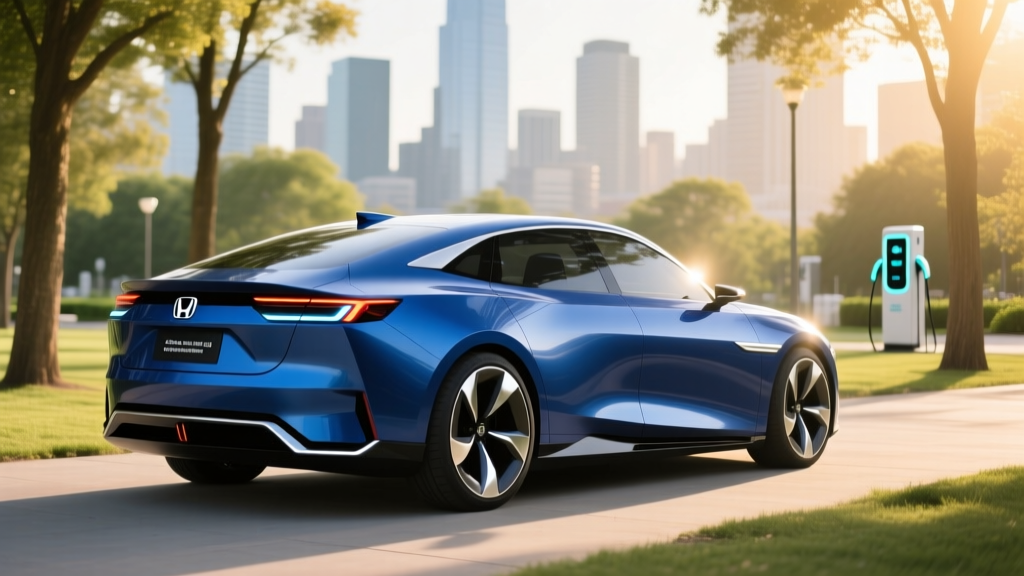
Quick Answer: Is the 2026 Honda Prologue Worth It?
The 2026 Honda Prologue is a midsize electric SUV built on GM's Ultium platform, offering an EPA-estimated 308 miles of range (FWD Elite), an 85 kWh usable NMC battery, and DC fast charging up to 150 kW (10–80% in roughly 30 minutes). Pricing starts around $47,400 before destination. It qualifies for partial or full federal tax credit depending on battery-sourcing compliance and your income. Best suited for buyers who want Honda's cabin ergonomics and dealer network with GM's proven EV hardware underneath — but those seeking sub-$40K entry pricing or 200+ kW charging will need to look at rivals like the Hyundai Ioniq 5 or Tesla Model Y.
2026 Honda Prologue: Range, Battery, and Efficiency
The 2026 Prologue carries over the 85 kWh (usable) Ultium lithium-ion NMC battery pack shared with the Chevrolet Blazer EV and Cadillac Lyriq. Honda offers two drivetrains:
- Front-wheel drive (FWD): Single motor, 220 hp, 236 lb-ft torque. EPA range up to 308 miles (Elite trim with 20-inch wheels) or 296 miles (base EX with 19-inch wheels, per fueleconomy.gov).
- All-wheel drive (AWD): Dual motor, 288 hp, 325 lb-ft torque. EPA range drops to 281 miles due to the added weight and drivetrain losses.
Real-World Range Expectations
The 308-mile EPA sticker is measured under mixed driving. Expect roughly 250–275 miles on a sustained 70-mph highway trip in moderate temperatures. In sub-freezing winter conditions, plan for 20–30% range reduction (down to ~215–245 miles) because battery heating consumes energy and cabin heat draws from the pack. Honda equips the Prologue with a heat pump on upper trims, which mitigates but does not eliminate cold-weather losses.
| Spec | FWD Elite | AWD Elite |
|---|---|---|
| EPA Range | 308 mi | 281 mi |
| Battery (usable) | 85 kWh NMC | 85 kWh NMC |
| Horsepower | 220 hp | 288 hp |
| 0–60 mph | ~7.8 sec | ~6.0 sec |
| Max DC Fast Charge | 150 kW | 150 kW |
| 10–80% DC Charge | ~30 min | ~30 min |
| Level 2 (AC) Charge | 11.5 kW (~7.5 hr) | 11.5 kW (~7.5 hr) |
| MPGe (combined) | 99 MPGe | 93 MPGe |
| Base MSRP | $47,400 | $50,400 |
Charging Speed and Connector Details
The Prologue uses a CCS1 connector for DC fast charging and a J1772 inlet for Level 1 and Level 2 AC charging. Honda has not adopted the Tesla NACS standard for the Prologue as of the 2026 model year, though GM — which supplies the Ultium platform — has committed to NACS on future vehicles.
| Level | Power | Miles Added per Hour | Use Case |
|---|---|---|---|
| Level 1 (120V) | ~1.4 kW | ~4–5 mi/hr | Overnight trickle, emergencies |
| Level 2 (240V, 48A) | 11.5 kW | ~37 mi/hr | Home daily charging |
| DC Fast Charge | 150 kW peak | ~200 mi in 20 min (10–50%) | Road trips, public stations |
Charging-curve reality: The 150 kW peak is not sustained across the entire session. Like most Ultium-based EVs, the Prologue holds strong charge rates from 10% to roughly 50% State of Charge, then tapers progressively. Expect 10–80% in about 30 minutes at a 150+ kW charger (Electrify America, EVgo). Above 80%, charging slows dramatically to protect the battery — a 5% to 100% top-off can add another 30–40 minutes, so plan stops accordingly.
Pricing, Trims, and Federal Tax Credit
The 2026 Prologue lineup includes EX (FWD/AWD), Touring (FWD/AWD), and Elite (FWD/AWD) trims. Destination adds approximately $1,350.
- EX FWD: ~$47,400 (base)
- Touring FWD: ~$49,400
- Elite FWD: ~$52,900
- AWD adds: ~$3,000 across trims
§30D Federal Tax Credit Eligibility
The Prologue is assembled in North America (Ramos Arizpe, Mexico, on GM's Ultium line), which satisfies the final-assembly requirement. However, the full $7,500 credit splits into two halves — $3,750 for critical-minerals sourcing and $3,750 for battery-component manufacturing — and compliance shifts yearly. As of 2026, eligibility depends on whether the battery materials and components meet IRS §30D thresholds, which tighten annually.
§30D Credit Checklist (2026 Rules)
- Buyer AGI must not exceed $150K (single), $225K (head of household), or $300K (joint).
- Vehicle MSRP must be under $80,000 for SUVs (Prologue qualifies).
- Final assembly in North America (Prologue qualifies).
- Battery critical-minerals and component sourcing must meet annual thresholds — verify at purchase via dealer POS tool.
- Credit can be transferred at point of sale as a purchase-price reduction, or claimed on your tax return.
- Consult a tax professional; rules are subject to legislative change.
If the Prologue qualifies for the full $7,500, the effective price of an EX FWD drops to roughly $39,900 — competitive with a loaded Honda CR-V Hybrid and far closer to EV rivals.
Prologue vs. Gas and Hybrid: Cost of Ownership
Honda's core buyers cross-shop the CR-V and CR-V Hybrid. Here's how the Prologue stacks up on real running costs over five years and 75,000 miles.
| Category | Prologue EX FWD | CR-V Hybrid AWD | CR-V Gas AWD |
|---|---|---|---|
| Purchase Price (after credit) | ~$40,000 | ~$36,500 | ~$34,500 |
| Fuel / Charging | ~$3,750* | ~$6,900 | ~$9,400 |
| Maintenance | ~$1,500 | ~$3,200 | ~$4,100 |
| Insurance (avg) | ~$9,000 | ~$7,500 | ~$7,500 |
| Estimated Depreciation | ~$18,000 | ~$14,000 | ~$14,500 |
| Total 5-Year | ~$72,250 | ~$68,100 | ~$70,000 |
*Charging cost assumes 70% home Level 2 at $0.15/kWh and 30% public DC at $0.40/kWh; efficiency 3.0 mi/kWh. Gas assumes $3.50/gal, 40 MPG combined (hybrid) and 29 MPG (gas). Actual costs vary by region and utility rate.
The Prologue's fuel and maintenance savings are substantial — roughly $5,000–$7,000 less than gas over five years. However, higher insurance premiums (EVs average 15–25% more to insure) and steeper depreciation partially offset the gains. If you qualify for the full $7,500 credit and charge primarily at home, the Prologue can break even or beat the CR-V Hybrid on total cost.
Real-World Ownership: What First-Time EV Buyers Must Know
Home Charging Is Non-Negotiable for Most Buyers
The Prologue's 11.5 kW onboard charger means a full charge from empty takes about 7.5 hours on a 240V Level 2 circuit. If you can install a Level 2 charger at home (or already have a 240V outlet in your garage), the Prologue works seamlessly as a daily driver — wake up "full" every morning. Budget $500–$1,500 for a quality Level 2 EVSE (ChargePoint Home Flex, Emporia Level 2) and $800–$2,500 for electrician installation, depending on whether your panel needs an upgrade to 200A.
If you live in an apartment or rely solely on public charging, the Prologue's 150 kW peak charge rate is adequate but not class-leading. Competitors like the Hyundai Ioniq 5 (peak 240 kW, 10–80% in ~18 minutes) are noticeably faster on road trips.
Climate and Driving Pattern Considerations
Cold-weather buyers in the Upper Midwest or Northeast should plan for 20–30% winter range loss and precondition the battery before DC fast charging (the Prologue's navigation system routes through chargers and warms the pack automatically). Highway-dominant commuters averaging 75+ mph will see range closer to 250 miles even in mild weather due to aerodynamic drag.
Maintenance and Longevity
EVs eliminate oil changes, spark plugs, transmission fluid, and exhaust repairs. Expect to replace cabin air filters, wiper blades, brake fluid (every 3 years), and tires (EVs wear tires 20–30% faster due to weight and instant torque). Honda covers the Prologue's battery with an 8-year/100,000-mile warranty against degradation below 70% capacity — standard for the industry and backed by GM's Ultium track record.
Common EV Misconceptions — Fact-Checked for Prologue Buyers
| Myth | Fact |
|---|---|
| "EV batteries need replacing every few years." | Ultium NMC packs are designed for 15+ years of service. Honda warranties 70% capacity retention at 8 years/100K miles. Full replacement (if ever needed) runs $12,000–$18,000 out of warranty. |
| "The Prologue is basically a Chevy with a Honda badge." | It shares the Ultium platform and battery with the Blazer EV, but Honda tunes the suspension, steering, interior materials, and infotainment independently. The cabin is distinctly Honda — physical climate knobs, Google Built-in, and a 11.3-inch touchscreen. |
| "I can't take road trips." | With 308 miles of range and 150 kW DC charging, you'll stop every 2.5–3 hours for a 20–30 minute charge — comparable to gas-car rest stops. Use A Better Routeplanner or the HondaLink app to plan. |
| "EVs are worse for the environment because of battery mining." | Lifecycle analyses by the ICCT and Argonne National Lab show EVs produce 50–70% fewer lifetime emissions than gas cars in the US grid mix, even accounting for battery production. The grid gets cleaner every year; gas cars do not. |
| "Charging is more expensive than gas." | At $0.15/kWh (national avg residential), the Prologue costs ~$0.05/mile to fuel vs. ~$0.12/mile for a 29 MPG gas SUV at $3.50/gal. Public DC fast charging is more expensive (~$0.13/mile) but still beats gas. |
Decision Framework: Should You Buy the 2026 Honda Prologue?
Choose the Prologue If:
- You want a midsize electric SUV from a legacy brand with a strong dealer network for service and warranty work.
- You qualify for the full or partial §30D tax credit, bringing the effective price near $40K.
- You can install Level 2 home charging and drive under 250 miles on most days.
- You value Honda's cabin ergonomics, physical controls, and Google Built-in infotainment over minimalist EV interiors.
- You want the safety net of an 8-year/100,000-mile battery warranty and GM's proven Ultium platform.
Look Elsewhere If:
- You need sub-$40K pricing before incentives — consider the Chevrolet Equus EV or used EV market.
- You road-trip frequently and want the fastest DC charging available — the Hyundai Ioniq 5 (240 kW peak) or Kia EV6 (240 kW) charge significantly faster.
- You want access to Tesla's Supercharger network without an adapter — the Prologue uses CCS1, and Honda has not yet adopted NACS.
- You need three rows of seating — the Prologue is a two-row, five-passenger SUV. Consider the Kia EV9 or Rivian R1S.
- You live in an apartment without charging access and your area has sparse public DC infrastructure.
Frequently Asked Questions
Does the 2026 Honda Prologue qualify for the $7,500 federal tax credit?
It meets the North American final-assembly and MSRP-cap requirements. The critical-minerals and battery-component sourcing thresholds change annually under IRS §30D rules. Ask your dealer for the current-year POS credit eligibility at the time of purchase, and verify your income qualifies.
What is the real-world highway range of the Prologue?
Expect approximately 250–275 miles at sustained 70-mph highway speeds in mild weather (60–80°F). In winter conditions below freezing, plan for 200–240 miles. The EPA combined rating is 308 miles (FWD Elite), but highway driving and cold weather reduce that figure.
How long does it take to charge the Prologue at home?
On a 240V Level 2 charger at 11.5 kW, a full charge from near-empty takes about 7.5 hours. Most owners charge overnight from 20–80%, which takes roughly 4–5 hours. A standard 120V outlet (Level 1) adds only about 4–5 miles per hour — suitable only for low-mileage drivers or trickle topping.
Is the Prologue built by Honda or GM?
The Prologue is manufactured at GM's Ramos Arizpe plant in Mexico on the Ultium platform. Honda designs the exterior, interior, suspension tuning, and software experience. Future Honda EVs (expected 2027+) will use Honda's own e:Architecture platform.
How does the Prologue compare to the Honda CR-V Hybrid?
The CR-V Hybrid offers 40 MPG combined, no charging requirement, and a lower starting price (~$36,500). The Prologue delivers lower per-mile fuel costs, stronger acceleration (AWD: 0–60 in ~6 seconds), and zero tailpipe emissions — but at a higher upfront cost and with charging logistics. If you can charge at home and qualify for the tax credit, the Prologue's 5-year total cost is competitive. If you can't charge at home, the CR-V Hybrid is the pragmatic choice.
Does the Prologue support NACS / Tesla Superchargers?
Not natively. The 2026 Prologue uses CCS1 for DC fast charging. Honda has announced future NACS adoption, but 2026 models will require a CCS-to-NACS adapter (when available) for Supercharger access. Plan your road trips around Electrify America, EVgo, and ChargePoint networks.
What is the Prologue's towing capacity?
The Prologue is rated to tow up to 1,500 pounds — adequate for a small utility trailer or a pair of dirt bikes, but not for boat or camper towing. If you need 3,500+ lb towing, look at the Ford F-150 Lightning, Rivian R1T, or Hyundai Ioniq 5 (with the appropriate tow package).
Sources: EPA fueleconomy.gov, IRS §30D Clean Vehicle Credits, Honda Prologue Official Page.