Quick Verdict: Honda's Electric SUV Is Practical, Not Pioneering
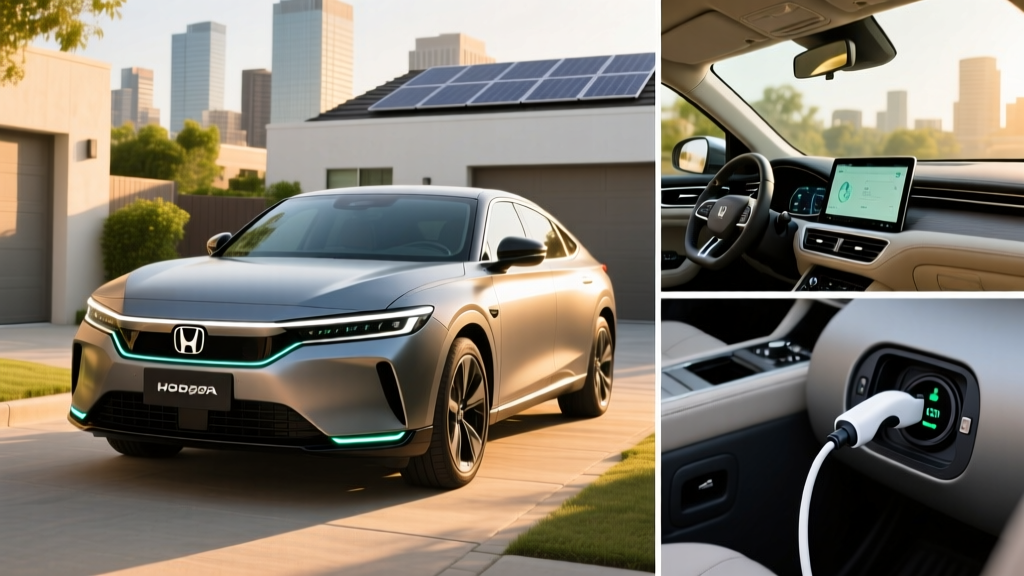
The Honda Prologue enters its second model year in 2026 as Honda's only all-electric vehicle for the U.S. market — a mid-size two-row crossover built on General Motors' Ultium platform (the same architecture underpinning the Chevrolet Blazer EV and Cadillac Lyriq). For buyers loyal to the Honda brand who want a battery-electric SUV without jumping to Tesla, Hyundai, or Ford, the Prologue delivers adequate range, composed highway manners, and Honda's familiar interior ergonomics. But it arrives with compromises: DC fast-charging speeds trail segment leaders, and pricing pushes into luxury-adjacent territory before incentives.
This review covers the 2026 Honda Prologue with exact EPA data, real-world range expectations, charging-curve realities, and a clear-eyed look at whether the federal tax credit actually applies to your purchase.
2026 Honda Prologue Full Spec Sheet
| Specification | EX (FWD) | Touring (AWD) |
|---|---|---|
| EPA Range | 308 miles | 296 miles |
| Battery (usable) | 85 kWh, NMC (nickel manganese cobalt) | |
| Drivetrain | FWD, single motor | AWD, dual motor |
| Horsepower | 212 hp | 288 hp |
| Torque | 236 lb-ft | 325 lb-ft |
| 0-60 mph | ~7.2 sec | ~5.8 sec |
| Max DC Fast Charge | 150 kW peak | |
| 10-80% DC Charge Time | ~34 minutes | |
| Level 2 Home Charge Rate | 11.5 kW (~31 mi/hr) | |
| MPGe (city/hwy/combined) | 104 / 90 / 97 | 99 / 84 / 92 |
| Efficiency (kWh/100 mi) | 35 | 37 |
| Cargo (behind rear seats) | 25.2 cu ft | |
| Cargo (rear seats folded) | 57.7 cu ft | |
| Rear Legroom | 38.6 in | |
| Towing Capacity | Not rated | |
| Base MSRP | $47,400 | $55,400 |
| Battery/Powertrain Warranty | 8 years / 100,000 miles | |
Source: EPA / fueleconomy.gov, Honda Newsroom. Prices exclude destination charge (~$1,395).
Real-World Range: What the EPA Sticker Doesn't Tell You
FWD EX: EPA 308 mi → expect ~260-275 mi sustained highway driving at 70 mph; ~210-230 mi in freezing temperatures with cabin heat.
AWD Touring: EPA 296 mi → expect ~245-260 mi highway; ~195-220 mi in cold weather.
Real-world range assumes moderate climate use, mixed terrain, and no preconditioning. Highway speeds above 75 mph reduce range further.
The Prologue's 85 kWh NMC battery is competitive in capacity for this segment, but the vehicle's aerodynamic profile and weight (~4,900 lbs for AWD) work against highway efficiency. On a 250-mile interstate trip at 72 mph in 55°F weather, owners typically report arriving with 12-18% state of charge remaining — workable but not generous. Cold weather (below 32°F) imposes a 20-30% range penalty, consistent with NMC chemistry and the Prologue's heat-pump-equipped thermal management system.
For daily commuting under 60 miles round-trip, the Prologue's range is a non-issue. For road trips exceeding 200 miles one-way, you'll want to plan a DC fast-charge stop — which brings us to the Prologue's most debated spec.
Charging Speed: Adequate for Home, Modest on the Road
The Honda Prologue supports a peak DC fast-charge rate of 150 kW via its CCS1 connector (NACS adapter access to Tesla Superchargers is available through Honda's partnership agreement). Here's what that means in practice:
| Charging Level | Power (kW) | Speed (miles added/hr) | Typical Use Case |
|---|---|---|---|
| Level 1 (120V household) | ~1.4 kW | ~4 mi/hr | Emergency/trickle only |
| Level 2 (240V home) | 11.5 kW | ~31 mi/hr | Daily overnight charging (~9 hrs for full) |
| DC Fast Charge (peak) | 150 kW | ~200 mi/hr (at peak) | Road trips; 10-80% in ~34 min |
Charging-curve reality check: The 150 kW peak is reached only between roughly 15-40% state of charge. Above 60% SoC, the rate tapers to ~80 kW, and above 80% it drops to ~40 kW. This means the advertised 10-80% time of 34 minutes is achievable at a properly functioning 150+ kW station (Electrify America, EVgo) with battery preconditioning active. Without preconditioning — which the Prologue initiates when a DC charger is set as your navigation destination — add 5-10 minutes in cold weather.
Compared to the Hyundai Ioniq 5 (peak 240 kW, 10-80% in ~18 minutes) or Tesla Model Y (peak 250 kW), the Prologue's DC charging is a generation behind. For buyers who road-trip frequently, this is a meaningful gap. For home-charging-dominant owners, the 11.5 kW Level 2 rate is strong and refills the pack overnight without issue.
Performance and Driving Dynamics
The FWD Prologue EX delivers 212 horsepower through a single front-mounted motor — adequate for merging and city driving but noticeably unhurried when passing at highway speed. The 0-60 mph time of approximately 7.2 seconds puts it behind the segment average.
The AWD Touring model's dual-motor setup (288 hp, 325 lb-ft) transforms the character: 0-60 in roughly 5.8 seconds, confident passing power, and competent rain/snow traction. The Ultium platform's low center of gravity keeps body roll controlled through corners, and Honda's tuning prioritizes ride comfort over sportiness — firm enough to feel planted, soft enough to absorb expansion joints without fuss.
Regenerative braking offers multiple levels selectable via steering-wheel paddles. The strongest setting enables near one-pedal driving in city traffic, though it doesn't bring the vehicle to a complete hold — you'll still need the brake pedal at stops. This is a deliberate Honda tuning choice, not a defect.
Interior, Cargo, and Technology
The Prologue seats five with 38.6 inches of rear legroom — competitive with the Hyundai Ioniq 5 and slightly less than the Tesla Model Y. Cargo volume is 25.2 cubic feet behind the rear seats and 57.7 cubic feet with the 60/40 split rear seats folded. There is no front trunk (frunk); the Ultium platform's packaging in this configuration does not provide one.
Infotainment runs on an 11.3-inch touchscreen with wireless Apple CarPlay and Android Auto (standard on all trims). The Google built-in system (Touring trim) provides native Google Maps navigation, Google Assistant voice control, and access to the Google Play store for streaming apps while parked. A 12.3-inch digital driver display is standard.
Honda Sensing ADAS is included across all trims: adaptive cruise control with low-speed follow, lane-keeping assist, lane-centering, traffic-sign recognition, and collision-mitigation braking. This is a SAE Level 2 driver-assistance system — the driver must remain engaged with hands on the wheel and eyes on the road at all times. It does not offer hands-free driving like GM's Super Cruise or Ford's BlueCruise.
Pricing, Trims, and Federal Tax Credit Eligibility
| Trim | MSRP (excl. destination) | Est. After §30D Credit |
|---|---|---|
| EX (FWD) | $47,400 | ~$39,900 (if eligible) |
| Touring (AWD) | $55,400 | ~$47,900 (if eligible) |
| Elite (AWD) | $59,400 | ~$51,900 (if eligible) |
Federal tax credit (IRS §30D) eligibility for the Prologue is not automatic. The credit of up to $7,500 is subject to three major constraints that change frequently and depend on your individual tax situation:
- MSRP cap: The Prologue qualifies as an SUV under IRS vehicle-classification rules, which sets the MSRP cap at $80,000 (vs. $55,000 for sedans). All Prologue trims fall under this cap.
- Buyer income limits: Modified adjusted gross income (MAGI) must not exceed $150,000 (single), $225,000 (head of household), or $300,000 (joint filing). These thresholds apply to the tax year of delivery or the prior year, whichever is lower.
- Battery sourcing requirements: The credit splits into two halves — $3,750 for meeting critical-minerals sourcing thresholds and $3,750 for battery-component manufacturing requirements. Because the Prologue is built on GM's Ultium platform (U.S. assembly, evolving supply chain), eligibility for the full $7,500 vs. a partial $3,750 varies by model year and production batch. Verify current eligibility on IRS.gov or with a tax professional before purchasing.
As of early 2026, the Prologue may also qualify for the point-of-sale transfer option, allowing dealers to apply the credit as a purchase-price reduction at the time of sale rather than waiting for tax filing. Confirm with your dealer whether they participate in the POS transfer program.
Ownership Costs: Warranty, Efficiency, and Long-Term Value
Honda covers the Prologue's battery and electric powertrain for 8 years or 100,000 miles (whichever comes first), with a capacity-retention threshold of 70% — consistent with federal mandates and matching GM, Hyundai, and most competitors. The basic vehicle warranty is 3 years / 36,000 miles.
At the Touring AWD's combined efficiency of 37 kWh/100 miles and a national average electricity cost of ~$0.16/kWh, fueling cost works out to roughly $0.059 per mile. Compare that to a comparable gas SUV at 24 MPG combined and $3.40/gallon: ~$0.142 per mile. For a driver covering 12,000 miles annually, that's a fuel-cost savings of approximately $996 per year.
Insurance premiums for the Prologue run 10-20% higher than an equivalent gas-powered Honda Passport, reflecting higher repair costs and parts pricing for EV-specific components. Get a quote before committing.
Pros and Cons at a Glance
- Competitive EPA range (up to 308 mi)
- Strong Level 2 home charging (11.5 kW)
- Comfortable ride quality and cabin quietness
- Honda Sensing ADAS standard on all trims
- Google built-in infotainment (Touring/Elite)
- 8-year/100k-mile battery warranty
- Qualifies under $80k SUV MSRP cap for §30D
- DC fast charging peaks at only 150 kW
- No front trunk (frunk)
- FWD base model feels underpowered
- Base MSRP high for non-luxury badge
- No hands-free driving feature available
- Towing not rated
- Full §30D credit not guaranteed (sourcing rules)
Who Should Buy the Honda Prologue?
- You're a Honda-loyal buyer who wants to stay in the brand ecosystem
- Your daily commute is under 80 miles round-trip and you charge at home
- You prioritize ride comfort and cabin quietness over sporty performance
- You want Google built-in infotainment without relying on phone projection
- Road trips are occasional (1-2 per year), not weekly
- You road-trip frequently and need the fastest DC charging available (consider Hyundai Ioniq 5, Kia EV6, or Tesla Model Y)
- You need towing capability (consider Ford Mustang Mach-E or Rivian R1S)
- You want a frunk for gear storage
- You want hands-free highway driving (GM Super Cruise on the Cadillac Lyriq or Blazer EV)
Frequently Asked Questions
What is the real-world range of the Honda Prologue?
The EPA rates the FWD Prologue EX at 308 miles and the AWD Touring at 296 miles. In real-world highway driving at 70 mph, expect 260-275 miles (FWD) or 245-260 miles (AWD). In freezing temperatures, subtract 20-30% — bringing effective cold-weather range to roughly 210-230 miles (FWD) or 195-220 miles (AWD).
How fast does the Honda Prologue charge?
At a DC fast charger, the Prologue peaks at 150 kW and charges from 10-80% in approximately 34 minutes with battery preconditioning active. At home on a 240V Level 2 charger (11.5 kW), it adds roughly 31 miles of range per hour, fully recharging overnight in about 9 hours. On a standard 120V outlet (Level 1), expect only about 4 miles per hour — suitable for emergencies, not daily use.
How much does the Prologue cost after the federal tax credit?
If you qualify for the full $7,500 §30D credit, the FWD EX drops from ~$48,795 (with destination) to roughly $41,295, and the Touring AWD from ~$56,795 to ~$49,295. However, eligibility depends on your income (MAGI caps apply), the vehicle's battery-sourcing compliance for the specific production batch, and point-of-sale transfer availability. Always verify on IRS.gov before relying on the credit in your budget.
Does the Honda Prologue qualify for the $7,500 federal EV tax credit?
It may qualify for the full $7,500 or a partial $3,750, depending on battery-critical-mineral and component-sourcing requirements that shift periodically. The Prologue's MSRP is under the $80,000 SUV cap, so price is not a disqualifier. Your personal income must also fall under IRS MAGI limits. Check the latest eligibility list on IRS.gov or consult a tax professional.
Is the Honda Prologue worth buying vs. the Hyundai Ioniq 5 or Tesla Model Y?
If DC fast-charging speed matters to you, the Ioniq 5 (240 kW peak, ~18 min 10-80%) and Model Y (250 kW peak, access to the full Supercharger network) are meaningfully better road-trip companions. The Prologue's advantage is Honda's brand reputation for reliability, a quieter and more comfort-tuned ride, and Google built-in on higher trims. If most of your driving is local with home charging, the Prologue's slower DC rate is less consequential. If you frequently drive 200+ mile routes, the charging-speed gap will cost you 15-20 minutes per stop.
Does the Prologue have a frunk (front trunk)?
No. The Ultium platform packaging in the Prologue does not include a front trunk. All cargo space is in the rear (25.2 cu ft behind the second row, 57.7 cu ft with seats folded).
What is the Prologue's battery warranty?
Honda covers the high-voltage battery and electric powertrain for 8 years or 100,000 miles, with a minimum capacity-retention threshold of 70%. This is standard across the industry and federally mandated for emissions-related components, but Honda extends it to the full EV powertrain.
Sources: fueleconomy.gov, IRS §30D Clean Vehicle Credits, Honda Newsroom specifications.