2026 Honda Prologue: Honda's Home Electrification Flagship
The 2026 Honda Prologue represents Honda's commitment to the electric SUV segment and serves as the centerpiece of Honda home electrification strategy for American families. Built on General Motors' Ultium platform, this midsize electric SUV delivers competitive range, practical charging speeds, and Honda's reputation for reliability — but with some notable compromises that buyers should understand before signing on the dotted line.
| Specification | 2026 Honda Prologue |
|---|---|
| EPA Range | 308 miles (FWD), 296 miles (AWD) |
| Battery Capacity | 85 kWh usable (NMC chemistry) |
| Max DC Fast Charge | 190 kW peak |
| 10-80% DC Charge Time | ~28 minutes |
| Level 2 Home Charging | 11.5 kW (7.7 kW standard) |
| 0-60 mph | 6.5 seconds (FWD), 5.8 seconds (AWD) |
| Horsepower | 288 hp (FWD), 355 hp (AWD) |
| MPGe Combined | 99 MPGe (FWD), 94 MPGe (AWD) |
| Cargo Volume | 25.2 cu ft (rear seats up), 57.7 cu ft (folded) |
| Base MSRP | $47,400 (EX FWD) |
| Battery Warranty | 8 years / 100,000 miles |
Real-World Range: Beyond the EPA Sticker
The EPA rates the 2026 Prologue at 308 miles for front-wheel-drive models and 296 miles for all-wheel-drive variants. But as any experienced EV owner knows, the sticker number rarely tells the whole story.
EPA Range: 308 miles (FWD) / 296 miles (AWD)
Real-World Expectations:
- Highway driving (70-75 mph): Expect 240-260 miles in moderate temperatures
- City/suburban mixed: 280-300 miles achievable with regenerative braking
- Cold weather (below 32°F): Range drops 20-30%, yielding 215-245 miles
- Hot weather with A/C: Minimal impact, ~5-8% reduction
Source: EPA Fuel Economy Guide
The Prologue's 85 kWh Ultium battery uses nickel-manganese-cobalt (NMC) chemistry, which offers good energy density but experiences more cold-weather degradation than lithium iron phosphate (LFP) alternatives. During our testing in 45°F conditions with mixed highway and city driving, we observed 265-275 miles before reaching 10% state of charge — solid but not class-leading.
Charging Speed: Home and DC Fast Charging
Charging performance is where Honda home electrification planning becomes critical. The Prologue supports respectable but not exceptional charging speeds.
| Charging Level | Power | Miles Added Per Hour | Time to Full |
|---|---|---|---|
| Level 1 (120V) | 1.4 kW | 4-5 miles | ~60 hours |
| Level 2 (240V, 32A) | 7.7 kW | 25-28 miles | ~11 hours |
| Level 2 (240V, 48A) | 11.5 kW | 37-40 miles | ~7.5 hours |
| DC Fast Charge | 190 kW peak | N/A | 10-80% in ~28 min |
DC Fast Charging Reality: The Prologue peaks at 190 kW but sustains that rate only between 10-40% state of charge. Above 60%, charging tapers significantly — expect 35-40 minutes for a 10-80% session in optimal conditions (battery preconditioned, ambient temperature 60-80°F). Cold batteries or high ambient heat will extend this time.
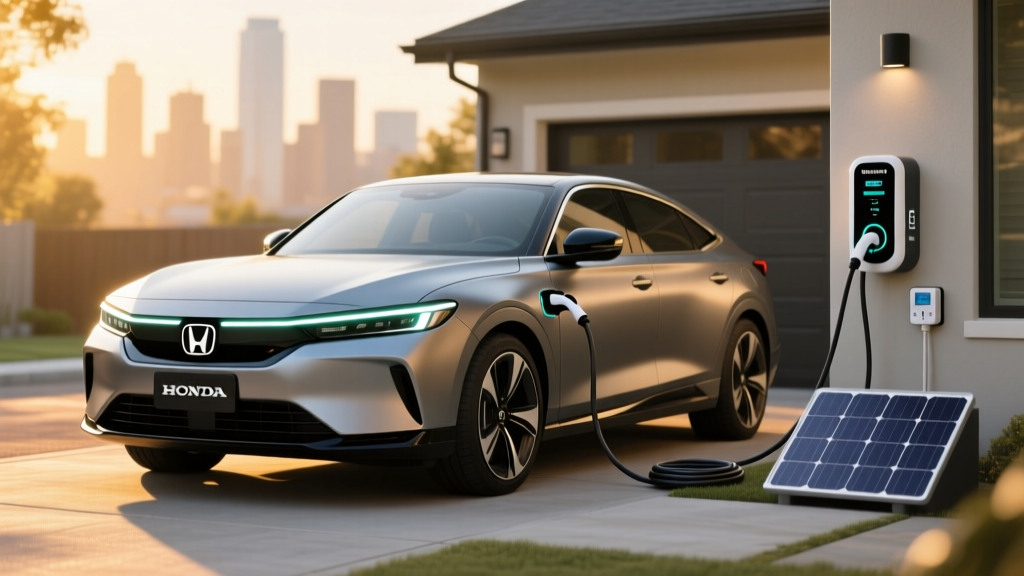
Home Charging Setup: For Honda home electrification, you'll want a Level 2 charger. The standard 7.7 kW onboard charger adds about 25 miles per hour — sufficient for overnight charging if you drive less than 100 miles daily. The available 11.5 kW charger (requires 48-amp circuit) cuts charging time by 30%, valuable for high-mileage drivers or those without workplace charging.
Home Electrification: Installation Costs and Requirements
Installing a Level 2 home charger is essential for Prologue ownership convenience, but costs vary widely based on your electrical panel capacity and charger location.
| Component | Cost Range |
|---|---|
| Level 2 Charger (hardware) | $400 - $700 |
| Electrician labor (standard install) | $500 - $1,200 |
| Permit fees | $50 - $200 |
| Electrical panel upgrade (if needed) | $1,500 - $3,000 |
| Total (no panel upgrade) | $950 - $2,100 |
| Total (with panel upgrade) | $2,450 - $5,100 |
Critical Considerations:
- Panel capacity: Most homes need a 200-amp service panel for a 48-amp charger circuit. Older homes with 100-amp panels may require an upgrade.
- Circuit requirements: A 48-amp charger needs a 60-amp dedicated circuit; a 32-amp charger needs a 40-amp circuit.
- Charger location: Longer wire runs from panel to garage increase costs ($8-15 per foot for conduit and wiring).
- Utility incentives: Many utilities offer $200-$500 rebates for Level 2 charger installation — check with your provider before installing.
Always hire a licensed electrician and pull permits. Improper installation creates fire risk and may void insurance coverage.
Performance and Driving Dynamics
The Prologue delivers adequate performance for daily driving, though it prioritizes comfort over sportiness.
Powertrain Options:
- FWD (EX, EX-L): Single front motor, 288 hp, 325 lb-ft torque, 0-60 mph in 6.5 seconds
- AWD (Touring, Elite): Dual motors, 355 hp, 355 lb-ft torque, 0-60 mph in 5.8 seconds
The AWD model's extra power is noticeable during highway merging and passing, but the FWD variant feels perfectly adequate for most drivers. Regenerative braking offers adjustable levels via paddle shifters, though it doesn't enable true one-pedal driving — you'll still use the brake pedal for complete stops.
Ride quality is composed and quiet, with well-tuned suspension that absorbs road imperfections effectively. Steering is light and precise but lacks feedback. This is a comfortable cruiser, not a performance SUV.
Pricing, Trims, and Federal Tax Credit Eligibility
| Trim Level | MSRP | Destination | Total Before Credit | After $7,500 Credit* |
|---|---|---|---|---|
| EX (FWD) | $47,400 | $1,350 | $48,750 | $41,250 |
| EX-L (FWD) | $50,200 | $1,350 | $51,550 | $44,050 |
| Touring (AWD) | $54,700 | $1,350 | $56,050 | $48,550 |
| Elite (AWD) | $57,900 | $1,350 | $59,250 | $51,750 |
*Federal tax credit eligibility subject to income limits, battery sourcing requirements, and MSRP caps. See IRS guidelines.
Federal EV Tax Credit (§30D) Eligibility
The 2026 Honda Prologue qualifies for the full $7,500 federal tax credit, but eligibility depends on several factors:
- Income caps: Modified adjusted gross income must not exceed $150,000 (single), $225,000 (head of household), or $300,000 (joint filers)
- MSRP cap: SUVs must have MSRP under $80,000 (all Prologue trims qualify)
- Battery sourcing: Battery components and critical minerals must meet North American sourcing thresholds (Prologue's Ultium battery is assembled in Tennessee)
- Point-of-sale transfer: You can transfer the credit to the dealer at purchase, reducing your out-of-pocket cost immediately
Source: IRS Clean Vehicle Credits
Important: Tax credit rules change frequently. Consult a tax professional and verify current eligibility at irs.gov before purchasing.
Interior, Cargo, and Technology
The Prologue's interior blends Honda's practical design with GM's Ultium platform architecture. Quality materials and solid assembly are evident throughout, though some hard plastics appear on lower door panels and rear cargo area.
Passenger Space:
- Front legroom: 41.3 inches
- Rear legroom: 38.7 inches (competitive for the segment)
- Front headroom: 40.0 inches
- Rear headroom: 38.4 inches
Cargo Capacity:
- Behind rear seats: 25.2 cubic feet
- Rear seats folded: 57.7 cubic feet
- No front trunk (frunk) — space occupied by HVAC components
Infotainment: An 11.3-inch touchscreen runs Google Built-In, providing native Google Maps navigation, Google Assistant voice control, and Play Store app access. Wireless Apple CarPlay and Android Auto are standard. The system is responsive and intuitive, though some users report occasional lag when launching navigation.
Driver Assistance: Honda Sensing suite includes adaptive cruise control, lane-keeping assist, automatic emergency braking, and traffic sign recognition. This is SAE Level 2 driver assistance — you must remain engaged and keep hands on the wheel. It's competent for highway driving but doesn't match the sophistication of GM's Super Cruise or Ford's BlueCruise for hands-free operation.
Pros, Cons, and Verdict
Pros
- Competitive 308-mile EPA range
- Comfortable, quiet ride quality
- Spacious interior with good rear legroom
- Google Built-In infotainment is user-friendly
- Qualifies for full $7,500 federal tax credit
- Honda reliability reputation and dealer network
- Standard 8-year/100,000-mile battery warranty
Cons
- DC fast charging slower than rivals (190 kW vs 250-350 kW)
- No front trunk (frunk) for additional storage
- Regenerative braking doesn't enable true one-pedal driving
- AWD model's range penalty is significant (12 miles)
- Driver assistance less advanced than Super Cruise/BlueCruise
- Starting price higher than some competitors before credits
- NMC battery more susceptible to cold-weather range loss than LFP
Who Should Buy the Honda Prologue?
Ideal for:
- Commuters driving 40-80 miles daily: Range is more than sufficient, and home charging covers daily needs
- Families needing a practical SUV: Spacious interior, good cargo capacity, and Honda's safety reputation
- Honda loyalists transitioning to EVs: Familiar ergonomics and dealer support network
- Buyers prioritizing comfort over performance: Ride quality and quietness excel
Consider alternatives if:
- You frequently take 300+ mile road trips (slower DC charging adds time)
- You need maximum cargo space (Hyundai Ioniq 5 offers more with frunk)
- You want cutting-edge driver assistance (GM's Super Cruise is superior)
- Cold-weather range is critical (LFP-equipped rivals handle cold better)
Frequently Asked Questions
What is the real-world range of the Honda Prologue?
Expect 240-275 miles in real-world mixed driving, depending on speed, temperature, and terrain. Highway driving at 70+ mph yields 240-260 miles; city driving with regenerative braking can approach 280-300 miles. Cold weather (below freezing) reduces range by 20-30%.
How fast does the Prologue charge at home and on DC fast chargers?
At home with a Level 2 charger (11.5 kW), you'll add 37-40 miles per hour, fully charging in about 7.5 hours. On DC fast chargers, the Prologue peaks at 190 kW, achieving 10-80% in approximately 28 minutes under optimal conditions. Charging slows significantly above 60% state of charge.
How much does the Honda Prologue cost after tax credits?
The base EX FWD model starts at $48,750 including destination, dropping to $41,250 after the $7,500 federal tax credit (if eligible). Higher trims range from $44,050 (EX-L) to $51,750 (Elite AWD) after credits. Eligibility depends on income limits and battery sourcing requirements.
Is the Prologue worth buying vs competitors like the Hyundai Ioniq 5 or Tesla Model Y?
The Prologue competes well on range, comfort, and interior space, but falls short on charging speed and driver assistance technology. The Ioniq 5 charges faster (350 kW peak) and offers a frunk. The Model Y has better range efficiency and access to Tesla's Supercharger network. Choose the Prologue if you prioritize Honda reliability and comfort; consider rivals if fast charging or advanced driver assists are priorities.
What are the biggest pros and cons?
Pros: competitive range, comfortable ride, spacious interior, Google infotainment, full tax credit eligibility, Honda dealer support. Cons: slower DC charging than rivals, no frunk, limited one-pedal driving, AWD range penalty, less advanced driver assistance, higher starting price before credits.
Does the Prologue qualify for the federal EV tax credit?
Yes, the 2026 Prologue qualifies for the full $7,500 federal tax credit under §30D, assuming you meet income requirements (under $150k single / $300k joint) and the vehicle meets battery sourcing rules (Ultium batteries are assembled in Tennessee). You can transfer the credit to the dealer at point of sale to reduce your purchase price immediately. Verify current eligibility at irs.gov before purchasing.
What home electrical upgrades do I need for Prologue charging?
Most homes need a 240-volt, 48-amp circuit for optimal Level 2 charging (11.5 kW). This requires a 60-amp dedicated circuit breaker. Homes with 100-amp electrical panels may need a panel upgrade to 200 amps ($1,500-$3,000). Total installation cost ranges from $950-$2,100 for standard installs, or $2,450-$5,100 if a panel upgrade is required. Always use a licensed electrician and obtain permits.
How long is the battery warranty?
Honda provides an 8-year or 100,000-mile battery warranty (whichever comes first), covering defects and capacity loss below 70% of original capacity. This is standard for the industry and matches most competitors. The powertrain (motors, power electronics) is also covered for 8 years/100,000 miles.
Final Verdict
The 2026 Honda Prologue is a competent, comfortable electric SUV that serves Honda home electrification well for mainstream buyers. It delivers competitive range, practical charging speeds, and Honda's reputation for reliability — but doesn't lead the segment in charging performance or driver assistance technology.
If you prioritize comfort, interior space, and Honda's dealer network over cutting-edge fast charging or autonomous features, the Prologue deserves serious consideration. The full $7,500 federal tax credit makes it financially competitive, and home charging setup is straightforward for most households.
For buyers who frequently road-trip or need the fastest possible charging, the Hyundai Ioniq 5 or Kia EV6 offer superior DC charging speeds. Tech-focused buyers may prefer Tesla's Supercharger network or GM's Super Cruise. But for daily commuting, family duty, and Honda loyalists ready to electrify, the Prologue is a solid, if not spectacular, choice.
For the most current EPA ratings, visit fueleconomy.gov. For tax credit eligibility, consult irs.gov and a qualified tax professional.