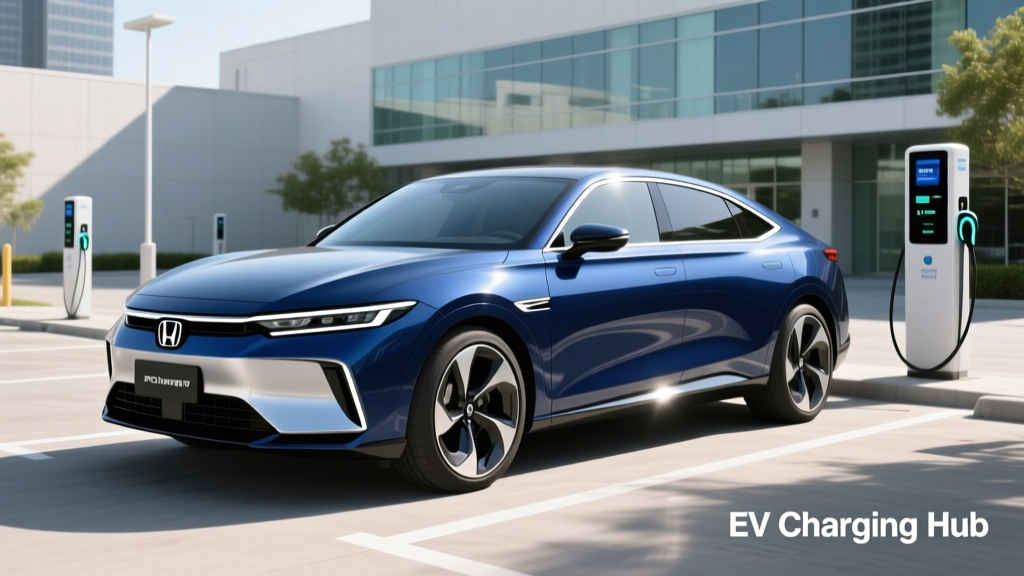
If you've been searching for answers to whether Honda is pulling the plug on its first mainstream electric SUV, you're not alone. Rumors and forum speculation have swirled since the Prologue launched for the 2024 model year on General Motors' Ultium platform. Let's cut through the noise with verified information, then dig into what the 2026 Honda Prologue actually delivers as a daily-driver EV — from real-world range and charging speed to pricing, tax credits, and how it stacks up against rivals like the Hyundai Ioniq 5 and Tesla Model Y.
Is Honda Discontinuing the Prologue? The Short Answer
As of early 2026, Honda has not announced any discontinuation of the Prologue. The SUV remains on sale in all three trims (EX, Touring, Elite) and continues to be listed on Honda's official consumer site and dealer ordering portals. What has changed is Honda's longer-term EV strategy: the company confirmed it will develop its own dedicated EV architecture for North America beginning later this decade, moving away from the GM Ultium partnership that underpins the current Prologue.
That strategic pivot — reported widely in automotive media — is likely what sparked the discontinuation rumors. But a future platform shift does not mean the current-generation Prologue is being killed off. Honda has a strong incentive to keep selling it: the Prologue was the brand's best-selling EV in 2025, and it qualifies for the full $7,500 federal tax credit under current IRS §30D rules — a major purchase incentive Honda is actively marketing.
What buyers should watch: Honda has not yet announced a direct successor or a timeline for a next-gen electric SUV on its own platform. Until it does, the current Prologue remains Honda's only electric offering in the U.S. market.
2026 Honda Prologue: Range, Battery & Efficiency
The 2026 Prologue carries over the same Ultium-based powertrain introduced at launch. Here's the core specification set:
| Spec | Value |
|---|---|
| Battery Capacity (usable) | 85 kWh |
| Battery Chemistry | NMC (nickel manganese cobalt) |
| EPA Range (FWD EX/Touring) | 308 miles |
| EPA Range (AWD Elite) | 281 miles |
| Efficiency (FWD) | 99 MPGe combined / 34 kWh/100 mi |
| Efficiency (AWD) | 93 MPGe combined / 36 kWh/100 mi |
| Drivetrain | FWD (single-motor) or AWD (dual-motor) |
| Horsepower | 212 hp (FWD) / 288 hp (AWD) |
| 0–60 mph | ~7.5 sec (FWD) / ~5.8 sec (AWD) |
| Max DC Fast Charge | 150 kW (peak) |
| 10–80% DC Charge Time | ~33 minutes |
| Level 2 Home Charge Rate | 11.5 kW (~31 mi/hr) |
| Warranty (Battery/Powertrain) | 8 years / 100,000 miles |
| Base MSRP (EX FWD) | $48,795 |
| Elite AWD MSRP | $59,295 |
Charging Speed: DC Fast Charging & Home Level 2
Charging is where the Prologue's GM Ultium roots show both strengths and limitations. The SUV uses a CCS1 connector (not NACS), though Honda has indicated future models will adopt the Tesla-style NACS plug. For now, Prologue owners rely on the CCS network — Electrify America, EVgo, and other CCS-equipped stations.
| Charging Level | Power | Speed (Miles Added) | Notes |
|---|---|---|---|
| Level 1 (120V household) | ~1.4 kW | ~4 miles per hour | Emergency/trickle only |
| Level 2 (240V home) | 11.5 kW | ~31 miles per hour | Full charge in ~8.5 hours |
| DC Fast Charge | 150 kW peak | ~170 mi in 30 min (ideal) | 10–80% in ~33 min; tapers significantly above 80% |
The 150 kW peak DC charge rate is adequate but not class-leading. Competitors like the Hyundai Ioniq 5 (up to 240 kW on 800V architecture) and the Tesla Model Y (up to 250 kW on V3 Superchargers) add range considerably faster on road trips. The Prologue's charge curve holds near peak rate from roughly 10–40% state of charge, then tapers progressively. Expect the 10–80% session to take approximately 33 minutes on a capable 150+ kW station — but plan for 40+ minutes if the station is shared, hot, or if you're starting from a very low state of charge in cold weather without preconditioning.
For home charging, the 11.5 kW onboard charger is competitive. A full overnight charge from near-empty takes roughly 8.5 hours, which is manageable for most commuters who plug in each evening. Installation of a 240V/48-amp Level 2 home charger typically costs $800–$2,000 depending on your electrical panel capacity and run distance — factor that into your total purchase budget.
Performance, Cargo Space & Daily Driving
The Prologue isn't positioned as a performance EV, and that's fine for its target buyer. The single-motor FWD model's 212 hp and 7.5-second 0–60 time are perfectly adequate for merging and city driving. The dual-motor AWD variant, with 288 hp and a 5.8-second sprint, adds confident highway passing ability and all-weather traction.
Where the Prologue genuinely shines is interior space — a direct benefit of the Ultium skateboard platform's flat floor:
- Cargo volume (behind rear seats): 25.2 cu ft
- Cargo volume (rear seats folded): 57.7 cu ft
- Rear legroom: 38.6 inches
- Front legroom: 41.4 inches
- Frunk: None — the Ultium platform packaging in the Prologue does not include a front trunk
The cabin materials and build quality are consistent with Honda's mainstream positioning: soft-touch surfaces on the dash and door uppers, durable cloth or available leatherette, and straightforward physical controls for climate and volume. The 11.3-inch infotainment touchscreen runs Google Built-In (on Touring and Elite trims), providing native Google Maps navigation, Google Assistant, and Play Store apps — a meaningful usability advantage over Honda's proprietary infotainment in the Accord or CR-V.
Driver assistance comes via Honda Sensing, which includes adaptive cruise control with low-speed follow, lane-keeping assist, blind-spot monitoring, and automatic emergency braking. This is a SAE Level 2 driver-assist system — it does not drive the car for you and requires continuous hands-on-wheel attention. There is no hands-free driving feature comparable to GM's Super Cruise or Ford's BlueCruise on the Prologue.
Pricing, Trims & Federal Tax Credit Eligibility
The 2026 Prologue is offered in three trims, with pricing that positions it in the mainstream mid-size EV SUV segment:
| Trim | Drivetrain | MSRP | Est. Price After §30D Credit* |
|---|---|---|---|
| EX | FWD | $48,795 | ~$41,295 |
| Touring | FWD or AWD | $52,095 (FWD) / $54,095 (AWD) | ~$44,595 – $46,595 |
| Elite | AWD | $59,295 | ~$51,795 |
*Federal tax credit estimates assume buyer eligibility. See rules below.
- Credit amount: Up to $7,500 (split between critical minerals and battery component requirements)
- MSRP cap: SUVs/vans/pickups must be under $80,000 — all Prologue trims qualify
- Buyer income cap: AGI must not exceed $150,000 (single), $225,000 (head of household), or $300,000 (joint filers)
- Battery sourcing: The Prologue's Ultium battery (manufactured in the U.S. with GM-sourced components) currently meets both critical-mineral and battery-component requirements for the full $7,500
- Point-of-sale transfer: Eligible buyers can apply the credit as an immediate dealer discount rather than waiting to claim it on their tax return
How the Prologue Compares to Key Competitors
The Prologue enters a crowded and competitive segment. Here's how it measures up against the most relevant alternatives:
| Spec | Honda Prologue (FWD) | Hyundai Ioniq 5 (RWD) | Tesla Model Y (LR RWD) | VW ID.4 (RWD) |
|---|---|---|---|---|
| EPA Range | 308 mi | 303 mi | 320 mi | 291 mi |
| Battery (usable) | 85 kWh | 77.4 kWh | ~75 kWh | 82 kWh |
| Peak DC Charge | 150 kW | 240 kW | 250 kW | 175 kW |
| 10–80% Time | ~33 min | ~18 min | ~22 min | ~28 min |
| Base MSRP | $48,795 | $43,150 | $44,990 | $40,790 |
| Heat Pump | No | Yes | Yes | Yes |
| Connector | CCS1 | CCS1/NACS | NACS | CCS1 |
The Prologue's biggest competitive disadvantage is charging speed. At 150 kW peak, it charges noticeably slower than the Ioniq 5 and Model Y on road trips — a meaningful gap if you drive long distances regularly. The lack of a heat pump also puts it at a cold-weather efficiency disadvantage.
Where the Prologue wins: interior space, ride comfort, and brand trust. Honda loyalists who value a quiet, compliant ride, straightforward controls, and strong dealer support will find the Prologue more familiar and less tech-overwhelming than a Tesla. The Google Built-In infotainment (on higher trims) is genuinely good, and the seating position and visibility feel like a well-executed Honda SUV — which is exactly what many buyers want.
Pros & Cons: The Honest Verdict
- Spacious cabin with generous rear legroom (38.6 in) and cargo volume
- Comfortable, quiet ride quality — classic Honda tuning
- Full $7,500 federal tax credit eligibility (point-of-sale available)
- Google Built-In infotainment on Touring/Elite is user-friendly
- Strong Honda dealer network for service and warranty work
- AWD available with respectable 288 hp output
- 150 kW peak DC charging is slowest in the segment
- No heat pump — cold-weather range loss is significant
- CCS1 connector only — no access to Tesla Supercharger network without adapter
- No front trunk (frunk) despite EV platform
- Priced higher than Ioniq 5, ID.4 with fewer EV-specific features
- Long-term platform uncertainty as Honda moves away from GM Ultium
Who Should Buy the 2026 Honda Prologue?
The Prologue is best suited for Honda-loyal commuters and families who primarily drive locally or regionally (under 200 miles per trip), have access to reliable home Level 2 charging, and value cabin comfort and dealer familiarity over cutting-edge EV technology. It's a strong daily driver for school runs, grocery hauls, and weekend trips within its real-world range envelope.
It is less ideal for frequent road-trippers who need fast DC charging, buyers in very cold climates where the lack of a heat pump compounds range loss, or shoppers who want access to the Tesla Supercharger network without relying on a third-party adapter. If you regularly drive 300+ miles in a day or live where CCS infrastructure is sparse, the Ioniq 5, Model Y, or even the Ford Mustang Mach-E may serve you better.
Frequently Asked Questions
Is Honda discontinuing the Prologue after the 2026 model year?
No. Honda has not announced a discontinuation date. The Prologue remains on sale and is expected to continue through at least the 2027 model year. Honda's future EV plans involve a proprietary platform later this decade, but no timeline has been confirmed for a Prologue successor.
Does the 2026 Honda Prologue qualify for the $7,500 federal EV tax credit?
Yes, all Prologue trims currently qualify for the full $7,500 under IRS §30D rules, provided the buyer meets income limits ($150K single / $300K joint) and the vehicle's MSRP is under the $80,000 SUV cap. The credit can be applied as a point-of-sale reduction at the dealership. Always verify current eligibility at IRS.gov before purchasing.
What is the real-world highway range of the Honda Prologue?
The FWD model's 308-mile EPA rating translates to approximately 250–275 miles in real-world highway driving at 70–75 mph in moderate temperatures. The AWD Elite delivers roughly 230–250 miles in similar conditions. In freezing weather, subtract another 15–25% due to the lack of a heat pump.
Can the Honda Prologue use Tesla Superchargers?
Not natively. The Prologue uses a CCS1 connector, while Tesla Superchargers use NACS. Some third-party CCS-to-NACS adapters exist, but Honda does not officially endorse a specific adapter for the Prologue, and Supercharger compatibility is not guaranteed. Honda has signaled that future EV models will adopt NACS natively.
How does the Prologue's warranty compare to competitors?
Honda provides an 8-year/100,000-mile battery and powertrain warranty, which matches the industry standard for EVs and aligns with the EPA's reporting conventions. Hyundai offers a more generous 10-year/100,000-mile battery warranty on the Ioniq 5, while Tesla covers the Model Y battery for 8 years/120,000 miles.
Is the Honda Prologue a good EV for families?
For families who need a comfortable, spacious, easy-to-drive electric SUV for daily commuting and regional trips, the Prologue is a solid choice. Its 25.2 cu ft of cargo space (57.7 with seats folded), generous rear legroom, and comprehensive Honda Sensing safety suite make it practical. However, families who take frequent long road trips should consider the faster-charging Ioniq 5 or Model Y to minimize charging stops.
Sources: EPA Fueleconomy.gov — 2026 Honda Prologue, Honda Prologue Official Page, IRS Clean Vehicle Credit Eligibility