The Quick Answer
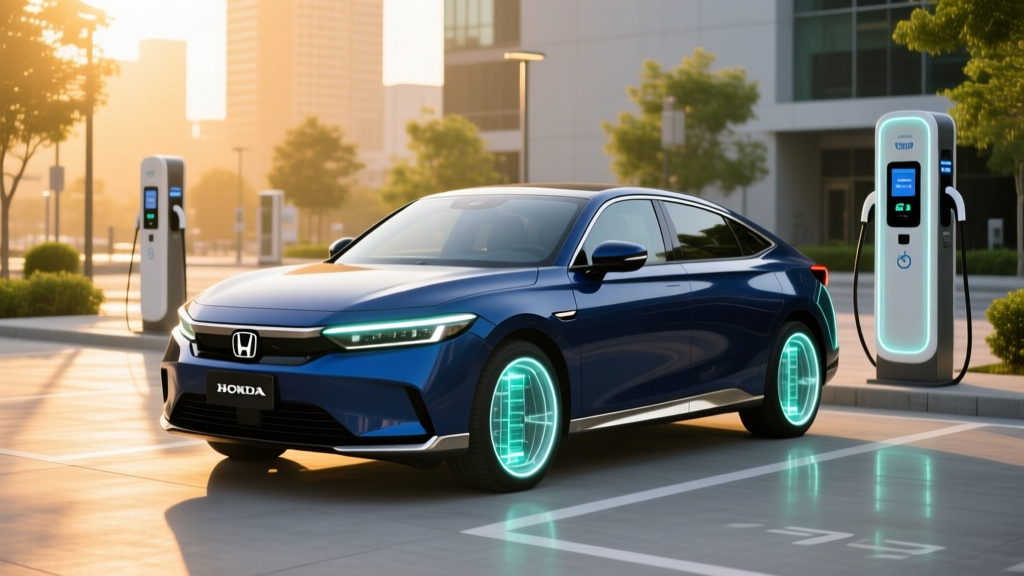
The 2026 Honda Prologue is Honda's mainstream electric SUV, built on GM's Ultium platform. It offers up to 308 miles of EPA-estimated range, 288 horsepower, and DC fast charging up to 150 kW. Pricing starts around $47,400 before incentives. It's a solid choice if you want Honda reliability in an EV package, but buyers should know it's mechanically a rebadged Chevrolet Blazer EV — meaning you're getting GM battery tech with Honda's interior and tuning. For most buyers, the Prologue makes sense if you have Level 2 home charging access and drive under 250 miles daily. If you need more range or faster charging, rivals like the Hyundai Ioniq 5 or Tesla Model Y may serve you better.
2026 Honda Prologue: Range, Battery, and Charging Specs
The 2026 Prologue comes in three trims — EX, Touring, and Elite — with front-wheel drive (FWD) or all-wheel drive (AWD) configurations. Range varies significantly depending on your choice.
| Spec | EX FWD | Touring AWD | Elite AWD |
|---|---|---|---|
| EPA Range | 308 mi | 294 mi | 283 mi |
| Battery (usable) | 85 kWh (NMC) | 85 kWh (NMC) | 85 kWh (NMC) |
| Horsepower | 220 hp | 288 hp | 288 hp |
| 0-60 mph | ~7.5 sec | ~6.0 sec | ~6.0 sec |
| Max DC Fast Charge | 150 kW | 150 kW | 150 kW |
| 10-80% DC Charge | ~32 min | ~32 min | ~32 min |
| Level 2 (240V) Rate | 11.5 kW | 11.5 kW | 11.5 kW |
| MPGe (combined) | 95 MPGe | 90 MPGe | 88 MPGe |
| Base MSRP | $47,400 | $50,400 | $57,900 |
| Battery Warranty | 8 yr / 100,000 mi | 8 yr / 100,000 mi | 8 yr / 100,000 mi |
Real-World Range Reality: The EPA sticker says 308 miles for the FWD EX, but expect 250–275 miles on highway road trips at 70+ mph. In freezing weather (below 32°F), plan for a 20–30% reduction — roughly 215–250 miles from a full charge. The Prologue lacks a heat pump, so cabin heating draws directly from the traction battery, amplifying cold-weather losses compared to EVs equipped with one (like the Ioniq 5 or Model Y).
How Does the Prologue Compare to Gas and Hybrid Alternatives?
Many Honda loyalists cross-shopping the Prologue are also considering the Honda CR-V Hybrid or even the CR-V gas model. Here's how the numbers stack up against Honda's own lineup and key EV competitors.
| Metric | 2026 Prologue Elite AWD | 2026 CR-V Hybrid AWD | 2026 CR-V EX AWD (Gas) |
|---|---|---|---|
| MSRP | $57,900 | $39,845 | $35,850 |
| EPA Range / MPG | 283 mi / 88 MPGe | 40 MPG combined | 29 MPG combined |
| Annual Fuel/Energy Cost* | ~$680 | ~$1,310 | ~$1,810 |
| 0-60 mph | ~6.0 sec | ~7.8 sec | ~8.5 sec |
| Horsepower | 288 hp | 204 hp | 190 hp |
| Maintenance (5-yr est.) | ~$1,800 | ~$3,200 | ~$3,800 |
| Federal Tax Credit | Up to $7,500† | None | None |
*Based on 15,000 miles/year, $0.16/kWh national average electricity, $3.40/gal gas. Your rates will vary.
†Subject to IRS §30D eligibility — see tax credit section below.
The Prologue costs significantly more upfront — roughly $18,000 more than the CR-V Hybrid. But the fuel and maintenance gap closes that delta over time. According to fueleconomy.gov, the Prologue's annual energy cost is roughly half that of the CR-V Hybrid's fuel cost.
Real Costs and Savings: 5-Year Ownership Breakdown
Sticker price is only part of the equation. Here's what five years of Prologue ownership actually looks like compared to the CR-V Hybrid, assuming 15,000 miles per year and home Level 2 charging.
| Cost Category (5 Years) | Prologue EX FWD | CR-V Hybrid AWD |
|---|---|---|
| Purchase Price | $47,400 | $39,845 |
| Federal Tax Credit (§30D) | −$7,500† | $0 |
| Effective Purchase | $39,900 | $39,845 |
| Home Charger Install (L2) | $1,200–$2,500 | $0 |
| Fuel / Electricity (5 yr) | $3,400 | $6,550 |
| Maintenance (5 yr) | $1,800 | $3,200 |
| Insurance (5 yr est.) | $9,500 | $7,200 |
| Estimated Depreciation | $18,500 | $14,200 |
| Total 5-Year Cost | ~$55,500 | ~$56,795 |
The Prologue reaches near cost-parity with the CR-V Hybrid within five years when you factor in the federal tax credit, lower energy costs, and reduced maintenance (no oil changes, fewer brake replacements due to regenerative braking). However, insurance premiums for the Prologue run roughly 20–30% higher — a common pattern for EVs due to higher repair costs and parts pricing.
Key caveat: This breakdown assumes you qualify for the full $7,500 federal credit and charge primarily at home. If you rely exclusively on public DC fast charging at $0.40–$0.60/kWh, your 5-year energy cost jumps to $8,500–$12,750, erasing most of the fuel savings.
Federal Tax Credit: Does the Prologue Qualify?
For 2026, the Honda Prologue is expected to qualify for up to $7,500 under the IRS §30D Clean Vehicle Credit, thanks to its North American assembly and GM-sourced Ultium battery. However, eligibility is not automatic — it depends on your personal tax situation and the vehicle's battery mineral sourcing.
- Income caps: Modified AGI must not exceed $150,000 (single), $225,000 (head of household), or $300,000 (joint filers)
- MSRP cap: SUVs must be under $80,000 — all Prologue trims qualify
- Battery sourcing: The critical minerals and battery component requirements phase in annually. Check IRS.gov for the current-year list of eligible VINs
- Point-of-sale transfer: You can transfer the credit to the dealer at purchase to reduce your out-of-pocket cost immediately, rather than waiting for tax filing
- Tax liability: The credit is non-refundable — you must owe at least $7,500 in federal taxes to claim the full amount (the point-of-sale transfer option bypasses this limitation for 2024+ purchases)
Always confirm eligibility with your tax professional before relying on the credit in your purchase budget. Rules change, and Honda's credit status should be verified against the fueleconomy.gov tax credit database at time of purchase.
What First-Time EV Buyers Need to Know About the Prologue
If this is your first electric vehicle, the Prologue has some strengths and some learning curves worth understanding before you sign.
Charging at Home Is Non-Negotiable for Most Owners
The Prologue's 11.5 kW Level 2 onboard charger means a full charge from empty takes about 7.5 hours on a 240V home circuit. This works well for overnight charging — plug in when you get home, wake up with a full battery. But it requires a dedicated 40-amp or 50-amp circuit. Budget $1,200–$2,500 for a quality Level 2 charger (like a ChargePoint Home Flex or Emporia Level 2) plus electrician installation. If your home has a 200-amp electrical panel with spare capacity, installation is straightforward. Older homes with 100-amp panels may need a $2,000–$4,000 panel upgrade.
If you live in an apartment or lack dedicated parking with electrical access, the Prologue becomes significantly less practical. Public-only charging is possible but expensive and time-consuming.
Charging Speed: Adequate, Not Class-Leading
The Prologue peaks at 150 kW on DC fast chargers. That's respectable, but rivals have moved ahead. The Hyundai Ioniq 5 charges at up to 240 kW (10-80% in ~18 minutes), and the Tesla Model Y sustains high charge rates via its Supercharger network. On a road trip, the Prologue's 32-minute 10-80% session means longer stops. Additionally, like most NMC batteries, the Prologue's charge rate tapers significantly above 80% — the final 20% can take as long as the first 80%.
The GM Platform Reality
The Prologue is built on GM's BEV3/Ultium architecture — the same platform underpinning the Chevrolet Blazer EV and Cadillac Lyriq. This means GM handles the battery, motors, and charging hardware, while Honda designed the exterior, interior, and infotainment. Some buyers love this (proven Ultium tech with Honda's cabin quality). Others prefer a ground-up Honda EV. Honda's next-generation EVs, built on their own dedicated EV platform, are expected later in the decade.
Common Misconceptions About the Honda Prologue
| Myth | Fact |
|---|---|
| "The Prologue is 100% Honda-engineered" | It's built on GM's Ultium platform with GM battery, motors, and charging hardware. Honda designed the body, interior, and software skin. |
| "EV batteries need replacing every few years" | The Prologue's NMC battery carries an 8-year/100,000-mile warranty against degradation below 70% capacity. Industry data shows most EV batteries retain 85-90% capacity after 100,000 miles. |
| "I'll save money no matter how I charge" | Home charging at $0.16/kWh saves significantly. Public DC fast charging at $0.48/kWh average costs nearly as much per mile as a 30 MPG gas car. Savings depend on charging behavior. |
| "308 miles of range means I'll always get 308 miles" | EPA range is measured under ideal conditions. Highway driving at 75 mph yields ~260 miles. Sub-freezing temperatures can cut range by 20–30%. Plan realistically. |
| "The Prologue qualifies for $7,500 automatically" | Federal credit eligibility depends on your income, the vehicle's battery sourcing compliance, and MSRP caps. Verify on IRS.gov before purchasing. |
Decision Framework: Is the Prologue the Right EV for You?
Choose the Honda Prologue if:
- You're a Honda loyalist who wants an EV with familiar brand ergonomics and dealership service
- You have Level 2 home charging and drive under 250 miles on most days
- You qualify for the full $7,500 federal tax credit, bringing effective pricing near $40,000
- You want a mid-size electric SUV with competitive range (283–308 mi EPA)
- You value a quiet, comfortable ride over sporty handling or cutting-edge tech
Look elsewhere if:
- You take frequent 400+ mile road trips — the 150 kW charge speed and 32-minute stops add up compared to the Ioniq 5 (18 min) or Tesla Model Y (Supercharger network)
- You live in a cold climate and need maximum real-world winter range — consider EVs with heat pumps (Ioniq 5, Model Y, EV6)
- You lack home charging access — the Prologue's public-charging economics are poor relative to a hybrid like the CR-V Hybrid
- You want a ground-up Honda EV — wait for Honda's next-gen platform expected later this decade
- Budget is tight — the CR-V Hybrid at ~$39,845 with 40 MPG combined delivers strong efficiency without the EV premium or charging dependency
Frequently Asked Questions
Does the 2026 Honda Prologue use NACS or CCS for charging?
The 2026 Prologue uses the CCS1 connector for DC fast charging and the J1772 connector for Level 2 AC charging. Honda has announced a transition to NACS (Tesla-style) for future models, but the current Prologue retains CCS. Adapters are available for Tesla Supercharger access, though compatibility should be confirmed with Honda before use.
How long will the Prologue's battery last before replacement?
Honda warranties the Ultium battery for 8 years or 100,000 miles against capacity loss below 70%. Based on GM Ultium data from the Lyriq and Blazer EV, most batteries should retain 85–90% capacity at 100,000 miles with normal use. A full battery replacement out of warranty would likely cost $12,000–$18,000, but total battery failure is rare — degradation is gradual.
Can I tow with the Honda Prologue?
Yes, but modestly. The Prologue is rated for up to 1,500 pounds of towing capacity across all trims. That's enough for a small utility trailer or a pair of dirt bikes, but not a camper or boat. Towing also reduces range by roughly 30–50% depending on trailer weight and aerodynamics.
Is the Prologue better than the Chevrolet Blazer EV?
Mechanically, they're nearly identical — same Ultium battery, same motors, same charging hardware. The differences are in interior design, infotainment software, suspension tuning, and brand. The Prologue offers Honda's cabin materials and Google-based infotainment, while the Blazer EV has a sportier aesthetic. Pricing is similar. Choose based on which brand experience and dealership network you prefer.
What happens if I can't charge at home?
Public-only EV ownership is viable but expensive and inconvenient. Expect to pay $0.35–$0.60/kWh at DC fast chargers, adding $120–$200/month in energy costs for 15,000 miles of annual driving. You'll also spend 2–4 hours per week charging. If home charging isn't possible, a PHEV like the Honda CR-V Plug-In Hybrid (if available in your market) or a standard hybrid may be a better fit until your charging situation improves.