Quick Verdict: The Prologue Lease Math Explained
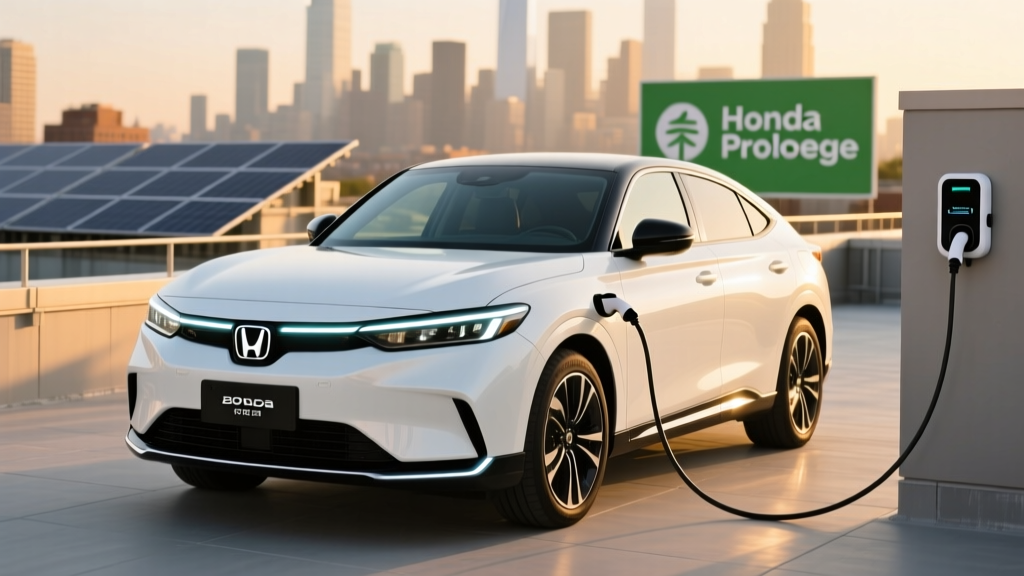
The Honda Prologue entered the market as Honda's first mass-market battery-electric vehicle, built on General Motors' Ultium platform and sharing its bones with the Chevrolet Blazer EV and Cadillac Lyriq. For 2025, Honda aggressively subsidized lease deals — some advertised as low as $299/month with modest money down — making the Prologue one of the most accessible midsize electric SUVs on paper. But now, shopping for Honda Prologue 2025 lease deals in the 2026 market means navigating leftover inventory, shifting federal tax credit rules, and a competitive landscape that has only gotten fiercer.
This review dissects the Prologue's real numbers — range, charging, pricing after credits, and ownership economics — so you can determine whether a 2025 lease residual or a 2026 purchase makes more financial sense.
Honda Prologue 2025 Lease Deals: What's Actually Available
Honda's 2025 lease programs were structured around the EX, Touring, and Elite trims, with the volume-selling EX (FWD) seeing the most aggressive subvention. Typical advertised offers hovered around $299–$399/month for 36 months with $3,000–$4,500 due at signing, depending on the region and dealer. These deals were possible because Honda applied the $7,500 federal EV tax credit as a point-of-sale lease capitalization reduction — a legal maneuver available only on leases (where the lessor, not the buyer, claims the credit and passes savings through).
As of early 2026, remaining 2025 Prologue inventory at dealers may carry carryover lease rates, but availability is spotty. If you find a leftover 2025 model, the lease economics can still beat a 2026 purchase, especially given that 2026 MSRP adjustments have nudged prices upward by roughly $1,000–$1,500 across trims.
| Specification | EX (FWD) | Touring (FWD) | Elite (AWD) |
|---|---|---|---|
| EPA Range | 296 miles | 296 miles | 281 miles |
| Battery (usable) | 85 kWh (NMC) | 85 kWh (NMC) | 85 kWh (NMC) |
| Motor / Drivetrain | Single motor, FWD | Single motor, FWD | Dual motor, AWD |
| Horsepower | 212 hp | 212 hp | 288 hp |
| 0–60 mph | ~8.0 sec | ~8.0 sec | ~6.5 sec |
| DC Fast Charge (peak) | 150 kW | 150 kW | 150 kW |
| 10–80% DC Time | ~35 min | ~35 min | ~35 min |
| Level 2 Home Rate | 11.5 kW (~35 mi/hr) | 11.5 kW (~35 mi/hr) | 11.5 kW (~35 mi/hr) |
| MPGe (combined) | 95 MPGe | 95 MPGe | 89 MPGe |
| Base MSRP | $47,400 | $53,400 | $57,400 |
Real-World Range: What the EPA Sticker Doesn't Tell You
The Prologue EX and Touring (both front-wheel drive) carry an EPA-estimated 296 miles of range. The dual-motor Elite AWD drops to 281 miles. These are competitive numbers for the midsize electric SUV segment, sitting between the Hyundai Ioniq 5 (303 mi) and the Ford Mustang Mach-E Extended Range (312 mi RWD).
Real-World Range Expectations
EPA Sticker: 296 miles (FWD) / 281 miles (AWD)
Real-world highway (70 mph, 72°F): Expect approximately 245–265 miles on a full charge. The Prologue's boxy crossover profile creates more aerodynamic drag than sleeker competitors like the Ioniq 5, and highway-speed efficiency drops noticeably.
Cold weather (below 32°F): Plan for 200–230 miles of usable range. The Prologue uses a resistive heater on lower trims; the Elite includes a heat pump that mitigates some loss, but NMC chemistry still suffers 15–25% range reduction in sustained freezing temperatures.
City/suburban mixed driving: Closer to EPA or slightly above — regenerative braking recovers energy in stop-and-go conditions, and you may see 280–305 miles in temperate city use.
The 85 kWh usable battery uses NMC (nickel manganese cobalt) chemistry, supplied by the Ultium Cells joint venture. NMC offers higher energy density than LFP (lithium iron phosphate), which keeps the pack size manageable, but it does mean you'll want to avoid routinely charging to 100% for daily use — keeping between 20–80% extends long-term battery health.
Charging Speed: DC Fast and Home Level 2
The Prologue's charging hardware is adequate but not class-leading. The peak DC fast-charge rate is 150 kW, which trails the Hyundai Ioniq 5's 240 kW and the Tesla Model Y's ~250 kW. On a 150+ kW station (like an Electrify America or EVgo 350 kW stall), the Prologue will peak near 150 kW and taper significantly above 60% state of charge.
| Charging Level | Power (kW) | Speed | Typical Use Case |
|---|---|---|---|
| Level 1 (120V household) | ~1.4 kW | ~4 miles/hour | Emergency/top-up overnight |
| Level 2 (240V home/public) | 11.5 kW | ~35 miles/hour | Daily home charging; full charge in ~7.5 hours |
| DC Fast Charge | 150 kW (peak) | 10–80% in ~35 min | Road trips; sustained rate drops above 60% SoC |
At home on a Level 2, 48-amp charger (requiring a 60-amp circuit), a full 0–100% charge takes roughly 7.5 hours — perfectly suited for overnight replenishment. The charge curve on DC fast charging is the more important story: the Prologue sustains close to 150 kW only from roughly 10–40% SoC, then tapers to ~100 kW through 60%, and drops below 50 kW past 80%. This means the published 10–80% time of ~35 minutes is accurate, but if you need to charge to 90%+ for a long leg, add another 15–20 minutes.
The Prologue uses a CCS1 connector for DC fast charging (with the J1772 inlet for Level 2 AC). Honda has confirmed that future models will adopt NACS, and a NACS adapter is available for Prologue owners to access Tesla Supercharger stations, though charge speeds may be adapter-limited.
Performance, Ride, and Interior Space
The front-wheel-drive Prologue delivers 212 horsepower and 236 lb-ft of torque from a single front-mounted motor. The 0–60 mph sprint takes approximately 8.0 seconds — perfectly adequate for merging and passing but not thrilling. The Elite AWD model, with its dual-motor setup producing 288 hp and 333 lb-ft, cuts that to roughly 6.5 seconds and adds confident all-weather traction.
Ride quality is a genuine strength. The Ultium platform gives the Prologue a low center of gravity, and Honda tuned the suspension for comfort over sportiness. Road noise is well-controlled, and the cabin feels more premium than the Chevrolet Blazer EV it shares underpinnings with.
Cargo and Passenger Dimensions
- Cargo volume (rear seats up): 25.2 cu ft
- Cargo volume (rear seats folded): 57.7 cu ft
- Front legroom: 41.4 inches
- Rear legroom: 38.5 inches
- Front headroom: 39.6 inches
- Rear headroom: 38.2 inches
These dimensions put the Prologue squarely in the midsize SUV territory, competitive with the Hyundai Ioniq 5 (27.2 / 59.3 cu ft cargo) and slightly behind the Ford Mustang Mach-E (29.7 / 59.7 cu ft). The rear seat is genuinely comfortable for two adults on long trips — a Honda hallmark.
Technology and Driver Assistance
The Prologue features an 11.3-inch touchscreen running Google Built-in (with Google Maps navigation, Google Assistant, and Play Store apps), an 11-inch digital instrument cluster, and wireless Apple CarPlay/Android Auto. The Elite trim adds a head-up display, a 12-speaker Bose audio system, and a panoramic moonroof.
Honda Sensing ADAS is standard across all trims, including adaptive cruise control with low-speed follow, lane-keeping assist, blind-spot monitoring, and automatic emergency braking. This is a SAE Level 2 driver-assistance system — it requires continuous driver supervision and is not a hands-off or "self-driving" feature. Honda does not currently offer a hands-free highway system comparable to GM's Super Cruise or Ford's BlueCruise on the Prologue.
Pricing, Tax Credits, and the Lease vs. Buy Decision
The 2025 Honda Prologue starts at $47,400 for the EX FWD, before destination. The Touring FWD is $53,400, and the Elite AWD tops out at $57,400. Destination charges add approximately $1,350.
| Trim | Base MSRP | Max §30D Credit | Effective Price (if eligible) |
|---|---|---|---|
| EX (FWD) | $47,400 | $7,500 | ~$39,900 |
| Touring (FWD) | $53,400 | $7,500 | ~$45,900 |
| Elite (AWD) | $57,400 | $7,500 | ~$49,900 |
Critical §30D eligibility caveats: The full $7,500 federal clean vehicle credit is not automatic. Eligibility depends on:
- Buyer income caps: Modified AGI must not exceed $300,000 (joint), $225,000 (head of household), or $150,000 (single).
- MSRP cap: The Prologue qualifies as an SUV with an $80,000 MSRP cap — all trims clear this.
- Battery sourcing requirements: The Prologue's Ultium battery is manufactured in the U.S. (Lansing, MI), and Honda has worked to meet critical-mineral sourcing thresholds. As of the 2025 model year, the Prologue qualifies for the full $7,500 — but IRS sourcing rules tighten annually. Verify current-year eligibility on fueleconomy.gov before signing.
- Point-of-sale transfer: You can transfer the credit to the dealer at purchase for an immediate price reduction, or claim it on your tax return.
Why Lease Deals Have Been So Aggressive
Here's the key insight for Honda Prologue 2025 lease deals: under the commercial clean vehicle credit (§45W), leased EVs qualify for the $7,500 credit regardless of buyer income, MSRP cap, or battery-sourcing rules — because the leasing company (the legal owner) claims the credit. Honda passes this through as a cap-cost reduction. This "lease loophole" has made leasing the Prologue significantly cheaper than buying, even for buyers who would qualify for the purchase credit.
A typical 36-month lease at $349/month with $3,500 due at signing works out to roughly $16,064 total lease cost over three years, versus $39,900+ to purchase (after credit). Of course, you own nothing at lease end, and excess mileage or wear charges apply — but for a 10,000–12,000 mile/year commuter, the lease math is compelling.
Warranty Coverage and Battery Longevity
Honda backs the Prologue with the following warranty structure:
- Battery and drive unit: 8 years / 100,000 miles (capacity retention guaranteed above 70%)
- Limited vehicle warranty: 3 years / 36,000 miles
- Powertrain: 5 years / 60,000 miles
- Corrosion: 5 years / unlimited miles
The 8-year battery warranty with a 70% capacity retention floor is industry-standard, matching competitors like Hyundai, Ford, and Tesla. NMC chemistry in the Ultium pack has shown promising early degradation data in GM's fleet, with most vehicles retaining 92–95% capacity after the first year of typical use. Long-term data (5+ years) is still accumulating, as the Prologue is a relatively new nameplate.
How the Prologue Stacks Up Against Key Competitors
The midsize electric SUV segment is crowded. Here's how the Prologue compares on the metrics that matter most to buyers:
| Metric | Honda Prologue EX | Hyundai Ioniq 5 SEL | Ford Mach-E ER RWD | Tesla Model Y LR |
|---|---|---|---|---|
| EPA Range | 296 mi | 303 mi | 312 mi | 320 mi |
| Battery | 85 kWh NMC | 77.4 kWh NMC | 91 kWh NMC | 75 kWh (est.) |
| DC Fast Charge Peak | 150 kW | 240 kW | 150 kW | 250 kW |
| 10–80% DC Time | ~35 min | ~18 min | ~37 min | ~25 min |
| 0–60 mph | ~8.0 sec | ~7.0 sec | ~6.1 sec | ~5.0 sec |
| Base MSRP | $47,400 | $46,650 | $42,995 | $44,990 |
| MPGe (combined) | 95 | 110 | 101 | 122 |
Where the Prologue wins: Ride comfort, interior build quality relative to the Blazer EV, Honda dealer network breadth, and strong lease economics.
Where it trails: Charging speed (the Ioniq 5's 800V architecture is significantly faster), efficiency (95 MPGe is below segment average), and performance (the FWD model feels leisurely compared to competitors). The lack of a front trunk (frunk) is also a missed opportunity for cargo versatility.
Who Should Consider the Prologue — And Who Shouldn't
Choose the Honda Prologue If:
- You want a comfortable, quiet midsize EV SUV and prioritize ride quality over sporty handling.
- You can access a 2025 lease deal with the $7,500 credit baked into cap-cost reduction, keeping monthly payments under $400.
- You primarily commute and take occasional road trips under 250 miles, where the 296-mile range and 35-minute fast-charge stops are manageable.
- You value Honda's dealer network for service and want a familiar brand in your driveway.
Look Elsewhere If:
- You take frequent road trips over 300 miles — the 150 kW charge rate and 35-minute stops add up versus the Ioniq 5's 18-minute capability.
- You want spirited acceleration or one-pedal driving dynamics — the Prologue's regen is mild and the FWD model is unhurried.
- You need maximum cargo space — the Ioniq 5 and Mach-E both offer more cubic feet with seats folded.
- You want hands-free highway driving — GM's Super Cruise (available on the Blazer EV) and Ford's BlueCruise are more advanced than Honda Sensing for long-distance comfort.
Pros and Cons at a Glance
Pros
- Strong lease deals with $7,500 credit pass-through lower the barrier to entry
- Comfortable, well-damped ride quality with a quiet cabin
- 296-mile EPA range (FWD) is competitive for the segment
- Spacious rear seat with 38.5 inches of legroom
- Google Built-in infotainment with native Google Maps navigation
- Honda dealer network provides broad service access
Cons
- 150 kW peak DC charging is slow for the class — 35 min for 10–80%
- 95 MPGe combined efficiency trails rivals (Ioniq 5: 110 MPGe)
- No front trunk (frunk) for additional cargo
- FWD model's 8.0-second 0–60 time feels sluggish for an EV
- Honda Sensing is competent but lacks hands-free highway capability
- Elite AWD trim pushes $57,400+ — diminishing the value proposition
Frequently Asked Questions
What is the real-world range of the Honda Prologue?
The EPA rates the FWD Prologue at 296 miles and the AWD Elite at 281 miles. In real-world highway driving at 70 mph, expect 245–265 miles. In cold weather below freezing, plan for 200–230 miles. City driving with regenerative braking can approach or slightly exceed the EPA estimate in mild weather.
How fast does the Prologue charge at home and on the road?
On a Level 2 home charger (11.5 kW / 48 amps), the Prologue adds about 35 miles of range per hour, with a full charge taking roughly 7.5 hours. On a DC fast charger, it peaks at 150 kW and charges from 10–80% in approximately 35 minutes. This is slower than the Hyundai Ioniq 5 (18 minutes) but comparable to the Ford Mustang Mach-E.
How much does the Honda Prologue cost after tax credits?
If you qualify for the full $7,500 federal §30D credit, the Prologue EX effectively starts at ~$39,900, the Touring at ~$45,900, and the Elite at ~$49,900. However, eligibility depends on buyer income (under $300K joint / $150K single), MSRP caps (all trims qualify), and battery-sourcing compliance. On a lease, the credit is typically applied as a cap-cost reduction regardless of your income, which is why Honda Prologue 2025 lease deals have been so attractive.
Is the Prologue worth buying vs. competitors?
It depends on your priorities. If ride comfort, cabin quietness, and Honda brand loyalty matter most, the Prologue is a solid choice — especially on a subsidized lease. If charging speed, efficiency, or performance are higher priorities, the Hyundai Ioniq 5 and Tesla Model Y are objectively stronger on those metrics. The Ford Mustang Mach-E offers more cargo space and a sportier drive at a lower base price.
Does the Honda Prologue qualify for the federal EV tax credit?
Yes — as of the 2025 model year, the Prologue qualifies for the full $7,500 federal clean vehicle credit under §30D when purchased, subject to buyer income limits and battery-sourcing requirements. When leased, the $7,500 credit is claimed by the lessor under §45W (commercial credit) and is typically passed through as a lease discount, with no income or sourcing restrictions on the lessee. Always verify current eligibility on the IRS website and fueleconomy.gov before committing, as rules can change annually.
What battery does the Prologue use, and how long will it last?
The Prologue uses an 85 kWh (usable) NMC (nickel manganese cobalt) battery pack built by Ultium Cells in Lansing, Michigan. Honda warrants the battery for 8 years or 100,000 miles with a 70% minimum capacity retention guarantee. Early data from the Ultium platform suggests 92–95% capacity retention after the first year of typical use, though long-term degradation curves are still being established.
Does the Prologue have a frunk or towing capability?
No front trunk (frunk) is available — the space under the hood houses HVAC and power electronics. The Prologue is rated to tow up to 1,500 pounds (all trims), which is adequate for a small utility trailer or bike rack but well below the Ford F-150 Lightning or Rivian R1S. Towing will significantly reduce range — expect a 30–40% reduction when towing near maximum capacity.