Quick Verdict: Honda's First EV Borrows Heavily from GM — and That's Mostly Good
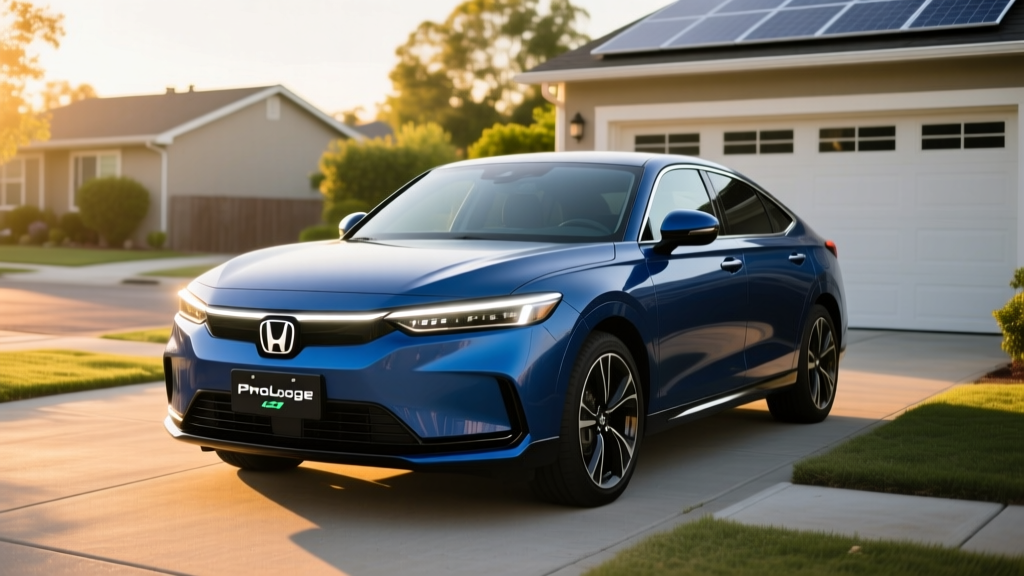
The Honda Prologue 2024 marks the automaker's return to the electric vehicle market after the Clarity EV's quiet departure. Built on General Motors' Ultium platform and assembled alongside the Chevrolet Blazer EV, the Prologue is essentially a reskinned, Honda-tuned version of GM's midsize electric SUV. That lineage gives it a proven 85 kWh battery pack, competitive range, and access to Tesla Superchargers via NACS adapter — but it also means Honda's first modern EV doesn't feel entirely its own.
For buyers who want a spacious two-row electric SUV with Honda's reputation for reliability and a straightforward ownership experience, the Prologue delivers. It's not the fastest-charging or most technologically adventurous EV in its class, but it's practical, comfortable, and — crucially — eligible for the full $7,500 federal tax credit when leased or purchased by qualifying buyers.
Range, Battery, and Real-World Efficiency
| Spec | Honda Prologue 2024 |
|---|---|
| EPA Range (FWD EX/Touring) | 296 miles |
| EPA Range (AWD Elite) | 273–281 miles |
| Battery Capacity (usable) | 85 kWh (NMC chemistry) |
| Battery Platform | GM Ultium (BTX) |
| Efficiency (FWD) | 99 MPGe combined / 34 kWh/100 mi |
| Efficiency (AWD) | 91–95 MPGe combined / 35–37 kWh/100 mi |
| Drivetrain | FWD single-motor or AWD dual-motor |
| Horsepower | 212 hp (FWD) / 288 hp (AWD) |
| Torque | 236 lb-ft (FWD) / 333 lb-ft (AWD) |
| 0–60 mph | ~7.8 sec (FWD) / ~6.2 sec (AWD) |
The Prologue's 85 kWh usable battery uses nickel-manganese-cobalt (NMC) pouch cells manufactured by the GM-LG Ultium Cells joint venture. NMC chemistry offers higher energy density than LFP (lithium iron phosphate), which keeps the pack compact enough for this midsize SUV platform. The trade-off is that NMC cells benefit from staying between 20–80% state of charge for daily use and degrade slightly faster than LFP over very high cycle counts — though GM's thermal management system is well-proven across the Cadillac Lyriq and Chevrolet Blazer EV.
According to fueleconomy.gov, the FWD Prologue achieves 99 MPGe combined, which is respectable for a 4,800-pound SUV but trails the Hyundai Ioniq 5 (114 MPGe) and Tesla Model Y (122 MPGe). Efficiency matters when you're paying for public DC fast charging, where the Prologue will cost slightly more per mile than those lighter, more aerodynamic rivals.
Charging Speed: DC Fast, Level 2, and Supercharger Access
| Charging Level | Power / Rate | Speed / Time |
|---|---|---|
| Level 1 (120V household) | ~1.4 kW | ~4 miles per hour |
| Level 2 (240V home, 48A) | 11.5 kW | ~34 miles per hour / full charge ~9 hrs |
| DC Fast Charge (peak) | 150 kW | 10–80% in ~35 minutes |
| DC Fast Charge (tapered) | ~50 kW above 80% | 80–100% adds ~25+ minutes |
The Prologue's 150 kW peak DC fast-charging rate is the most common criticism among EV enthusiasts — and it's a fair one. Competitors like the Hyundai Ioniq 5 and Kia EV6 peak at 240 kW on 800V architectures and can reach 80% in roughly 18 minutes. The Prologue takes about 35 minutes for the same 10–80% sprint, which you'll notice on road trips with multiple charging stops.
The charging curve also tapers noticeably above 80% state of charge. Honda and GM recommend charging to 80% for daily use to preserve battery longevity, but if you need a full pack before a long drive, expect the final 20% to add significant time. This is typical of NMC chemistry at 400V architecture — not a defect, but a limitation worth planning around.
For home charging, the Prologue supports up to 11.5 kW on a Level 2 hardwired charger (48 amps on a 60-amp circuit). Honda includes a dual-level charge cord with the vehicle that handles both 120V and 240V outlets (NEMA 14-50), delivering up to 7.7 kW on a standard 240V plug — enough for roughly 23 miles of range per hour. Most owners will want a dedicated Level 2 wallbox installed; expect $500–$1,500 for installation depending on your electrical panel capacity and run distance from the breaker box.
NACS / Tesla Supercharger access: The Prologue ships with a CCS1 port. Honda provides a NACS adapter (included or available depending on purchase date) that unlocks access to Tesla's Supercharger network — currently the most reliable public DC fast-charging infrastructure in the U.S. This is a significant practical advantage over CCS-only competitors that still rely on Electrify America or EVgo networks with more variable uptime.
Interior, Cargo, and Everyday Practicality
The Prologue's cabin is where Honda's influence is most visible. The 11.3-inch touchscreen runs a Honda-customized interface layered on top of Google Built-In (Android Automotive OS), giving you native Google Maps navigation, Google Assistant voice commands, and access to the Play Store for apps like Spotify and Waze. Wireless Apple CarPlay and Android Auto are standard on all trims.
Build quality is solid, with soft-touch materials on the dashboard and upper door panels, though the lower cabin uses harder plastics that feel more Chevrolet than Honda at this price point. The 11-inch digital instrument cluster is clear and configurable, and the physical volume knob is a welcome usability choice.
Cargo and passenger dimensions:
- Cargo volume (rear seats up): 25.2 cu ft
- Cargo volume (rear seats folded): 57.7 cu ft
- Front legroom: 41.4 inches
- Rear legroom: 38.6 inches
- Front headroom: 40.0 inches
- Rear headroom: 39.6 inches
- Frunk: None (no front trunk storage)
The absence of a frunk is a missed opportunity — the Ultium platform doesn't allocate front space for cargo, and that 25.2 cu ft behind the rear seats is adequate but not class-leading. The Hyundai Ioniq 5 offers 27.2 cu ft behind the second row, and the Tesla Model Y delivers 30.2 cu ft (plus a frunk). For a family of four with strollers, groceries, and luggage, the Prologue works fine, but it doesn't maximize the space advantage that EVs typically offer.
The Prologue includes Honda's Honda Sensing suite of driver-assistance features: adaptive cruise control with stop-and-go, lane-keeping assist, lane-departure warning, forward collision warning with automatic emergency braking, and traffic-sign recognition. These are SAE Level 2 driver-assistance systems — the driver must remain fully engaged, with hands on the wheel and eyes on the road. This is not autonomous driving, and it does not offer hands-free operation like GM's Super Cruise or Ford's BlueCruise.
Pricing, Trims, and Federal Tax Credit Eligibility
| Trim | Drivetrain | MSRP | After $7,500 Credit* |
|---|---|---|---|
| EX | FWD | $48,795 | ~$41,295 |
| EX | AWD | $51,795 | ~$44,295 |
| Touring | FWD | $51,295 | ~$43,795 |
| Touring | AWD | $54,295 | ~$46,795 |
| Elite | AWD (standard) | $59,295 | ~$51,795 |
*Prices include destination charge. Tax credit figures assume full §30D eligibility. Actual credit depends on individual tax liability, income caps, and battery-sourcing compliance. Always verify with a tax professional and the IRS clean vehicle credit page.
The Prologue's pricing places it in direct competition with the Hyundai Ioniq 5 ($42,500–$58,200), Ford Mustang Mach-E ($42,995–$59,995), and Chevrolet Blazer EV ($44,995–$56,595 — its platform sibling). Honda's MSRP is at the higher end of that spread, but the tax credit significantly narrows the gap.
Federal tax credit (§30D) eligibility checklist for the 2024 Prologue:
- MSRP cap: SUVs must be under $80,000 — all Prologue trims qualify ✓
- Buyer income cap: Modified AGI ≤ $150,000 (single), ≤ $225,000 (head of household), ≤ $300,000 (joint) ✓
- Final assembly: Must occur in North America — assembled in Ramos Arizpe, Mexico ✓
- Battery component sourcing: Must meet escalating critical-mineral and battery-component requirements per the Inflation Reduction Act. The Prologue's Ultium Cells battery (U.S.-manufactured cells) has generally qualified, but sourcing rules tighten annually. Verify current-year compliance at fueleconomy.gov.
- Point-of-sale transfer: As of 2024, buyers can transfer the credit to the dealer at purchase, reducing the out-of-pocket price immediately rather than waiting to claim it on their tax return.
- Lease loophole: If purchased via lease, the credit passes to the lessor (Honda Financial), which typically applies it as a capitalized-cost reduction — effectively passing savings to the lessee regardless of personal income caps or battery-sourcing rules.
The lease pathway is particularly attractive for the Prologue. Honda has aggressively incentivized leases with competitive money factors and residual values, and the $7,500 credit applied as a cap-cost reduction can bring monthly payments well below what a purchase would require. Many Prologue buyers in 2024–2025 found leasing to be the most economical route.
Warranty and Long-Term Ownership
| Coverage | Term |
|---|---|
| Basic (bumper-to-bumper) | 3 years / 36,000 miles |
| Powertrain | 5 years / 60,000 miles |
| Battery pack | 8 years / 100,000 miles (capacity retention ≥70%) |
| Corrosion perforation | 5 years / unlimited miles |
| Roadside assistance | 3 years / 36,000 miles |
The 8-year/100,000-mile battery warranty with a 70% capacity-retention threshold is standard for the industry and matches what GM offers on the Blazer EV and Cadillac Lyriq. Based on data from GM's Ultium platform vehicles now accumulating real-world mileage, degradation has been modest — most owners report 95%+ state of health after the first year. The thermal management system actively conditions the battery during charging and extreme temperatures, which is the single most important factor in long-term longevity.
Honda dealers service the Prologue, which is a significant advantage for owners in areas without dedicated EV service centers. However, because the powertrain is GM-sourced, some complex battery or high-voltage diagnostics may require GM-specific tooling or escalation — a potential friction point that early adopters should be aware of.
Pros and Cons: The Honest Summary
Pros
- Competitive EPA range (296 mi FWD) for the class
- $7,500 federal tax credit eligibility (purchase or lease)
- Tesla Supercharger access via NACS adapter
- Spacious cabin with comfortable seating for five adults
- Google Built-In infotainment with native Google Maps
- Smooth, quiet ride quality with well-tuned suspension
- Honda dealer network for service and support
- Honda Sensing safety suite standard on all trims
Cons
- 150 kW peak DC charging is slower than 800V rivals (Ioniq 5, EV6)
- No frunk (front trunk) — missed storage opportunity
- Cargo volume trails key competitors (25.2 cu ft)
- AWD Elite trim commands a steep $59,295 MSRP
- Interior materials don't fully justify the premium price
- No hands-free driving feature (Level 2 only, no Super Cruise equivalent)
- Efficiency (99 MPGe) trails lighter, more aero competitors
Who Should Buy the Honda Prologue 2024?
Choose the Prologue if:
- You're a current Honda owner who trusts the brand and wants to transition to an EV without learning a new ecosystem
- You need a comfortable, spacious two-row SUV for daily commuting and family duties
- You value Supercharger access and want a reliable public-charging experience on road trips
- You plan to lease and want to maximize the $7,500 tax credit regardless of income or sourcing rules
- You prioritize ride comfort and quiet refinement over sporty handling or maximum tech features
Look elsewhere if:
- You take frequent long road trips and want the fastest possible DC charging (choose Hyundai Ioniq 5 or Kia EV6)
- You need maximum cargo space or a frunk for gear (choose Tesla Model Y or Ford Mustang Mach-E)
- You want hands-free highway driving assistance (choose a GM vehicle with Super Cruise or a Ford with BlueCruise)
- Budget is tight and you want the most range per dollar (the Ioniq 5 SE Standard Range starts lower with similar efficiency)
The Prologue is a competent, comfortable electric SUV that serves Honda loyalists well. It's not the EV that will win drag races or charging-speed benchmarks, but it's the one that will quietly handle school runs, grocery trips, and weekend getaways without drama. For Honda's first serious attempt at a mainstream EV since the Clarity, that's a respectable foundation — and the 2025+ model years with Honda's own dedicated EV platform will likely address the remaining gaps.
Frequently Asked Questions
What is the real-world range of the Honda Prologue 2024?
The EPA rates the FWD Prologue at 296 miles and AWD Elite at 273 miles. In real-world highway driving at 70+ mph, expect approximately 245–265 miles (FWD) or 225–245 miles (AWD). In cold weather below 30°F, range can drop 20–30%, so plan for roughly 190–220 miles on a full charge in winter highway conditions.
How fast does the Honda Prologue charge?
On a DC fast charger, the Prologue peaks at 150 kW and charges from 10–80% in approximately 35 minutes. At home on a Level 2 charger (240V, 48A), it charges at up to 11.5 kW, adding about 34 miles of range per hour — a full charge takes roughly 9 hours. On a standard 120V outlet (Level 1), expect about 4 miles per hour.
How much does the Honda Prologue cost after tax credits?
The Prologue EX FWD starts at $48,795 MSRP. With the full $7,500 federal tax credit applied (via point-of-sale transfer or lease cap-cost reduction), the effective price drops to approximately $41,295. Higher trims scale accordingly, with the Elite AWD at roughly $51,795 after credit. Eligibility depends on income caps, tax liability, and current-year battery-sourcing rules.
Does the Honda Prologue qualify for the $7,500 federal EV tax credit?
Yes, the Prologue has generally qualified for the full $7,500 credit under IRS §30D rules. It meets the MSRP cap (under $80,000 for SUVs), North American assembly requirement, and battery-sourcing thresholds. However, buyer income limits apply ($150K single / $300K joint), and sourcing rules tighten annually. Leasing bypasses personal income and sourcing restrictions. Always verify current eligibility at irs.gov or with a tax professional.
Is the Honda Prologue worth buying over competitors like the Ioniq 5 or Model Y?
It depends on your priorities. The Prologue wins on ride comfort, Honda dealer support, and Supercharger adapter access. The Hyundai Ioniq 5 wins on charging speed (240 kW peak), efficiency (114 MPGe), and interior space. The Tesla Model Y wins on cargo volume, efficiency (122 MPGe), and native Supercharger access without an adapter. For Honda loyalists who want a comfortable, no-surprises EV, the Prologue is worth serious consideration. For spec-sheet shoppers optimizing every metric, the Ioniq 5 and Model Y edge it out.
What battery does the Honda Prologue use, and how long will it last?
The Prologue uses an 85 kWh (usable) NMC (nickel-manganese-cobalt) battery pack built on GM's Ultium platform. It's backed by an 8-year/100,000-mile warranty guaranteeing at least 70% capacity retention. Based on early Ultium platform data, degradation has been minimal in the first 1–2 years of ownership. With proper care (avoiding frequent 100% charges, using preconditioning for DC fast charging), the pack should retain 85–90% capacity over a typical 8-year ownership period.
Can the Honda Prologue tow?
The Prologue is not rated for towing. Honda does not provide a towing capacity rating, and the vehicle lacks a factory hitch receiver. If towing is a requirement, look at the Ford Mustang Mach-E (up to 1,500 lbs with GT), Hyundai Ioniq 5 (up to 1,650 lbs), or the larger Kia EV9 and Rivian R1S for serious towing duty.