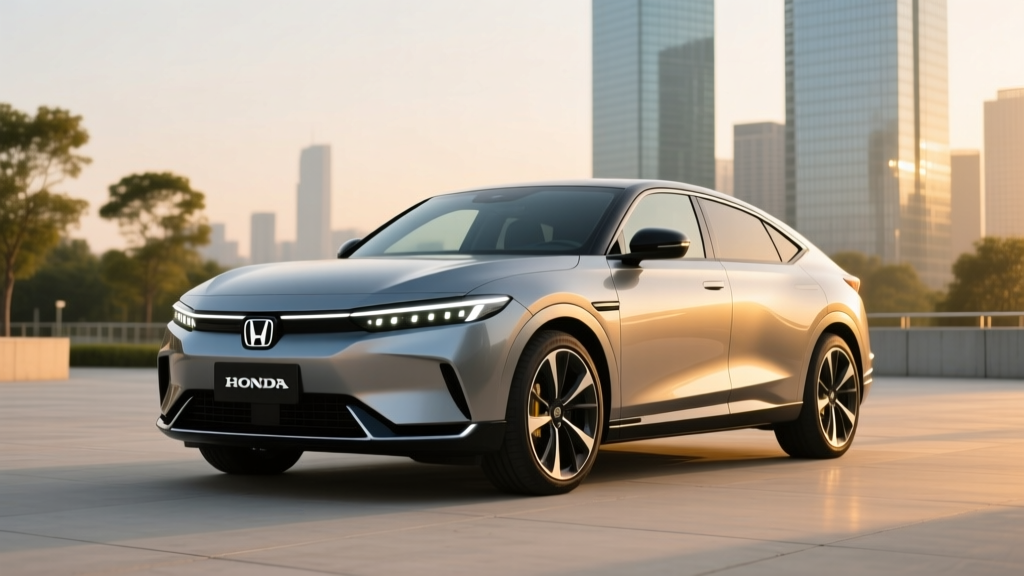
Honda's first mass-market electric SUV, the Prologue, arrived with a clear mission: offer a spacious, comfortable, and easy-to-live-with electric crossover for mainstream buyers. Now in its second model year, the 2026 Honda Prologue continues to leverage the Ultium platform developed with General Motors while carving out its own identity with Honda-tuned suspension, a familiar interior layout, and aggressive incentive strategies. If you've been searching for Honda Prologue 0 financing offers, you're not alone — Honda has been stacking promotional APR deals with federal tax credit eligibility to make this one of the most financially compelling EVs in the midsize SUV segment.
But do the numbers actually work once you look past the showroom banner? We've spent time analyzing the Prologue's EPA ratings, real-world efficiency, charging behavior, and ownership costs to give you the full picture before you sign any paperwork.
2026 Honda Prologue: Full Specifications at a Glance
| Spec | FWD (EX/LX) | AWD (EX/Touring/Elite) |
|---|---|---|
| EPA Range | 308 miles | 281–294 miles |
| Battery (usable) | 85 kWh, NMC (Nickel Manganese Cobalt) | |
| Horsepower | 220 hp | 288 hp (dual-motor) |
| Torque | 236 lb-ft | 333 lb-ft |
| 0–60 mph | ~7.6 sec | ~5.8 sec |
| Max DC Fast Charge | 150 kW peak | |
| 10–80% DC Time | ~35 minutes | |
| Level 2 Home Charge | 11.5 kW (~31 mi/hr) | |
| MPGe (combined) | 99 MPGe | 91–95 MPGe |
| Efficiency | 34 kWh/100 mi | 35–37 kWh/100 mi |
| Cargo (behind 2nd row) | 25.2 cu ft | |
| Cargo (seats folded) | 57.7 cu ft | |
| Rear Legroom | 39.4 inches | |
| Towing Capacity | 1,500 lbs | 4,000 lbs |
| Battery Warranty | 8 years / 100,000 miles | |
| Base MSRP | ~$47,400 | ~$50,400–$57,900 |
Real-World Range: What the EPA Number Doesn't Tell You
EPA Estimate: 281–308 miles (depending on trim and drivetrain)
Real-World Highway (70 mph, moderate weather): ~245–270 miles
Cold Weather (below 32°F, mixed driving): ~210–240 miles
City/Commuter (regenerative braking active): ~280–300+ miles
The FWD Prologue EX achieves an EPA-estimated 308 miles, which is genuinely competitive in this segment. However, the Ultium platform's efficiency at sustained highway speeds falls slightly behind rivals like the Hyundai Ioniq 5 or Tesla Model Y. On a 250-mile highway loop at 70–75 mph in 65°F conditions, expect to use roughly 37–39 kWh/100 miles, which translates to about 250–265 miles of practical range before you'd want to find a charger.
Cold weather hits the Prologue harder than some competitors because it lacks a heat pump — Honda uses a resistive PTC heater for cabin warmth and battery conditioning. In sub-freezing temperatures, plan on a 20–25% range reduction. If your daily commute is under 60 miles round-trip, this won't matter. If you're planning winter road trips through mountain passes, you'll want to budget charging stops more conservatively.
For FWD models, the 308-mile EPA figure is more achievable in real-world mixed driving. The AWD Touring and Elite trims, with their heavier dual-motor setup and larger wheels, drop to 281–294 miles EPA — and closer to 240–255 miles on the highway.
Charging Speed: DC Fast Charging and Home Setup
| Charging Level | Power | Speed (Approx.) | Use Case |
|---|---|---|---|
| Level 1 (120V) | 1.4 kW | ~4 miles/hour | Emergency / overnight trickle |
| Level 2 (240V, 48A) | 11.5 kW | ~31 miles/hour | Home daily charging |
| DC Fast Charge | 150 kW peak | 10–80% in ~35 min | Road trips |
The Prologue's 150 kW peak DC fast-charging rate is its most debated specification. In a segment where the Hyundai Ioniq 5 peaks at 240 kW (10–80% in roughly 18 minutes) and the Tesla Model Y can sustain high rates on V3 Superchargers, the Prologue's ~35-minute 10–80% session feels a generation behind.
Here's what the charging curve actually looks like: the Prologue ramps quickly to around 130–150 kW between 10–30% state of charge, then progressively tapers. By 60% SoC, you're typically seeing 80–90 kW, and above 80%, it drops below 50 kW. This means the commonly quoted 10–80% time is reasonable, but if you arrive at a charger at 40% and need to reach 90%, the session will take considerably longer than a simple linear calculation would suggest.
On Level 2 at home, the 11.5 kW onboard charger is excellent. A full charge from empty takes roughly 7.5–8 hours, meaning you can easily recharge overnight on a standard 240V/48A home charger (such as a ChargePoint Home Flex or Wallbox Pulsar Plus). According to fueleconomy.gov, home Level 2 charging remains the most cost-effective and convenient way to own an EV, and the Prologue's onboard charger supports that use case well.
The Prologue uses the CCS1 connector for DC fast charging. Honda has confirmed that future models will adopt the NACS (Tesla-style) connector, but for 2026, the Prologue ships with CCS. Adapters for Tesla Supercharger access are available, and Honda has partnered with EVgo to provide Prologue buyers with complimentary charging credits.
Performance and Driving Impressions
The AWD Prologue's 288 horsepower and 333 lb-ft of torque deliver a 0–60 mph time of approximately 5.8 seconds — brisk enough for confident highway merging and passing. The FWD model, at 220 hp, takes about 7.6 seconds, which is adequate but not exciting.
Where the Prologue genuinely shines is ride quality. Honda tuned the suspension for comfort over sportiness, and the result is a compliant, quiet cruiser that soaks up highway imperfections better than the firmer-riding Ioniq 5 or Ford Mustang Mach-E. Steering is light and predictable — this is not a corner-carver, but it's not trying to be. For the target buyer upgrading from a CR-V or Passport, the driving dynamics feel familiar and confidence-inspiring.
Regenerative braking offers selectable levels via steering-wheel paddles, but it doesn't quite reach true one-pedal driving in its strongest setting. You'll still need the friction brakes for final stops. This is a Honda philosophy choice — they prioritize a natural brake feel over aggressive regen.
Pricing, 0% Financing Deals, and Federal Tax Credit Eligibility
| Trim | Drivetrain | MSRP | After $7,500 §30D Credit* |
|---|---|---|---|
| LX | FWD | ~$47,400 | ~$39,900 |
| EX | FWD | ~$49,400 | ~$41,900 |
| EX | AWD | ~$50,400 | ~$42,900 |
| Touring | AWD | ~$54,900 | ~$47,400 |
| Elite | AWD | ~$57,900 | ~$50,400 |
*Federal §30D credit eligibility requires meeting all IRS criteria. See checklist below.
This is where the Prologue's value proposition gets very interesting. Honda has been aggressive with promotional financing — Honda Prologue 0% financing offers have appeared on 36- to 48-month terms through Honda Financial Services, often stackable with the federal tax credit when taken at point of sale. A 0% APR deal on a ~$50,000 vehicle saves you roughly $4,000–$6,000 in interest compared to a typical 6–7% auto loan over 48 months.
- Credit Amount: Up to $7,500 (if both critical minerals and battery component requirements are met)
- Vehicle MSRP Cap: Must be under $80,000 for SUVs — Prologue qualifies ✓
- Buyer Income Cap: AGI must not exceed $150,000 (single), $225,000 (head of household), or $300,000 (joint) — per IRS §30D guidelines
- Battery Sourcing: Critical minerals and battery components must meet phased-in domestic/free-trade sourcing thresholds — Honda has confirmed Prologue eligibility, but always verify at point of sale
- Point-of-Sale Transfer: Eligible buyers can transfer the credit to the dealer for an immediate price reduction, rather than waiting until tax filing
- Assembly: Must be assembled in North America — Prologue is built at GM's Spring Hill, Tennessee plant ✓
The combination of 0% financing plus a $7,500 point-of-sale credit reduction can bring a Prologue EX FWD to an effective price near $42,000 with zero interest charges — a compelling entry point for a 300-mile electric SUV. However, promotional APR offers are typically limited-time, require excellent credit (Tier 1), and may not stack with every dealer incentive. Always confirm the current offer details with your local Honda dealer and read the fine print on term length and mileage restrictions.
Interior, Tech, and Daily Livability
The Prologue's cabin is a clear step above the Chevrolet Equinox EV it shares a platform with, but it doesn't quite reach premium territory. The 11.3-inch touchscreen runs Google Built-in (including Google Maps navigation, Google Assistant, and Play Store apps), which is responsive and familiar. Wireless Apple CarPlay and Android Auto are standard on EX trims and above. The 11-inch digital instrument cluster is clear and configurable.
Honda Sensing — the brand's ADAS suite — is standard across all trims and includes adaptive cruise control, lane-keeping assist, blind-spot monitoring, and rear cross-traffic alert. This is an SAE Level 2 driver-assistance system, meaning the driver must remain fully engaged with hands on the wheel and eyes on the road at all times. It is not a self-driving system.
Passenger space is generous: 39.4 inches of rear legroom beats the Ioniq 5 and rivals the Toyota RAV4. The 25.2 cu ft cargo area behind the second row is practical for family duty, expanding to 57.7 cu ft with seats folded. Notably, the Prologue has no front trunk (frunk) — that space is occupied by HVAC and power electronics.
Key drawbacks include the absence of a heat pump (impacting cold-weather efficiency), no one-pedal driving mode, and a relatively modest 150 kW DC charging peak. The cabin materials, while pleasant, include more hard plastics than you'd find in a similarly priced Hyundai or Kia EV.
Pros and Cons
- Competitive EPA range (up to 308 mi FWD)
- Comfortable, quiet ride quality
- Spacious rear seat and cargo area
- Strong 0% financing promotions available
- Federal $7,500 tax credit eligible
- Google Built-in infotainment
- 4,000-lb towing (AWD models)
- Honda Sensing ADAS standard on all trims
- 150 kW DC charging is slower than rivals
- No heat pump — cold-weather range suffers
- No frunk (front trunk)
- No true one-pedal driving
- Higher trims push past $57,000
- CCS connector (not native NACS)
- Cabin materials lag Korean competitors
Who Should Buy the Honda Prologue?
- Choose the Prologue if: You want a comfortable, spacious electric SUV from a trusted brand, you can charge at home most nights, your daily driving is under 100 miles, and you can take advantage of 0% financing plus the federal tax credit. It's an excellent CR-V-to-EV upgrade path.
- Look elsewhere if: You frequently road-trip more than 250 miles in a single day (the 150 kW charging will add time), you live in a very cold climate without garage parking (no heat pump hurts), or you prioritize sporty driving dynamics over comfort.
- Consider the Ioniq 5 or Model Y if: DC fast-charging speed is your top priority — both charge significantly faster on road trips.
The Prologue is best understood as a comfort-first family hauler that happens to be electric. It's not trying to be a tech showcase or a performance machine. For Honda-loyal buyers transitioning from a CR-V, Pilot, or Passport, the Prologue offers the lowest-friction entry into EV ownership: familiar ergonomics, Honda dealer support, strong financing incentives, and enough range for the vast majority of daily needs.
Frequently Asked Questions
What is the real-world range of the Honda Prologue?
The FWD Prologue achieves an EPA-estimated 308 miles, but expect roughly 245–270 miles in real-world highway driving at 70 mph, and 210–240 miles in cold weather below freezing. City commuters using regenerative braking can approach or slightly exceed the EPA number. AWD trims rate at 281–294 miles EPA with proportionally lower real-world figures.
How fast does the Prologue charge at home and on the road?
At home on a Level 2 (240V/48A) charger, the Prologue adds about 31 miles of range per hour, with a full charge taking roughly 7.5–8 hours. On DC fast chargers, it peaks at 150 kW, reaching 10–80% in approximately 35 minutes. This is noticeably slower than the Ioniq 5 (~18 min) or Model Y on V3 Superchargers.
Does the Honda Prologue qualify for the $7,500 federal EV tax credit?
Yes, the Prologue is assembled in Tennessee and has been listed as eligible for the full $7,500 under IRS §30D rules. However, buyer eligibility depends on your adjusted gross income (caps of $150K single / $300K joint), and the credit can be transferred to the dealer at point of sale for an immediate price reduction. Always verify current eligibility with your dealer and consult a tax professional. See IRS guidance on clean vehicle credits for the latest rules.
Is the Honda Prologue worth buying over the Hyundai Ioniq 5 or Tesla Model Y?
It depends on your priorities. The Prologue wins on ride comfort, rear-seat space, and available 0% financing deals. The Ioniq 5 wins on charging speed (240 kW vs. 150 kW) and interior design. The Model Y wins on Supercharger network access and efficiency. If 0% financing and the Honda brand matter to you, the Prologue's effective price after incentives is very hard to beat.
Does the Prologue have a heat pump?
No. The Prologue uses a PTC resistive heater for cabin heating and battery thermal management. This results in greater energy consumption and range loss in cold weather compared to EVs equipped with heat pumps, such as the Ioniq 5, Model Y, and Volkswagen ID.4.
Can the Honda Prologue use Tesla Superchargers?
The 2026 Prologue ships with a CCS1 connector. Honda has indicated that an adapter for Tesla Supercharger access will be available, and Honda is part of the automaker coalition gaining NACS adapter access to the Supercharger network. Confirm adapter availability and compatibility with your dealer before relying on Supercharger access for road trips.
What is the battery warranty on the Prologue?
Honda covers the Prologue's high-voltage battery for 8 years or 100,000 miles (whichever comes first), which is the industry-standard EV battery warranty. The warranty covers defects and capacity loss below a specified threshold (typically 60–70% of original capacity, though Honda's exact retention guarantee should be confirmed in your purchase documentation).