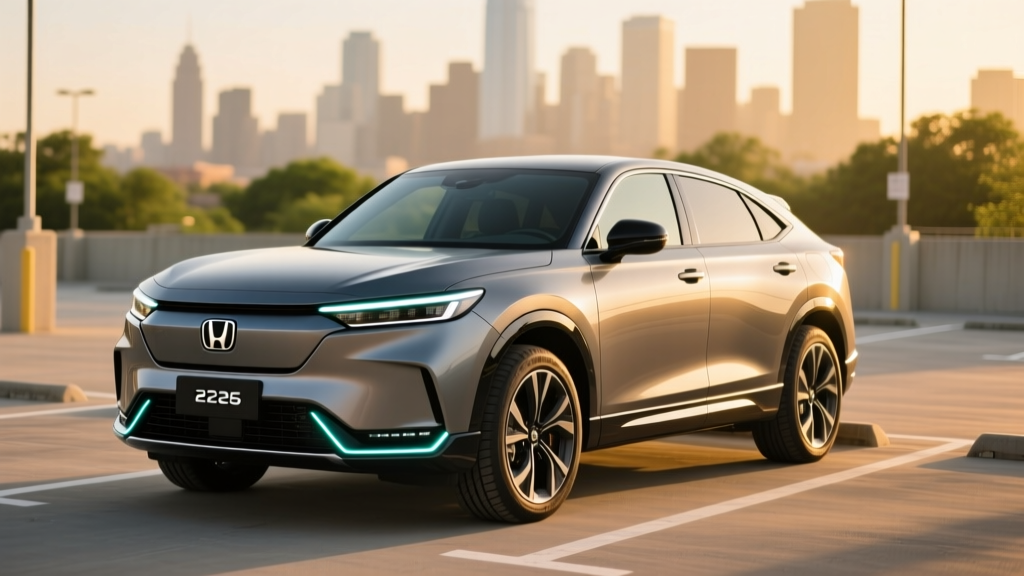
Quick Verdict: What the Honda Prologue 0% APR Offer Actually Means
Honda has been aggressively incentivizing the Prologue to move metal, and the headline Honda Prologue 0% APR financing deals catching shoppers' attention in 2026 are real — but they come with conditions. Typically offered for 36- to 48-month terms on well-qualified buyers (credit scores generally above 720), these promotional rates can save thousands in interest compared to prevailing auto loan rates hovering around 6-7%. Combined with potential federal tax credits, the Prologue's effective price can dip into territory that makes this midsize electric SUV genuinely compelling.
But financing is only part of the equation. The Prologue — built on General Motors' Ultium platform and assembled alongside the Chevrolet Blazer EV — is a capable, comfortable family hauler with competitive range and improving charging speeds. It's not the most exciting EV to drive, and its infotainment carries some GM quirks, but for buyers prioritizing space, comfort, and a strong dealer network, the numbers add up.
Range, Battery, and Real-World Efficiency
The 2026 Honda Prologue uses an 85 kWh usable lithium-ion battery with NMC (nickel manganese cobalt) chemistry, shared with its GM-platform siblings. Honda does not offer an LFP (lithium iron phosphate) variant. Here's what the EPA says versus what you'll actually experience:
| Trim / Drivetrain | EPA Range | Real-World Highway | Cold Weather (20-30°F) |
|---|---|---|---|
| EX FWD | 308 miles | ~255-275 miles | ~215-240 miles |
| EXL FWD | 308 miles | ~255-275 miles | ~215-240 miles |
| EXL AWD | 294 miles | ~245-265 miles | ~205-230 miles |
| Touring AWD | 283 miles | ~235-255 miles | ~195-220 miles |
Source: EPA fueleconomy.gov
The FWD models achieve an EPA-rated 107 MPGe combined (roughly 31 kWh/100 mi), while AWD variants drop to about 99 MPGe combined (~34 kWh/100 mi). These are mid-pack numbers for the segment — the Hyundai Ioniq 5 and Tesla Model Y are measurably more efficient, but the Prologue's larger battery compensates with raw capacity.
Charging Speed: DC Fast and Home Level 2
Charging is where the Prologue has seen meaningful improvement for the 2026 model year. Honda upgraded the DC fast-charging capability, though the charge curve still tapers noticeably past 80% State of Charge (SoC).
| Charging Level | Power / Rate | Speed / Time | Connector |
|---|---|---|---|
| Level 1 (120V household) | ~1.4 kW | ~4 miles per hour | J1772 / NACS (with adapter) |
| Level 2 (240V home) | 11.5 kW (48A) | ~33 miles per hour | J1772 / NACS |
| DC Fast Charge | Peak 190 kW | 10-80% in ~32 minutes | NACS (native on 2026 models) |
Charging-curve reality check: The Prologue peaks near 190 kW only between roughly 10-40% SoC. From 40-80%, the rate drops to 90-120 kW, which is why the full 10-80% session takes about 32 minutes rather than the ~22 minutes a sustained peak would suggest. For road trips, plan for 30-35 minute stops at 150+ kW chargers like Tesla Superchargers (now accessible via Honda's native NACS port on 2026 models) or Electrify America stations.
At home, a Level 2 wallbox at 11.5 kW will fully replenish the 85 kWh battery in roughly 8.5 hours — easily an overnight charge. Most Prologue owners report spending $1,200-$2,500 on a professional Level 2 home installation (equipment + electrician + permit), depending on panel capacity and run length.
Performance and Driving Dynamics
The Prologue isn't positioned as a performance EV, but it delivers adequate acceleration for daily driving and highway merging.
| Specification | FWD Models | AWD Models |
|---|---|---|
| Horsepower | 212 hp | 288 hp (dual-motor) |
| Torque | 236 lb-ft | 333 lb-ft |
| 0-60 mph | ~7.6 seconds | ~5.9 seconds |
| Drivetrain | Single motor, FWD | Dual motor, AWD |
| Towing Capacity | 1,500 lbs | 1,500 lbs |
The AWD Touring model's 5.9-second 0-60 time is respectable but trails competitors like the Tesla Model Y Long Range (~4.8 seconds) and the Hyundai Ioniq 5 AWD (~5.1 seconds). Where the Prologue shines is ride quality: the suspension tuning is noticeably softer and more compliant than most EV rivals, absorbing road imperfections in a way that feels distinctly Honda — comfortable and composed rather than sporty.
Regenerative braking offers multiple levels selectable via steering-wheel paddles, but the Prologue does not offer true one-pedal driving with a full stop hold. You'll still need the friction brake pedal for complete stops, which some EV converts find disappointing.
Pricing, Trims, and the 0% APR Deal Breakdown
Here's what the 2026 Honda Prologue lineup costs before incentives:
| Trim | MSRP | Federal §30D Credit Eligibility | Effective Price (with credit) |
|---|---|---|---|
| EX FWD | $48,795 | Up to $7,500 (see rules below) | ~$41,295 |
| EXL FWD | $51,795 | Up to $7,500 | ~$44,295 |
| EXL AWD | $53,795 | Up to $7,500 | ~$46,295 |
| Touring AWD | $59,295 | Up to $7,500 | ~$51,795 |
About that Honda Prologue 0% APR deal: Honda has periodically offered 0% APR for 36-48 months on the Prologue through Honda Financial Services. On a $48,795 EX FWD with 20% down ($9,759), a 48-month 0% loan finances $39,036 at $813/month. Compare that to a 6.5% APR at the same terms: $921/month — a difference of $108/month or roughly $5,184 in total interest savings over the loan term. That's meaningful money back in your pocket.
To claim the up-to-$7,500 credit on a Prologue, you must meet ALL of the following per IRS guidelines:
- Income caps: Modified AGI ≤ $150,000 (single), $225,000 (head of household), $300,000 (joint)
- MSRP cap: Vehicle MSRP must not exceed $80,000 for SUVs (all Prologue trims qualify)
- Battery sourcing: Critical minerals and battery components must meet phased-in domestic/FCA-sourcing thresholds — the Prologue's GM Ultium battery currently meets partial requirements, potentially yielding $3,750-$7,500 depending on the specific battery pack's sourcing compliance for the delivery date
- Point-of-sale transfer: You can elect to transfer the credit to the dealer at purchase, reducing your out-of-pocket cost immediately rather than waiting for a tax refund
- Final assembly: Must occur in North America (Prologue is assembled in Ramos Arizpe, Mexico — verify current compliance status with your dealer)
Important: Tax credit eligibility depends on your specific situation. Consult a tax professional and verify current rules at irs.gov before purchasing.
Interior Space, Cargo, and Daily Practicality
The Prologue's midsize SUV dimensions translate to generous interior space that competes well with the Hyundai Ioniq 5, Ford Mustang Mach-E, and Volkswagen ID.4.
| Measurement | Specification |
|---|---|
| Front Legroom | 41.4 inches |
| Rear Legroom | 38.5 inches |
| Front Headroom | 39.6 inches |
| Rear Headroom | 38.2 inches |
| Cargo (behind 2nd row) | 25.2 cu ft |
| Cargo (seats folded) | 57.7 cu ft |
| Frunk (front trunk) | None |
The rear seat is a standout — 38.5 inches of legroom means adults can sit comfortably behind tall front-seat occupants. The 25.2 cu ft cargo area with seats up is adequate for a week's groceries or two large suitcases, though it trails the Ioniq 5 (27.2 cu ft) and significantly trails the Model Y (30.2 cu ft). The absence of a frunk is a missed opportunity for additional secure storage.
Technology, Driver Assists, and Notable Drawbacks
The Prologue runs a Google Built-In infotainment system on an 11.3-inch touchscreen (EX/EXL) or an upgraded display on the Touring trim. Google Maps navigation, Google Assistant voice control, and Play Store apps are integrated natively. Wireless Apple CarPlay and Android Auto are standard.
Honda Sensing ADAS suite includes:
- Adaptive cruise control with stop-and-go
- Lane-keeping assist and road departure mitigation
- Collision mitigation braking
- Blind-spot monitoring with rear cross-traffic alert
- Traffic sign recognition
Honda Sensing is a Level 2 driver-assistance system per SAE classification. This means the vehicle can simultaneously control steering and speed, but the driver must remain fully engaged — hands on or near the wheel, eyes on the road at all times. This is not autonomous or "self-driving" capability.
- Spacious rear seat and comfortable ride quality
- 0% APR financing saves $3,000-$5,000+ vs. market rates
- Native NACS port on 2026 models — direct Tesla Supercharger access
- Strong Honda dealer network for service and support
- Competitive range (308 mi EPA FWD)
- Google Built-In infotainment is intuitive
- No frunk reduces cargo versatility
- No true one-pedal driving mode
- DC fast-charge speed (190 kW peak) trails Ioniq 5 (240 kW) and Model Y (250 kW)
- Efficiency lags behind lighter competitors
- Towing limited to 1,500 lbs
- Touring trim pushes $60K before incentives
Warranty and Long-Term Ownership
| Coverage Type | Term |
|---|---|
| Basic (bumper-to-bumper) | 3 years / 36,000 miles |
| Powertrain | 5 years / 60,000 miles |
| Battery (high-voltage) | 8 years / 100,000 miles (capacity retention ≥ 70%) |
| Corrosion | 5 years / unlimited miles |
| Roadside Assistance | 3 years / 36,000 miles |
The 8-year/100,000-mile battery warranty with a 70% capacity retention threshold is industry-standard and aligns with federal requirements. Real-world Ultium platform data from GM's broader EV fleet suggests typical degradation of 5-8% over the first 100,000 miles under normal use — well within the warranty threshold. If you're planning to keep the Prologue beyond 100K miles, Honda's warranty provides reasonable peace of mind, though out-of-warranty battery replacement on the Ultium platform currently runs $12,000-$18,000 depending on module availability.
Who Should Buy the Honda Prologue (and Who Shouldn't)
- You want a comfortable, spacious midsize EV SUV with a familiar Honda driving feel
- You qualify for 0% APR financing and want to minimize interest costs
- You value a large dealer network for service accessibility
- You primarily commute and take moderate road trips (under 250 miles between stops)
- Rear-seat passenger comfort is a top priority
- You want the fastest DC charging in the segment (consider Ioniq 5 or Model Y)
- You need maximum cargo space or a frunk (Model Y offers both)
- You want true one-pedal driving (most competitors offer this)
- You tow more than 1,500 lbs (Rivian R2 or F-150 Lightning for heavier needs)
- You prioritize driving engagement over comfort (Ioniq 5 N or Model Y Performance)
Frequently Asked Questions
What is the real-world range of the Honda Prologue?
The EPA rates the FWD Prologue at 308 miles and the AWD at 283-294 miles depending on trim. In real-world highway driving at 70-75 mph, expect 255-275 miles (FWD) or 235-265 miles (AWD). In cold weather below 30°F, plan for 20-30% range reduction due to battery resistance and cabin heating demands. The Prologue does not include a heat pump on base trims, which increases cold-weather energy consumption compared to heat-pump-equipped competitors.
How fast does the Prologue charge at home and on the road?
At home on a Level 2 charger (240V, 48A), the Prologue charges at up to 11.5 kW, adding about 33 miles of range per hour — a full charge takes roughly 8.5 hours overnight. On DC fast chargers, it peaks at 190 kW and charges from 10-80% in approximately 32 minutes. The 2026 model's native NACS port gives direct access to Tesla Superchargers without an adapter.
How much does the Honda Prologue cost after tax credits?
With the base EX FWD starting at $48,795 and a potential $7,500 federal tax credit (subject to income, MSRP, and battery-sourcing eligibility), the effective price can drop to approximately $41,295. However, the Prologue is assembled in Mexico, and final assembly in North America is a §30D requirement — verify current eligibility with your dealer and tax advisor before relying on the credit. The 0% APR financing offer can save an additional $3,000-$5,000+ in interest over a standard loan.
Does the Honda Prologue qualify for the federal EV tax credit?
Eligibility is nuanced. The Prologue's MSRP falls well under the $80,000 SUV cap, and most buyers will fall within income limits. However, the vehicle's final assembly location (Mexico) and battery component sourcing determine whether it qualifies for the full $7,500, a partial $3,750, or nothing at all under current IRS §30D rules. Honda has been working to improve sourcing compliance — check the latest eligibility list at fueleconomy.gov or with your dealer at the time of purchase.
Is the Honda Prologue worth buying vs. the Hyundai Ioniq 5 or Tesla Model Y?
It depends on priorities. The Prologue wins on ride comfort, rear-seat space, and dealer support. The Ioniq 5 charges faster (240 kW peak, ~18 min 10-80%), has a frunk, and offers more engaging styling. The Model Y leads in cargo space (76 cu ft max), efficiency, Supercharger network maturity, and performance. If 0% APR financing and Honda's service network matter to you, the Prologue makes a strong value case. If charging speed or driving dynamics are paramount, test-drive the Ioniq 5 before committing.
What are the biggest drawbacks of the Prologue?
The most common complaints from owners are the lack of a frunk, no true one-pedal driving, and DC fast-charging speeds that lag behind the segment leaders. The Touring trim's near-$60K price also pushes it into territory where rivals offer more performance or range for similar money. The Google Built-In infotainment is generally well-received, but some users report occasional lag and a learning curve with the climate controls being screen-integrated rather than physical buttons.