Honda One EV: What You Need to Know Before You Buy
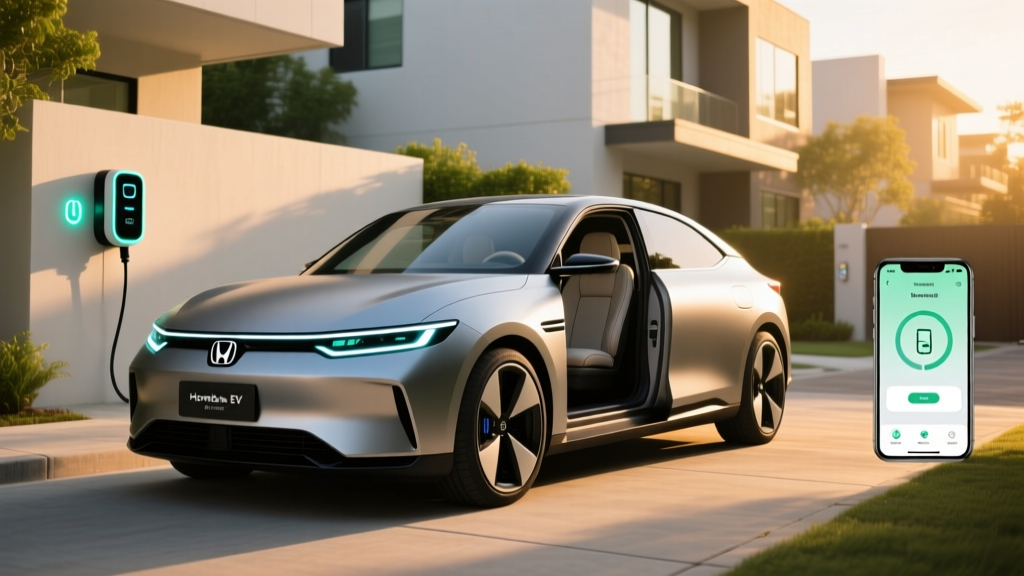
Quick Answer: The Honda One EV is not currently in production or available for purchase as of the 2026 model year. Honda's active electric lineup includes the Prologue (EPA 296 mi, ~$47,400 MSRP) and the e:Ny1 (Europe/Asia). If you've seen "Honda One EV" referenced online, it likely stems from concept renders, mistranslations of Honda's e:Architecture branding, or confusion with the Honda 0 Series concepts announced at CES 2024 with projected 2026–2028 production timelines. This guide covers what Honda's actual EV lineup looks like today, what's announced, and how to evaluate a Honda electric purchase against gas and hybrid alternatives.
Search interest in "Honda One EV" has surfaced periodically, but no vehicle by that name exists in Honda's U.S. product catalog. Honda's electrification strategy centers on its e:Architecture platform and the upcoming Honda 0 Series — a family of next-generation EVs previewed by the Saloon and Space-Hub concepts. The first production Honda 0 Series vehicle is expected to reach U.S. dealers around the 2027 model year.
Until then, the Honda Prologue — built on GM's Ultium platform — is the only Honda BEV you can buy in the United States. Let's break down what's actually available, what's coming, and how to run the numbers on a Honda EV purchase today.
Honda's Actual EV Lineup in 2026
Here is what Honda offers or has confirmed for U.S. buyers:
| Model | Type | EPA Range | Battery (kWh) | Peak DC Charge | Base MSRP | Status |
|---|---|---|---|---|---|---|
| Prologue EX | BEV | 296 mi (FWD) | 85 kWh (NMC) | 150 kW | $47,400 | On sale |
| Prologue Touring | BEV | 281 mi (AWD) | 85 kWh (NMC) | 150 kW | $50,400 | On sale |
| CR-V Hybrid | HEV | N/A (43 mpg comb.) | ~1.1 kWh | N/A | $36,395 | On sale |
| Accord Hybrid | HEV | N/A (48 mpg comb.) | ~1.1 kWh | N/A | $34,990 | On sale |
| Honda 0 Series (Saloon) | BEV | TBA (~300+ mi est.) | TBA (thin-pack) | TBA (350 kW est.) | TBA | Announced, ~2027 |
The Prologue is Honda's stopgap EV — engineered by General Motors on the Ultium platform shared with the Chevrolet Blazer EV and Cadillac Lyriq. It charges via CCS1 (not NACS) and tops out at 150 kW DC fast charging, which translates to a 10–80% session in roughly 30–35 minutes. That's adequate but trails competitors like the Hyundai Ioniq 5 (240 kW peak, ~18 min 10–80%) and the Tesla Model Y (250 kW peak, ~15 min 10–80% on V3 Superchargers).
Source: fueleconomy.gov — Honda Prologue
EV vs. Hybrid vs. Gas: Real Cost Comparison
Many buyers cross-shopping a "Honda One EV" are actually deciding between Honda's Prologue BEV, a CR-V Hybrid, or a conventional CR-V. Here's a five-year cost projection assuming 15,000 miles per year, $3.50/gallon regular unleaded, and $0.14/kWh home electricity (national average):
| Cost Category | Prologue BEV (FWD) | CR-V Hybrid (AWD) | CR-V Gas (AWD) |
|---|---|---|---|
| Base MSRP | $47,400 | $36,395 | $31,450 |
| Est. Federal Tax Credit (§30D) | $0–$7,500* | $0 | $0 |
| Fuel/Energy (5 yrs) | ~$3,675 | ~$5,845 | ~$8,750 |
| Maintenance (5 yrs) | ~$1,800 | ~$3,200 | ~$3,800 |
| Insurance (5 yrs, avg.) | ~$9,500 | ~$7,800 | ~$7,200 |
| Depreciation (est. 5-yr) | ~$22,000 | ~$14,500 | ~$13,000 |
| Total 5-Yr Cost | ~$62,375–$69,875 | ~$67,740 | ~$64,200 |
*The Prologue's §30D credit eligibility depends on battery-sourcing and critical-mineral requirements that shift annually. Honda's Ultium-sourced battery may not meet all 2026 sourcing thresholds. Check the latest rules at irs.gov or confirm point-of-sale eligibility with your dealer before purchase.
The Prologue's advantage is fuel savings — roughly $5,000 less than a gas CR-V over five years. But higher insurance premiums (EVs average 15–25% more to insure), steeper depreciation on early-generation EVs, and a higher entry price narrow the gap. The CR-V Hybrid sits in a pragmatic middle: lower upfront cost, strong resale value, and meaningful fuel savings without charging dependency.
Real-World Ownership: What First-Time Honda EV Buyers Must Know
If you're evaluating the Prologue — or waiting for the Honda 0 Series — these ownership realities shape your experience far more than spec sheets:
Home Charging Is Non-Negotiable for Most Owners
The Prologue's Level 2 onboard charger accepts up to 11.5 kW (48A). On a home Level 2 station, a full charge from empty takes about 7.5 hours. Without home charging access, relying on public DC fast chargers at $0.30–$0.50/kWh erases most of the fuel-cost advantage and adds 30–40 minutes per session to your routine.
Home Level 2 installation costs range from $500 (simple 240V outlet near the panel) to $3,000+ (200A panel upgrade, long conduit runs, permits). Get a quote from a licensed electrician before committing to the car.
Real-World Range vs. EPA Sticker
The Prologue EX FWD carries an EPA rating of 296 miles. In practice:
- Highway driving (70–80 mph): Expect ~240–260 miles. Aerodynamic drag hits EVs harder than gas cars because there's no transmission to optimize.
- Cold weather (below 32°F): Expect 20–35% range reduction. The Prologue uses a resistive heater in some trims rather than a heat pump, which draws significantly more energy for cabin heating.
- City/suburban mixed driving: You'll meet or slightly exceed the EPA figure thanks to regenerative braking at lower speeds.
Honda Prologue EX Range Reality:
EPA: 296 mi | Real-world highway: ~245–265 mi | Cold-weather mixed: ~195–235 mi
Plan trips around the lower bound, not the sticker number.
Charging Speed Limitations
The Prologue's 150 kW peak DC charge rate means:
- 10–80%: ~30–35 minutes at a compatible 150+ kW station
- Above 80% SoC: Charge rate tapers sharply — going from 80–100% can take as long as 10–80%. This is normal lithium-ion battery management, but it means don't plan road-trip stops around charging to full.
- CCS1 connector: The Prologue uses CCS1, not Tesla's NACS. Honda has committed to adopting NACS on future vehicles (starting with the 0 Series), but today's Prologue cannot access Tesla Superchargers without an adapter — and Honda has not issued an official adapter program as of early 2026.
Common Misconceptions About Honda's EV Plans
| Claim | Reality |
|---|---|
| "The Honda One EV is available now." | No vehicle named "Honda One EV" exists in any market. Honda's current U.S. BEV is the Prologue. |
| "Honda's upcoming EV will charge in 10 minutes." | Honda's 0 Series concepts target ultra-thin battery packs and high charge rates, but production specs and timelines remain unconfirmed. Expect 2027+ for U.S. availability. |
| "The Prologue qualifies for the full $7,500 tax credit." | Eligibility depends on battery-sourcing and critical-mineral requirements under §30D. Some Ultium-sourced vehicles have qualified, but rules tighten annually. Verify at the point of sale. |
| "EVs cost less to own in every scenario." | EVs save on fuel and maintenance but carry higher insurance, steeper depreciation (currently), and higher upfront cost. TCO advantage depends on mileage, electricity rate, home charging access, and how long you keep the vehicle. |
| "I can charge an EV on a standard 120V outlet." | Level 1 (120V) adds roughly 3–4 miles per hour of charging. For the Prologue's 85 kWh battery, a full charge from empty would take over 80 hours. It works for overnight top-ups under 40 miles but is impractical as a primary strategy. |
Decision Framework: Which Honda Electrified Vehicle Is Right for You?
Choose the Honda Prologue BEV if:
- You have reliable home Level 2 charging (or can install it)
- Your daily commute is under 80 miles round-trip
- You drive 12,000+ miles per year (fuel savings offset the premium)
- You want zero tailpipe emissions and can accept CCS-only charging for now
- You plan to keep the vehicle 5+ years to ride out depreciation
Choose the CR-V Hybrid if:
- You lack home charging access or live in an apartment
- You regularly drive in extreme cold or tow (hybrids don't lose range in cold the way BEVs do)
- You want lower upfront cost and proven long-term resale value
- Your annual mileage is under 10,000 (fuel savings won't justify a BEV premium)
- You take frequent road trips over 300 miles and don't want to plan around charging stops
Wait for the Honda 0 Series (2027+) if:
- You want Honda's own dedicated EV platform (not a GM-sourced vehicle)
- NACS/Supercharger access is important to you
- You want faster charging (Honda targets 350 kW capability)
- Current Prologue pricing feels too high for what it offers
Frequently Asked Questions
Is Honda releasing an EV called the "Honda One"?
No. Honda has not announced any vehicle named "Honda One" or "Honda One EV" for any market. The name may be confused with Honda's e:Architecture branding, the Honda e (a discontinued small EV sold only in Europe/Japan), or the Honda 0 Series concept family expected in production form around 2027.
Does the Honda Prologue qualify for the $7,500 federal tax credit?
It depends on the model year and current battery-sourcing rules. Under IRS §30D, the credit is split into two halves: $3,750 for battery-component sourcing and $3,750 for critical-mineral sourcing. Requirements tighten each year. The Prologue's GM Ultium battery has qualified in some configurations, but you must verify current eligibility at the point of sale. Income caps also apply: $150,000 single / $300,000 joint MAGI. Check irs.gov for the latest rules.
How does the Prologue compare to the Hyundai Ioniq 5 or Tesla Model Y?
The Prologue trails both in charging speed (150 kW vs. 240–250 kW), NACS/Supercharger access, and rear cargo space. It competes more closely on ride comfort, cabin quietness, and Honda brand loyalty. The Ioniq 5 and Model Y are generally stronger EV choices for road-trippers who prioritize fast charging and network access.
What battery chemistry does the Prologue use?
The Prologue uses NMC (nickel manganese cobalt) lithium-ion cells in its 85 kWh (usable) Ultium pack. NMC offers higher energy density than LFP (lithium iron phosphate) but is more sensitive to sustained high-State-of-Charge storage. Honda recommends keeping daily charging to 80–90% and only charging to 100% before long trips to maximize long-term battery health.
What is the Prologue's battery warranty?
Honda covers the Prologue's battery pack for 8 years / 100,000 miles (whichever comes first) against defects and capacity loss below a defined threshold (typically 70% of original capacity). This aligns with the federal minimum for EV battery warranties and matches most competitors.
Should I wait for Honda's next-gen EV instead of buying the Prologue?
If you need a vehicle now and the Prologue fits your needs, it's a competent midsize electric SUV. But if you can wait until 2027–2028, the Honda 0 Series promises a dedicated Honda platform, NACS charging, thinner battery packs, and likely faster charging. The trade-off is uncertainty: production timelines slip, and early pricing on new platforms is rarely discounted.
Bottom Line: Honda's EV Reality in 2026
The "Honda One EV" doesn't exist — but Honda's electrification story is real and evolving. The Prologue is a capable, if unremarkable, electric SUV that serves Honda loyalists transitioning to battery power. The CR-V Hybrid remains the smarter financial play for buyers without home charging or with lower annual mileage. And the 0 Series, when it arrives, should be the Honda EV worth waiting for.
Run your own numbers: multiply your annual miles by your local electricity rate ($/kWh) and compare it to your gas spend. If the Prologue's $47,400 entry price (minus any applicable credit) plus home charger installation fits your budget and your driving pattern supports it, it's a solid choice. If not, Honda's hybrid lineup delivers 80% of the efficiency benefit at 60% of the cost.