Quick Answer: What Is Honda's New EV?
Honda's current electric vehicle is the Prologue, a midsize SUV built on GM's Ultium platform with up to 308 miles of EPA range, starting around $47,400 (before incentives). Looking ahead, Honda's 0 Series — a family of ground-up EVs including a sedan and SUV — is announced for the 2026–2027 model years using Honda's own dedicated EV architecture. If you're shopping today, the Prologue is what's on dealer lots; if you can wait, the 0 Series promises thinner batteries, lighter weight, and Honda-tuned driving dynamics.
The Prologue: Honda's Current EV on Sale Now
The Honda Prologue arrived for the 2024 model year as Honda's first mass-market battery-electric vehicle, developed in partnership with General Motors. It rides on the same Ultium platform underpinning the Chevrolet Blazer EV and Cadillac Lyriq, which means proven battery hardware but styling, interior, and tuning that are distinctly Honda.
| Spec | EX (FWD) | Touring (AWD) |
|---|---|---|
| EPA Range | 308 mi | 281 mi |
| Battery (usable) | 85 kWh, NMC | 85 kWh, NMC |
| Motor Output | 212 hp / 236 lb-ft | 288 hp / 333 lb-ft |
| 0–60 mph | ~7.5 sec | ~5.8 sec |
| Max DC Fast Charge | 155 kW (peak) | 155 kW (peak) |
| 10–80% DC Charge | ~32 min | ~32 min |
| Level 2 (AC) Rate | 11.5 kW | 11.5 kW |
| MPGe (combined) | 94 MPGe | 87 MPGe |
| Base MSRP | $47,400 | $57,400 |
| Battery Warranty | 8 yr / 100,000 mi | |
Source: fueleconomy.gov
Real-World Range Expectations
The EPA rates the Prologue EX at 308 miles, but plan for reality: expect ~250–275 miles on highway road trips at 70–75 mph, and ~200–230 miles in cold weather (below 30°F) without preconditioning. The NMC battery lacks a heat pump, so winter efficiency takes a meaningful hit. The Touring AWD trim's extra weight and second motor drop EPA range to 281 miles — figure roughly 230 miles highway in fair weather.
Charging the Prologue: Speeds, Connectors, and Home Setup
The Prologue uses a CCS1 connector for DC fast charging (Honda has not yet adopted NACS natively, though adapters exist for Tesla Supercharger access). At peak, the Prologue accepts 155 kW on a DC fast charger, but like all EVs, it doesn't sustain peak rate throughout the session.
| Level | Power | Miles Added per Hour | Typical Use Case |
|---|---|---|---|
| Level 1 (120V) | ~1.4 kW | ~4–5 mi/hr | Overnight top-up, emergencies |
| Level 2 (240V, 48A) | 11.5 kW | ~35–38 mi/hr | Home daily charging |
| DC Fast (CCS) | 155 kW peak | ~180 mi in 20 min (10–50%) | Road trips |
Charging-curve reality: The Prologue hits 155 kW only between roughly 10–30% state of charge. By 50%, you'll see ~100 kW; above 80%, it drops below 50 kW to protect the battery. A 10–80% session takes about 32 minutes at a 150+ kW charger, but a 10–90% session stretches past 50 minutes. Plan road-trip stops to 80% and keep moving.
Home charging cost: A Level 2 home charger installation typically runs $800–$2,000 (equipment + electrician + permit) if your electrical panel has capacity. If you need a panel upgrade from 100A to 200A, add $1,500–$3,000. Always get a quote from a licensed electrician before purchasing equipment.
Honda 0 Series: What's Coming Next
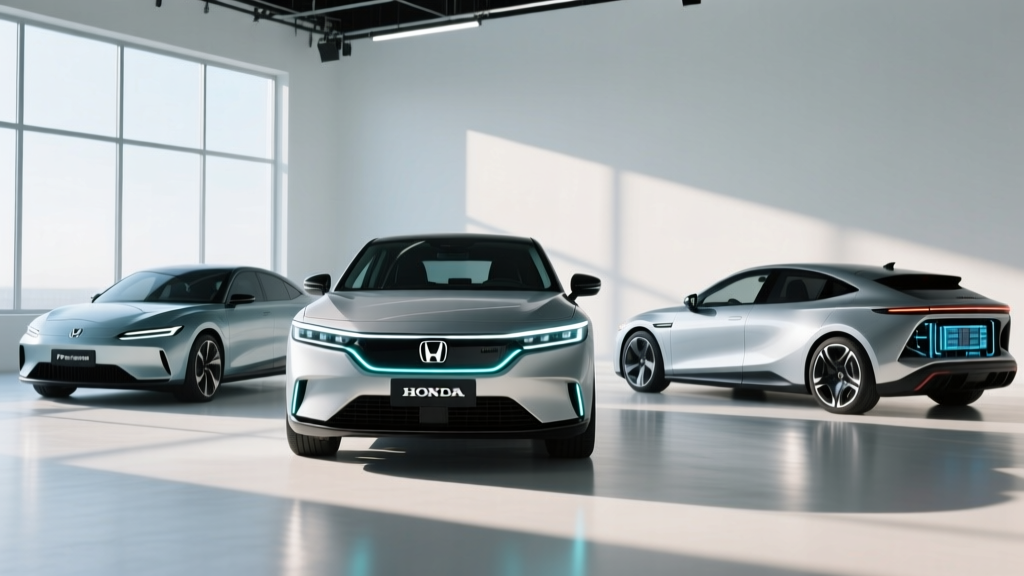
Honda's 0 Series represents the brand's ground-up EV future — no more borrowed GM architecture. Announced at CES 2024 and detailed through 2025, the 0 Series will include:
- 0 Series Sedan — A sleek, low-slung electric sedan targeting the Tesla Model S / Hyundai Ioniq 6 segment. Expected 2027 model year for the US market.
- 0 Series SUV — A three-row electric SUV positioned above the Prologue. Announced for late 2026 or 2027.
- Compact EV — A smaller, more affordable model potentially arriving by 2027–2028, aimed at the sub-$40,000 segment.
Honda has promised a "thin, light, and wise" engineering philosophy: thinner battery packs for lower ride height and better aerodynamics, lightweight construction, and a new proprietary automated-driving system. Preliminary specs suggest 300+ mile ranges across the lineup, with a new SAE Level 2+ driver-assist suite (not Level 4 autonomy — the driver remains responsible).
⚠️ 0 Series Availability Warning
All 0 Series models are announced but not yet on sale as of early 2026. Specs, pricing, and timelines are preliminary and subject to change. If you need an EV now, the Prologue is Honda's only current option.
Prologue vs. Gas CR-V vs. CR-V Hybrid: The Real Cost Comparison
Most Prologue shoppers cross-shop Honda's own CR-V lineup. Here's how a 5-year ownership period stacks up, assuming 15,000 miles/year, $3.50/gal regular fuel, and $0.14/kWh home electricity:
| Cost Factor | Prologue EX ($47,400) | CR-V Hybrid EX-L ($39,000) | CR-V EX Gas ($35,500) |
|---|---|---|---|
| Purchase Price | $47,400 | $39,000 | $35,500 |
| Est. Federal Tax Credit | Up to $7,500* | $0 | $0 |
| Fuel / Energy (5 yr) | $3,940 | $6,560 | $8,750 |
| Maintenance (5 yr) | $1,200 | $3,200 | $3,800 |
| Insurance (5 yr est.) | $9,500 | $7,800 | $7,500 |
| Est. Depreciation | $18,000 | $14,500 | $13,200 |
| Net 5-Year Cost | $62,040 | $61,060 | $62,250 |
*Prologue tax credit eligibility depends on current-year IRS §30D rules including buyer income caps ($150K single / $300K joint), MSRP caps ($80K for SUVs), and battery critical-mineral sourcing requirements. The Prologue's Ultium battery has faced sourcing scrutiny — verify eligibility at purchase via the IRS VIN lookup tool or your dealer's point-of-sale transfer system. Consult a tax professional for your specific situation.
The takeaway: Over 5 years, the Prologue roughly breaks even with a gas CR-V and costs slightly more than the CR-V Hybrid, primarily because of higher upfront cost, steeper depreciation, and pricier insurance. The fuel and maintenance savings are real (~$4,800 less fuel than gas, ~$2,600 less maintenance), but they don't fully overcome the price premium in this timeframe. If you drive more than 15,000 miles/year or have cheap home solar electricity, the math shifts in the Prologue's favor.
Common Misconceptions About Honda's EVs
| Myth | Fact |
|---|---|
| "The Prologue is just a rebadged Chevy." | It shares the Ultium platform and battery with the Blazer EV, but Honda designed the exterior, interior, suspension tuning, and software interface independently. The driving experience and cabin are distinctly different. |
| "308 miles means I'll always get 308 miles." | EPA range is a laboratory estimate. Highway driving at 75 mph yields ~250–275 mi; cold weather drops it further to ~200–230 mi. Always budget 20–30% below EPA for trip planning. |
| "I need to charge every night." | If your daily commute is under 50 miles, you're using less than 20% of the battery per day. Charging every other night or a few times per week is perfectly fine and may even benefit long-term battery health by avoiding constant 100% SoC. |
| "Honda's new EVs are all self-driving." | Honda's driver-assist systems (Honda Sensing on the Prologue, future 0 Series ADAS) are SAE Level 2 — the driver must remain fully engaged, hands on or near the wheel, eyes on the road at all times. |
| "Battery replacement will cost $20,000+." | The Prologue's battery is warranted for 8 years / 100,000 miles against degradation below ~70% capacity. Most Ultium-based batteries show minimal degradation in early data. Full replacement (rarely needed) is estimated at $12,000–$16,000 but is typically covered under warranty during the coverage period. |
SAE Automation Level Reminder
Level 2 (Prologue Honda Sensing): The car can steer, accelerate, and brake under certain conditions, but the human driver is the pilot and must supervise at all times. Level 4 (Waymo, Zoox): The vehicle handles all driving tasks in defined geographic areas with no human driver needed. Honda's current and announced systems are Level 2.
Decision Framework: Should You Buy the Prologue, Wait for 0 Series, or Go Hybrid?
Choose the Honda Prologue if:
- You need an EV now and want a midsize SUV from a mainstream brand
- You have home Level 2 charging and a commute under 80 miles round-trip
- You qualify for the federal tax credit, bringing effective price below $40,000
- You value Honda's dealer network for service and warranty work
Wait for the Honda 0 Series if:
- You can delay your purchase until late 2026 or 2027
- You want a Honda-engineered EV (not GM-derived) with potentially better efficiency
- You're interested in a sedan or three-row SUV specifically
- You want Honda's next-gen ADAS and thinner battery-pack design
Choose the CR-V Hybrid instead if:
- You lack reliable home or workplace charging access
- You frequently drive 400+ mile road trips in regions with sparse DC fast-charging infrastructure
- You live in an extremely cold climate where EV range loss is a daily concern
- Your budget is firm below $40,000 and you don't qualify for EV incentives
First-Time EV Buyer Checklist for the Prologue
- Confirm your home electrical capacity. A 240V/48A Level 2 charger needs a 60A circuit. Have an electrician assess your panel before buying equipment.
- Verify tax credit eligibility. Use the IRS clean vehicle credit page and the dealer's VIN-specific lookup. Point-of-sale transfer lets you apply the credit as a down payment reduction.
- Test the CCS charging network near you. Download the Electrify America, EVgo, and ChargePoint apps. Confirm there are reliable 150+ kW CCS stations along your common routes.
- Ask about the Honda EV charging partnership. Some Honda Prologue purchases include complimentary charging credits or a home charger bundle — ask your dealer about current promotions.
- Budget for insurance. EV insurance premiums run 15–25% higher than equivalent gas vehicles. Get quotes before signing.
- Understand the charge curve. Plan road-trip charging to 80%, not 100%. The last 20% takes nearly as long as the first 80%.
Frequently Asked Questions
Does the Honda Prologue qualify for the $7,500 federal tax credit?
It may, but eligibility depends on current IRS §30D rules including battery critical-mineral sourcing, buyer income limits ($150K single / $300K joint AGI), and the $80,000 MSRP cap for SUVs. The Prologue's GM-sourced Ultium battery has faced scrutiny on sourcing requirements. Always verify with the fueleconomy.gov tax credit lookup and your dealer at the time of purchase.
How long does it take to charge the Prologue at home?
From near-empty (10%) to full on a Level 2 home charger at 11.5 kW takes about 7.5–8 hours. Most owners plug in overnight and wake to a full battery. On a standard 120V outlet (Level 1), a full charge takes roughly 60+ hours — only practical for emergency top-ups.
Can the Prologue use Tesla Superchargers?
Not natively — the Prologue has a CCS1 port. However, Honda has indicated compatibility with NACS adapters (sold separately) for access to Tesla's Supercharger network. Confirm adapter availability and warranty implications with your dealer before purchasing a third-party adapter.
What is the Prologue's cargo space compared to the CR-V?
The Prologue offers approximately 25.2 cu ft behind the rear seats and 57.7 cu ft with seats folded. The gas CR-V provides 36.3 cu ft / 76.5 cu ft. The Prologue's raised floor (battery underneath) reduces cargo volume noticeably — a real trade-off for families who haul gear.
Will Honda release a cheaper EV?
Honda has announced plans for a compact, more affordable EV as part of the 0 Series family, potentially priced in the $30,000–$40,000 range, targeting the 2027–2028 timeframe. Details remain preliminary. If affordability is your top priority, the CR-V Hybrid (starting ~$35,000) remains the pragmatic Honda choice today.