Quick Verdict: Who Should Consider the Honda N-One e?
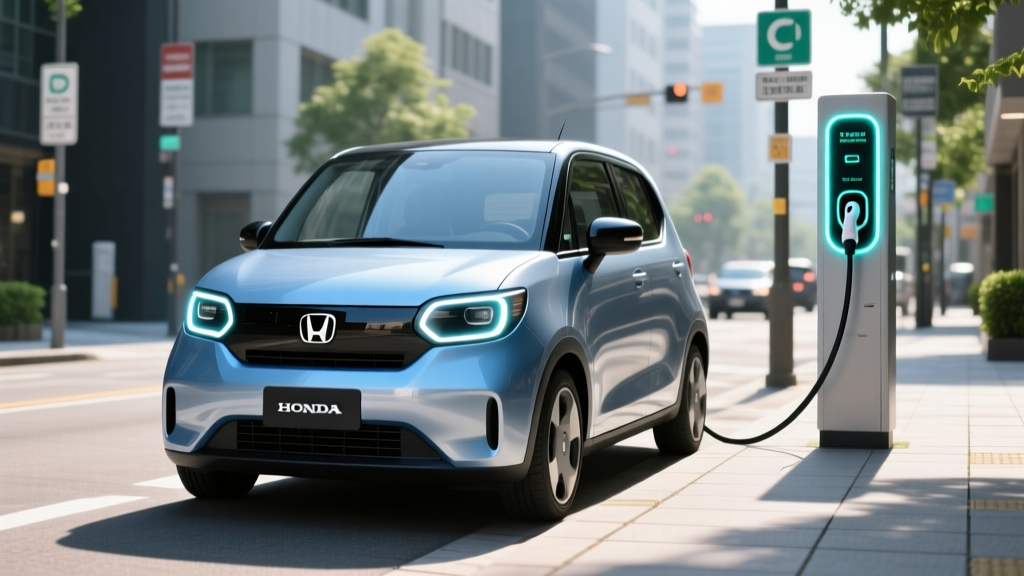
The Honda N-One e: tiny EV is a kei-class electric city car designed primarily for the Japanese domestic market. With an estimated 18–20 kWh battery, roughly 100–115 miles of range (WLTP cycle), and a compact footprint under 11 feet long, it targets urban commuters who need an affordable, easy-to-park electric runabout. As of early 2026, the N-One e is not sold in the United States, and Honda has not announced plans to import it. This guide breaks down what the vehicle offers, what it would cost to own if available, and which currently purchasable EVs serve a similar role for American buyers.
What Is the Honda N-One e?
The Honda N-One e is the battery-electric variant of Honda's popular N-One kei car, a retro-styled microcar that has sold in Japan since 2012. The electric version replaces the turbocharged 660cc three-cylinder gasoline engine with a front-mounted electric motor and a modest lithium-ion battery pack positioned beneath the floor. Honda debuted the production model at the Japan Mobility Show in late 2023, with deliveries beginning in Japan in 2024.
Kei-car regulations in Japan cap dimensions at 3.4 meters long, 1.48 meters wide, and 2.0 meters tall, with engine displacement limited to 660cc for combustion models. For the EV variant, these dimensional constraints remain, but the powertrain limit translates to a relatively small motor and battery compared to mainstream global EVs.
| Spec | Value |
|---|---|
| Battery capacity (usable) | ~18–20 kWh |
| Battery chemistry | Lithium-ion (NMC estimated) |
| WLTP range | ~100–115 miles (160–185 km) |
| EPA range (if rated) | ~80–95 miles (estimated) |
| Motor output | ~45–50 kW (60–67 hp) |
| 0–60 mph | Not published (~12–14 sec est.) |
| Top speed | ~80 mph (130 km/h) |
| DC fast charge (peak) | ~30–40 kW (CCS2/CHAdeMO, market-dependent) |
| 10–80% DC charge time | ~35–45 min (est.) |
| Level 2 AC charge rate | ~6 kW |
| Length × Width × Height | 3,395 × 1,475 × 1,545 mm |
| Curb weight | ~1,050–1,100 kg (~2,315–2,425 lbs) |
| Japan base price | ~¥2,500,000 (~$16,500 USD est.) |
Critical caveat: These figures are based on Honda's Japanese-market disclosures and independent Japanese automotive press reporting. The N-One e has not been submitted for EPA testing, so any EPA-equivalent range figure is an estimate. WLTP range ratings tend to be 10–20% more optimistic than EPA ratings, meaning a 115-mile WLTP rating could translate to roughly 90–100 miles EPA.
Range and Efficiency: What to Expect in Real Driving
A battery in the 18–20 kWh range is small by global EV standards — for comparison, the Chevrolet Bolt EV (discontinued after 2023) carried a 65 kWh pack, and the 2026 Nissan Leaf base model uses a 40 kWh pack. The N-One e's efficiency advantage comes from its low weight (roughly 2,400 lbs) and modest power output.
Real-World Range Reconciliation
WLTP sticker: ~115 miles (185 km)
EPA equivalent (estimated): ~90–100 miles
Real-world city driving (moderate climate): ~80–95 miles
Highway at 65–70 mph: ~65–75 miles (small batteries suffer disproportionately at sustained speed)
Cold weather (below 32°F / 0°C): ~55–70 miles (LFP or NMC chemistry without a heat pump loses 25–40% in extreme cold)
For a city-dwelling commuter with a round trip under 40 miles, this range is workable — especially with nightly Level 1 or Level 2 home charging. But it leaves no margin for spontaneous highway trips, detours, or winter conditions. This is fundamentally a second-car or dedicated-commuter vehicle, not a primary household car for most American driving patterns.
Charging: Speed, Infrastructure, and the Small-Battery Reality
Small batteries charge slowly on DC fast chargers in absolute terms, even though the C-rate (charge rate relative to battery size) may be reasonable. A 30–40 kW peak charge rate on a ~20 kWh pack means:
| Level | Power | Miles Added per Hour | Full Charge Time |
|---|---|---|---|
| Level 1 (120V, 12A) | ~1.4 kW | ~5–6 mi/hr | ~14–16 hours |
| Level 2 (240V, 24A) | ~6 kW | ~25–30 mi/hr | ~3–4 hours |
| DC Fast Charge | ~30–40 kW peak | N/A (session-based) | 10–80% in ~35–45 min |
Level 1 charging on a standard 120V household outlet is a genuine option here — a full overnight charge (10 hours) adds roughly 50–60 miles, which covers most daily urban needs. This is one advantage of a tiny battery: you don't need an expensive Level 2 home installation to make the car workable.
However, DC fast charging at 30–40 kW is slow by 2026 standards. Most modern global-market EVs charge at 150–350 kW peak. On a road trip (if you attempted one in an 80-mile-range car), a 40-minute stop for 10–80% is a significant time penalty. And the charge curve — the rate at which charging slows as the battery fills — means the last 20% could add another 20+ minutes.
Cost Comparison: N-One e vs. Gas Kei Car vs. US-Market Alternatives
Since the N-One e isn't available in the US, let's build a cost comparison that answers the underlying question: Is a tiny, affordable EV cheaper to own than a gas-powered subcompact, and what US-market EVs fill this niche?
| Category | Honda N-One e (if imported, est.) | Gas Subcompact (e.g., Mitsubishi Mirage) | US-Market Small EV (e.g., used Bolt EV / Mini Cooper SE) |
|---|---|---|---|
| Purchase price (est.) | $16,500–$20,000* | $18,000–$20,000 | $20,000–$30,000 |
| Fuel / electricity (5 yr, 60k mi) | $1,800–$2,400** | $5,400–$6,600*** | $1,800–$2,700** |
| Maintenance (5 yr) | $600–$900 | $2,500–$3,500 | $800–$1,200 |
| Insurance (5 yr avg) | $6,000–$8,000 | $5,500–$7,000 | $6,500–$9,000 |
| Federal tax credit (§30D) | Not eligible (not US-sold) | $0 | Up to $4,000 (used EV credit)**** |
| Est. 5-yr total | $24,900–$31,300 | $31,400–$37,100 | $25,100–$38,900 |
* Imported price hypothetical — includes shipping, homologation, dealer markup, which would likely push it above Japan MSRP.
** Assumes $0.14/kWh average home electricity; 3.5–4.0 mi/kWh efficiency.
*** Assumes $3.50/gal gasoline; 36 MPG combined.
**** IRS §25E used EV credit: 30% of sale price up to $4,000; income caps apply. Source: IRS.gov.
The key takeaway: EVs with small batteries are cheapest to fuel, but the savings vs. a gas subcompact depend heavily on your annual mileage and electricity rates. At 12,000 miles/year and $0.14/kWh, an efficient small EV saves roughly $700–$900/year on fuel alone. Over five years, that's $3,500–$4,500 — enough to offset a modest price premium.
US-Market Alternatives: What to Buy Instead
If the Honda N-One e: tiny EV appeals to you as a concept — a compact, affordable, city-friendly electric car — here's what's actually purchasable in the US market for 2026:
Decision Framework: Which Small EV Fits Your Situation?
Choose a used Chevrolet Bolt EV/EUV (2020–2023) if: You want the best value in a small EV — 259 miles EPA range, 65 kWh battery, CCS charging, and potential eligibility for the $4,000 used EV tax credit. Prices in 2026 hover around $15,000–$22,000 depending on mileage and condition. This is the closest functional equivalent to what the N-One e represents, but with far more range.
Choose a MINI Cooper SE (2025–2026) if: You want a new, small, premium-feeling urban EV with roughly 114 miles EPA range and a 32.6 kWh battery. Starting MSRP around $31,000, it's pricier but offers the style and city-car character the N-One e embodies. Best for buyers with reliable home charging and short commutes.
Choose a Nissan Leaf (2025–2026) if: You want a new, affordable compact EV with a proven track record. The base S trim with the 40 kWh pack offers 149 miles EPA range starting around $29,000. Note: the Leaf still uses CHAdeMO for DC charging, which is increasingly rare at US public stations — home charging is essential.
Choose a Fiat 500e (2024–2026) if: You want the smallest new EV available in the US with ~149 miles EPA range and a 42 kWh battery, starting around $34,000. It's the closest in spirit to the N-One e — a stylish, compact urban EV — but at roughly double the N-One e's Japanese price.
Choose a PHEV (e.g., Toyota Prius Prime) if: You want electric-only commuting (44 miles EPA electric range) without range anxiety for longer trips. A plug-in hybrid eliminates the charging-desert problem and cold-weather range loss that a small-battery EV can't overcome.
Common Misconceptions About Tiny EVs
| Myth | Fact |
|---|---|
| "Small batteries mean the car is useless." | For a defined commute under 40 miles round-trip with home charging, a 20 kWh battery is more than adequate. The average American drives roughly 37 miles per day according to FHWA data. The issue isn't daily usability — it's flexibility for unplanned trips. |
| "You need a Level 2 home charger for any EV." | With a ~20 kWh battery, Level 1 (120V) charging adds ~5–6 miles per hour. A 10-hour overnight session restores 50–60 miles — sufficient for most city driving. A $500–$2,000 Level 2 installation is nice but not mandatory for small-battery EVs. |
| "All EVs qualify for the $7,500 federal tax credit." | The IRS §30D credit requires the vehicle to be on the IRS qualified list, meet MSRP caps ($55,000 for cars, $80,000 for SUVs/trucks), buyer income limits ($150K single / $300K joint), and battery-sourcing requirements. Many imported or niche vehicles do not qualify. Always verify on fueleconomy.gov. |
| "Tiny EVs are unsafe because they're small." | Crash safety depends on structural engineering, not just mass. Japanese kei cars must meet the same safety standards as larger vehicles sold in Japan. However, in a collision with a much larger vehicle (common on US roads), physics favors mass. A kei-class car is inherently at a disadvantage in multi-vehicle US highway crashes compared to a 4,000-lb crossover. |
| "EV batteries need replacing every few years." | Modern lithium-ion EV batteries are designed for 150,000–200,000+ miles with 70–80% capacity retention. Honda typically warranties its EV batteries for 8 years / 100,000 miles. A small battery may degrade faster if frequently DC fast-charged to 100%, but for a city car charged slowly at home overnight, longevity should be comparable to larger EVs. |
Real-World Ownership Considerations
Before deciding whether a tiny EV — the N-One e concept or a US-market alternative — fits your life, work through these practical factors:
Home Charging Access
This is the single biggest ownership variable. If you have a garage, driveway, or dedicated parking spot with access to a 120V or 240V outlet, a small-battery EV is extremely practical. If you rely entirely on street parking and public charging, a 20 kWh battery becomes a liability — you'll visit chargers frequently, and at 30–40 kW peak rates, each session takes 35+ minutes. Renters and apartment dwellers: check whether your building has or plans EV charging infrastructure before committing to any EV.
Climate and Cold-Weather Range Loss
Small batteries have less buffer for cold-weather degradation. In sub-freezing temperatures, expect 25–40% range loss if the vehicle lacks a heat pump (which the N-One e's Japanese-market specs don't confirm). A 95-mile EPA rating could drop to 55–70 miles in a Minnesota winter. If you live in a cold climate, add at least 30% to your required range buffer.
Driving Patterns
Map your actual weekly mileage. If 90%+ of your driving is under 50 miles/day and you rarely take highway trips over 60 miles, a small EV works. If you regularly drive 80+ miles in a day, need to carry passengers or cargo, or take road trips more than a few times a year, you need either a longer-range EV or a PHEV.
Insurance Costs
EV insurance premiums in 2026 remain 15–25% higher than comparable gas cars on average, driven by higher repair costs and battery replacement risk. For a small, low-value EV, the premium gap narrows in absolute dollars, but get quotes before purchasing. Insurers like GEICO, Progressive, and State Farm now offer EV-specific policies.
Resale Value and Depreciation
Small, short-range EVs have historically depreciated faster than long-range models. The Nissan Leaf and early Fiat 500e lost 60–70% of their value in the first three years. If you're buying used, this is your advantage — someone else absorbed the depreciation. If buying new, expect steep value loss unless the model develops a cult following.
Federal Tax Credit Reality Check
For 2026, the federal EV tax credit landscape is complex:
§30D New Clean Vehicle Credit (up to $7,500)
- Vehicle must be on the IRS qualified list — assembled in North America, with battery-sourcing and critical-mineral requirements. The Honda N-One e, as a Japan-market vehicle, would not qualify.
- MSRP caps: $55,000 for sedans/hatchbacks; $80,000 for SUVs, trucks, vans.
- Buyer income limits: Modified AGI cannot exceed $150,000 (single), $225,000 (head of household), or $300,000 (married filing jointly).
- Point-of-sale transfer: As of 2024, buyers can transfer the credit to the dealer for an immediate price reduction rather than claiming it on their tax return.
- Battery sourcing rules tighten annually — fewer models qualify each year as critical-mineral and battery-component requirements phase in. Always verify current eligibility at fueleconomy.gov.
§25E Used Clean Vehicle Credit (up to $4,000)
- 30% of the sale price, capped at $4,000.
- Vehicle must be at least 2 model years old and sold by a licensed dealer.
- Buyer income limits: $75,000 (single) / $112,500 (head of household) / $150,000 (joint).
- Sale price must not exceed $25,000.
- This makes used small EVs like the Bolt EV, Leaf, or Fiat 500e potentially very affordable after the credit.
Frequently Asked Questions
Can I import the Honda N-One e to the United States?
Practically, no. The N-One e does not meet US Federal Motor Vehicle Safety Standards (FMVSS) and has not been homologated for sale in the US. Importing a non-conforming vehicle requires a registered importer, crash testing, and modifications that would cost tens of thousands of dollars — far exceeding the car's value. The NHTSA's 25-year import rule won't help until approximately 2049.
What's the cheapest EV I can actually buy in the US in 2026?
On the new-vehicle market, the cheapest EVs start around $28,000–$30,000 (Nissan Leaf S, MINI Cooper SE). On the used market, Chevrolet Bolt EVs from 2020–2022 can be found for $13,000–$18,000 and may qualify for the $4,000 used EV credit, bringing effective cost as low as $9,000–$14,000.
Is a tiny EV safe for American roads?
Kei-class vehicles meet Japanese safety standards, which are rigorous. However, US roads feature a high proportion of large SUVs and trucks. In a collision between a 2,400-lb kei car and a 5,500-lb full-size pickup, physics strongly favors the heavier vehicle. If safety in mixed-traffic conditions is a priority, a compact or midsize EV (Bolt EV, Model 3, Ioniq 5) offers significantly more mass and crash protection.
Would Honda ever sell the N-One e in America?
As of 2026, Honda has not announced any plans to bring the N-One e to the US market. Honda's US EV strategy centers on larger vehicles — the Prologue SUV (built on GM's Ultium platform) and upcoming models on Honda's own e:Architecture. The kei-car segment has never been viable in the US due to size expectations, safety regulations, and highway-speed requirements. If Honda brings a small EV to the US, it would more likely be a global model similar in size to the Fit/Jazz rather than a kei car.
How does a small EV battery affect longevity and replacement cost?
Small batteries aren't inherently less durable, but they undergo more charge cycles for the same mileage (since each cycle covers fewer miles). A 20 kWh battery cycled daily to 80% depth of discharge completes roughly 365 cycles per year; a 75 kWh battery doing the same daily commute might only cycle to 25% depth, accumulating far fewer equivalent full cycles. That said, modern NMC and LFP chemistries are rated for 1,500–3,000+ cycles before significant degradation. Replacement cost for a ~20 kWh pack would likely be $4,000–$7,000 out of warranty — substantially less than the $12,000–$20,000+ for larger packs.
Should I wait for more small EVs to come to the US market?
Several automakers have announced affordable compact EVs targeting the $25,000–$30,000 price point for 2026–2028, including next-generation models from Tesla, Hyundai, and potentially BYD (if trade policy allows). If a small, affordable EV is your goal but you don't need one immediately, the 2026–2028 window should bring more options with better range, faster charging, and US-market availability. However, if your commute is short and you have home charging now, a used Bolt EV or Leaf is a proven, cost-effective solution today.