The Short Answer: No Electric Honda Grom Exists Yet
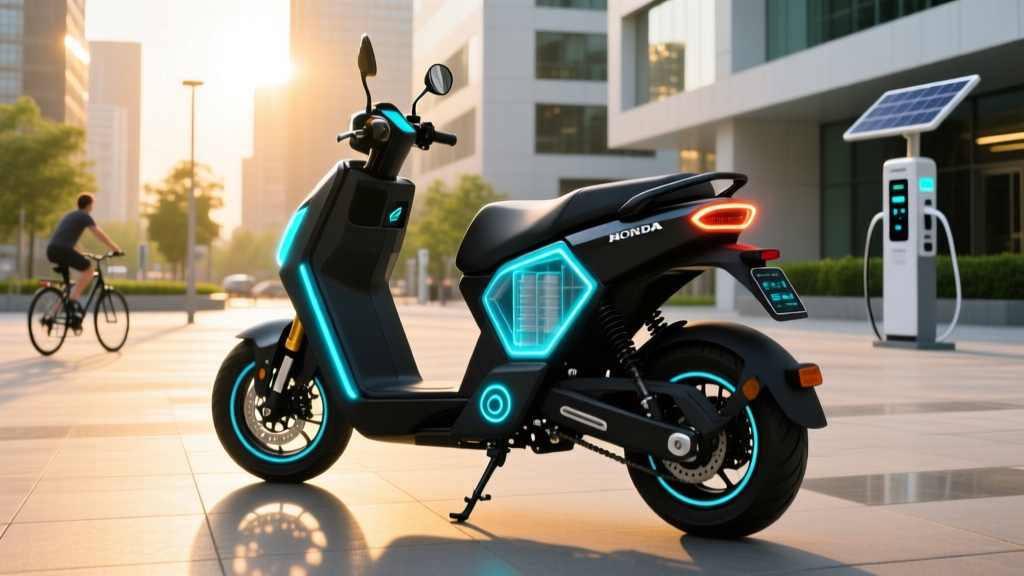
As of 2026, Honda has not released or formally announced an electric version of the Honda Grom (MSX125). The current Grom remains a 125cc gasoline-powered mini motorcycle. However, Honda has been actively developing electric two-wheelers globally — including the EM1 e: electric scooter available in Japan and Europe — signaling that an electric mini motorcycle in the Grom's spirit is plausible, though unconfirmed for the U.S. market. If you're searching for a "Honda Grom electric," you're likely encountering concept renderings, aftermarket conversions, or confusion with Honda's EM1 e: scooter. None of these are a production electric Grom you can buy today.
The Honda Grom has been a cult favorite since its 2014 debut — a 125cc, street-legal mini motorcycle beloved for its approachable size, fuel sipping nature, and $3,499 starting price. With electric motorcycles gaining traction from brands like Zero, LiveWire, and NIU, it's natural to wonder when Honda will electrify its most iconic small bike. Here's what the data and Honda's roadmap actually tell us.
Honda's Electric Two-Wheeler Strategy: Where Things Stand
Honda has committed to carbon neutrality across its motorcycle lineup by 2050, with a near-term target of offering electric models across major markets by the late 2020s. The most concrete product so far is the Honda EM1 e:, a compact electric scooter introduced in Japan in 2023 and subsequently rolled out to European and select Asian markets.
Key EM1 e: specifications (where available):
- Motor output: 1.7 kW continuous / 4.2 kW peak (~5.6 hp peak)
- Battery: Swappable Honda Mobile Power Pack e:, 29.4V, approximately 1.3 kWh usable capacity
- Range: Approximately 25 miles (41 km) per charge under WMTC test conditions
- Top speed: ~30 mph (48 km/h) — classified as a moped/scooter, not a full motorcycle
- Charging: Battery swaps at Honda stations or home charging via portable charger (~5 hours for full charge)
The EM1 e: is not a Grom replacement. It's a low-speed urban commuter scooter — a different vehicle category entirely. The Grom, by contrast, is a 9.7 hp, 59 mph-capable mini motorcycle with a manual 5-speed transmission and a devoted enthusiast following. An electric Grom equivalent would need substantially more power, range, and performance than the EM1 e: delivers.
Honda has also shown concepts like the Honda Riding Assist and participated in battery-swapping consortiums with Yamaha, Suzuki, and Kawasaki (the Swappable Battery Consortium), suggesting a shared infrastructure approach for future electric motorcycles. But a production electric mini motorcycle wearing the Grom nameplate remains unannounced for any market as of early 2026.
The Gas Honda Grom: What You Can Actually Buy Today
For buyers who want the Grom experience now, the current-generation Honda Grom (introduced for the 2022 model year with ongoing updates) remains gasoline-powered. Here's what the numbers look like:
| Specification | Value |
|---|---|
| Engine | 125cc air-cooled single-cylinder |
| Horsepower | 9.7 hp @ 7,000 rpm |
| Transmission | 5-speed manual |
| Top Speed | ~59 mph (95 km/h) |
| Fuel Economy (EPA est.) | ~134 mpg combined |
| Fuel Tank Capacity | 1.6 gallons (6.0 liters) |
| Range (estimated) | ~180-215 miles per tank |
| Curb Weight | 227 lbs (103 kg) |
| Seat Height | 30.3 inches (770 mm) |
| Base MSRP | $3,599 |
At 134 mpg, the gas Grom is already one of the most fuel-efficient vehicles Honda sells. That creates a high bar for any electric successor to clear on a cost-per-mile basis, as we'll see below.
Cost Comparison: Gas Grom vs. a Hypothetical Electric Equivalent
Even though an electric Grom doesn't exist, we can model what ownership economics might look like based on the EM1 e: platform scaled up, comparable electric mini motorcycles from competitors, and the gas Grom's known costs. This comparison assumes 3,000 miles driven annually — reasonable for a fun/commuter mini bike.
| Cost Category | Gas Grom ($3,599 MSRP) | Hypothetical Electric Grom ($5,500 est. MSRP) |
|---|---|---|
| Purchase Price | $3,599 | $5,500 (estimated) |
| Fuel/Energy (5 yrs, 15k mi) | $390 (at $3.50/gal, 134 mpg) | $135 (at $0.15/kWh, ~90 Wh/mi) |
| Maintenance (5 yrs) | $450 (oil, chain, filters, valves) | $150 (tires, brake fluid, minimal) |
| Insurance (5 yrs avg.) | $1,200 | $1,200 |
| Estimated Resale Value (yr 5) | -$1,800 | -$2,200 |
| Total Net 5-Year Cost | ~$3,839 | ~$4,785 |
| Cost Per Mile | ~$0.26 | ~$0.32 |
The gas Grom's extraordinary fuel efficiency — 134 mpg means you burn just 0.75 gallons per 100 miles — makes it extremely cheap to fuel. At current gasoline prices, annual fuel cost is under $80. An electric equivalent would save roughly $50 per year on energy, which doesn't offset the estimated $1,900 higher purchase price over five years.
This is a recurring theme in small-displacement motorcycle electrification: when the gas vehicle already achieves 100+ mpg, the fuel savings from going electric are modest in absolute dollars. The business case for electrification rests more on emissions reduction, reduced maintenance complexity, and urban air quality regulations than on owner cost savings.
Aftermarket Electric Grom Conversions: Are They Viable?
A small but active community of DIY enthusiasts has converted gas Groms to electric power. These conversions typically involve:
- Removing the 125cc engine and 5-speed transmission
- Installing a hub motor or mid-drive electric motor (commonly 3-5 kW continuous)
- Fitting a custom lithium battery pack (typically 2-4 kWh, using salvaged EV cells or purpose-built packs)
- Fabricating motor mounts, battery enclosures, and controller wiring
Typical conversion costs: $2,500-$5,000 in parts alone, plus 40-80 hours of fabrication and wiring labor. Total project cost often reaches $5,000-$8,000 when factoring in the donor Grom.
Performance outcomes vary widely but generally fall in this range:
- Range: 25-50 miles depending on battery size and riding style
- Top speed: 45-65 mph depending on motor and gearing
- Charging: 3-6 hours on standard 120V household outlet
These conversions are passion projects, not practical alternatives. They void all Honda warranties, may not meet DOT/EPA compliance for street use in all states, and require significant electrical and mechanical skill. If you're considering one, treat it as a hobby build — not a reliable daily commuter solution.
What Would a Real Electric Grom Need to Succeed?
Based on the gas Grom's capabilities and the current state of electric motorcycle technology, a production electric Grom would need to hit these benchmarks to satisfy the existing enthusiast base:
| Attribute | Gas Grom (Current) | Electric Grom Target (Minimum Viable) |
|---|---|---|
| Peak Power | 9.7 hp | 10-12 hp (7.5-9 kW) |
| Top Speed | ~59 mph | 60+ mph (highway-capable) |
| Range | ~180-215 miles | 70-100 miles (realistic for the segment) |
| Battery Capacity | N/A (1.6 gal fuel) | 3.5-5 kWh usable |
| Charging Time (full) | 2 min (refuel) | 2-4 hours (Level 2 / 240V) |
| Weight | 227 lbs | Under 280 lbs |
| MSRP Target | $3,599 | $4,500-$5,500 |
| Character | Manual 5-speed, engaging | TBD — would lack clutch/shifter feel |
The biggest engineering challenge isn't power — electric motors can easily match 9.7 hp. It's packaging a battery large enough for meaningful range while keeping weight near the Grom's featherweight 227 lbs and price near its $3,599 MSRP. Battery energy density improvements and Honda's swappable battery ecosystem could address range and charging, but cost parity with the gas Grom is unlikely before 2028 at the earliest.
There's also the intangible factor: much of the Grom's appeal lies in its manual transmission, the physical engagement of shifting, and the character of its little single-cylinder engine. An electric version would fundamentally change the riding experience — potentially alienating the core enthusiast audience even if the specs are competitive.
Alternatives: Electric Two-Wheelers You Can Buy Now
If you're drawn to the idea of a small, fun, electric two-wheeler and can't wait for a hypothetical electric Grom, here's what's actually available in the U.S. market as of 2026:
- NIU MQI+ Sport: ~$3,399 | 1.5 kW motor | ~40-50 mile range | ~45 mph top speed | Classified as a moped in most states
- Super73-RX: ~$3,995 | 2 kW peak hub motor | ~40-75 mile range (with dual battery) | ~28 mph (Class 2 e-bike) or unlocked higher | Technically an electric bicycle, not a motorcycle
- Zero FX: ~$11,995 | 46 hp peak | ~50 mile city range (7.2 kWh battery) | 85 mph top speed | A full-size dual-sport electric motorcycle — far more capable and expensive than a Grom equivalent
- LiveWire ONE: ~$21,999 | 105 hp | ~95 mile city range | 110 mph+ | Premium performance electric — completely different category
None of these replicate the Grom's specific combination of ultra-low price, mini motorcycle form factor, manual transmission, and cult personality. The closest in spirit might be the NIU MQI+ series, but it's a scooter — no manual shifting, different ergonomics, and moped-class performance.
Federal Tax Credits and Electric Motorcycle Incentives
Important context for anyone evaluating electric motorcycle purchases: the federal §30D Clean Vehicle Credit, which provides up to $7,500 for qualifying electric cars and trucks, does not apply to motorcycles. Motorcycles are excluded from the §30D definition of "new clean vehicle" under current IRS guidelines.
A separate credit — the Alternative Fuel Vehicle Refueling Property Credit (§30C) — can cover 30% of home charging equipment installation costs (up to $1,000) if you install a Level 2 charger at a qualifying residence. Some states and utilities offer additional rebates for electric motorcycle purchases; check your local DMV and utility provider for current programs. The fueleconomy.gov tax incentives page tracks federal incentive eligibility by vehicle.
This is a meaningful disadvantage for electric motorcycles compared to electric cars. A buyer purchasing a $5,500 electric motorcycle receives no federal purchase incentive, while a qualifying EV car buyer could receive up to $7,500 — sometimes exceeding the motorcycle's entire purchase price.
Decision Framework: Should You Wait for an Electric Grom or Buy Now?
Buy the gas Honda Grom now if:
- You want a proven, $3,599 mini motorcycle with 134 mpg and a devoted community
- You value the manual shifting experience and lightweight, engaging ride
- You need 180+ mile range and 2-minute refueling for longer rides
- You want a bike that holds value well and has abundant parts and service support
Consider an existing electric two-wheeler now if:
- Your riding is strictly urban commuting under 30 miles round-trip
- You have reliable home charging access (standard 120V outlet is sufficient for most electric scooters)
- You prioritize zero tailpipe emissions and near-silent operation
- You're comfortable with moped-class speeds (30-45 mph) and don't need highway capability
Wait for a potential Honda electric mini motorcycle if:
- You specifically want Honda's build quality, dealer network, and brand in an electric package
- You're willing to wait 2-4+ years with no guarantee of a U.S. release
- You currently have a satisfactory vehicle and the Grom is a "want," not a "need"
Common Misconceptions About a Honda Grom Electric
| Myth | Fact |
|---|---|
| "Honda already sells an electric Grom in Asia" | Honda sells the EM1 e: electric scooter in Asia/Europe — a completely different vehicle class (moped) with ~25 mile range and ~30 mph top speed. It is not a Grom. |
| "An electric Grom would be cheaper to own" | The gas Grom's 134 mpg makes fuel costs under $80/year. Electric energy savings (~$50/year) don't offset a likely $1,500-$2,000 higher purchase price over 5 years. |
| "You can easily convert a Grom to electric" | Conversions cost $5,000-$8,000 all-in, require advanced fabrication skills, void warranties, and may not be street-legal in all jurisdictions. They're hobby projects, not practical solutions. |
| "Electric motorcycles qualify for the $7,500 federal tax credit" | The §30D credit applies to 4-wheeled vehicles only. Motorcycles are excluded under current IRS rules. |
| "An electric Grom would have the same range as the gas one" | Current battery energy density makes matching 180+ miles impractical at the Grom's size and price point. A realistic electric range target is 70-100 miles. |
Frequently Asked Questions
Will Honda ever make an electric Grom?
Honda has not announced an electric Grom for any market. The company is developing electric two-wheelers — the EM1 e: scooter and swappable battery consortium suggest the technology foundation exists — but no electric mini motorcycle bearing the Grom name has been confirmed. Given Honda's typical 3-5 year product planning cycles, the earliest realistic window for a U.S.-market electric mini motorcycle would be 2028-2030, and even that is speculative.
How much would an electric Honda Grom cost if it existed?
Based on the pricing gap between gas and electric two-wheelers in comparable segments (NIU, Zero, and Honda's own EM1 e: pricing in international markets), an electric Grom equivalent would likely carry an MSRP of $4,500-$5,500 — roughly 30-50% more than the current $3,599 gas Grom. Battery costs remain the primary driver of this premium.
What's the cheapest electric motorcycle I can buy in the U.S.?
Among street-legal, highway-capable electric motorcycles from established manufacturers, the Zero FX at approximately $11,995 is the most affordable full-size option. For lower-speed urban use, electric scooters and mopeds from NIU, CSC, and others start around $2,500-$3,500 but don't match the Grom's performance or character.
Does the Honda Grom get good gas mileage compared to other motorcycles?
At an EPA-estimated 134 mpg combined, the Grom is among the most fuel-efficient motorcycles sold in the United States. For comparison, a Honda CB300R achieves approximately 71 mpg, and a Kawasaki Ninja 400 approximately 62 mpg. Only 50cc scooters and some other 125cc commuter bikes match or exceed the Grom's efficiency.
Is a DIY electric Grom conversion street legal?
Legality varies significantly by state. Most states require motorcycles to have a Manufacturer's Certificate of Origin (MCO) or title reflecting the original powertrain type for registration. Swapping from gas to electric may require a reconstructed vehicle title, special inspection, or may not be registrable at all. Check your state's DMV regulations before starting a conversion project. The NHTSA provides federal vehicle classification guidance, but registration is handled at the state level.
What's the difference between kW and kWh on electric motorcycles?
kW (kilowatts) measures power — how much energy the motor can deliver at a given moment, directly affecting acceleration and top speed. kWh (kilowatt-hours) measures energy capacity — how much total energy the battery stores, directly affecting range. A 5 kW motor with a 3 kWh battery would be roughly analogous to a 7 hp engine with a 0.8-gallon fuel tank. For an electric Grom equivalent, you'd want approximately 7-9 kW peak power and 3.5-5 kWh battery capacity.