Quick Answer: Honda's Full Electric Car Options in 2026
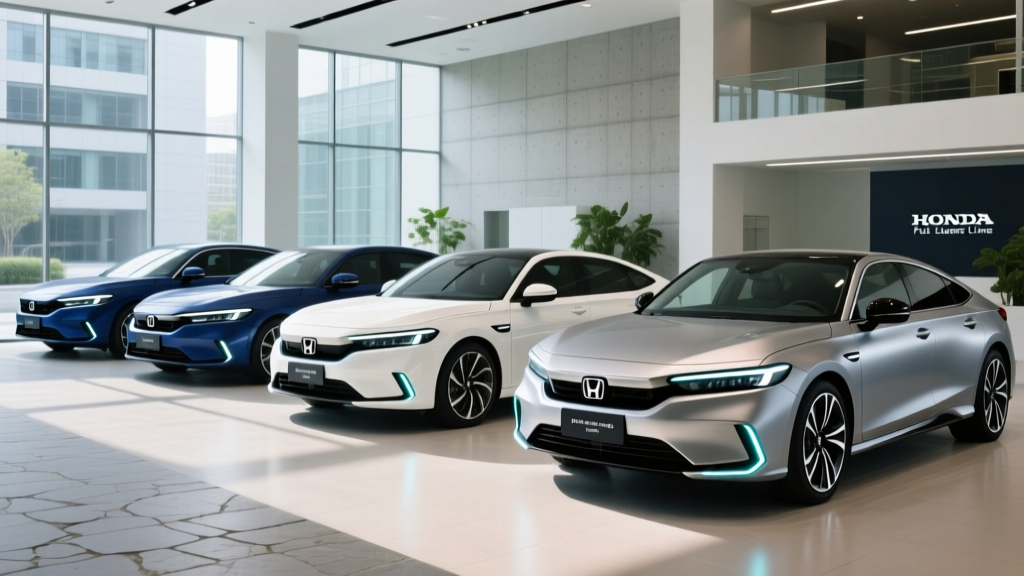
Honda's fully electric lineup for U.S. buyers centers on the Honda Prologue SUV (EPA range up to 308 miles, starting near $47,400) and the newly introduced Honda e:NY1 compact crossover (EPA range approximately 256 miles, starting around $42,000). Both use GM's Ultium platform and NMC battery chemistry. For buyers who want electrification without full BEV commitment, Honda also offers the CR-V Hybrid and Accord Hybrid, which deliver strong MPG without any plug. The Prologue qualifies for partial or full federal tax credits depending on battery sourcing and your income — check current IRS §30D rules before purchasing.
The 2026 Honda Prologue: Honda's Flagship Full Electric Car
The Prologue is Honda's first serious volume EV for the American market, developed in partnership with General Motors and built on the Ultium platform shared with the Chevrolet Blazer EV and Cadillac Lyriq. For 2026, Honda has refined the software and charging curve based on first-year owner feedback, though the hardware remains largely carried over from the 2024 launch.
Spec Table: 2026 Honda Prologue
| Spec | EX (FWD) | Touring (AWD) |
|---|---|---|
| EPA Range | 308 miles | 273 miles |
| Battery (usable) | 85 kWh, NMC | 85 kWh, NMC |
| Horsepower | 212 hp | 288 hp |
| 0-60 mph | ~7.5 sec | ~6.2 sec |
| Peak DC Fast Charge | 150 kW | 150 kW |
| 10-80% DC Charge Time | ~35 min | ~35 min |
| Level 2 Charge Rate | 11.5 kW | 11.5 kW |
| MPGe (combined) | 95 MPGe | 87 MPGe |
| Base MSRP | $47,400 | $57,400 |
| Battery Warranty | 8 yr / 100,000 mi | 8 yr / 100,000 mi |
Real-World Range Reality: The EPA 308-mile figure for the FWD EX applies to mixed city/highway driving at moderate temperatures. Expect approximately 250-270 miles on sustained highway driving at 70-75 mph, and 210-240 miles in cold weather (below 32°F) where cabin heating and reduced battery efficiency take a toll. The AWD Touring's 273-mile EPA rating drops to roughly 220-230 miles in real-world highway use. Honda's thermal management system is competent but not class-leading — preconditioning the battery before DC fast charging is essential for achieving peak 150 kW rates.
Honda e:NY1: The Compact Electric Crossover
New to the U.S. market for 2026, the e:NY1 fills the gap below the Prologue as a more affordable, compact electric crossover. It also rides on the Ultium platform but with a smaller battery pack tuned for urban efficiency rather than long-distance touring.
| Spec | e:NY1 EX | e:NY1 Touring |
|---|---|---|
| EPA Range | 256 miles | 240 miles |
| Battery (usable) | 68 kWh, NMC | 68 kWh, NMC |
| Horsepower | 201 hp | 201 hp |
| 0-60 mph | ~7.8 sec | ~7.8 sec |
| Peak DC Fast Charge | 130 kW | 130 kW |
| 10-80% DC Charge Time | ~32 min | ~32 min |
| Base MSRP | $42,000 | $47,500 |
The e:NY1 is best suited for daily commuting and suburban errands. Its smaller footprint makes it easier to park, and the lower price point — especially after applicable incentives — positions it against the Hyundai Kona Electric and Nissan Ariya. However, its 130 kW peak charge rate and 68 kWh battery mean road trips require more planning than the Prologue.
Honda EV vs. Gas and Hybrid: The Cost Comparison
The question most Honda shoppers face isn't just "which EV?" — it's whether to go fully electric at all. Honda's hybrid lineup (CR-V Hybrid, Accord Hybrid, Civic Hybrid) is strong, which makes this comparison genuinely competitive.
| Factor | Prologue EX (BEV) | CR-V Hybrid (HEV) | CR-V Gas (ICE) |
|---|---|---|---|
| Base MSRP | $47,400 | $36,350 | $32,450 |
| EPA Combined | 95 MPGe | 40 MPG | 30 MPG |
| Fuel/Energy Cost (15k mi/yr) | ~$540/yr* | ~$1,310/yr | ~$1,750/yr |
| Annual Maintenance | ~$300 | ~$600 | ~$750 |
| Federal Tax Credit | Up to $7,500** | $0 | $0 |
| 5-Year Energy + Maint. | ~$4,200 | ~$9,550 | ~$12,500 |
| 5-Year Total Cost (est.) | ~$51,600 | ~$45,900 | ~$44,950 |
*Based on $0.14/kWh national average home electricity rate. Actual costs vary by state and utility. **§30D credit eligibility depends on income, MSRP caps, and battery sourcing requirements. Verify at irs.gov.
5-Year Cost Breakdown: Prologue vs. CR-V Hybrid
| Category | Prologue EX (BEV) | CR-V Hybrid Sport |
|---|---|---|
| Purchase Price (after credit) | $39,900* | $36,350 |
| Home Charger Install (Level 2) | $1,200-$2,500 | $0 |
| Energy (5 yrs) | $2,700 | $6,550 |
| Maintenance (5 yrs) | $1,500 | $3,000 |
| Insurance (5 yrs, avg) | $7,500 | $6,000 |
| Depreciation (est.) | $18,000 | $14,000 |
| 5-Year Total | ~$70,800-$72,100 | ~$65,900 |
*Assumes full $7,500 §30D credit. Many buyers will qualify for partial credit or none depending on battery sourcing and income caps ($150k single / $300k joint AGI). Insurance premiums for EVs run 15-25% higher on average due to repair costs.
The Prologue's higher purchase price and insurance premiums mean the break-even point versus a CR-V Hybrid typically arrives around year 6-7 of ownership — unless you secure the full tax credit and have cheap home solar or off-peak electricity rates. For buyers who plan to own the vehicle 8+ years and drive 15,000+ miles annually, the EV math improves substantially.
Charging the Honda Prologue and e:NY1: What Owners Need to Know
Honda's Ultium-based EVs use the CCS1 connector for DC fast charging and the J1772 connector for Level 2 AC charging. Honda has confirmed that future models will adopt the NACS (Tesla) connector, but the 2026 Prologue and e:NY1 ship with CCS1. Adapters for Tesla Supercharger access are available but add cost and slight charging-speed reduction.
| Charging Level | Power (kW) | Miles Added per Hour | Best For |
|---|---|---|---|
| Level 1 (120V outlet) | 1.4 kW | ~4 mi/hr | Overnight trickle, emergencies |
| Level 2 (240V home) | 11.5 kW | ~34 mi/hr | Daily home charging |
| DC Fast Charge | Up to 150 kW (Prologue) | ~180 mi in 10 min (peak) | Road trips |
Home charging installation is the critical variable. A Level 2 home charger (such as the ChargePoint Home Flex or Emporia Level 2) on a 48-amp circuit will fully replenish the Prologue's 85 kWh battery overnight — approximately 8-9 hours from near-empty. Installation costs vary widely:
| Component | Low Estimate | High Estimate |
|---|---|---|
| Level 2 Charger (hardware) | $400 | $750 |
| Electrician labor | $500 | $1,500 |
| Electrical permit | $50 | $200 |
| Panel upgrade (if needed) | $0 | $2,500 |
| Total | $950 | $4,950 |
Homes with a 200-amp electrical panel and a nearby garage outlet will be at the low end. Older homes with 100-amp service or long conduit runs to the garage can push costs toward the high end. Always get a licensed electrician's assessment before purchasing — don't assume your panel has spare capacity.
DC fast charging reality check: The Prologue's 150 kW peak rate is respectable but not class-leading. The Hyundai Ioniq 5 peaks at 240 kW and charges 10-80% in ~18 minutes versus the Prologue's ~35 minutes. More importantly, the Prologue's charge curve tapers significantly above 80% SoC — the last 20% can take as long as the first 70%. For road trips, plan to charge from 10-80% and move on rather than waiting for a full battery.
Federal Tax Credits and Incentives for Honda EVs
Under the current IRS §30D rules, the Prologue's tax credit eligibility depends on several factors that shift periodically:
- MSRP Cap: SUVs must be under $80,000 — the Prologue qualifies on all trims.
- Buyer Income Cap: Modified AGI must not exceed $150,000 (single) or $300,000 (joint filing).
- Battery Sourcing: Credits are split into two halves — $3,750 for critical minerals and $3,750 for battery components. The Prologue's GM-sourced battery has faced sourcing-rule challenges; check the latest DOE/FuelEconomy eligibility list for the current credit amount.
- Point-of-Sale Transfer: You can transfer the credit to the dealer at purchase, reducing your out-of-pocket cost immediately rather than waiting for tax filing.
The e:NY1's credit status should be confirmed at purchase time, as Honda's supply chain for this model may differ from the Prologue's GM partnership. Always verify with your tax professional — incentive rules change and individual circumstances vary.
Common Misconceptions About Honda's Electric Cars
| Myth | Fact |
|---|---|
| "The Prologue is just a rebadged Chevy." | While it shares the Ultium platform, Honda tunes the suspension, steering, interior materials, and infotainment independently. The driving character is distinctly Honda — softer ride, more conservative regen calibration. |
| "EVs need battery replacement after 5 years." | NMC batteries in liquid-cooled packs like the Prologue's typically lose 8-12% capacity over 8 years. Honda's warranty covers drops below 70% capacity for 8 years/100,000 miles. Full replacement (rarely needed) runs $12,000-$18,000. |
| "I can't take road trips in an EV." | The Prologue's 308-mile EPA range covers most Interstate stretches between charging stops. With DC fast charging adding ~180 miles in 10 minutes at peak, a 600-mile trip adds roughly 40-50 minutes of total charging time. |
| "EVs are always cheaper to own." | Not always. Higher purchase price, insurance premiums, and potential home charger install costs mean savings depend on annual mileage, electricity rates, and ownership duration. Low-mileage drivers may save more with a hybrid. |
| "Honda's EVs use Tesla Superchargers natively." | The 2026 Prologue and e:NY1 use CCS1 connectors. Tesla Supercharger access requires an adapter, and not all Supercharger stalls support non-Tesla vehicles yet. |
Decision Framework: Should You Buy a Honda Full Electric Car?
Choose the Honda Prologue if:
- You have reliable Level 2 home charging (or can install it)
- You drive 12,000+ miles per year, making fuel savings meaningful
- You qualify for the federal tax credit (check income and sourcing rules)
- You want a midsize electric SUV with Honda's reliability reputation and dealer network
- You plan to own the vehicle 6+ years to reach the cost break-even point
Choose the Honda e:NY1 if:
- Your daily commute is under 60 miles round-trip
- You want a more affordable entry into EV ownership (sub-$42k before credits)
- You primarily drive in urban/suburban environments
- You don't frequently take road trips over 200 miles
Choose a Honda Hybrid (CR-V or Accord) instead if:
- You lack home charging access and rely on street parking
- You live in an area with limited public DC fast charging infrastructure
- You regularly drive in extreme cold (below 10°F) where EV range drops 30-40%
- You want the lowest total cost of ownership over 3-5 years with no charging behavior change
- You frequently tow or take long road trips through charging-desert regions
What First-Time Honda EV Buyers Must Know
Transitioning from a gas Honda to a full electric Honda involves more than just plugging in. Here are the practical realities:
Preconditioning matters. The Prologue's battery performs best when warmed to operating temperature before DC fast charging. Use the HondaLink app to precondition while still plugged in at home — this draws power from the grid rather than the battery, preserving range. In cold weather, skipping preconditioning can reduce your DC charge rate from 150 kW to under 80 kW.
Regenerative braking takes adjustment. Honda offers multiple regen levels, including a one-pedal driving mode. Unlike some competitors, Honda's regen calibration is relatively gentle — expect to use the friction brake more often than in a Hyundai or Tesla. This is by design for drivers transitioning from gas cars, but it means slightly more brake pad wear than aggressive-regen EVs.
Insurance will cost more. EV insurance premiums average 15-25% higher than comparable gas vehicles. Get quotes before purchasing — the Prologue's insurance cost can add $200-$400 per year versus a CR-V Hybrid. Some insurers offer EV-specific discounts, so shop around.
Public charging reliability varies. Networks like Electrify America and EVgo have improved, but downtime and broken chargers remain a reality. Download multiple charging apps (PlugShare, ChargePoint, EVgo) and always have a backup charging plan on road trips. The Prologue's navigation system routes through charging stops, but verify station status in-app before relying on it.
Frequently Asked Questions
Is the Honda Prologue a good electric car for families?
Yes, with caveats. The Prologue offers competitive cargo space (approximately 57 cu ft with rear seats folded), a comfortable ride, and Honda's strong safety reputation. The available Honda Sensing ADAS suite includes adaptive cruise control, lane-keeping assist, and automatic emergency braking — all Level 2 driver-assist features that require your attention at all times. For families with home charging and mostly local driving, it's a strong choice. For frequent 400+ mile road trips, the 35-minute charge time and CCS1 connector (limiting Supercharger access) require more planning than some competitors.
How long will the Honda Prologue battery last?
Honda warranties the battery for 8 years or 100,000 miles against capacity loss below 70%. Based on data from similar Ultium-based vehicles, expect approximately 5-8% degradation in the first two years, then a slower linear decline. Most owners will see 88-92% of original capacity at the 5-year mark. Full battery replacement is rarely needed but would cost approximately $14,000-$18,000 out of warranty.
Does the Honda Prologue qualify for the $7,500 federal tax credit?
Eligibility depends on current battery sourcing rules under §30D. The Prologue's GM-sourced Ultium battery has met partial credit requirements in recent quarters, but critical-mineral sourcing rules change periodically. As of early 2026, check the fueleconomy.gov tax credit database for the exact credit amount. Your modified AGI must also be under $150,000 (single) or $300,000 (joint).
Can I charge a Honda Prologue at a Tesla Supercharger?
Not natively. The 2026 Prologue uses a CCS1 connector, while Tesla Superchargers use the NACS connector. Honda has indicated future models will adopt NACS, and adapters are available for purchase. However, adapter-based charging may not achieve the full 150 kW peak rate, and not all Supercharger locations support non-Tesla vehicles. Check Tesla's "Charge Your Non-Tesla Vehicle" page for current compatible locations.
Honda EV vs. Honda Hybrid: which saves more money?
Over 5 years, the CR-V Hybrid typically costs less in total ownership due to its lower purchase price, no home charger installation, and lower insurance. Over 8+ years with high annual mileage (15,000+ miles), the Prologue's lower energy and maintenance costs can overtake the hybrid's advantage — especially if you secure the full $7,500 tax credit and have low-cost home electricity. The hybrid is the safer financial choice for most buyers; the EV pays off for high-mileage, long-term owners with home charging.