The Short Answer on the Honda Fit Electric
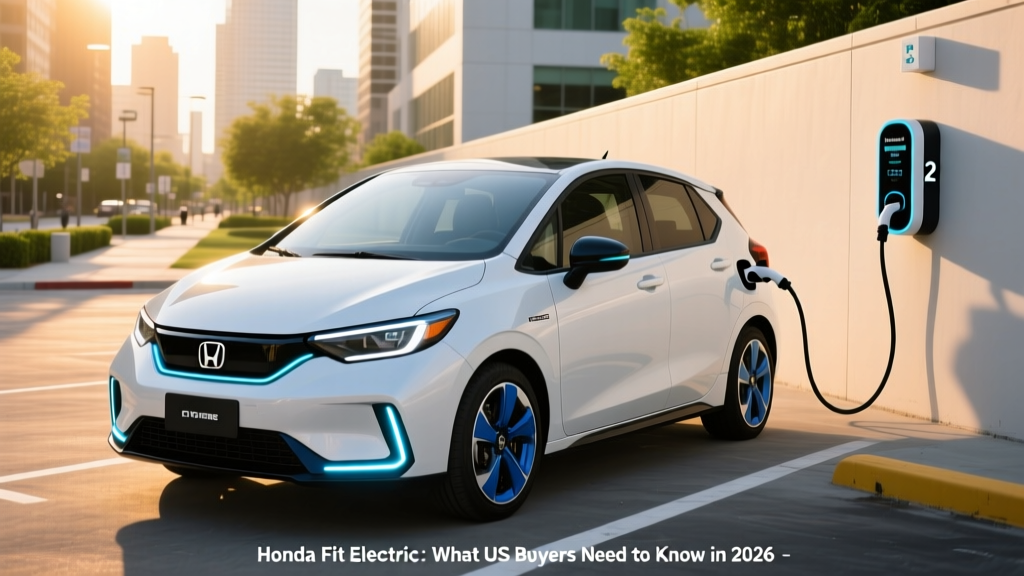
As of 2026, Honda does not sell a Honda Fit Electric in the United States. The Fit (known as the Jazz in some markets) was discontinued in the US after the 2020 model year, and Honda has not released a battery-electric version for the American market. The Fit e:HEV hybrid exists in Japan and Europe but not in North America. If you want a Honda EV in the US, the closest options are the Honda Prologue (EPA range up to 296 miles, starting around $47,400) or the upcoming Honda 0 Series models expected in 2027. For a small electric hatchback in the Fit's spirit, the Chevrolet Bolt EV/EUV (discontinued 2023 but available used) or the Nissan LEAF (up to 212 miles EPA, starting ~$28,140) are the closest current or recent alternatives.
Why There's No Honda Fit EV in America
Honda produced a limited-run Honda Fit EV from 2013 to 2015 — but only as a compliance lease in California and Oregon. Roughly 1,100 units were built, all leased (never sold), and all featured a modest 20 kWh battery delivering just 82 miles of EPA range. It was a stopgap, not a product Honda invested in.
When Honda discontinued the gas Fit in the US after 2020, it cited shifting consumer demand toward crossovers and SUVs. The subcompact hatchback segment had been shrinking for years, and Honda chose to focus its US electrification strategy on larger vehicles with higher margins. The result: no Fit successor, gas or electric, for the American market.
In Japan and Europe, Honda offers the Jazz/Fit with the e:HEV hybrid powertrain — a clever two-motor system that pairs a 1.5L Atkinson-cycle engine with electric drive. But this is a conventional hybrid (HEV), not a plug-in or battery-electric vehicle, and it has never been homologated for US sale.
What Honda Actually Sells as an EV in 2026
If you're committed to the Honda brand and want electric propulsion, here's what's actually on dealer lots:
| Model | Type | EPA Range / MPG | Battery / Powertrain | Starting MSRP |
|---|---|---|---|---|
| Honda Prologue (FWD) | BEV | 296 mi EPA | 85 kWh NMC (Ultium platform) | $47,400 |
| Honda Prologue (AWD) | BEV | 281 mi EPA | 85 kWh NMC | $50,400 |
| Honda CR-V Hybrid | HEV | 40 city / 34 hwy / 37 combined MPG | 2.0L + 2-motor hybrid | $35,395 |
| Honda Accord Hybrid | HEV | 51 city / 44 hwy / 48 combined MPG | 2.0L + 2-motor hybrid | $34,995 |
The Prologue is built on GM's Ultium platform (sharing architecture with the Chevrolet Blazer EV) and represents Honda's first serious US-market EV. It's a midsize SUV — far larger and more expensive than a Fit would have been. Honda's next-generation "0 Series" EVs, previewed by concept vehicles at CES, are expected to arrive in the US around 2027 with dedicated Honda EV architecture, thinner batteries, and potentially a smaller crossover that could serve as a spiritual Fit successor.
The Small Electric Hatchbacks You Can Actually Buy
If your goal is a compact, affordable electric car that captures the Fit's practicality — tall roof, clever cargo space, city-friendly dimensions — these are the real alternatives:
| Vehicle | EPA Range | Battery (kWh) | DC Fast Charge (Peak kW) | 10–80% Time | Starting MSRP |
|---|---|---|---|---|---|
| 2025 Nissan LEAF S | 149 mi | 40 kWh (NMC) | 50 kW (CHAdeMO) | ~40 min | $28,140 |
| 2025 Nissan LEAF SV Plus | 212 mi | 60 kWh (NMC) | 100 kW (CHAdeMO) | ~35 min | $36,140 |
| Used Chevy Bolt EV (2022–2023) | 259 mi | 65 kWh (NMC) | 55 kW (CCS) | ~55 min | ~$15,000–$22,000 used |
| Used Chevy Bolt EUV (2022–2023) | 247 mi | 65 kWh (NMC) | 55 kW (CCS) | ~55 min | ~$17,000–$24,000 used |
| Mini Cooper SE (2025) | 114 mi | 28.9 kWh (NMC) | 50 kW (CCS) | ~30 min | $30,900 |
A few things jump out from this data. The Bolt EV/EUV is the clear range and value champion on the used market, with 259 miles of EPA range and a price that has dropped steeply since production ended. The LEAF SV Plus offers solid range but is hamstrung by CHAdeMO charging — a connector standard that's being eclipsed by CCS and NACS as the charging infrastructure consolidates. The Mini Cooper SE is fun but impractical for anyone needing the Fit's cargo versatility.
Cost Breakdown: Small EV vs. What a Fit Electric Would Have Cost
Let's compare what owning a small EV actually costs versus a late-model gas Honda Fit, using concrete numbers. This gives you the economic framework Honda Fit Electric shoppers are really after.
| Cost Category | Used Bolt EV (2022) | Used Honda Fit (2020) |
|---|---|---|
| Purchase Price (est.) | $18,000 | $17,500 |
| Federal Used EV Credit (§25E) | −$4,000 | $0 |
| Net Purchase | $14,000 | $17,500 |
| Fuel/Energy (15,000 mi/yr × 5 yr) | $3,750 (home L2 at $0.14/kWh) | $8,438 (33 MPG avg at $3.75/gal) |
| Maintenance (5 yr) | $1,200 | $3,500 |
| Insurance (5 yr avg.) | $7,500 | $6,250 |
| Total 5-Year Cost | $26,450 | $35,688 |
The math favors the EV substantially — a savings of roughly $9,200 over five years — driven primarily by fuel savings and the §25E used EV tax credit of up to $4,000 (30% of sale price, capped at $4,000, for vehicles under $25,000 from a dealer, subject to buyer income limits). Maintenance savings come from eliminating oil changes, transmission fluid, spark plugs, and most brake wear (regenerative braking extends pad life dramatically).
The main offset is insurance, which typically runs 15–25% higher for EVs due to higher repair costs and battery replacement risk. Get quotes before purchasing — this varies heavily by state, age, and driving record.
Real-World Ownership: What First-Time EV Buyers Must Know
Whether you end up in a Bolt, LEAF, or waiting for Honda's next-gen EV, these practical realities apply:
Home Charging Is the Foundation
Over 80% of EV charging happens at home. A standard 120V outlet (Level 1) adds roughly 3–5 miles of range per hour — adequate if you drive under 40 miles daily and can plug in overnight. For faster replenishment, a Level 2 home charger (240V, typically 32–48 amps) adds 20–35 miles per hour and costs $500–$1,500 for equipment plus $800–$2,500 for electrician installation, depending on whether your panel needs an upgrade to 200A service.
Public Charging: Understand the Connector Landscape
The US charging infrastructure has consolidated around two primary DC fast-charging connectors as of 2026:
- NACS (Tesla's connector, now the SAE J3400 standard): Adopted by Ford, GM, Rivian, Volvo, and most major automakers starting 2025. Grants access to Tesla's Supercharger network — the most reliable and widespread DC fast-charging network in the US.
- CCS1: Still used by many vehicles on the road but increasingly supplemented by NACS adapters. Electrify America, EVgo, and ChargePoint stations typically offer CCS.
The Nissan LEAF uses CHAdeMO, a legacy standard with declining station availability. This is a genuine practical limitation for LEAF buyers in 2026 — verify CHAdeMO station density in your area before committing.
Cold Weather Range Loss Is Real
Battery chemistry slows in cold temperatures. Expect 20–35% range reduction at 20°F compared to the EPA sticker. A Bolt rated at 259 miles EPA might deliver 170–200 miles on a 20°F winter day, especially with cabin heat running. Vehicles with heat pumps (like the Prologue) mitigate this somewhat, but the physics are unavoidable. If you live in northern climates, budget for this loss.
DC Fast Charging Tapers Above 80%
Peak charge rates (e.g., "55 kW peak") only apply at low states of charge. Above 80% SoC, charging slows dramatically to protect the battery — a 10–80% session might take 35 minutes, but 80–100% can add another 25 minutes. On road trips, plan to charge to 80% and go. This is why manufacturers quote 10–80% times.
Common Misconceptions About Small EVs
| Myth | Fact |
|---|---|
| "EV batteries need replacing every few years" | Federal law mandates EV battery warranties of at least 8 years / 100,000 miles. Most NMC and LFP batteries retain 85–92% capacity after 100,000 miles based on fleet data from Tesla, GM, and Nissan. |
| "A small EV can't handle road trips" | A Bolt with 259 mi range can handle 300-mile legs with a single 30-minute DC fast charge. The constraint is charging speed (55 kW peak on the Bolt), not range. Plan stops at 150+ kW stations for faster turns. |
| "EVs are more expensive to own overall" | After the used EV credit and fuel/maintenance savings, a used Bolt costs roughly $9,000 less over 5 years than a comparable gas Fit, even with higher insurance premiums. |
| "You can't charge in an apartment" | Level 1 (120V) charging works from any standard outlet. Many apartment complexes and workplaces now offer Level 2 stations. Check PlugShare or ChargePoint for nearby options before ruling out EV ownership. |
| "Honda will release a Fit EV soon" | Honda's announced US EV roadmap focuses on the 0 Series (midsize sedan and SUV) for 2027+. No subcompact electric hatchback is in the announced pipeline for North America. |
Decision Framework: What Should You Actually Buy?
If-Then EV Buyer Guide
- If you want a Honda badge and need an EV today: The Prologue is your only option, but it's a $47,000+ midsize SUV — not a Fit replacement in size or price. Test-drive it knowing the trade-offs.
- If you want the Fit's spirit (small, practical, affordable) in electric form: A used 2022–2023 Chevy Bolt EV/EUV at $15,000–$22,000 (before the $4,000 §25E credit) is the best value in the segment. 259 miles of range, peppy 200-hp motor, and surprisingly usable cargo space (56.3 cu ft with seats folded in the EUV).
- If you drive under 40 miles/day and can charge at home: A LEAF S (149 mi EPA, ~$28,140 new) works fine, but verify CHAdeMO charger availability near you. The SV Plus (212 mi, 60 kWh) is the better long-term play.
- If you can wait 1–2 years: Honda's 0 Series and competing small EVs from other manufacturers (including a possible next-gen Bolt and Hyundai Casper EV) may fill the affordable small-EV gap by 2027–2028.
- If you primarily drive in cold climates or take frequent road trips: Prioritize a vehicle with NACS/CCS access to 150+ kW chargers and a heat pump. The Bolt's 55 kW peak charge rate makes road trips slower than in a Hyundai Ioniq 5 (240 kW peak) or Tesla Model 3 (250 kW peak).
Frequently Asked Questions
Did Honda ever make an electric Fit?
Yes, but only as a limited compliance lease vehicle from 2013–2015 in California and Oregon. The Honda Fit EV had a 20 kWh battery, 82 miles of EPA range, and was never offered for sale. Approximately 1,100 units were leased. Some remain on the used market, but parts availability and the outdated battery make them impractical as daily drivers in 2026.
Will Honda bring back the Fit as an EV?
There is no announced plan for a Honda Fit EV or Fit successor in the US market. Honda's US EV roadmap centers on the Prologue (current) and the upcoming 0 Series (expected 2027). If Honda introduces a small electric vehicle for North America, it would more likely be a subcompact crossover than a hatchback, given market trends.
What's the closest thing to a Honda Fit Electric I can buy today?
The used Chevy Bolt EV (2022–2023) comes closest: compact dimensions, hatchback cargo versatility (up to 56.3 cu ft in the EUV), 259 miles of EPA range, and a purchase price of $15,000–$22,000 before the $4,000 federal used EV credit. It's the most Fit-like EV available in the US right now.
Does the Honda Fit hybrid (e:HEV) come to the US?
No. The Fit/Jazz e:HEV is sold in Japan, Europe, and other markets but was never certified for US sale. Honda's US hybrid lineup consists of the CR-V Hybrid, Accord Hybrid, and Civic Hybrid — all larger vehicles.
What federal tax credits apply to small EVs in 2026?
For new EVs, the §30D credit offers up to $7,500, but eligibility depends on MSRP caps ($55,000 for cars, $80,000 for SUVs/trucks), buyer income limits ($150,000 single / $300,000 joint AGI), and stringent battery component and critical mineral sourcing requirements that change annually. For used EVs, the §25E credit provides 30% of the sale price up to $4,000 for vehicles priced at $25,000 or less from a licensed dealer. Consult IRS guidelines and a tax professional for your specific eligibility.
Is a used EV battery reliable?
Modern EV batteries are designed for longevity. GM's Bolt battery carries an 8-year/100,000-mile warranty (federally mandated minimum). Real-world data shows most NMC batteries retaining 88–93% capacity at 80,000 miles. When buying used, request a battery health report from the dealer or use an OBD-II scanner with an EV app to check State of Health (SoH). Avoid vehicles with SoH below 85% unless heavily discounted.