The Short Answer: Honda's EV Pivot Explained
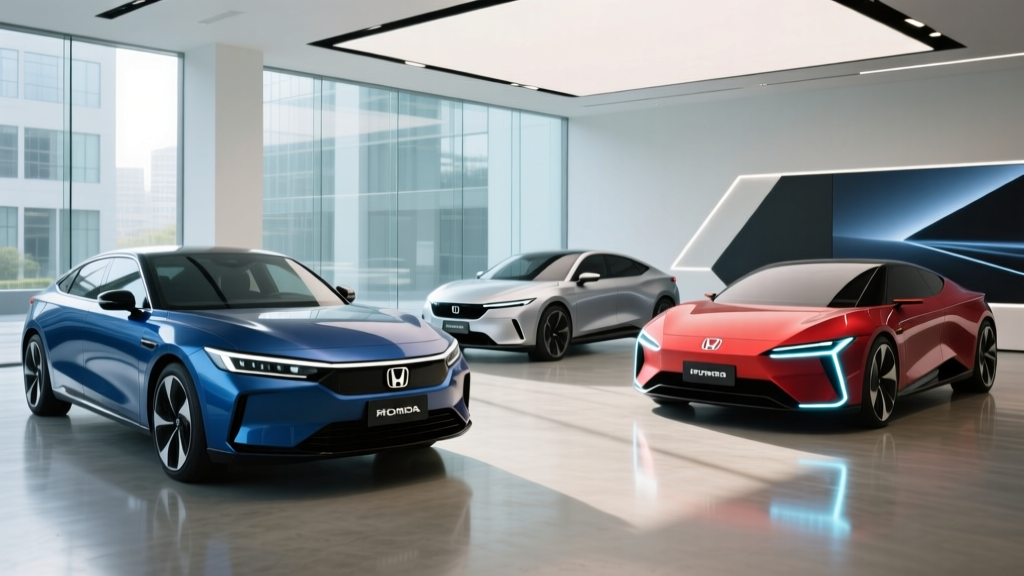
Honda has dramatically reshaped its electric vehicle roadmap between 2024 and 2026. After initially partnering with GM on the Ultium-based Honda Prologue (EPA range up to 296 miles, starting around $47,500), Honda canceled several planned dedicated EVs in late 2024–2025 and pivoted toward a hybrid-heavy lineup with next-gen EVs arriving in 2027+ on its own dedicated "0 Series" platform. For buyers right now, this means: the Prologue remains Honda's only fully electric offering, the CR-V Hybrid and Accord Hybrid are the pragmatic electrified choices, and Honda's next-generation EVs (announced as the 0 Series sedan and SUV) are still preliminary and not yet on sale. If you need an EV today, the Prologue competes with the Hyundai Ioniq 5 and Tesla Model Y—but with slower DC charging and limited tax-credit eligibility. If you can wait, Honda's 2027+ lineup promises thinner batteries and lighter weight.
Why Honda Changed Its EV Strategy
In early 2024, Honda committed to an aggressive all-electric future, projecting 30 EV models globally by 2030 and a $65 billion investment. By late 2024, the company had reversed course—slashing that target to roughly 15 models, writing down billions in EV-related investment, and openly acknowledging that EV demand growth had slowed relative to expectations, particularly in North America.
The strategic shift came down to three hard realities:
- Demand recalibration: U.S. EV sales continued growing in 2025, but at a decelerating rate. Hybrid sales surged, with Toyota and Honda's own hybrid models selling out and commanding minimal discounts.
- Profitability pressure: Honda's early EVs (the Prologue and Acura ZDX, both on GM's Ultium platform) required significant revenue-sharing with GM and did not achieve the margins of Honda's hybrid powertrains.
- Tariff and policy uncertainty: Shifting U.S. trade policy and potential modifications to the §30D federal EV tax credit created planning risk for vehicles sourced from or dependent on North American battery supply chains.
The result: Honda doubled down on hybrids for the near term and reset its dedicated EV timeline around its own "0 Series" architecture, targeting a global debut in 2026 with U.S. deliveries expected in 2027 or later.
What You Can Actually Buy: The 2026 Honda Prologue
As of 2026, the Honda Prologue remains the brand's sole battery-electric vehicle available in the U.S. market. Built on GM's Ultium platform alongside the Chevrolet Blazer EV and Acura ZDX, it's a midsize crossover with competitive range but middling charge speeds relative to the class.
| Spec | EX (FWD) | Touring (AWD) |
|---|---|---|
| Battery (usable) | 85 kWh, NMC | 85 kWh, NMC |
| EPA Range | 296 mi | 273 mi |
| Peak DC Fast Charge | 150 kW | 150 kW |
| 10–80% DCFC Time | ~38 min | ~38 min |
| Level 2 Charge Rate | 7.7 kW | 7.7 kW |
| Horsepower | 212 hp | 288 hp |
| 0–60 mph | ~7.5 sec | ~6.2 sec |
| Efficiency (MPGe) | 99 MPGe combined | 92 MPGe combined |
| Base MSRP | ~$47,500 | ~$57,500 |
| Battery Warranty | 8 yr / 100,000 mi | 8 yr / 100,000 mi |
Charging Reality
The Prologue's 150 kW peak DC fast-charge rate is its most notable competitive weakness. The Hyundai Ioniq 5 peaks at 240 kW (10–80% in ~18 minutes on a 350 kW charger), and the Tesla Model Y can sustain ~250 kW at V4 Superchargers. The Prologue's ~38-minute 10–80% session means noticeably longer road-trip stops. On Level 2 at 7.7 kW, a full overnight charge from empty takes roughly 11 hours—adequate for daily replenishment but slower than competitors offering 11.5 kW onboard chargers.
The Prologue uses a CCS1 connector for DC fast charging and J1772 for Level 2 AC. Honda has confirmed future models will adopt the Tesla NACS connector, but the current Prologue requires a CCS-to-NACS adapter for Supercharger access (included with some trims, available separately for others).
The Hybrid Alternative: Where Honda Excels Right Now
Honda's strategic pivot makes more sense when you look at its hybrid lineup, which delivers strong fuel economy at significantly lower purchase prices and zero charging-infrastructure dependency.
| Metric | 2026 Honda Prologue (EX FWD) | 2026 Honda CR-V Hybrid (Sport Touring AWD) | 2026 Tesla Model Y (Long Range AWD) |
|---|---|---|---|
| Base MSRP | ~$47,500 | ~$40,350 | ~$46,630 |
| EPA Range / MPG | 296 mi / 99 MPGe | 40 MPG combined | 320 mi / 123 MPGe |
| Fuel/Energy Cost (15k mi/yr) | ~$540/yr (home charging) | ~$1,310/yr ($3.50/gal) | ~$490/yr (home charging) |
| Federal Tax Credit (§30D) | Likely ineligible (GM-sourced battery) | N/A (not a BEV/PHEV) | Up to $7,500 (verify sourcing) |
| DC Fast Charge (10–80%) | ~38 min | N/A | ~15 min |
| Home Charging Required? | Strongly recommended | No | Strongly recommended |
| Maintenance (5-yr est.) | ~$1,800 | ~$3,200 | ~$1,600 |
Sources: fueleconomy.gov (EPA estimates), manufacturer MSRP data. Energy costs assume $0.14/kWh national average electricity and $3.50/gallon gasoline. Actual costs vary by region and utility rate. Tax credit eligibility per IRS §30D—verify battery-sourcing and income requirements for your specific purchase year.
Cost Breakdown: 5-Year Ownership Comparison
| Category | Prologue EX FWD | CR-V Hybrid Sport Touring | Model Y Long Range |
|---|---|---|---|
| Purchase Price | $47,500 | $40,350 | $46,630 |
| Federal Tax Credit | $0 (likely ineligible) | N/A | -$7,500 (if eligible) |
| Home Charger Install | $1,200 | $0 | $1,200 |
| Energy (5 yr) | $2,700 | $6,550 | $2,450 |
| Maintenance (5 yr) | $1,800 | $3,200 | $1,600 |
| Insurance (5 yr est.) | $9,500 | $7,500 | $10,200 |
| 5-Year Total (before depreciation) | $62,700 | $57,600 | $54,580 |
The Prologue's lack of §30D eligibility (due to its GM-sourced Ultium battery likely failing the critical-minerals and battery-component sourcing requirements) is a significant financial blow. The CR-V Hybrid's lower purchase price and zero charging infrastructure cost make it the most accessible option. The Model Y, when the full $7,500 credit applies and can be transferred at point of sale, becomes the cheapest to own over five years—but carries higher insurance premiums and depends on maintaining tax-credit eligibility at time of purchase.
Honda's 0 Series: The EVs That Aren't Here Yet
Honda's next-generation EV platform, branded the "0 Series," was unveiled conceptually at CES 2024 and detailed further in 2025. Key engineering promises include:
- Thin battery packs: Targeting ~100 mm pack height (vs. ~130 mm typical), enabling lower seating and sportier proportions
- Lightweight construction: Honda claims a 100 kg (220 lb) weight reduction vs. the Prologue equivalent
- Improved aerodynamics: Targeting Cd figures competitive with Tesla and Lucid
- Next-gen ADAS: Honda plans Level 3-capable highway autonomy on select models (eyes-off in specific conditions), a step beyond the current Honda Sensing suite (Level 2)
Two models have been announced: a sedan and an SUV. However, as of 2026, neither is available for purchase. Honda targets initial global sales starting in early 2026 in Japan, with U.S. market availability expected in 2027 or later. Specifications, pricing, and EPA range figures remain preliminary and unconfirmed.
Common Misconceptions About Honda's EV Lineup
| Myth | Fact |
|---|---|
| "Honda has multiple EVs available in the U.S." | Only the Prologue. The Fit EV was discontinued years ago, and the 0 Series isn't on sale. |
| "The Prologue qualifies for the $7,500 federal tax credit." | Likely ineligible as of 2026. The GM-sourced battery and critical-mineral supply chain do not appear to meet IRS §30D sourcing requirements. Always verify at point of purchase. |
| "Honda abandoned EVs entirely." | No. Honda reduced targets and delayed timelines but is actively developing the 0 Series platform. The commitment is smaller and slower, not zero. |
| "Honda hybrids are just stopgaps—they won't be supported." | The opposite. Honda has publicly stated hybrids are a core profit center through 2030+. The CR-V Hybrid and Accord Hybrid are priority models with expanding trim offerings. |
| "The Prologue charges as fast as a Tesla." | It does not. At 150 kW peak, the Prologue's 10–80% session takes ~38 minutes. A Model Y at a V3/V4 Supercharger achieves 10–80% in approximately 15 minutes. |
Decision Framework: What Should You Buy?
Choose based on your situation:
Buy the Honda Prologue if:
- You're a loyal Honda buyer who wants an EV now and values Honda's dealer network and Honda Sensing safety suite
- Your daily commute is under 80 miles round-trip and you have reliable Level 2 home charging
- You rarely road-trip more than 250 miles in a single day
- You're comfortable with CCS charging networks (Electrify America, EVgo) and don't need Supercharger access
Buy the Honda CR-V Hybrid (or Accord Hybrid) if:
- You lack consistent home charging access (apartment, street parking, no garage outlet)
- You live in a region with extreme cold (sustained sub-20°F winters) where EV range loss is 25–40%
- You want the lowest total cost of ownership without relying on tax-credit eligibility
- You regularly drive 400+ mile road trips and don't want to plan around charging stops
Buy the Tesla Model Y (or Hyundai Ioniq 5) instead of the Prologue if:
- Fast DC charging speed is a priority (road trips, frequent travel)
- You want §30D tax-credit eligibility (verify current-year rules at irs.gov)
- You value Supercharger network reliability or the Ioniq 5's 800V architecture and 240 kW peak charging
- Over-the-air updates, advanced driver-assist features, and software ecosystem matter to you
Wait for Honda's 0 Series if:
- Your current vehicle has 2+ years of useful life remaining
- You specifically want a Honda-branded EV with Honda engineering (not a GM rebadge)
- You're willing to accept timeline risk—2027 U.S. availability is a target, not a guarantee
First-Time EV Buyer Essentials
If the Honda Prologue is your first EV, here's what the dealership won't emphasize:
Home Charging Is Non-Negotiable for Convenience
Public-only EV ownership is possible but significantly more expensive ($0.30–$0.50/kWh at DC fast chargers vs. $0.10–$0.16/kWh at home) and time-consuming. Budget $800–$2,000 for a Level 2 home charger installation (240V, 32–48 amp circuit). If your electrical panel is maxed out, a panel upgrade adds $1,500–$3,000. Confirm with a licensed electrician before purchasing any EV.
Understand kW vs. kWh
The Prologue's battery holds 85 kWh of energy (think: gallons in a tank). It charges at up to 150 kW of power (think: flow rate of a gas pump). The charge rate isn't constant—it peaks around 20–40% state of charge and tapers significantly above 80%, which is why the 10–80% time is the standard metric.
Cold Weather Cuts Range Hard
Lithium-ion batteries lose efficiency in cold temperatures, and cabin heating draws significant energy. In sustained sub-freezing conditions, expect the Prologue's real-world range to drop to 65–80% of its EPA rating. Preconditioning the battery while plugged in (available via the HondaLink app) mitigates this somewhat but doesn't eliminate it.
Tax Credits Are Not Guaranteed
The §30D federal credit has strict requirements: buyer income caps ($150K single / $300K joint), MSRP caps ($55K sedans / $80K SUVs and trucks), and battery-sourcing rules that change annually. The Prologue's GM-sourced battery has been a persistent barrier to eligibility. Always check the fueleconomy.gov tax credit lookup for the specific model year and trim you're buying, and consult a tax professional if your situation is complex.
Frequently Asked Questions
Is Honda discontinuing the Prologue?
No. Honda has confirmed the Prologue will continue through at least the 2027 model year. However, it remains a GM-Ultium-based vehicle, and Honda's long-term EV future lies with the 0 Series platform arriving later.
Will Honda's future EVs use the Tesla NACS charging connector?
Yes. Honda has committed to adopting the North American Charging Standard (NACS) on future EVs sold in North America. The current Prologue uses CCS1, and an adapter is required for Supercharger access.
How does the Prologue compare to the Hyundai Ioniq 5?
The Ioniq 5 offers faster DC charging (240 kW peak vs. 150 kW), similar EPA range (up to 303 miles on Long Range AWD), 800V architecture, V2L capability, and competitive pricing starting around $42,600. The Prologue's main advantage is Honda's dealer network and the Honda Sensing safety suite. For road-trip-heavy buyers, the Ioniq 5's charging speed is a decisive edge.
Should I lease the Prologue instead of buying?
Leasing can be smart for the Prologue specifically. Some leases have passed through a $7,500 commercial clean vehicle credit (§45W) as a capitalized-cost reduction, effectively lowering the monthly payment. This workaround has been available even when the retail §30D credit isn't. Ask the dealer explicitly whether the lease includes this incentive, and compare the total lease cost against a purchase scenario.
What's the Prologue's insurance cost compared to a CR-V Hybrid?
EV insurance premiums typically run 15–30% higher than comparable gas/hybrid vehicles due to higher repair costs and battery replacement risk. Expect Prologue insurance at roughly $1,800–$2,200/year depending on your profile, vs. $1,400–$1,700/year for a CR-V Hybrid. Get quotes before committing.
Is Honda's hybrid technology reliable long-term?
Honda's two-motor hybrid system (used in the CR-V Hybrid and Accord Hybrid) has been in production since 2014 with strong reliability records. Hybrid battery warranties are typically 8 years/100,000 miles (10 years/150,000 miles in CARB states). Real-world hybrid battery replacements are rare before 150,000+ miles.
Data current as of 2026 model year. Specifications, pricing, and tax-credit eligibility are subject to change. Verify all figures with the manufacturer and IRS before purchasing. Real-world range and efficiency figures are estimates based on aggregated owner reports and independent testing; individual results vary based on driving style, climate, terrain, and tire selection.