The Short Answer
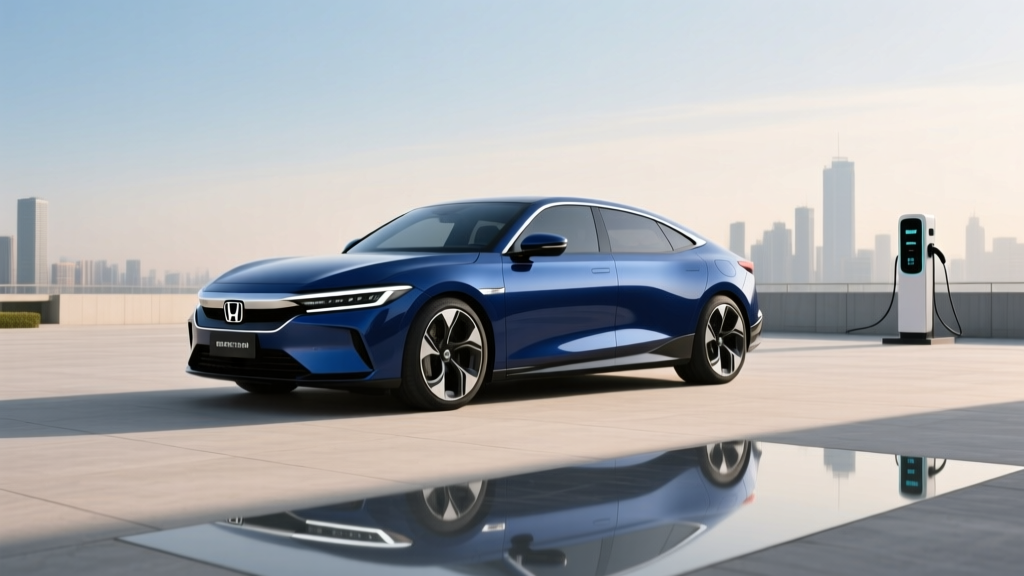
Honda's EV sales slump stems from a limited lineup (primarily the Prologue, EPA-estimated 296 miles range, starting at $47,400 MSRP), heavy reliance on GM's Ultium platform, and intense competition from the Hyundai Ioniq 5, Tesla Model Y, and Ford Mustang Mach-E. For buyers, this means aggressive dealer discounts and lease incentives on the Prologue, but also legitimate questions about Honda's long-term EV commitment and resale value. If you want a Honda badge with electric powertrain, the Prologue is competent but not class-leading. If you want Honda's legendary reliability with electrification, the CR-V Hybrid (40 MPG combined) or the upcoming 2026 Honda 0 Series models may be smarter plays.
Why Honda's EV Sales Are Stalling
Honda's electric vehicle sales in the U.S. have underperformed relative to the broader EV market's growth trajectory. The core issues are structural, not just cyclical:
- Single-model dependency: The Prologue (a rebadged Chevrolet Blazer EV built on GM's Ultium platform) carries Honda's entire EV portfolio. One model cannot compete against brands offering 4-6 EVs across segments.
- Platform dependency on GM: Honda doesn't control its own EV architecture yet. The Prologue shares the Ultium platform with the Blazer EV and Cadillac Lyriq, meaning Honda can't differentiate on battery tech, charging speed, or software.
- Pricing pressure: At $47,400 base MSRP for the 2026 Prologue, it undercuts the Tesla Model Y Long Range ($48,990) only slightly, while the Hyundai Ioniq 5 starts around $42,950. The price-to-range ratio isn't compelling enough.
- Charging speed limitations: The Prologue peaks at 190 kW DC fast charging (10-80% in approximately 28 minutes). Competitors like the Ioniq 5 (800V architecture, 240 kW peak, 10-80% in ~18 minutes) and the Kia EV6 charge noticeably faster.
- Brand identity gap: Honda buyers historically prioritize fuel efficiency, reliability, and value. The Prologue doesn't clearly deliver a "Honda" experience — it drives and feels like a Chevrolet underneath.
Honda has acknowledged the challenge. The company is pivoting toward its in-house "0 Series" EV platform, with new dedicated Honda EVs expected to begin arriving for the 2026-2027 model years. But those are still largely announced/preliminary — not on dealer lots today.
2026 Honda Prologue: By the Numbers
| Specification | 2026 Honda Prologue (FWD) | 2026 Honda Prologue (AWD) |
|---|---|---|
| EPA Range | 296 miles | 281 miles |
| Battery (usable) | 85 kWh, NMC (Ultium) | 85 kWh, NMC (Ultium) |
| Horsepower | 212 hp | 288 hp |
| 0-60 mph | ~7.8 sec | ~6.2 sec |
| DC Fast Charge Peak | 190 kW | 190 kW |
| 10-80% DC Fast Charge | ~28 minutes | ~28 minutes |
| Level 2 Charge Rate | 11.5 kW (~7.7 kW onboard) | 11.5 kW (~7.7 kW onboard) |
| MPGe (combined) | 99 MPGe | 95 MPGe |
| Base MSRP | $47,400 | $49,400 |
| Battery Warranty | 8 years / 100,000 miles | 8 years / 100,000 miles |
Real-World Range Reality
The EPA rates the Prologue FWD at 296 miles, but expect 240-260 miles in real-world highway driving at 70+ mph, and potentially 210-230 miles in freezing temperatures. The Ultium platform's thermal management is adequate but not best-in-class. On a 300-mile road trip, plan for at least one DC fast-charging stop.
Prologue vs. the Competition: EV vs. EV
| Metric | 2026 Honda Prologue FWD | 2026 Hyundai Ioniq 5 SEL RWD | 2026 Tesla Model Y LR AWD | 2026 Ford Mach-E Select RWD |
|---|---|---|---|---|
| EPA Range | 296 mi | 303 mi | 320 mi | 250 mi |
| Battery | 85 kWh NMC | 77.4 kWh NMC | ~75 kWh NMC | 70 kWh NMC |
| DC Peak / 10-80% | 190 kW / ~28 min | 240 kW / ~18 min | 250 kW / ~15 min | 150 kW / ~34 min |
| 0-60 mph | 7.8 sec | 7.4 sec | 4.8 sec | 6.3 sec |
| Base MSRP | $47,400 | $42,950 | $48,990 | $42,995 |
| Federal §30D Credit | Eligible (verify sourcing) | Eligible (verify sourcing) | Eligible | Eligible (verify sourcing) |
| Charging Network | NACS (Supercharger access) | NACS (Supercharger access) | NACS native | NACS (Supercharger access) |
The Prologue holds its own on range but loses decisively on charging speed, performance, and price. The Ioniq 5 offers more range, faster charging, and a lower starting price. The Model Y delivers superior performance and access to Tesla's mature Supercharger network. The Prologue's primary selling point is the Honda badge and dealership experience — which matters to loyal brand enthusiasts but doesn't win spec-sheet comparisons.
EV vs. Hybrid: What Honda Does Best
For many Honda shoppers, the smarter electrified purchase in 2026 may not be the Prologue at all — it may be a hybrid.
| Factor | 2026 Honda Prologue (EV) | 2026 Honda CR-V Hybrid (HEV) |
|---|---|---|
| MSRP (base) | $47,400 | $35,850 |
| EPA Efficiency | 99 MPGe (2.96 mi/kWh) | 40 MPG combined |
| Annual Fuel/Energy Cost* | ~$620 (home charging, $0.14/kWh) | ~$1,500 (gasoline, $3.30/gal) |
| Federal Tax Credit | Up to $7,500 (§30D) | None |
| 5-Year Fuel Savings vs. Gas CR-V | ~$4,400 | ~$1,500 |
| Home Charging Required? | Strongly recommended (Level 2 install: $500-$2,000) | No |
| Road-Trip Convenience | DC charging stops every 220-250 mi | Gas stations everywhere, 375+ mi range |
| Maintenance (5-yr est.) | ~$1,200 (no oil changes, tire rotation, cabin filter) | ~$2,800 (oil changes, brakes, filters) |
*Based on 12,000 miles/year, national average electricity rate of $0.14/kWh and gasoline at $3.30/gallon. Actual costs vary by region and driving pattern. Source: fueleconomy.gov.
The math is revealing. After the §30D credit, the Prologue's effective price drops to roughly $39,900 — still $4,050 more than the CR-V Hybrid. The Prologue saves about $880/year in energy costs over the hybrid. That means it takes approximately 4.6 years to break even on the price premium through fuel savings alone. If you drive more than 12,000 miles/year or have access to cheap/free charging, the math improves. If you primarily drive short commutes and can charge at home, the Prologue offers a quieter, smoother daily experience.
What the Sales Slump Means for Your Wallet
Here's where Honda's struggles become your opportunity — or your risk:
The Upside: Deals Are Available
Slow sales force Honda and its dealers to incentivize. In 2026, expect:
- Lease deals: Honda has historically offered aggressive lease pricing on the Prologue (some markets have seen effective monthly payments under $300/month with the $7,500 credit applied as a capitalized cost reduction via the commercial clean vehicle credit loophole under §45W). Check current offers on Honda's site.
- Dealer discounts: Inventory sitting on lots means negotiation leverage. $3,000-$5,000 off MSRP is realistic in many markets.
- Federal §30D credit: The Prologue may qualify for up to $7,500 in federal tax credits, subject to income caps ($150K single / $300K joint), MSRP caps ($80K SUVs), and critical mineral/battery component sourcing requirements. Always verify current eligibility on IRS.gov — sourcing rules have tightened significantly.
The Risk: Resale Value Uncertainty
A brand pulling back from EVs or struggling with sales creates depreciation risk. The Prologue's resale value is already under pressure due to:
- GM Ultium platform perception (buyers may prefer "real" Honda engineering)
- Honda's announced pivot to its own 0 Series platform (making the Prologue a "transitional" model)
- Broader EV market price compression from Tesla price cuts and Chinese competition
If you plan to own the Prologue for 5+ years, this matters less. If you're considering a 3-year ownership cycle, leasing may protect you from depreciation risk.
Tax Credit Eligibility Checklist
§30D Federal EV Tax Credit — Key Requirements (2026)
- Income cap: Modified AGI ≤ $150,000 (single) or ≤ $300,000 (married filing jointly)
- MSRP cap: Vehicle MSRP ≤ $80,000 for SUVs/trucks/vans; ≤ $55,000 for sedans
- Battery sourcing: Critical minerals and battery components must meet escalating domestic/free-trade-partner thresholds — these tighten annually. Verify the specific VIN on the IRS qualified vehicles list.
- Point-of-sale transfer: You can transfer the credit to the dealer at purchase for an immediate price reduction (instead of waiting for your tax return)
- Assembly: Vehicle must undergo final assembly in North America
Source: IRS — Clean Vehicle Credits. Rules change frequently; consult a tax professional.
Decision Framework: Should You Buy a Honda EV?
Choose the Honda Prologue If:
- You're a loyal Honda owner who values the dealer service experience and wants to stay in the brand
- You can secure a strong lease deal or negotiate $4,000+ off MSRP
- Your daily commute is under 80 miles round-trip with home Level 2 charging
- You want an EV SUV with 290+ miles of range and don't need fastest-in-class charging
- You plan to keep the vehicle 5+ years (absorbing depreciation risk)
Choose a Competitor If:
- You prioritize charging speed (Ioniq 5 or Model Y charge 30-40% faster)
- You want best-in-class performance (Model Y AWD: 4.8 sec 0-60)
- You need maximum cargo space (Model Y: 76 cu ft vs. Prologue: 57 cu ft behind rear seats)
- You want a proven, dedicated EV platform (not a rebadged GM product)
- Resale value certainty matters for a 3-year ownership horizon
Choose a Honda Hybrid Instead If:
- You can't install a Level 2 home charger (apartment, street parking, no garage)
- You regularly drive 300+ miles between stops in rural areas with sparse DC charging
- You live in extreme cold climates (below 0°F regularly) where EV range drops 30-40%
- Your budget is under $40,000 and you want Honda reliability without EV complexity
- You want to wait for Honda's dedicated 0 Series EVs (2027+)
Common Misconceptions About Honda's EV Situation
| Myth | Fact |
|---|---|
| "Honda is abandoning EVs." | No — Honda is pivoting to its own 0 Series platform. The Prologue was always a stopgap while Honda developed in-house tech. New Honda-designed EVs are announced for 2027+. |
| "The Prologue is unreliable because it's a GM product." | The Ultium platform has improved since its rocky 2023-2024 launch. However, Honda doesn't control the powertrain, so long-term reliability data specific to the Prologue is still limited. |
| "I can't charge a Prologue at Tesla Superchargers." | As of 2025, the Prologue (equipped with NACS port or via adapter) can access Tesla's Supercharger network. Verify adapter availability with your dealer. |
| "The $7,500 tax credit applies to everyone." | No. Income caps, MSRP caps, and battery-sourcing requirements apply. The Prologue's eligibility can change as sourcing rules tighten. Always check the IRS qualified vehicle list for your specific VIN. |
| "Honda EVs will have terrible resale value forever." | The Prologue specifically may depreciate faster due to its transitional status. Future Honda 0 Series EVs built on dedicated platforms will likely hold value better — but that's unproven. |
First-Time EV Buyer: What You Must Know
If the Honda Prologue is your entry point into EV ownership, here's what the spec sheet doesn't tell you:
Home Charging Is Non-Negotiable for Most Owners
Level 1 charging (standard 120V outlet) adds roughly 3-4 miles of range per hour — that's 36-48 miles overnight. For the Prologue's 85 kWh battery, a full Level 1 charge takes over 24 hours. A Level 2 home charger (240V, 48A circuit) adds ~25-30 miles per hour and fully charges overnight in about 9-10 hours. Budget $500-$2,000 for professional Level 2 installation depending on your electrical panel capacity. If your panel is maxed out at 100A, a panel upgrade to 200A can cost $1,500-$3,000 additional.
DC Fast Charging Isn't Always Fast
The Prologue's 190 kW peak charge rate only sustains between roughly 10-40% state of charge. Above 60%, the charge curve tapers significantly. Expect 10-80% in ~28 minutes at a compatible 200+ kW station, but 80-100% can take an additional 30+ minutes. Plan road-trip stops around the 10-80% window.
Cold Weather Is the Great Equalizer
In sustained temperatures below 32°F, expect the Prologue's range to drop 25-35%. That 296-mile EPA rating becomes roughly 200-220 miles in January in Minneapolis. Preconditioning the battery (warming it before driving/charging while plugged in) mitigates some loss but doesn't eliminate it. If you live in a cold climate, this is a real ownership factor — not a myth.
Insurance Costs More
EV insurance premiums run 15-25% higher than comparable gas vehicles due to battery replacement costs and specialized repair requirements. Get an insurance quote on the specific Prologue trim before finalizing your purchase. In some states, the premium gap is $400-$800/year.
Frequently Asked Questions
Is the Honda Prologue being discontinued?
As of 2026, Honda has not announced a discontinuation of the Prologue. However, Honda's long-term strategy centers on its in-house 0 Series EV platform launching with new models expected for 2027+. The Prologue may continue as a value-oriented option or be replaced. If you're considering one, the transitional status is a legitimate depreciation risk factor.
Can I get the $7,500 tax credit on a Honda Prologue?
Possibly, but eligibility depends on your income, the vehicle's MSRP, and whether the battery meets current-year critical mineral and component sourcing thresholds. The Prologue qualifies as an SUV under the $80,000 MSRP cap. Check the fueleconomy.gov tax credit lookup for the specific model year and trim, and consult a tax professional for your personal situation.
How does the Prologue compare to the CR-V Hybrid for daily commuting?
For a 30-mile round-trip commute with home charging, the Prologue costs roughly $0.04/mile in electricity vs. $0.12/mile in gasoline for the CR-V Hybrid. Over a year (12,000 miles), that's ~$480 vs. ~$1,440 in energy costs — a $960 annual savings. The Prologue is also quieter and smoother in stop-and-go traffic. However, the CR-V Hybrid costs $11,550 less upfront and has no charging requirements.
What Honda EVs are coming next?
Honda's 0 Series platform is the company's next-generation dedicated EV architecture. Honda has announced plans for multiple models built on this platform, with production expected to begin in 2026-2027 for global markets. Specific U.S. models, pricing, range, and availability remain preliminary. If you're not in a rush, waiting for Honda's own-platform EVs may yield a more competitive product.
Is it better to lease or buy the Prologue given the sales slump?
Leasing protects you from depreciation risk, which is elevated for the Prologue due to its transitional-platform status and Honda's uncertain EV direction. Additionally, some Honda leases have historically passed through the $7,500 commercial clean vehicle credit (§45W) as a capitalized cost reduction, effectively lowering monthly payments. Buying makes more sense only if you can negotiate a substantial discount ($5,000+ off MSRP), plan to keep the vehicle 5+ years, and want to claim the §30D credit directly.