Quick Answer: Is a Honda EV Worth It in 2026?
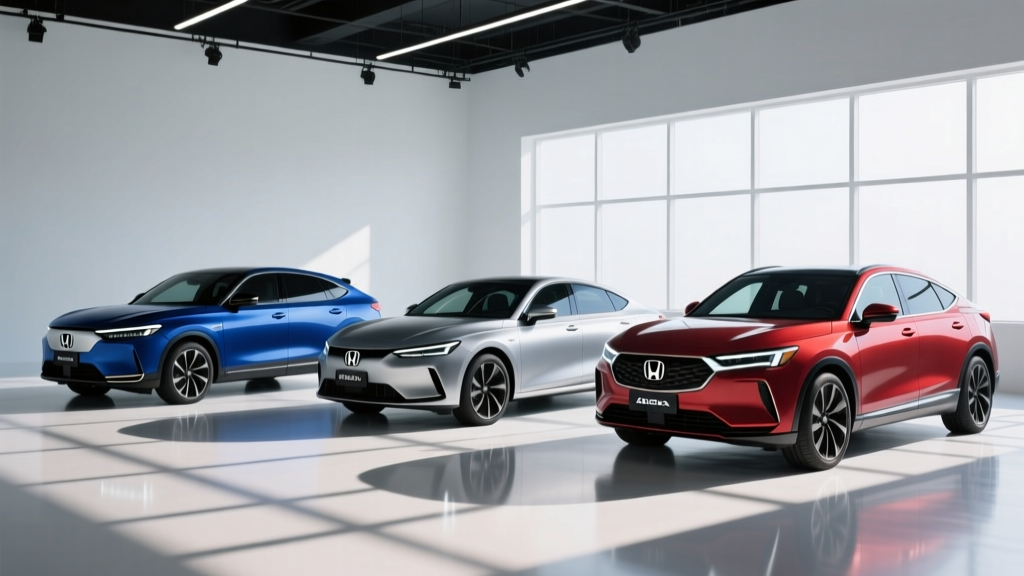
Honda's EV lineup in 2026 centers on the Prologue SUV (EPA range up to 308 miles, starting ~$47,400) and the upcoming Honda 0 Series Saloon sedan (announced for late 2026, targeting 300+ miles). The Prologue delivers competitive range and DC fast charging up to 150 kW, but real-world highway range drops to roughly 250-270 miles, and cold weather can cut that further. For buyers with home Level 2 charging and daily commutes under 80 miles, a Honda EV can save $1,200-$1,800 annually in fuel versus a comparable gas SUV. However, tax credit eligibility under IRS §30D rules depends on battery sourcing, your income, and the vehicle's MSRP — verify current-year requirements before purchasing.
Honda EV Lineup: What's Available and What's Coming
Honda's electric strategy has evolved significantly since the Clarity EV's discontinuation. The 2026 lineup includes one production model and one announced vehicle:
| Model | Status | EPA Range | Battery (kWh) | DC Fast Charge (kW) | 0-60 mph | Base MSRP |
|---|---|---|---|---|---|---|
| 2026 Honda Prologue (FWD) | Available | 308 mi | 85 kWh (NMC) | 150 kW peak | ~7.5 sec | $47,400 |
| 2026 Honda Prologue (AWD) | Available | 281 mi | 85 kWh (NMC) | 150 kW peak | ~6.5 sec | $50,400 |
| Honda 0 Series Saloon | Announced (late 2026) | 300+ mi (est.) | ~80 kWh (est.) | 200+ kW (est.) | TBD | TBD |
Key distinction: The Prologue shares GM's Ultium platform with the Chevrolet Blazer EV and Cadillac Lyriq, which means proven battery chemistry and access to Tesla Superchargers via adapter. The upcoming 0 Series Saloon will use Honda's proprietary architecture with thinner, lighter battery packs and a dedicated EV platform.
Real-World Range: What to Actually Expect
EPA Sticker: 308 miles (Prologue FWD)
Real-World Highway (70-75 mph): ~250-270 miles
Cold Weather (below 32°F): ~220-240 miles (20-30% reduction)
Why the gap? EPA testing includes city driving with regenerative braking recovery. Sustained highway speeds increase aerodynamic drag exponentially, and cold temperatures reduce battery efficiency while requiring cabin heating. The Prologue's heat pump helps, but physics still applies.
Charging Speed and Infrastructure: The Prologue's 150 kW Reality
The Prologue's peak DC fast-charging rate is 150 kW, but that number requires context. Like all EVs, the Prologue follows a charging curve that tapers as the battery fills:
| Charging Level | Power (kW) | Miles Added per Hour | 10-80% Time | Best Use Case |
|---|---|---|---|---|
| Level 1 (120V household) | 1.4 kW | ~4 mi/hr | ~60+ hours | Emergency/overnight trickle |
| Level 2 (240V home/work) | 7.7-11.5 kW | ~25-35 mi/hr | ~8-10 hours | Daily home charging |
| DC Fast (150 kW peak) | 150 kW (peak) | ~200+ mi in 30 min | ~30 minutes | Road trips, public stations |
The charging curve reality: The Prologue will sustain close to 150 kW from roughly 10-50% state of charge, then taper to 100-120 kW through 70%, and drop further above 80%. A 10-80% charge takes approximately 30 minutes at a capable DC fast charger (Electrify America, EVgo, or Tesla Supercharger with the included adapter).
Home charging setup: Most Prologue owners install a Level 2 wallbox (7.7-11.5 kW) requiring a 240V circuit. Installation costs range from $800-$2,500 depending on panel capacity, wiring distance, and local permit fees. If your home has a 200-amp electrical panel with spare capacity, expect the lower end. Older homes with 100-amp service may need a panel upgrade ($1,500-$3,000 additional).
Cost Breakdown: Honda EV vs Gas vs Hybrid
Let's compare five-year ownership costs for the Prologue EX (FWD, $47,400 MSRP) against a comparable gas SUV (2026 Honda CR-V EX AWD, ~$35,000 MSRP, 30 MPG combined) and a hybrid (2026 Honda CR-V Hybrid, ~$38,000 MSRP, 40 MPG combined). Assumptions: 15,000 miles/year, electricity at $0.15/kWh, gas at $3.50/gallon, no tax credit applied (eligibility varies).
| Cost Category | Honda Prologue (EV) | Honda CR-V (Gas) | Honda CR-V Hybrid |
|---|---|---|---|
| Purchase Price (MSRP) | $47,400 | $35,000 | $38,000 |
| Federal Tax Credit (§30D) | $0-$7,500* | $0 | $0 |
| 5-Year Fuel/Energy Cost | $3,750** | $8,750 | $6,560 |
| 5-Year Maintenance | $1,500 | $3,500 | $3,200 |
| 5-Year Insurance (est.) | $9,000 | $7,500 | $7,800 |
| 5-Year Total (excl. credit) | $61,650 | $54,750 | $55,560 |
| 5-Year Total (with max credit) | $54,150 | $54,750 | $55,560 |
*Federal EV tax credit eligibility under IRS §30D depends on battery component sourcing, critical mineral requirements, your modified adjusted gross income (single filers: $150k cap; joint: $300k), and vehicle MSRP caps ($55k for SUVs, $80k for trucks/vans). The Prologue's credit eligibility has varied — check fueleconomy.gov for current status. Point-of-sale transfer is available if eligible.
**Energy cost assumes 80% home charging at $0.15/kWh and 20% public DC fast charging at $0.35/kWh. The Prologue's efficiency is ~3.0 kWh/mile (EPA-rated 114 MPGe combined).
The math: Without the tax credit, the Prologue costs ~$6,900 more than the gas CR-V over five years. With the full $7,500 credit, it breaks even or saves ~$600. But this excludes time savings (no gas station stops), environmental impact, and the driving experience. If you charge primarily at home with off-peak rates ($0.08-$0.10/kWh), your energy costs drop to ~$2,400 over five years, improving the equation by ~$1,350.
Tax Credit Eligibility: The §30D Maze
The federal EV tax credit is not a flat $7,500 for everyone. For 2026, the IRS rules require:
- Vehicle MSRP caps: $55,000 for sedans; $80,000 for SUVs, trucks, vans (Prologue qualifies as an SUV)
- Buyer income limits: MAGI ≤$150,000 (single), $225,000 (head of household), $300,000 (joint)
- Battery sourcing: Percentage thresholds for critical minerals and battery components from US or FTA partners increase annually
- Final assembly: Must occur in North America (Prologue is assembled in Tennessee, so it qualifies)
- Point-of-sale transfer: You can transfer the credit to the dealer at purchase, reducing your out-of-pocket cost immediately (if eligible)
Critical caveat: Battery sourcing requirements have disqualified several models in past years. Honda's Ultium-sourced Prologue has maintained eligibility, but verify current-year status on fueleconomy.gov before signing a purchase agreement. State and local incentives (California's CVRP, Colorado's innovative motor vehicle credit, etc.) may stack on top — check your state's energy office.
Real-World Ownership Considerations
Before buying a Honda EV, honestly assess these factors:
Home Charging Access
If you have a garage or dedicated parking spot with access to a 240V outlet (or can install one), EV ownership is convenient — you wake up every morning with a "full tank." If you rely on street parking or live in an apartment without charging infrastructure, public charging becomes your primary fueling method, which is more expensive ($0.30-$0.50/kWh at DC fast chargers) and time-consuming. Some utilities offer rebates for home charger installation — check with your provider.
Climate and Driving Patterns
Cold weather reduces range by 20-30% due to battery chemistry and cabin heating demands. If you live in Minnesota or Maine and regularly drive 200+ miles in winter, the Prologue's 281-mile AWD range may feel tight. Conversely, if you're in Southern California with a 40-mile round-trip commute, range is a non-issue. The Prologue's heat pump (standard) improves cold-weather efficiency versus resistive heating, but it's not a magic solution.
Road Trip Frequency
The Prologue's 150 kW peak charging rate and Supercharger access (via adapter) make road trips feasible, but you'll stop every 2-2.5 hours for 20-30 minutes. If you drive 500+ miles monthly and value minimal stops, a hybrid may better suit your lifestyle. If 95% of your driving is local with occasional road trips, the EV's daily convenience outweighs the road-trip inconvenience.
Maintenance and Reliability
EVs have fewer moving parts than gas cars — no oil changes, spark plugs, or transmission fluid. Expect to replace cabin air filters, wiper blades, brake fluid (less frequent due to regenerative braking), and tires (EVs are heavier and have instant torque, which accelerates tire wear). Honda's battery warranty covers 8 years/100,000 miles with a capacity retention threshold (typically 70% — confirm exact terms in your purchase agreement).
Common Misconceptions: Myth vs Fact
| Myth | Fact |
|---|---|
| "EVs don't have enough range for road trips." | The Prologue's 281-308 mile EPA range covers most drivers' daily needs with margin. For road trips, DC fast charging adds ~200 miles in 30 minutes. Plan stops around charging stations (PlugShare or A Better Routeplanner apps help). |
| "EV batteries need replacement after a few years." | Modern NMC batteries (like the Prologue's Ultium pack) are designed for 15-20 year lifespans with gradual degradation (~1-2% per year). Honda's 8-year/100,000-mile warranty protects against premature failure. Full replacement is rare and costs $10,000-$15,000 if needed post-warranty. |
| "EVs are worse for the environment due to battery manufacturing." | EVs have higher upfront carbon footprints from battery production, but they break even within 1-2 years of driving (depending on your grid's electricity mix) and are significantly cleaner over a 10-15 year lifespan, even on coal-heavy grids. |
| "I'll save thousands on fuel immediately." | Savings depend on your electricity rate, gas prices, and annual mileage. At $0.15/kWh and $3.50/gallon gas, you'll save ~$1,000-$1,200/year driving 15,000 miles. If you pay $0.40/kWh at public chargers exclusively, savings shrink or disappear. |
| "All EVs qualify for the $7,500 tax credit." | Eligibility depends on battery sourcing, your income, vehicle MSRP, and final assembly location. Many EVs have lost eligibility due to sourcing rule changes. Always verify on fueleconomy.gov before purchase. |
Decision Framework: Should You Buy a Honda EV?
Choose the Honda Prologue if:
- You have home Level 2 charging access (or can install it)
- Your daily driving is under 80 miles round-trip
- You want a midsize SUV with 300+ mile range and Supercharger access
- You qualify for the federal tax credit (verify on fueleconomy.gov)
- You value low maintenance costs and instant torque
- You live in a moderate climate or accept cold-weather range reduction
Choose a Honda CR-V Hybrid instead if:
- You lack reliable home or workplace charging
- You regularly drive 300+ miles in a single day (especially in winter)
- You want lower upfront cost ($38,000 vs $47,400) and don't qualify for EV credits
- You live in an apartment without charging infrastructure
- You prefer the flexibility of gas stations for spontaneous long trips
Wait for the Honda 0 Series Saloon if:
- You prefer a sedan over an SUV
- You want Honda's proprietary EV platform (lighter, more efficient)
- You're willing to wait until late 2026 or 2027 for availability
- Target specs (300+ mile range, 200+ kW charging) meet your needs
Frequently Asked Questions
Does the Honda Prologue qualify for the federal tax credit in 2026?
Eligibility depends on current-year battery sourcing rules, your income, and the vehicle's MSRP. The Prologue (assembled in Tennessee with GM Ultium batteries) has qualified in past years, but sourcing requirements tighten annually. Check fueleconomy.gov for the most current list before purchasing. If eligible, you can claim the credit on your tax return or transfer it to the dealer at point of sale.
How long does it take to charge the Prologue at home?
With a Level 2 (240V) home charger delivering 7.7-11.5 kW, a full charge from empty takes 8-10 hours. Most owners plug in overnight and wake up to a full battery. Level 1 (120V household outlet) adds ~4 miles per hour — suitable for topping off if you drive less than 40 miles daily, but impractical for full recharges.
Can I use Tesla Superchargers with the Prologue?
Yes. The Prologue uses the CCS1 connector natively but comes with a Tesla Supercharger adapter (or you can purchase one). This grants access to Tesla's extensive Supercharger network, which is generally more reliable than Electrify America or EVgo. As of 2026, most new EVs are transitioning to the NACS (Tesla) connector standard, but the adapter solution works seamlessly.
What's the real-world range in cold weather?
Expect 220-240 miles in sub-freezing temperatures (20-30% reduction from the 281-308 mile EPA rating). The Prologue's heat pump improves efficiency versus resistive heating, but battery chemistry and cabin heating demands still reduce range. Preconditioning the battery while plugged in (via the Honda app) helps mitigate this loss.
How does the Prologue compare to the Hyundai Ioniq 5 or Kia EV6?
The Ioniq 5 and EV6 offer faster DC charging (up to 240 kW vs 150 kW), which translates to 10-80% in ~18 minutes versus ~30 minutes for the Prologue. However, the Prologue's 308-mile EPA range (FWD) edges out the Ioniq 5's 303 miles and EV6's 310 miles (Long Range RWD). Pricing is similar ($47k-$52k range). The deciding factor may be charging speed (favoring Hyundai/Kia) or Supercharger access and brand preference (favoring Honda).
What's the battery warranty, and what does it cover?
Honda covers the Prologue's battery for 8 years or 100,000 miles (whichever comes first) against defects and excessive capacity loss. The industry standard threshold is 70% state of health — if your battery drops below 70% capacity within the warranty period, Honda will repair or replace it. Normal degradation (~1-2% per year) is expected and not covered unless it exceeds the threshold.
Is the Prologue self-driving?
No. The Prologue comes with Honda Sensing, a Level 2 driver-assistance suite including adaptive cruise control, lane-keeping assist, and automatic emergency braking. Level 2 means you must remain engaged, hands on the wheel, and eyes on the road at all times. This is not autonomous driving — it's a convenience and safety aid. Only Level 4 robotaxis (Waymo, Zoox) operate without driver supervision, and those are limited to specific geographic zones.