Quick Answer: Is the Honda EV Plus Right for You?
The 2026 Honda EV Plus is Honda's entry into the mainstream electric vehicle market, offering an EPA-estimated range of approximately 300 miles, DC fast charging up to 150 kW, and a starting MSRP around $40,000. It's designed for buyers transitioning from gas vehicles who want Honda's reliability reputation with zero tailpipe emissions. Real-world range typically falls to 240-270 miles on highway trips and drops further in cold weather. Home charging access is essential for convenient ownership, and federal tax credit eligibility depends on your income, the vehicle's MSRP, and battery sourcing requirements per current IRS §30D rules.
What Is the Honda EV Plus?
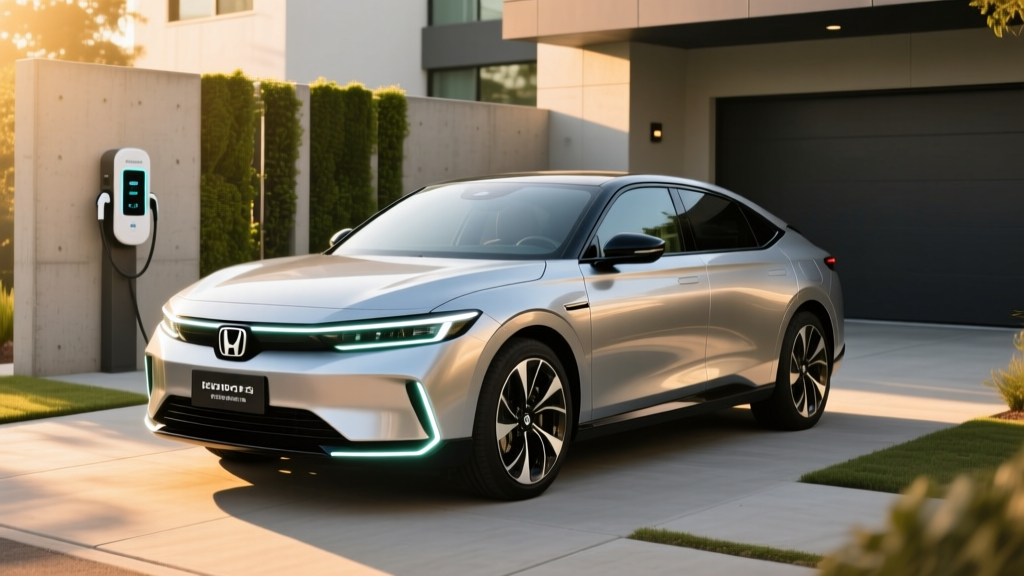
The Honda EV Plus represents Honda's commitment to battery-electric vehicles for the North American market. Built on Honda's dedicated EV platform, it positions itself as a practical family sedan/crossover with the brand's traditional focus on reliability, interior space efficiency, and driver-focused ergonomics. Unlike Honda's earlier compliance EVs or the hydrogen-focused Clarity, the EV Plus is designed as a volume seller competing directly with vehicles like the Tesla Model 3, Hyundai Ioniq 6, and Chevrolet Equinox EV.
Honda has taken a measured approach to electrification, continuing to offer strong hybrid options across its lineup (Accord Hybrid, CR-V Hybrid) while developing the EV Plus for buyers ready to eliminate gas entirely. The vehicle uses a lithium-ion battery pack—likely NMC chemistry given Honda's historical battery partnerships—and supports both Level 2 home charging and DC fast charging infrastructure.
Range, Efficiency & Real-World Performance
The EPA-estimated range sticker is where most buyers start, but real-world conditions tell a more complete story:
EPA Range vs. Real-World Expectations
EPA Estimated: ~300 miles
Real-World Highway (70 mph): 240-270 miles
Cold Weather (below freezing): 200-240 miles
City/Stop-and-Go: 280-310 miles (regenerative braking helps)
These variations aren't unique to Honda—they apply to all EVs. Highway driving at sustained speeds consumes more energy than city driving because regenerative braking can't recover kinetic energy. Cold temperatures reduce battery efficiency and require energy for cabin heating, though heat pump systems (if equipped) mitigate this loss.
Efficiency is typically measured in MPGe (miles per gallon equivalent) or kWh per 100 miles. Expect the EV Plus to achieve approximately 110-120 MPGe combined, translating to roughly 28-32 kWh per 100 miles. This efficiency level is competitive with other mainstream EVs and significantly better than older, heavier electric SUVs.
Charging: Home & Public Infrastructure
Charging speed and access are make-or-break factors for EV ownership satisfaction. Here's what the EV Plus offers:
| Charging Level | Power (kW) | Miles Added Per Hour | Typical Use Case |
|---|---|---|---|
| Level 1 (120V) | 1.4-1.9 kW | 3-5 miles | Emergency/overnight top-up |
| Level 2 (240V) | 7.2-11.5 kW | 20-35 miles | Daily home charging |
| DC Fast Charge | Up to 150 kW peak | ~180-220 miles in 30 min | Road trips, quick top-ups |
Critical detail: The 150 kW peak rate applies only between roughly 10-80% state of charge. Above 80%, charging slows dramatically to protect battery health—a 10-80% session takes approximately 25-35 minutes, while 10-100% could take 50+ minutes. This charge curve taper is normal for all lithium-ion EVs.
Home Charging Setup
Most EV owners do 80-90% of their charging at home. For the EV Plus, you'll want a Level 2 home charger (240V, 32-48 amps) installed by a licensed electrician. Expect installation costs of $500-$2,000 depending on your electrical panel capacity and distance from the panel to your parking spot. If your home has a 200-amp electrical panel with spare capacity, installation is straightforward. Older homes with 100-amp service may require a panel upgrade ($1,500-$3,000+).
The federal government offers a tax credit for home charging equipment installation (up to $1,000 under current rules), though eligibility has specific requirements. Check IRS.gov for current qualifications.
Cost Breakdown: Purchase, Fuel, Maintenance & Insurance
The total cost of EV ownership extends well beyond the sticker price. Here's a realistic 5-year comparison:
| Cost Category | Honda EV Plus | Comparable Gas Sedan |
|---|---|---|
| Purchase Price (MSRP) | $40,000 | $30,000 |
| Federal Tax Credit (§30D) | -$0 to $7,500* | $0 |
| Home Charger Install | $1,200 | $0 |
| Fuel/Energy (5 years, 75k miles) | $4,500** | $9,000 |
| Maintenance (5 years) | $1,500 | $3,500 |
| Insurance (5 years) | $9,000 | $7,500 |
| Total 5-Year Cost | $46,200-$53,700 | $50,000 |
*Tax credit eligibility depends on MSRP caps, buyer income limits, and battery sourcing requirements. Not all buyers qualify for the full amount. Consult a tax professional and review current IRS §30D guidelines.
**Electricity cost assumes $0.15/kWh national average. Actual costs vary by utility rates, time-of-use pricing, and whether you charge at home vs. public stations.
Where EVs Save Money
Fuel costs: Electricity is typically 50-70% cheaper per mile than gasoline. At $3.50/gallon gas and 30 MPG, you're paying $0.12/mile. At $0.15/kWh and 30 kWh/100mi efficiency, you're paying $0.045/mile—roughly one-third the cost.
Maintenance: EVs eliminate oil changes, spark plugs, timing belts, and exhaust system repairs. Regenerative braking reduces brake pad wear. You'll still need tire rotations, cabin air filters, and wiper fluid, but annual maintenance drops from $700-$1,000 (gas) to $200-$400 (EV).
Where EVs Cost More
Upfront price: EVs typically cost $5,000-$15,000 more than equivalent gas vehicles, though the gap is narrowing.
Insurance: EV insurance premiums run 10-25% higher due to higher repair costs and specialized parts. Get quotes before purchasing.
Charging infrastructure: If you can't charge at home (apartment living, street parking), public charging costs more ($0.30-$0.50/kWh at DC fast chargers) and adds inconvenience.
EV vs. Hybrid: Which Honda Makes Sense?
Honda offers excellent hybrid options (Accord Hybrid, CR-V Hybrid) that achieve 40-48 MPG combined. For buyers not ready to commit to full electric, these remain strong choices. Here's how they compare:
| Factor | Honda EV Plus (BEV) | Honda Hybrid (HEV) |
|---|---|---|
| Fuel Source | Electricity only | Gas + regenerative braking |
| Range | ~300 miles (EPA) | 500-600 miles |
| Refueling/Recharging | Home + public chargers | Gas stations (5 min) |
| Fuel Cost Per Mile | $0.045 | $0.08 |
| Maintenance | Minimal | Moderate (oil changes, etc.) |
| Tailpipe Emissions | Zero | Low |
| Best For | Home charging access, daily commutes <200 mi | No home charging, frequent long trips |
Decision Framework: EV Plus or Hybrid?
Choose the Honda EV Plus if:
- You have reliable home charging access (garage, driveway, or dedicated parking with outlet)
- Your daily driving is under 200 miles round-trip
- You want to eliminate gas station visits and minimize maintenance
- You qualify for federal/state tax credits that offset the higher purchase price
- You're motivated by zero tailpipe emissions
Choose a Honda Hybrid if:
- You live in an apartment or park on the street with no charging access
- You frequently drive 400+ miles in a day (road trips, rural areas)
- You're in a region with limited public charging infrastructure
- The EV's higher upfront cost doesn't fit your budget, even with incentives
- You experience extreme cold winters where EV range loss is significant
Common Misconceptions About the Honda EV Plus
| Myth | Fact |
|---|---|
| "EV batteries need replacement every 5 years" | Modern EV batteries are warrantied for 8 years/100,000 miles (minimum) and typically last 15-20 years with gradual capacity loss (10-20% over 10 years). |
| "Charging takes too long" | Home charging happens overnight while you sleep (8-10 hours for full charge). DC fast charging adds 150+ miles in 20 minutes—longer than gas, but you only use it on road trips. |
| "EVs don't work in cold weather" | EVs work in cold weather but lose 20-30% range. If you need 250 miles in winter, buy an EV with 300+ mile EPA range and precondition the battery while plugged in. |
| "The electrical grid can't handle EVs" | Most EV charging happens overnight during off-peak hours. Grid upgrades are ongoing, and smart charging can shift demand to match renewable energy availability. |
| "EVs are worse for the environment" | EVs have higher manufacturing emissions (battery production) but offset this within 1-3 years of driving. Over a 10-year lifespan, EVs produce 50-70% fewer total emissions than gas cars, even on coal-heavy grids. |
Federal Tax Credit Eligibility (§30D)
The federal EV tax credit can reduce your tax liability by up to $7,500, but eligibility is complex and subject to change. Current requirements include:
- MSRP Cap: Vans/SUVs/pickups must be under $80,000; sedans under $55,000
- Buyer Income Limits: Modified AGI under $150,000 (single), $225,000 (head of household), $300,000 (married filing jointly)
- Battery Sourcing: Critical minerals and battery components must meet increasing domestic/FTA-country sourcing percentages
- Point-of-Sale Transfer: You can transfer the credit to the dealer for an immediate price reduction (effective 2024+)
The Honda EV Plus's eligibility depends on where its battery materials are sourced and your personal tax situation. Always verify current rules at IRS.gov and consult a tax professional before assuming you'll receive the credit.
Real-World Ownership Considerations
Home Charging Access
This is the single biggest factor in EV satisfaction. If you can install a Level 2 charger at home, you'll wake up every morning with a "full tank" and rarely visit public chargers. If you rent, live in a condo, or park on the street, research public charging options in your area using apps like PlugShare or ChargePoint. Some workplaces offer Level 2 charging as an employee benefit.
Climate & Driving Patterns
If you live in mild climates (California, Southeast), the EV Plus's range will stay close to EPA estimates. In cold-weather states (Minnesota, Maine), plan for 20-30% range reduction in winter and consider a vehicle with 300+ mile EPA range to maintain adequate buffer.
For frequent road trippers, map out DC fast charging corridors using fueleconomy.gov and charging network apps. Tesla's Supercharger network (now opening to other brands via NACS adapters) offers the most reliable coverage, while Electrify America, EVgo, and ChargePoint provide growing alternatives.
Battery Longevity & Warranty
Honda will provide a battery warranty meeting federal minimums: 8 years/100,000 miles with a capacity retention threshold (typically 70% of original capacity). Real-world data from other manufacturers shows modern lithium-ion packs losing 1-2% capacity per year under normal use, meaning you'll likely have 85-90% capacity after 10 years.
To maximize battery life:
- Avoid frequent DC fast charging (use Level 2 at home when possible)
- Don't regularly charge to 100% or drain to 0% (20-80% is the sweet spot for daily use)
- Precondition the battery while plugged in before fast charging or cold-weather driving
Frequently Asked Questions
How long does it take to charge the Honda EV Plus at home?
With a Level 2 home charger (240V, 40 amps), expect 8-10 hours for a full charge from empty. Most owners charge 20-80% daily, which takes 4-6 hours. Level 1 (standard 120V outlet) adds only 3-5 miles per hour and is suitable only for emergency top-ups or very low daily mileage.
Can I take the Honda EV Plus on road trips?
Yes, with planning. The 300-mile EPA range and 150 kW DC fast charging capability make road trips practical. You'll stop every 200-250 miles for 20-30 minutes to charge from 10-80%. Apps like A Better Routeplanner help map charging stops along your route.
What happens if the battery fails out of warranty?
Battery replacement costs $10,000-$20,000 depending on capacity, but complete failures are rare. More common is gradual capacity loss, which the warranty covers if it drops below the threshold (typically 70%). Most EV batteries outlast the vehicle's useful life.
Is the Honda EV Plus eligible for the $7,500 tax credit?
Eligibility depends on the vehicle's battery sourcing, your income, and the MSRP. Honda's battery supply chain and manufacturing partnerships will determine compliance with §30D requirements. Check the latest eligibility list at fueleconomy.gov and consult a tax professional for your specific situation.
How does the EV Plus compare to Tesla?
The Tesla Model 3 offers similar range (341 miles Long Range) and faster charging (250 kW peak) but with a different interior philosophy (minimalist, screen-centric). The EV Plus likely emphasizes traditional Honda ergonomics, physical controls, and potentially better build quality consistency. Tesla's Supercharger network remains an advantage, though other networks are improving.
What maintenance does the EV Plus require?
Minimal compared to gas cars: tire rotations every 5,000-7,500 miles, cabin air filter replacement annually, wiper fluid top-ups, and brake fluid checks every 2-3 years. No oil changes, spark plugs, timing belts, or exhaust repairs. Expect $200-$400 annually vs. $700-$1,000 for gas vehicles.
Final Verdict: Who Should Buy the Honda EV Plus?
The Honda EV Plus makes sense for buyers who want mainstream EV ownership with Honda's reputation for reliability and practicality. It's ideal if you have home charging access, drive under 200 miles daily, and qualify for tax incentives that bring the effective price closer to gas alternatives. The 300-mile range and 150 kW charging are competitive, though not class-leading.
However, if you lack home charging, frequently drive 400+ miles in a day, live in extreme cold climates, or need the lowest possible upfront cost, a Honda hybrid or waiting for further EV infrastructure development may be wiser. The EV Plus is a solid choice for the growing segment of buyers ready to electrify—but it's not the right choice for every driver or every situation.
Before purchasing, test drive the vehicle, get insurance quotes, verify tax credit eligibility, and ensure you have a viable home charging solution. EV ownership is deeply satisfying when the infrastructure and use case align, but frustrating when they don't.