The Honda Prologue Lease Deal That's Turning Heads
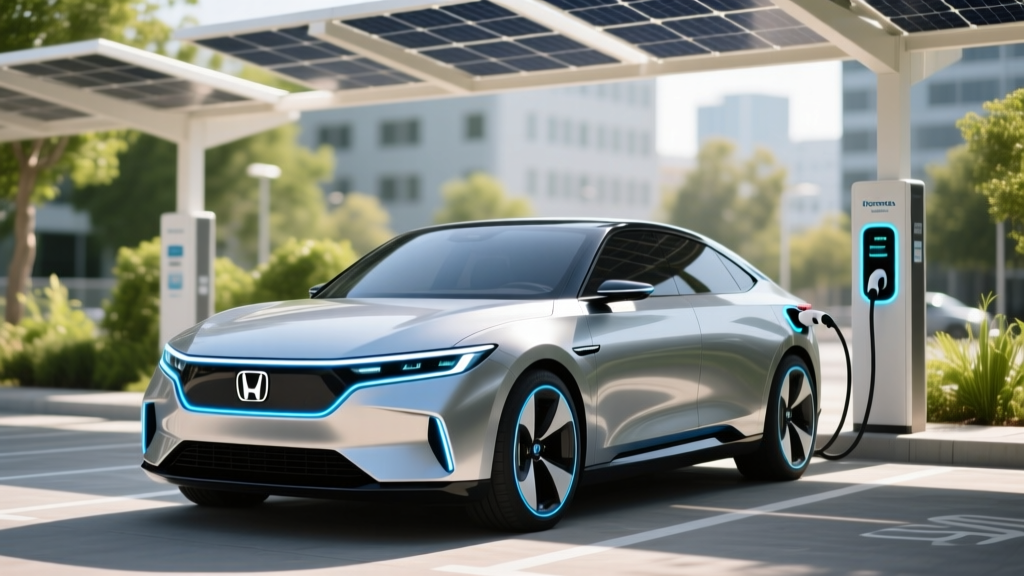
If you've been searching for a Honda EV lease in 2026, you've likely encountered the Prologue — Honda's first mass-market battery-electric vehicle, built on GM's Ultium platform. With a starting MSRP around $47,400 for the EX trim and lease deals frequently advertising the full $7,500 federal incentive applied at signing, the Prologue has become one of the most talked-about entry points into electric driving.
But here's what most dealership ads don't tell you: the headline lease payment is only one piece of the ownership puzzle. Insurance premiums, home charging installation, electricity costs, and long-term depreciation all factor into whether that Prologue lease actually saves you money over five years compared to a gas-powered CR-V or a competing EV.
This guide breaks down every cost layer — with exact numbers — so you can decide if a Honda EV lease makes financial sense for your situation.
2026 Honda Prologue: The Numbers That Matter
Before we get into cost analysis, let's establish the Prologue's core specifications. Honda refreshed the Prologue for 2026 with modest efficiency gains and expanded trim availability.
| Specification | EX (FWD) | EX (AWD) | Touring (AWD) |
|---|---|---|---|
| Base MSRP | $47,400 | $50,400 | $57,900 |
| EPA Range | 308 miles | 291 miles | 283 miles |
| Battery (usable) | 85 kWh, NMC lithium-ion (Ultium) | ||
| Peak DC Fast Charge | 190 kW (10-80% in ~27 min) | ||
| Level 2 Charge Rate | 11.5 kW (~7.7 kW onboard acceptance typical) | ||
| Horsepower | 220 hp | 288 hp | 288 hp |
| 0-60 mph | 7.6 sec | 6.1 sec | 6.1 sec |
| MPGe (combined) | 101 MPGe | 96 MPGe | 93 MPGe |
| Battery Warranty | 8 years / 100,000 miles | ||
The Federal Tax Credit: How It Actually Works on a Honda EV Lease
The most common question we get: "Do I qualify for the $7,500 federal tax credit on a Prologue lease?" The answer depends on how you structure the deal.
Under the IRS §30D Clean Vehicle Credit rules effective for 2026, purchasing a new EV can yield up to $7,500 — split between a $3,750 critical minerals component and a $3,750 battery components component. However, the Prologue's eligibility for purchase credits has been inconsistent due to battery-sourcing requirements that shifted throughout 2025-2026.
Here's the lease loophole: When you lease (technically, the lessor purchases the vehicle), the $7,500 commercial clean vehicle credit under §25W can be claimed by the leasing company — and most pass it through as a capitalized cost reduction, effectively lowering your lease payment or due-at-signing amount. Honda Financial Services has been applying this consistently on Prologue leases.
- MSRP Caps: Vans/SUVs/pickups ≤ $80,000; sedans/other ≤ $55,000
- Income Limits (MAGI): Joint filers ≤ $300,000; Head of household ≤ $225,000; Single ≤ $150,000
- Battery Sourcing: Critical minerals and battery components must meet escalating domestic/free-trade-agreement percentages — verify current-year compliance on IRS.gov
- Point-of-Sale Transfer: Eligible credits can be transferred to the dealer at purchase for immediate price reduction
- Final Assembly: Must occur in North America (Prologue qualifies — built in Ramos Arizpe, Mexico)
Note: Tax credit rules change frequently. Always verify current eligibility at fueleconomy.gov and consult a tax professional before relying on credit amounts in your purchase decision.
5-Year Total Cost of Ownership: Prologue Lease vs. CR-V Gas
Let's run the actual math comparing a 2026 Prologue EX AWD lease against a comparably-equipped 2026 Honda CR-V EX AWD (gas) over 60 months at 12,000 miles/year. This is where the Honda EV lease value proposition either proves out or falls apart.
| Cost Category | Prologue EX AWD (Lease) | CR-V EX AWD (Purchase) |
|---|---|---|
| Monthly Payment (avg) | $449/mo × 60 = $26,940 | $41,500 purchase (financed ~$502/mo) |
| Due at Signing | $3,500 (after $7,500 credit applied) | $4,000 down |
| Fuel/Energy (60k mi) | $3,480 (see breakdown below) | $7,560 (see breakdown below) |
| Maintenance (5 yr) | $1,200 | $3,800 |
| Insurance (5 yr avg) | $11,400 ($2,280/yr) | $8,400 ($1,680/yr) |
| Home Charger Install | $1,200 (Level 2, one-time) | $0 |
| Disposition Fee (lease end) | $595 | $0 |
| Vehicle Value at Year 5 | $0 (returned) | ~$18,500 (resale equity) |
| Net 5-Year Cost | $28,415 | $25,760 |
The verdict: The Prologue lease costs roughly $2,655 more over five years than purchasing a gas CR-V — primarily due to higher insurance and the fact that you don't build equity in a leased vehicle. However, you're driving a larger, more tech-forward vehicle with dramatically lower fuel and maintenance costs. The gap narrows further if you have access to cheap electricity or qualify for additional state incentives.
Charging vs. Gas: The Per-Mile Math
Here's how we calculated energy costs for both vehicles over 60,000 miles:
- Efficiency: 3.0 miles/kWh (real-world combined)
- Total energy needed: 20,000 kWh
- Assumed mix: 85% home charging at $0.145/kWh, 15% public DC fast charging at $0.48/kWh
- Blended rate: ~$0.174/kWh
- Total: $3,480 over 5 years ($0.058/mile)
- EPA combined: 29 MPG
- Total fuel needed: ~2,069 gallons
- Assumed average gas price: $3.65/gallon (national avg projection)
- Total: $7,552 over 5 years ($0.126/mile)
Fuel savings with the Prologue: ~$4,072 over five years.
Maintenance Savings: Where EVs Quietly Win
The Prologue's maintenance advantage is substantial but often understated. Here's what five years of scheduled service looks like:
| Service Item | Prologue (EV) | CR-V (Gas) |
|---|---|---|
| Oil Changes | $0 (none required) | $600 (10 changes @ $60) |
| Brake Pads/Rotors | $0-200 (regen extends life 2-3×) | $800 (1-2 replacements) |
| Transmission Fluid | $0 (single-speed reducer) | $250 |
| Coolant Flush | $150 (battery thermal loop) | $200 |
| Cabin Air Filter | $180 (3 replacements) | $180 (3 replacements) |
| Tire Rotation/Replacement | $900 (EVs wear tires ~15% faster due to weight/torque) | $750 |
| Wiper Blades/Misc. | $170 | $220 |
| Total Maintenance | ~$1,400 | ~$3,000 |
Net maintenance savings: approximately $1,600 over five years. The regenerative braking system does most of the deceleration work, meaning your friction brakes can last well beyond 80,000 miles in normal driving. The trade-off is slightly accelerated tire wear — the Prologue's 4,700-lb curb weight and instant torque demand more from rubber than the 3,400-lb CR-V.
Insurance: The Uncomfortable Truth
This is where the Honda EV lease equation gets less rosy. EV insurance premiums run 15-35% higher than equivalent gas vehicles, and the Prologue is no exception.
Why the premium? Several factors converge:
- Higher repair costs: Battery pack damage from even minor collisions often requires full-module replacement rather than repair. Specialized high-voltage training is required for body shops.
- Parts scarcity: As a newer platform, Prologue-specific body panels and structural components have limited aftermarket availability.
- Total-loss thresholds: Insurers are more likely to declare an EV a total loss when battery integrity is in question, even with modest exterior damage.
- Vehicle value: The Prologue's ~$50,000 transaction price simply costs more to replace than a ~$35,000 CR-V.
For a 38-year-old driver with a clean record in a suburban ZIP code, expect Prologue insurance around $180-210/month compared to $135-155/month for a CR-V. That's $540-$660 more per year, or roughly $2,700-$3,300 over five years.
Tip: Shop quotes from GEICO, Progressive, and EV-specialty carriers like Lemonade or Root before signing the lease. Some insurers offer specific EV discounts of 5-10%.
Depreciation and Resale: The Case for Leasing
EV depreciation has been volatile. Between 2023-2025, aggressive price wars led by Tesla, combined with rapidly improving new EV range and charging speeds, hammered used EV values. The Prologue, as a first-generation Honda EV, carries additional depreciation risk:
- Technology obsolescence: By 2028-2029, expect new EVs at similar price points to offer 350+ miles of range, 300+ kW charging, and next-gen driver assist. The Prologue's 190 kW peak charge rate and 308-mile range will feel dated.
- Battery degradation uncertainty: While the Ultium NMC pack should retain 85-90% capacity at 5 years, buyer perception of used-EV battery health remains a drag on resale.
- Honda's EV brand equity: Unlike Tesla or Hyundai/Kia, Honda lacks an established EV reputation. Early adopters drove Prologue sales, but mainstream used-car buyers may discount it.
Industry projections suggest the Prologue could retain 38-45% of MSRP at 5 years — compared to 52-58% for the CR-V. On a $50,400 Prologue EX AWD, that's a potential resale of $19,000-$22,700 versus $26,200-$29,200 for the CR-V.
This is precisely why leasing makes sense for the Prologue. You transfer the depreciation risk to Honda Financial Services. If EV values crater further, it's their problem at lease-end, not yours. You simply hand back the keys and walk into whatever 2029 EV technology offers.
State, Local, and Utility Incentives: Stacking the Savings
Beyond the federal credit embedded in your lease, additional incentives can tip the cost equation further in the Prologue's favor:
- California (CVRP): Up to $2,000 rebate for income-qualified buyers; additional $1,000 in disadvantaged communities
- Colorado: Up to $5,000 state tax credit for new EVs (income-capped)
- New York (Drive Clean): Up to $2,000 point-of-sale rebate
- Utility rebates: Many utilities offer $500-$1,500 for Level 2 home charger installation (e.g., PG&E, ConEd, Xcel Energy)
- HOV lane access: California, Colorado, Maryland, and others grant single-occupant carpool lane access to EVs — a significant time/money saver for commuters
These incentives vary dramatically by state, utility district, and income level. Check AFDC.energy.gov for your specific ZIP code, and confirm current-year availability before counting them in your budget.
Frequently Asked Questions
How much does it really cost to own a Honda Prologue over 5 years?
Based on our analysis, a Prologue EX AWD lease costs approximately $28,000-$30,000 net over five years (including energy, insurance, maintenance, and home charger installation, minus the $7,500 lease credit). That's within $2,000-$4,000 of a gas CR-V depending on your electricity rates and insurance profile. The Prologue costs less to fuel and maintain but more to insure, and you build no equity since you return the vehicle at lease-end.
Do I qualify for the federal tax credit on a Honda EV lease?
Leasing sidesteps most §30D purchase restrictions. The leasing company claims the commercial clean vehicle credit under §25W and typically passes it to you as a cap cost reduction. You don't need to meet the income caps, MSRP caps, or battery-sourcing requirements that apply to purchases. However, confirm with your Honda dealer that the $7,500 is being applied to your specific lease — it's common but not universal across all lessors.
How much do I save on fuel and maintenance with the Prologue?
Combined fuel and maintenance savings total approximately $5,600-$5,800 over five years (60,000 miles) compared to a gas CR-V. Fuel savings alone are around $4,072 at current electricity and gas prices. Maintenance savings add another $1,600. These savings partially offset the higher insurance premiums (~$2,700-$3,300 more over five years).
Are EVs more expensive to insure than gas cars?
Yes — typically 15-35% more. For the Prologue, expect $45-$65/month more than a comparably-priced gas SUV. Higher repair costs, battery replacement risk, limited body shop expertise, and higher vehicle values all contribute. Shop multiple insurers and ask specifically about EV discounts.
How well does the Honda Prologue hold its value?
Projected 5-year retention is 38-45% of MSRP — below the CR-V's 52-58%. EV depreciation has been steeper than gas vehicles due to rapid technology advancement, price competition, and buyer uncertainty about used battery health. This depreciation risk is exactly why leasing the Prologue is strategically sound: you lock in your cost exposure upfront and walk away at lease-end regardless of market conditions.
What happens if battery technology leaps forward during my 36-month lease?
That's actually the beauty of leasing. If solid-state batteries or 400-mile, 350-kW charging EVs hit the market at competitive prices by 2028-2029, you simply return the Prologue and lease or buy the newer technology. You're not stuck with a depreciating first-generation EV on your hands.
Bottom Line: Is a Honda EV Lease Right for You?
The 2026 Prologue lease makes the most sense if you:
- Have reliable home charging access (garage or dedicated driveway spot)
- Want to test EV ownership without long-term depreciation risk
- Value the $7,500 lease credit that may not be available on a purchase
- Drive 10,000-14,000 miles/year (within standard lease limits)
- Want to stay positioned for next-generation EV tech in 2-3 years
Consider buying (or choosing a different vehicle) if you:
- Drive over 15,000 miles/year (lease overage penalties add up fast at $0.20-0.25/mile)
- Lack home charging and would rely entirely on public infrastructure
- Plan to keep the vehicle 8+ years (buying and holding is almost always cheaper long-term)
- Live in a state with no additional EV incentives and high electricity rates
The Honda EV lease proposition isn't about pure cost savings versus gas — it's about accessing modern EV technology with capped financial risk, meaningful fuel and maintenance savings, and the flexibility to upgrade as the market evolves. For many buyers in 2026, that's a smart trade.