The Short Answer on the Honda EV Concept Urban
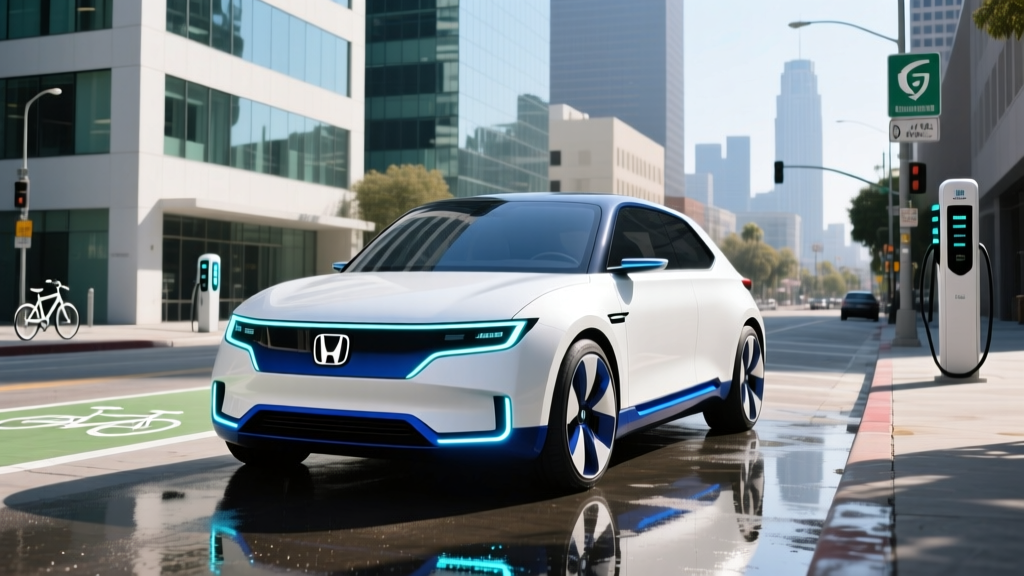
The Honda EV Concept Urban (also shown as the Honda 0 Series "Saloon" and compact concepts debuted at CES 2024 and refined through 2025) is not yet available for purchase in the United States. Honda has confirmed a global rollout of its next-generation EV lineup beginning in 2026, with North American models expected to follow — but exact US specs, pricing, and release dates remain unannounced as of early 2026. Based on Honda's published platform details and concept disclosures, expect a compact urban EV with approximately 200–250 miles of EPA-equivalent range, an estimated starting MSRP between $30,000 and $38,000, and a thin, lightweight dedicated EV architecture. If you need a city-friendly EV today, the closest available alternatives are the Hyundai Kona Electric (EPA 261 mi, from ~$32,975), Chevrolet Equinox EV (EPA 319 mi, from ~$33,000), and Nissan Leaf (EPA 212 mi, from ~$28,140).
What the Honda EV Concept Urban Actually Is
The "Honda EV Concept Urban" refers to Honda's compact electric vehicle concepts previewing its next-generation, city-oriented EVs. These sit under Honda's broader "0 Series" EV initiative — a family of dedicated battery-electric vehicles built on a new thin, light, and aerodynamic platform that replaces the heavier e:Architecture used in the current Prologue. Honda has showcased multiple concept variants, including a compact hatchback/crossover silhouette aimed at dense urban environments.
Key platform characteristics Honda has disclosed:
- Thin battery pack: Honda targets a lower-height battery module to preserve interior space and reduce vehicle weight — a direct response to the 5,000+ lb curb weights common in current EVs.
- Rear-wheel-drive bias: The new platform prioritizes RWD and a low center of gravity for handling agility, consistent with Honda's engineering heritage.
- Advanced driver assist: Honda plans to include its next-generation Honda Sensing 360+ suite, targeting SAE Level 2+ highway automation with hands-off capability in limited conditions (the driver must remain attentive — this is not Level 4 autonomy).
- OTA-capable software stack: Full over-the-air updates for powertrain calibration, ADAS, and infotainment.
Estimated Specs: What We Know (and What's Still Preliminary)
Because Honda has not published a US-spec window sticker for any 0 Series compact model, the figures below are estimated based on concept disclosures, Honda's engineering targets, and competitive positioning. Treat them as preliminary — not purchase-ready data.
| Spec | Estimated (Honda 0 Series Compact) | Source / Basis |
|---|---|---|
| EPA Range | ~200–250 mi (est.) | Concept disclosures; WLTP targets suggest ~300 km WLTP ≈ 200–230 mi EPA |
| Battery Capacity | ~55–65 kWh usable (est.) | Thin-pack platform; competitive with Kona EV / Equinox EV |
| Battery Chemistry | Likely NMC; LFP possible for base trim | Honda has not confirmed; industry trend for cost-competitive compacts |
| DC Fast Charge (Peak) | ~130–150 kW (est.) | Consistent with compact-EV segment norms |
| 10–80% DC Charge Time | ~28–35 min (est.) | Based on 150 kW peak with typical taper curve |
| Level 2 AC Charge Rate | ~11 kW (est.) | Standard for modern onboard chargers |
| 0–60 mph | ~7.0–8.5 sec (est.) | RWD single motor; Honda targets driving engagement over raw acceleration |
| Horsepower | ~180–220 hp (est.) | Single-motor RWD configuration |
| Estimated Base MSRP | $30,000–$38,000 | Competitive with Kona EV, Equinox EV, ID.4 |
| Battery Warranty | 8 years / 100,000 mi (expected) | Standard Honda EV warranty precedent (Prologue) |
Real-World Range Reality: If the EPA sticker reads 230 miles, plan for approximately 175–200 miles on the highway at 70 mph and potentially 150–170 miles in freezing weather (below 30°F). LFP chemistry, if used, would reduce cold-weather loss slightly but also lower peak energy density. These estimates assume a ~15–25% reduction from EPA combined figures under demanding conditions — consistent with independent testing by fueleconomy.gov and real-world EV range studies.
Honda EV Concept Urban vs. Gas Civic and Current Compact EVs
The most likely cross-shopping decision for a prospective Honda urban EV buyer: do you wait for this concept to reach production, buy a current compact EV, or stick with a gas-powered Honda Civic? Here's how the numbers compare for a typical urban commuter driving 12,000 miles/year.
| Metric | Honda 0 Series Compact (Est.) | 2026 Hyundai Kona Electric | 2026 Honda Civic (Gas) |
|---|---|---|---|
| EPA Range / Tank | ~230 mi | 261 mi | ~420 mi (12.4 gal tank) |
| EPA Efficiency | ~110 MPGe (est.) | 105 MPGe | 36 MPG combined |
| Fuel/Energy Cost per Mile | ~$0.04 (home charging at $0.16/kWh) | ~$0.05 | ~$0.09 (at $3.30/gal) |
| Annual Fuel/Energy Cost | ~$480 | ~$540 | ~$1,100 |
| Estimated Starting MSRP | $30,000–$38,000 | $32,975 | $24,950 |
| Est. Federal Tax Credit (§30D) | Up to $7,500 (if eligible) | Up to $7,500 (if eligible) | None |
| 5-Year Fuel Savings vs. Civic | ~$3,100 | ~$2,800 | Baseline |
Key takeaway: The Honda urban EV concept, if priced near $32,000 with full §30D eligibility, would offer a compelling cost-per-mile advantage over a Civic — but the upfront price premium is $5,000–$13,000 before incentives. The IRS §30D credit has strict requirements: buyer income caps ($150K single / $300K joint), vehicle MSRP caps ($55K for cars), and battery critical-mineral and component sourcing rules that change annually. Never assume automatic $7,500 eligibility — verify on the IRS site and with your tax professional before purchasing.
Real Costs of Ownership: What First-Time EV Buyers Must Budget
Beyond the sticker price, EV ownership involves distinct cost categories that differ from gas vehicles. Here's a realistic 5-year breakdown for a compact urban EV like the projected Honda 0 Series, assuming 12,000 miles/year and primarily home Level 2 charging.
| Cost Category | Compact EV (Est. 5-Year) | Gas Civic (Est. 5-Year) | Notes |
|---|---|---|---|
| Purchase Price (after est. credit) | $25,000–$33,000 | $24,950 | EV credit eligibility varies; consult IRS rules |
| Home Charger Install (Level 2) | $500–$2,000 | $0 | Depends on panel capacity; 240V/40A circuit typical |
| Energy / Fuel | $2,400 | $5,500 | Based on $0.16/kWh home rate vs. $3.30/gal |
| Maintenance | $800–$1,200 | $2,500–$3,500 | EVs skip oil changes, spark plugs, transmission fluid |
| Insurance (avg.) | $8,500–$10,500 | $7,000–$8,500 | EV premiums run 15–25% higher on average |
| Tires | $1,800–$2,500 | $1,200–$1,800 | EVs wear tires faster due to instant torque + weight |
| Estimated 5-Year Total | $39,000–$49,700 | $41,150–$44,250 | EV savings grow beyond year 5; insurance and tires narrow the gap |
Home charging access is the make-or-break variable. If you can install a Level 2 (240V) charger at home — in a garage, driveway, or dedicated parking spot — daily EV ownership is effortless: plug in overnight, wake up with a full battery. If you rely solely on public charging, your "fuel" cost roughly doubles (DC fast charging averages $0.30–$0.48/kWh nationally) and convenience drops significantly. Renters and apartment dwellers should verify charging access before committing to any EV purchase.
Common Misconceptions About Compact Urban EVs
| Myth | Fact |
|---|---|
| "200 miles of range isn't enough for daily driving." | The average US commute is under 40 miles round-trip (fueleconomy.gov). A 200+ mile EV covers nearly all daily urban needs with a large buffer, especially with home charging. |
| "EV batteries need replacing every few years." | Modern EV batteries (NMC and LFP) are engineered for 1,500–3,000+ full charge cycles. At 12,000 miles/year, a 60 kWh pack should retain 80%+ capacity at 150,000+ miles. Federal law mandates 8-year/100,000-mile battery warranties. |
| "Charging takes too long." | Home Level 2 charging (overnight, 7–10 hours) handles 90%+ of charging needs. DC fast charging at 150 kW adds ~150 miles in 20–25 minutes for road trips. |
| "EVs are worse in cold weather." | EVs lose 15–30% range in sub-freezing temps — a real but manageable limitation. Preconditioning the battery while plugged in mitigates this, and a heat pump (expected on the Honda 0 Series) improves cabin efficiency. |
| "I'll qualify for the full $7,500 tax credit." | The §30D credit has income caps, MSRP caps, and battery-sourcing requirements that change annually. Many EVs qualify for partial credits ($3,750) or none at all. Always check IRS.gov for current eligibility. |
Decision Framework: Should You Wait for Honda or Buy Now?
Choose to WAIT for the Honda 0 Series compact EV if:
- You're a current Honda loyalist who values the brand's driving dynamics and dealer network
- Your current vehicle has 12+ months of life left, giving Honda time to finalize US specs and pricing
- You want Honda Sensing 360+ ADAS integrated from launch rather than retrofitted
- You prefer a thin, lightweight EV platform over the heavier converted architectures used in some current models
Choose to BUY a current compact EV now if:
- You need a vehicle within 3–6 months and can't wait for an unannounced release date
- You want confirmed EPA range, pricing, and §30D eligibility — not estimates
- The Hyundai Kona Electric (261 mi, ~$33K), Chevy Equinox EV (319 mi, ~$33K), or Volvo EX30 (275 mi, ~$36K) already meet your range and budget needs
- You live in an area with limited Honda dealer EV service infrastructure
Choose a HYBRID (Honda Civic Hybrid) instead if:
- You lack reliable home or workplace charging access
- You regularly drive 300+ miles in a single day without time for charging stops
- You live in a region with extreme cold (below 0°F for extended periods) and have no garage
- Your budget is under $28,000 and you need maximum flexibility today
What First-Time EV Buyers Should Know Before Any Purchase
Whether you wait for the Honda EV Concept Urban to reach production or choose a current model, these fundamentals apply:
- Verify your home electrical panel. A Level 2 charger typically requires a 240V/40A dedicated circuit. Older homes with 100A panels may need a $1,500–$3,000 panel upgrade. Consult a licensed electrician for a site assessment before buying the car.
- Understand kW vs. kWh. kW (kilowatts) measures power — how fast you charge. kWh (kilowatt-hours) measures energy — how big the battery is. A 60 kWh battery charged at 11 kW takes about 5.5 hours from empty. Confusing these is the most common EV newcomer mistake.
- Test public chargers near you. Download apps for Electrify America, EVgo, and ChargePoint. Visit a few stations. Check reliability and pricing. If your area has sparse DC fast-charging infrastructure, a longer-range EV or a PHEV may be more practical.
- Factor in insurance early. Get quotes before purchasing. EV insurance premiums are typically 15–25% higher than comparable gas vehicles due to repair costs and battery replacement expense.
- Don't overbuy range. For urban commuting with home charging, 200–250 miles is ample. Paying $5,000+ extra for a 350-mile battery you'll rarely use is poor economics. Reserve long-range trims for frequent road-trippers.
Frequently Asked Questions
When will the Honda EV Concept Urban be available to buy in the US?
Honda has announced a global rollout of its 0 Series EVs starting in 2026, but a specific US launch date for the compact urban model has not been confirmed. Based on Honda's typical production timelines, a US market arrival in late 2026 or 2027 is plausible but not guaranteed. Honda's US press site should be monitored for official announcements.
Will the Honda urban EV qualify for the $7,500 federal tax credit?
It's too early to confirm. The IRS §30D credit requires specific battery critical-mineral sourcing and component manufacturing thresholds that change yearly. Honda's battery supply chain for the 0 Series has not been fully disclosed for US-market vehicles. Additionally, the buyer must meet income caps ($150K single / $300K joint) and the vehicle MSRP must be under $55,000 for cars. Consult a tax professional before assuming credit eligibility.
How does the Honda EV Concept Urban compare to the Honda Prologue?
The Prologue (EPA 296 mi, from ~$47,400) is a larger, heavier midsize SUV built on GM's Ultium platform. The 0 Series compact will be smaller, lighter, more affordable, and built on Honda's own dedicated EV architecture. They target different buyers: the Prologue for families needing SUV space, the 0 Series compact for urban commuters prioritizing efficiency and agility.
Is 200–250 miles of range enough for a city EV?
Yes, for the vast majority of urban drivers. The US average daily commute is under 40 miles. With home Level 2 charging, you start every day with a full battery — effectively eliminating "range anxiety" for daily use. The range limitation surfaces only on road trips exceeding 180 miles one-way, where a 20–25 minute DC fast-charge stop is needed.
Should I buy a Honda Civic Hybrid instead of waiting for the EV?
If you lack home charging access, drive long distances regularly, or need a vehicle immediately, the Civic Hybrid (EPA ~49 MPG combined, from ~$28,000) is an excellent bridge. You'll save roughly $600–$700/year in fuel versus a gas-only Civic, with zero charging infrastructure requirements. However, you'll miss out on EV-level per-mile savings (~$0.04/mi vs. ~$0.07/mi for the hybrid) and the §30D credit is not available for standard HEVs.
What charger connector will the Honda 0 Series use?
Honda has confirmed that future North American EVs will adopt the NACS (Tesla-style) connector, aligning with the industry-wide shift away from CCS1. This means direct access to Tesla Supercharger stations (via adapter initially, then natively on newer models). This is a significant practical advantage for road-trip charging convenience.