The Short Answer on Honda's EV Concepts
If you're searching for the Honda EV concept and wondering when you can actually buy one: Honda's 0 Series production vehicles — starting with a flagship sedan and an SUV — are slated to begin reaching US dealerships in the 2026–2027 timeframe. These are built on Honda's new dedicated EV architecture with a thin, lightweight battery pack, a proprietary heat-pump system, and a steer-by-wire platform. Until they arrive, Honda's current electrified lineup in the US consists of the Prologue (a rebadged GM Ultium SUV with an EPA-estimated 296 miles of range) and hybrid models like the CR-V Hybrid and Accord Hybrid. If you need an EV today, the Prologue is your Honda option; if you can wait 12–18 months, the 0 Series represents a fundamentally different, Honda-engineered product worth considering.
From Concept to Curb: Honda's 0 Series Timeline
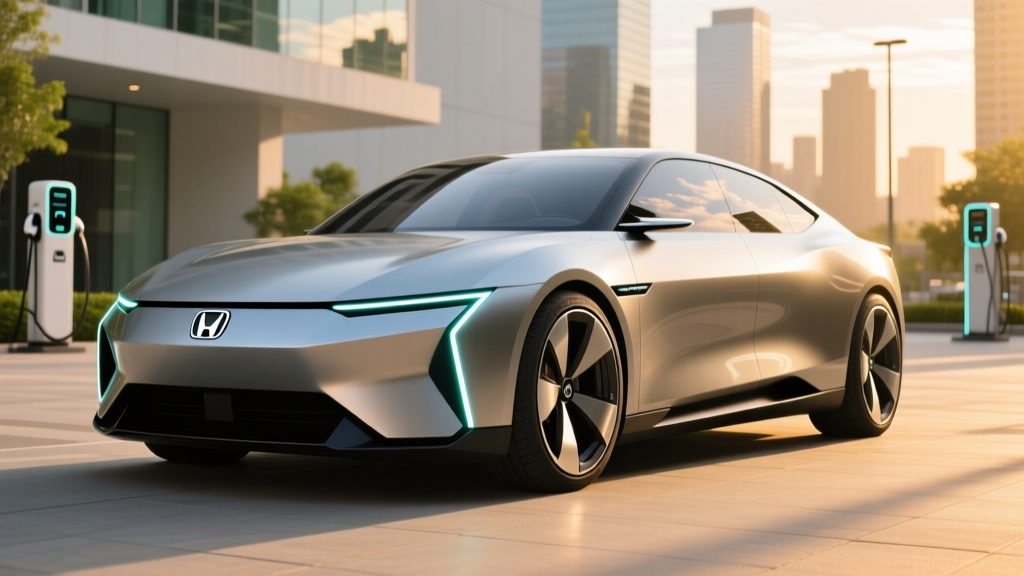
Honda debuted its first 0 Series concepts at CES 2024 — the Saloon (a low-slung sedan) and the Space-Hub (a boxy, minivan-like people mover). These weren't just styling exercises; Honda confirmed they preview production vehicles under a "thin, light, and wise" engineering philosophy that departs from the heavy, thick-battery approach used by most competitors.
Here's where things stand as of early 2026:
- 0 Series Sedan (production): Expected to reach the US market in late 2026 or early 2027. Honda has confirmed a North American launch, with initial production likely in Ohio at the company's retooled EV hub.
- 0 Series SUV: A production SUV based on the Space-Hub concept is expected to follow within 12 months of the sedan.
- Next-gen Prologue refresh: Honda has not detailed a second-generation Prologue, but the current GM-based model will likely continue alongside the 0 Series during the transition.
All specs below for 0 Series models are preliminary and subject to change until Honda releases official EPA certifications and MSRP pricing.
Estimated Specs: What We Know About the 0 Series Platform
Honda has shared engineering details but not final production numbers. Based on statements, patent filings, and industry analysis, here's what the 0 Series platform targets:
| Specification | 0 Series Sedan (Estimated) | Honda Prologue (2025, Confirmed) |
|---|---|---|
| Platform | Honda dedicated EV (thin battery) | GM Ultium (shared with Blazer EV) |
| Battery Chemistry | Expected NMC (high-density thin pack) | NMC (Ultium) |
| Battery Capacity | ~80–90 kWh usable (est.) | 85 kWh usable |
| EPA Range | ~300+ miles targeted | 296 miles (FWD Elite) |
| DC Fast Charge Peak | ~200+ kW targeted | 190 kW peak |
| 10–80% DC Charge Time | ~25–30 min (est.) | ~33 min (10–80%) |
| Level 2 AC Charging | ~11–19 kW onboard | 11.5 kW (Level 2) |
| Horsepower | Dual-motor AWD likely; 350+ HP est. | 288 HP (AWD Elite) |
| 0–60 mph | ~5.0 sec (AWD est.) | 5.9 sec (AWD) |
| Connector | NACS expected (Honda joining Tesla network) | CCS1 (adapter for NACS available) |
| Base MSRP | ~$45,000–$55,000 est. | $47,400 (base) |
| Battery Warranty | 8 yr / 100,000 mi (expected) | 8 yr / 100,000 mi |
Sources: Honda Global CES 2024 Announcement, EPA fueleconomy.gov Prologue data
The 0 Series vs. Buying Gas or Hybrid Today
If you're weighing whether to wait for Honda's next-gen EV or buy a gas or hybrid vehicle now, here's a data-driven comparison using Honda's current lineup as a baseline:
| Metric | 0 Series Sedan (Est.) | Accord Hybrid (2025) | Accord Gas (2025, 1.5T) |
|---|---|---|---|
| Base MSRP | ~$48,000 | $33,655 | $28,395 |
| EPA Efficiency | ~120 MPGe (target) | 48 MPG combined | 32 MPG combined |
| Annual Fuel/Energy Cost | ~$600–$800 (home charging) | ~$1,100 | ~$1,650 |
| 5-Year Fuel/Energy Cost | ~$3,000–$4,000 | ~$5,500 | ~$8,250 |
| Estimated Maintenance (5 yr) | ~$1,200 | ~$2,800 | ~$3,200 |
| Federal Tax Credit (§30D) | Up to $7,500 (if eligible) | None | None |
| 5-Year Estimated Total Cost* | ~$48,200–$51,200 | ~$41,955 | ~$39,845 |
*Total cost includes purchase price (minus tax credit where applicable), 5 years of fuel/energy, and estimated maintenance. Excludes insurance, depreciation, and state incentives. Actual costs vary by electricity rate, driving patterns, and credit eligibility. Source: IRS §30D guidance.
The 0 Series is projected to cost more upfront than an Accord Hybrid, but the fuel and maintenance savings narrow the gap to roughly $6,000–$9,000 over five years. The break-even point depends heavily on whether you qualify for the full federal tax credit and how cheaply you can charge at home.
Real-World Ownership: What First-Time Honda EV Buyers Must Know
Home Charging Access Is the Make-or-Break Factor
The single biggest determinant of EV satisfaction is whether you can charge at home. If you have a garage or dedicated parking spot with access to a 240V circuit:
- Level 2 home charger installation: Expect $800–$2,500 for the charger unit and electrician labor if your panel has capacity. A panel upgrade (to 200A) can add $1,500–$4,000.
- Overnight charging: An 11.5 kW Level 2 charger adds roughly 35–40 miles of range per hour. For the 0 Series' estimated 80–90 kWh battery, a full 10–100% charge takes about 8–9 hours overnight.
- Cost per mile at home: At the US average residential electricity rate of ~$0.17/kWh, driving the 0 Series would cost roughly $0.04–$0.05 per mile — compared to ~$0.14/mile for an Accord Hybrid at 30 MPG and $3.50/gallon gas.
If you cannot charge at home (apartment, street parking, no panel capacity), an EV becomes significantly less convenient. You'll rely on public DC fast chargers, where costs run $0.30–$0.50/kWh, pushing your per-mile cost closer to hybrid territory. In that scenario, a Honda hybrid is the more practical choice.
Cold Weather and Highway Range Loss
Honda's "thin" battery design aims to improve thermal management, but physics still applies. Expect the following real-world range reductions from the 0 Series' EPA sticker:
- Highway driving (75+ mph): ~10–15% below EPA estimate. A 320-mile EPA rating becomes ~272–288 miles at sustained highway speed.
- Cold weather (below 32°F): ~20–30% reduction. That same 320-mile rating could drop to ~224–256 miles in winter conditions, depending on cabin heating demands. Honda's heat-pump system should mitigate this somewhat compared to resistive heating, but it won't eliminate the loss.
- Combined highway + cold: Plan for ~30–40% below EPA in worst-case winter road-trip conditions.
The Charging Curve Reality
Honda's target of 200+ kW peak DC fast charging sounds impressive, but peak rate is not sustained rate. In real-world DC fast charging:
- The battery charges at or near peak kW only between roughly 10–40% state of charge (SoC).
- From 40–60%, the rate typically tapers to ~70–80% of peak.
- Above 80%, charging slows dramatically to protect battery health — often dropping below 50 kW.
This is why manufacturers quote 10–80% times rather than 0–100%. For the 0 Series, expect roughly 25–30 minutes for a 10–80% session at a capable 350 kW charger. If you regularly road-trip, plan stops around the 10–80% window to minimize total charging time.
Federal Tax Credit: What the 0 Series Will Need to Qualify
Honda's 0 Series will need to meet the current IRS §30D requirements to be eligible for up to $7,500 in federal tax credits. The rules are strict and evolving:
§30D Credit Requirements (2026 Rules)
- MSRP cap: Sedans must be priced at or below $55,000; SUVs/pickups/vans at or below $80,000. If the 0 Series Sedan starts above $55,000, only lower trims may qualify.
- Buyer income cap: Modified adjusted gross income must not exceed $150,000 (single), $225,000 (head of household), or $300,000 (joint).
- Battery component sourcing: A percentage of battery components must be manufactured or assembled in North America. This threshold increases annually.
- Critical minerals: A percentage of critical minerals must be sourced from the US or a free-trade-agreement country. This threshold also increases annually.
- Final assembly: Must occur in North America. Honda's Ohio EV production hub should satisfy this requirement.
- Point-of-sale transfer: Eligible buyers can transfer the credit to the dealer at purchase, reducing the sale price directly rather than waiting for a tax refund.
Key uncertainty: Honda has not confirmed whether the 0 Series battery supply chain will meet the critical-minerals and component-sourcing thresholds at launch. This is a moving target — always verify eligibility at fueleconomy.gov before purchasing.
Honda's EV Concept vs. the Competition
If you're considering the 0 Series, you're likely cross-shopping these alternatives. Here's how Honda's upcoming platform stacks up against confirmed 2025/2026 competitors:
| Vehicle | EPA Range | Battery | Peak DC Charge | 10–80% | Base MSRP |
|---|---|---|---|---|---|
| Honda 0 Series Sedan (est.) | ~300+ mi | ~80–90 kWh | ~200+ kW | ~25–30 min | ~$48,000 |
| Tesla Model 3 Long Range | 363 mi | 79 kWh (NMC) | 250 kW | ~25 min | $47,740 |
| Hyundai Ioniq 6 SEL | 361 mi | 77.4 kWh (NMC) | 235 kW | ~18 min | |
| BMW i4 eDrive40 | 301 mi | 81.5 kWh (NMC) | 200 kW | ~31 min | $57,900 |
Honda's "thin and light" approach prioritizes driving dynamics and efficiency over maximum battery size. The trade-off: potentially slightly less range than a Tesla Model 3 or Ioniq 6, but with Honda's reputation for build quality, ride comfort, and dealer network.
Decision Framework: Should You Wait for Honda's 0 Series?
If X, Then Y
Buy the Honda Prologue now IF:
- You need an EV within the next 3–6 months
- You want an SUV with ~296 miles of range and GM Ultium reliability data
- You're comfortable with CCS charging (and a NACS adapter for Supercharger access)
Buy a Honda Hybrid (CR-V/Accord) now IF:
- You can't charge at home reliably
- You live in an extreme cold-weather climate and regularly drive 300+ miles between stops
- Your budget is under $35,000
- You want zero charging-infrastructure dependency
Wait for the 0 Series IF:
- You want a Honda-engineered EV (not a GM rebadge) with Honda's driving dynamics
- You can wait 12–18 months for production and delivery
- You want steer-by-wire and Honda's next-gen ADAS suite
- You're a current Honda/Acura loyalist who prefers the brand's ergonomics and dealer experience
Look at a Tesla Model 3 or Hyundai Ioniq 6 instead IF:
- You want maximum range per dollar right now
- You need the fastest available DC charging (Ioniq 6's ~18 min 10–80%)
- You want established Supercharger or NACS network access without adapters
Common Misconceptions About Honda's EV Plans
| Myth | Fact |
|---|---|
| "Honda doesn't make real EVs." | The Prologue is a real, EPA-rated EV with 296 miles of range and over 190 kW DC fast charging. The 0 Series will be Honda's first ground-up EV platform for the global market. |
| "The 0 Series concepts will never reach production." | Honda has confirmed production versions for North America starting in the 2026–2027 timeframe, with Ohio production already being prepared. |
| "Honda EVs won't qualify for the $7,500 tax credit." | The Prologue (assembled in Mexico on GM's platform) has had partial credit eligibility depending on sourcing rules. The 0 Series, assembled in Ohio, has a stronger path to eligibility — but battery-sourcing requirements remain the variable. |
| "I should wait for solid-state batteries." | Honda is developing solid-state technology, but it's not expected in the first-generation 0 Series. Solid-state production vehicles from any major automaker remain unlikely before 2028–2030 at scale. |
| "EVs are always cheaper to own than gas cars." | Not always. Higher insurance premiums (~15–25% more for EVs), upfront cost, and potential home charger installation expenses mean the total-cost-of-ownership advantage depends on your driving volume, electricity rate, and how long you keep the vehicle. |
Frequently Asked Questions
When will the Honda 0 Series be available to buy?
Honda targets late 2026 to early 2027 for the first 0 Series production vehicle (expected to be the sedan) in North America. Reservations and pricing details have not yet been announced. The SUV variant is expected to follow within approximately 12 months.
Will the Honda 0 Series use Tesla's NACS charging connector?
Honda has committed to adopting the North American Charging Standard (NACS) for its future EVs. The 0 Series is expected to ship with a native NACS port, granting direct access to Tesla Supercharger stations without an adapter. This is a significant advantage over the current Prologue, which uses CCS1.
How much will the Honda 0 Series cost?
Official pricing has not been announced. Industry estimates place the 0 Series Sedan starting between $45,000 and $55,000, depending on trim and battery configuration. If Honda prices the base model at or below $55,000, it would fall under the IRS §30D MSRP cap for sedans, making it potentially eligible for the full $7,500 federal tax credit (subject to buyer income and battery-sourcing requirements).
Is the Honda Prologue worth buying instead of waiting?
If you need an EV now, the Prologue is a competent midsize electric SUV with 296 miles of EPA range, comfortable ride quality, and access to Honda's dealer network. Its GM Ultium underpinnings mean proven battery technology. The trade-off is CCS charging (with an adapter for NACS) and a platform Honda didn't engineer in-house. It's a good bridge vehicle until the 0 Series arrives.
What's Honda's battery warranty on EVs?
The current Honda Prologue carries an 8-year/100,000-mile battery warranty, consistent with industry standards and federal requirements. Honda has not yet published 0 Series warranty terms, but expect similar or slightly improved coverage given the competitive landscape.
Will Honda's EVs have self-driving capability?
Honda has been developing Level 3 autonomous technology (where the car handles all driving in limited conditions, such as highway traffic jams) and has limited deployment in Japan through the Legend sedan. For the US market, expect the 0 Series to launch with an advanced Level 2 driver-assist system — meaning you must remain engaged and supervising at all times. This is similar in SAE automation level to Tesla Autopilot, GM Super Cruise, or Ford BlueCruise, though Honda's hands-on/off approach will depend on final US regulatory approvals.
Editorial note: Specifications for the Honda 0 Series are preliminary and based on manufacturer announcements and industry analysis as of early 2026. Final EPA ratings, MSRP, and tax-credit eligibility will be confirmed closer to the on-sale date. Always verify current information at honda.com and fueleconomy.gov before making a purchase decision.