The Short Answer on Honda EV Cars
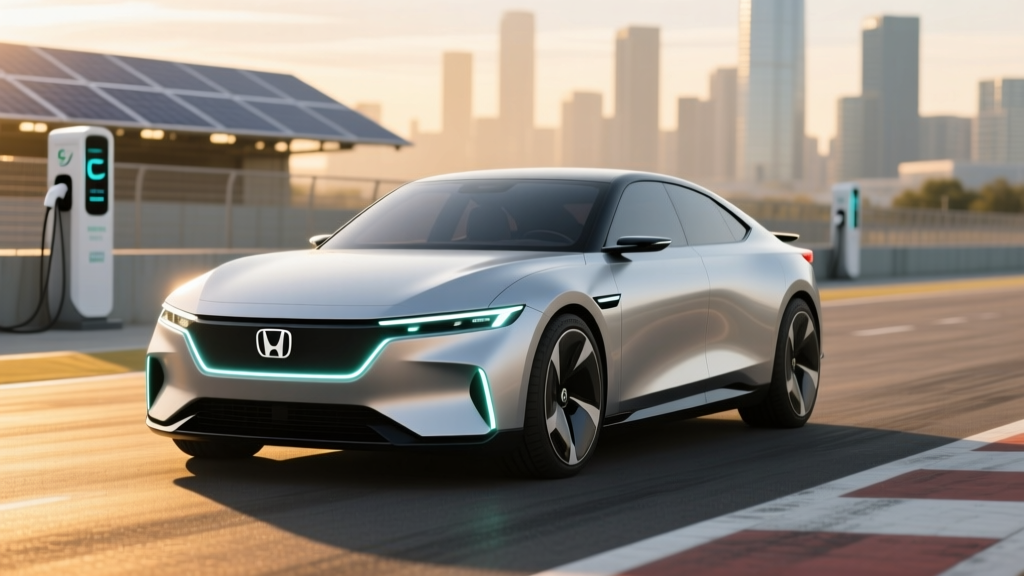
As of 2026, Honda's only all-electric vehicle sold in the U.S. is the Honda Prologue, a midsize SUV built on General Motors' Ultium platform. It offers up to 308 miles of EPA-estimated range (FWD Elite trim), a 85 kWh usable NMC battery, and DC fast charging that peaks at 155 kW (10–80% in roughly 28 minutes). Base pricing starts at $48,795 before destination. Federal §30D tax credit eligibility depends on current-year battery sourcing and your income — check the latest rules at IRS.gov before counting on a discount. If you need a three-row family hauler or a sub-$35K commuter, Honda's EV lineup won't cover you yet. If you want a comfortable, tech-forward two-row crossover with solid highway manners and GM's proven battery architecture, the Prologue is worth a serious test drive.
Honda's Electric Lineup: What's Actually Available
Honda has been cautious on full battery-electric vehicles compared to rivals like Hyundai and Tesla. The brand's U.S. EV strategy pivoted in 2024 when the Prologue launched — a rebadged and restyled sibling of the Chevrolet Blazer EV and Cadillac Lyriq, all riding GM's BEV3/Ultium platform. This partnership gave Honda a fast track to market with a proven battery and motor supply chain rather than developing everything in-house.
For 2026, the Prologue remains Honda's sole BEV offering in America. Honda has announced a next-generation EV series using its own "e:Architecture" platform, expected to debut around 2027, but those models are not yet on sale and specs remain preliminary. The tiny Honda e (a retro-styled city car sold in Europe and Japan) was never imported to the U.S. and has been discontinued globally.
Honda's broader electrification strategy leans heavily on hybrids. The CR-V Hybrid, Accord Hybrid, and Civic Hybrid are all strong sellers with no plug required. If you're cross-shopping Honda EV cars against Honda hybrids, the decision framework below will help you choose.
2026 Honda Prologue: Full Spec Breakdown
Here are the numbers that matter, pulled from fueleconomy.gov and Honda's official specifications:
| Specification | Prologue EX (FWD) | Prologue Touring (FWD) | Prologue Elite (AWD) |
|---|---|---|---|
| EPA Range | 308 mi | 308 mi | 281 mi |
| Battery (Usable) | 85 kWh NMC | 85 kWh NMC | 85 kWh NMC |
| Motor / HP / Torque | Single / 220 hp / 236 lb-ft | Single / 220 hp / 236 lb-ft | Dual / 293 hp / 336 lb-ft |
| 0–60 mph (est.) | ~7.2 sec | ~7.2 sec | ~5.8 sec |
| MPGe (City/Hwy/Combined) | 114 / 94 / 104 | 114 / 94 / 104 | 101 / 85 / 93 |
| Peak DC Fast Charge | 155 kW | 155 kW | 155 kW |
| 10–80% DC Charge Time | ~28 min | ~28 min | ~28 min |
| Level 2 (AC) Charge Rate | 11.5 kW | 11.5 kW | 11.5 kW |
| Connector | NACS (native) | NACS (native) | NACS (native) |
| Cargo Volume | 25.2 cu ft (rear seats up) | 25.2 cu ft | 25.2 cu ft |
| Base MSRP | $48,795 | $51,795 | $57,895 |
| Battery/Powertrain Warranty | 8 yr / 100,000 mi | 8 yr / 100,000 mi | 8 yr / 100,000 mi |
Real-World Range Reality Check
The 308-mile EPA sticker on FWD trims is competitive, but plan for real-world conditions:
- Highway cruising at 70–75 mph: Expect roughly 250–270 miles before needing a stop. Aerodynamic drag hits all EVs hard above 65 mph.
- Cold weather (below 32°F): Range drops 20–30% depending on cabin heating use. A 308-mile Prologue may deliver 215–245 miles in a Midwest winter.
- Mixed suburban driving, mild weather: You'll likely meet or slightly exceed the EPA number.
The Prologue does not have a heat pump (it uses resistive PTC heating), which is a notable efficiency disadvantage in cold climates compared to Hyundai/Kia models that include heat pumps as standard.
Charging the Prologue: Home and On the Road
Honda made a smart move adopting the NACS (Tesla-style) connector natively on the Prologue. That means direct access to Tesla Supercharger stalls — the largest and most reliable DC fast-charging network in the U.S. — without an adapter.
| Charging Level | Power (kW) | Approx. Miles Added per Hour | Typical Use Case |
|---|---|---|---|
| Level 1 (120V household outlet) | 1.2–1.4 kW | 3–4 miles | Emergency / overnight trickle |
| Level 2 (240V home charger) | 11.5 kW (max) | ~32 miles | Daily home charging |
| DC Fast Charge (public) | Up to 155 kW peak | ~180 mi in 28 min (10–80%) | Road trips |
Charging curve reality: The Prologue's 155 kW peak is not sustained for the full session. You'll see peak rates from roughly 10–40% State of Charge, after which the rate tapers. From 80–100%, charging slows significantly — this is normal for all lithium-ion batteries and protects long-term cell health. Don't plan road-trip stops around "full charges"; the 10–80% window is where you want to operate.
Home charging setup: To get the Prologue's full 11.5 kW Level 2 rate, you need a 48-amp hardwired charger on a 60-amp dedicated circuit. Budget $500–$800 for a quality Level 2 unit (ChargePoint Home Flex, Emporia Level 2, or Tesla Wall Connector) plus $600–$2,000 for professional electrician installation, depending on your panel capacity and run length. If your home has a 100-amp main panel, a panel upgrade to 200 amps could add $1,500–$3,000.
Prologue vs. Gas and Hybrid: The Cost Math
This is where most buyers get stuck. Let's run the numbers comparing the Prologue EX against two logical Honda alternatives: the CR-V Hybrid and the CR-V gas model.
| Factor | Prologue EX (EV) | CR-V Hybrid (AWD) | CR-V EX (Gas, AWD) |
|---|---|---|---|
| Base MSRP | $48,795 | $36,350 | $34,050 |
| Est. Federal Tax Credit (§30D) | Up to $7,500* | None | None |
| Effective Price After Credit | ~$41,295* | $36,350 | $34,050 |
| EPA Fuel Economy / Efficiency | 104 MPGe (29 kWh/100mi) | 40 MPG combined | 29 MPG combined |
| Annual Fuel/Energy Cost (15K mi) | ~$565 (at $0.13/kWh home) | ~$1,313 (at $3.50/gal) | ~$1,810 (at $3.50/gal) |
| 5-Year Fuel/Energy Cost | ~$2,825 | ~$6,565 | ~$9,050 |
| Est. Annual Maintenance | ~$300 | ~$550 | ~$650 |
| 5-Year Maintenance | ~$1,500 | ~$2,750 | ~$3,250 |
*Tax credit eligibility depends on battery component sourcing, critical minerals, buyer income caps, and MSRP caps under current IRS §30D rules. Verify at irs.gov or with a tax professional before purchasing. The Prologue's eligibility has shifted as GM adjusts supply chains — do not assume qualification.
The bottom line: The Prologue costs roughly $5,000–$7,000 more upfront than a CR-V Hybrid (even after a potential tax credit). But you save $3,500–$6,000 in fuel and maintenance over five years. Break-even typically lands around year 4–6 depending on your local electricity rates, mileage, and whether you actually qualify for the credit. If you drive more than 15,000 miles annually, the math tilts faster in the EV's favor.
Tax Credit Eligibility: What You Actually Need to Know
The federal §30D Clean Vehicle Credit can reduce your tax bill by up to $7,500 — but it's not automatic. Here's the 2026 checklist:
- MSRP cap: SUVs must have an MSRP at or below $80,000 (the Prologue qualifies).
- Buyer income cap: Modified AGI must not exceed $150,000 (single), $225,000 (head of household), or $300,000 (joint).
- Battery sourcing: A percentage of critical minerals and battery components must be sourced from the U.S. or free-trade-agreement countries. These thresholds increase annually and have disqualified several models.
- Point-of-sale transfer: You can transfer the credit to the dealer at purchase to reduce your out-of-pocket cost — but if your tax liability turns out to be less than the credit, you may have to repay it.
- Final assembly: Must occur in North America (the Prologue is assembled in Ramos Arizpe, Mexico — confirm current-year eligibility).
Because sourcing requirements tighten yearly, a model that qualified in 2024 may not qualify in 2026. Always check the DOE's qualifying vehicle list and consult a tax professional before committing.
Real-World Ownership: What First-Time Honda EV Buyers Should Know
| Myth | Fact |
|---|---|
| "The Prologue gets 308 miles no matter what." | EPA tests assume mild weather and mixed driving. Highway-only at 75 mph yields ~250–270 mi; winter driving can drop it below 230 mi. |
| "I can charge on any public charger." | The Prologue uses NACS natively. It can charge at Tesla Superchargers directly, but older CCS-only stations will require a CCS-to-NACS adapter (confirm your unit is rated for 155 kW). |
| "EVs cost more to insure." | Often true. The Prologue's insurance premiums run 10–25% higher than a CR-V Hybrid due to repair costs and parts pricing. Get quotes before buying. |
| "The battery will need replacing in 5 years." | NMC batteries in modern EVs are warrantied for 8 years/100,000 miles at ≥70% capacity retention. GM Ultium packs show ~5–8% degradation at 100K miles based on early fleet data. |
| "I don't need home charging." | You can survive on public charging, but it costs 2–4× more per mile than home Level 2, and convenience drops sharply. If you can't install a home charger, a hybrid may be a better fit. |
Driving pattern check: The Prologue shines as a daily commuter and weekend road-tripper if you can charge at home overnight. If your round-trip commute is under 80 miles, you'll rarely need public charging. If you regularly drive 300+ miles in a single day (rural routes, cross-state trips), plan charging stops using the Tesla Supercharger map — the Prologue's 28-minute 10–80% time is acceptable but not class-leading. The Hyundai Ioniq 5, for comparison, charges 10–80% in roughly 18 minutes on its 800V architecture.
Climate matters: If you live in northern states with sustained sub-freezing winters, the Prologue's lack of a heat pump means more range loss and slower charging in cold weather. Preconditioning the battery (available through the HondaLink app while plugged in) mitigates this — always precondition before a DC fast-charge session in cold weather.
Decision Framework: Is a Honda EV Right for You?
Choose the Honda Prologue if:
- You want a Honda-badged EV and accept that it's built on GM architecture
- Your daily driving is under 120 miles round-trip and you can charge at home
- You value direct Tesla Supercharger access via native NACS
- You want a comfortable, quiet midsize SUV with strong safety tech (Honda Sensing suite standard)
- You qualify for the §30D credit and the Prologue remains on the DOE qualifying list at time of purchase
Choose a Honda Hybrid (CR-V Hybrid, Accord Hybrid) instead if:
- You can't install a Level 2 home charger (apartment, street parking, older electrical panel)
- You live in a region with sparse public DC charging infrastructure
- Your budget is firmly under $40,000
- You regularly drive in extreme cold and want zero range variability
- You want three rows of seating (the Prologue is strictly two-row)
Look at competitors if:
- You need faster DC charging → Hyundai Ioniq 5 (800V, ~18 min 10–80%)
- You want more range → Tesla Model Y Long Range (320+ mi EPA)
- You need a smaller, cheaper EV → Chevrolet Equinox EV (from ~$33,000, 319 mi EPA)
Frequently Asked Questions
Is Honda making more EV cars after the Prologue?
Yes. Honda has announced a next-generation EV series based on its own e:Architecture platform, with models expected starting around 2027. Honda has also confirmed a compact EV for the North American market, though final specs, pricing, and availability have not been released. These are announced plans, not currently purchasable vehicles.
Does the Honda Prologue qualify for the $7,500 federal tax credit in 2026?
Eligibility depends on current-year battery sourcing rules, your income, and the vehicle's MSRP. The Prologue's MSRP falls under the $80,000 SUV cap, but battery component and critical-mineral sourcing thresholds tighten annually. Check the latest IRS §30D guidance and the DOE's qualifying vehicle list before purchasing. A tax professional can confirm your personal eligibility.
Can the Prologue use Tesla Superchargers?
Yes. The 2026 Prologue has a native NACS charge port, meaning it plugs directly into Tesla Supercharger stalls without an adapter. This gives Prologue owners access to over 20,000 Supercharger stalls across North America.
How much does it cost to charge the Prologue at home?
At the U.S. average residential electricity rate of roughly $0.13/kWh, a full 85 kWh charge costs about $11.05 and provides roughly 280–308 real-world miles. That works out to approximately $0.037 per mile — compared to $0.12–$0.15 per mile for a gas-powered CR-V at $3.50/gallon.
What is the Prologue's battery degradation like?
The Prologue uses GM's Ultium NMC (nickel manganese cobalt) battery pack. Based on early Ultium fleet data and GM's testing, expect approximately 5–8% capacity loss over 100,000 miles. Honda warrants the battery for 8 years or 100,000 miles with a minimum 70% capacity retention threshold. If the pack falls below that, Honda will repair or replace it under warranty.
Is the Prologue a rebadged Chevrolet?
The Prologue shares its BEV3 platform, battery, and powertrain with the Chevrolet Blazer EV and Cadillac Lyriq. However, Honda designed its own exterior and interior styling, tuned the suspension, and integrated Honda's infotainment and safety systems. The driving experience and cabin feel distinctly Honda, even though the electric hardware is GM-sourced. This is similar to how the Toyota Supra shares a platform with the BMW Z4 but drives like a Toyota product.