Honda's entry into the compact electric two-wheeler space — the EM1 e: — targets urban commuters who want zero tailpipe emissions, minimal maintenance, and a footprint small enough to store in an apartment hallway. But before you trade your gas scooter or consider this as a last-mile solution alongside your EV, you need the real numbers on range, charging, and total cost.
Quick Answer: Is the Honda EM1 e: Worth It?
The Honda EM1 e: delivers an EPA-estimated 25 miles of range per charge (with Honda's Mobile Power Pack e: swappable battery), a top speed of 31 mph, and a price around $3,200–$3,500 depending on market. It excels as a neighborhood errand runner or campus commuter but falls short for anyone needing highway speeds or longer commutes. Charging costs roughly $0.08–$0.12 per full charge at residential electricity rates — pennies compared to a gas scooter's fuel cost.
What Is the Honda EM1 e: Electric Mini Bike?
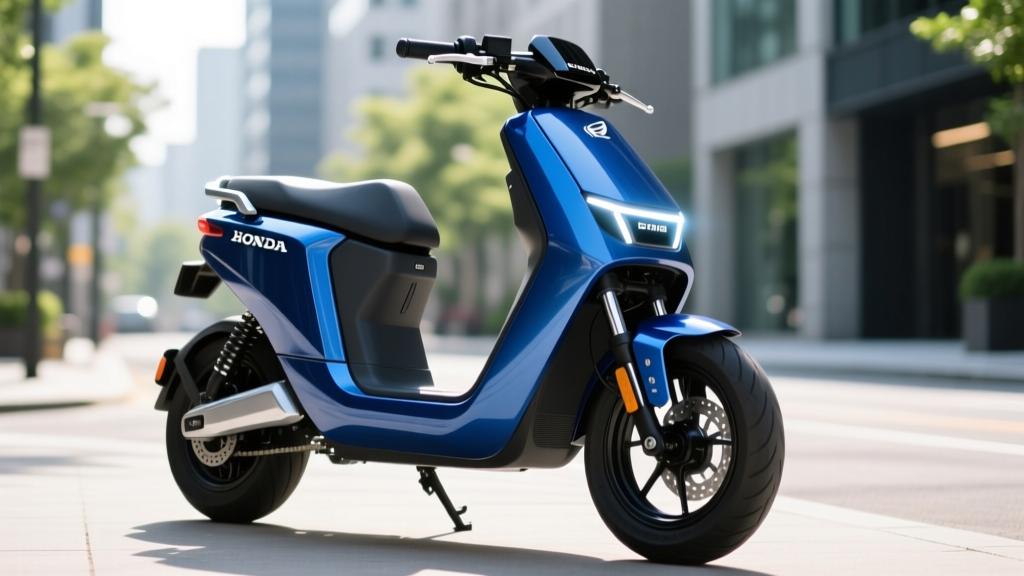
The EM1 e: is Honda's compact electric scooter-class vehicle — what many riders call a "mini bike" due to its small wheels, step-through frame, and lightweight construction. It's classified as a low-speed electric two-wheeler in most US jurisdictions (check your state's DMV for licensing and registration requirements).
Honda designed the EM1 e: around its Mobile Power Pack e: — a removable, swappable lithium-ion battery you can charge indoors using a standard 120V household outlet. This solves one of the biggest barriers to electric two-wheeler adoption: the need for dedicated outdoor charging infrastructure.
Specs, Range, and Battery Details
| Specification | Honda EM1 e: |
|---|---|
| Battery Type | Honda Mobile Power Pack e: (swappable, Li-ion NMC) |
| Battery Capacity | 1.5 kWh (nominal) |
| EPA-Estimated Range | ~25 miles (single pack) |
| Real-World Range (mixed riding) | ~18–22 miles |
| Top Speed | 31 mph (50 km/h) |
| Motor Output | 1.7 kW continuous / 4.2 kW peak (~2.3 HP / ~5.6 HP peak) |
| Charging Time (120V outlet) | ~5 hours (0–100%) |
| Vehicle Weight | ~209 lbs (95 kg) |
| Seat Height | ~28.9 inches (735 mm) |
| Storage (under-seat) | Fits one helmet or small bag |
| MSRP (estimated US) | $3,200–$3,500 |
Real-World Range Reality
The 25-mile EPA figure assumes moderate speeds on flat terrain in mild weather. Expect 18–22 miles in mixed urban riding with stops, starts, and modest hills. In cold weather (below 40°F), lithium-ion chemistry loses efficiency — plan on 14–17 miles of usable range. If your daily round-trip commute exceeds 15 miles, this mini bike will require daily charging or a second battery pack.
Charging: Costs, Speed, and Practical Setup
Because the EM1 e: uses a removable battery, charging is straightforward: pull the pack out, carry it inside, plug it into any standard 120V wall outlet using Honda's included charger. No Level 2 installation, no electrician, no panel upgrade.
| Charging Scenario | Cost per Full Charge | Cost per Mile |
|---|---|---|
| Home (120V, $0.14/kWh avg US rate) | ~$0.21 | ~$0.008–$0.012 |
| Home (120V, $0.22/kWh high-cost state like CA) | ~$0.33 | ~$0.013–$0.018 |
| Public charging (rare for this class) | N/A — no DC fast charge port | N/A |
At 5 hours for a full charge, you'll want to plug in overnight or during a workday. Honda's swappable battery ecosystem (available in select Asian markets via battery-swap stations) has not been widely deployed in the US as of 2026, so plan on owning your charger and relying on standard outlets.
Honda EM1 e: vs. Gas Scooter: Cost & Ownership Breakdown
How does Honda's electric mini bike stack up against a comparable 50cc gas scooter like the Honda Metropolitan or a generic Chinese 50cc? Here's a 3-year ownership comparison assuming 3,000 miles per year (9,000 total):
| Cost Category | Honda EM1 e: (Electric) | 50cc Gas Scooter |
|---|---|---|
| Purchase Price | ~$3,350 | ~$2,800–$3,200 |
| Fuel/Energy (9,000 mi) | ~$80–$120 | ~$540–$720 (at 80 MPG, $3.50/gal) |
| Maintenance (3 yr) | ~$50–$100 (brake pads, tires) | ~$400–$600 (oil, belt, spark plug, valve adjust) |
| Insurance (est. annual) | ~$150–$300/yr | ~$200–$400/yr |
| Federal Tax Credit (§30D) | Not eligible (2-wheeler credit expired) | N/A |
| 3-Year Total Cost | ~$4,030–$4,470 | ~$4,140–$5,320 |
The electric mini bike wins on operating costs — you'll save roughly $400–$600 on fuel and $300–$500 on maintenance over three years. The break-even point against a comparably priced gas scooter typically arrives around year two, depending on your local electricity and gas prices.
Tax credit note: The federal §30D clean vehicle credit applies to four-wheeled vehicles meeting specific MSRP, income, and battery-sourcing requirements. Electric two-wheelers like the EM1 e: do not qualify for the current $7,500 credit. Some states and utilities offer rebates for electric bikes and scooters — check your local programs via the AFDC state incentive database.
Who Should (and Shouldn't) Buy the Honda EM1 e:
Decision Framework
Buy the Honda EM1 e: if:
- Your daily round-trip commute is under 15 miles on flat or gently rolling terrain
- You have access to a standard 120V outlet at home or work for overnight/daytime charging
- You want near-zero maintenance (no oil changes, no carburetor, no exhaust system)
- You live in an apartment or condo where storing a gas vehicle with fuel is impractical or prohibited
- You want a quiet, zero-emission ride for neighborhood errands or campus commuting
Look elsewhere if:
- You need to travel above 35 mph or ride on roads with speed limits above 35 mph
- Your commute exceeds 15 miles one-way (consider a full-size electric scooter like the NIU NQi GT or a used EV)
- You ride in sustained cold weather below 30°F regularly (range drops significantly)
- You need to carry a passenger (the EM1 e: is single-rider only)
- You lack any access to a standard electrical outlet for charging
Common Misconceptions About Electric Mini Bikes
| Myth | Fact |
|---|---|
| "Electric mini bikes are as fast as gas ones" | The EM1 e: tops out at 31 mph. Most 50cc gas scooters hit 35–40 mph. For highway-adjacent roads, neither is appropriate — but gas has a slight speed edge. |
| "The battery will need replacing every 2 years" | Honda's Mobile Power Pack e: uses NMC lithium-ion cells rated for approximately 1,000+ charge cycles before reaching 80% capacity. At one charge per day, that's roughly 3+ years of daily use before noticeable range loss. |
| "I can charge it at public EV stations" | The EM1 e: has no DC fast-charge port or J1772/NACS connector. It charges exclusively via its proprietary AC charger on a standard 120V wall outlet. |
| "It qualifies for the $7,500 federal EV tax credit" | It does not. The §30D credit applies to four-wheeled clean vehicles. The prior two-wheeler plug-in credit (§30D(f)) expired and has not been renewed as of 2026. |
| "I don't need a license or registration" | Requirements vary by state. Many states classify low-speed electric two-wheelers differently from gas mopeds, but some still require registration, a valid driver's license, or a moped endorsement. Check your state DMV. |
Real-World Ownership Considerations
Home Charging Access
The swappable battery is the EM1 e:'s biggest practical advantage. If you live in a third-floor apartment, you carry the ~22 lb battery pack inside and charge it next to your couch. No garage needed, no outdoor outlet, no Level 2 installation. This is the two-wheeler equivalent of charging your laptop.
Climate Impact
Lithium-ion batteries lose capacity in cold weather. At 32°F, expect roughly 25–30% range reduction compared to mild-weather riding. If you're in Minnesota or Maine and plan to ride year-round, your 25-mile range becomes roughly 17–19 miles in winter. Store the battery indoors and install it warm before riding to minimize cold-weather losses.
Driving Patterns & Practicality
The EM1 e: shines for predictable, short-distance patterns: grocery runs within 3 miles, commuting to a transit station, campus loops, or neighborhood delivery gigs. It does not shine for highway on-ramps, 20-mile suburban commutes, or carrying significant cargo. Think of it as an electric bicycle alternative with weather protection and a twist throttle, not a car replacement.
Insurance & Registration
Insurance for low-speed electric two-wheelers is generally inexpensive — $150–$300 annually for liability coverage through most major insurers. Registration requirements vary: some states treat the EM1 e: as a moped (requiring registration and a standard driver's license), while others classify it as an electric bicycle (no registration needed). Verify with your state's DMV before purchasing.
Frequently Asked Questions
Can the Honda EM1 e: go on roads with 45 mph speed limits?
Legally, possibly — but practically, no. The EM1 e: tops out at 31 mph, which means you'd be a slow-moving obstacle on a 45 mph road. Most riders stick to residential streets, bike lanes (where permitted), and low-speed commercial corridors.
How long does the battery last before it needs replacement?
Honda rates the Mobile Power Pack e: for roughly 1,000+ charge cycles to 80% capacity. With daily charging, that translates to approximately 3 years before you notice a meaningful range drop (from 25 miles down to ~20 miles). A replacement pack is expected to cost $400–$600 based on Honda's pricing in international markets.
Can I buy a second battery to double my range?
Yes. The EM1 e: is designed for battery swapping — you can carry a charged spare and swap it in seconds. However, Honda's US battery availability and pricing for spare packs should be confirmed with your local dealer, as the swap-station network available in Japan and Southeast Asia has not launched stateside.
Does the Honda EM1 e: qualify for any tax incentives?
Not the federal §30D credit — that applies to four-wheeled vehicles only. However, some states (notably California, Colorado, and Massachusetts) and local utilities offer rebates for electric two-wheelers. Check the Alternative Fuels Data Center for your state's current programs.
How does the EM1 e: compare to an electric bicycle?
A Class 1 or Class 2 e-bike (750W motor, 20 mph top speed) costs $1,500–$3,000 and offers 20–40 miles of range. The EM1 e: is heavier, faster (31 mph), more weather-resistant, and has under-seat storage — but it costs more and requires registration in many states. If you want pedal-assist exercise and bike-lane access, get an e-bike. If you want twist-and-go with more weather protection, the EM1 e: fits better.
Is the Honda EM1 e: available in the United States?
Honda has announced the EM1 e: for select markets. US availability and final pricing should be confirmed through your local Honda Powersports dealer, as Honda has been rolling this model out in phases across different regions. Specifications and pricing may differ from the international figures cited here.