Honda's EV Strategy: The Short Answer
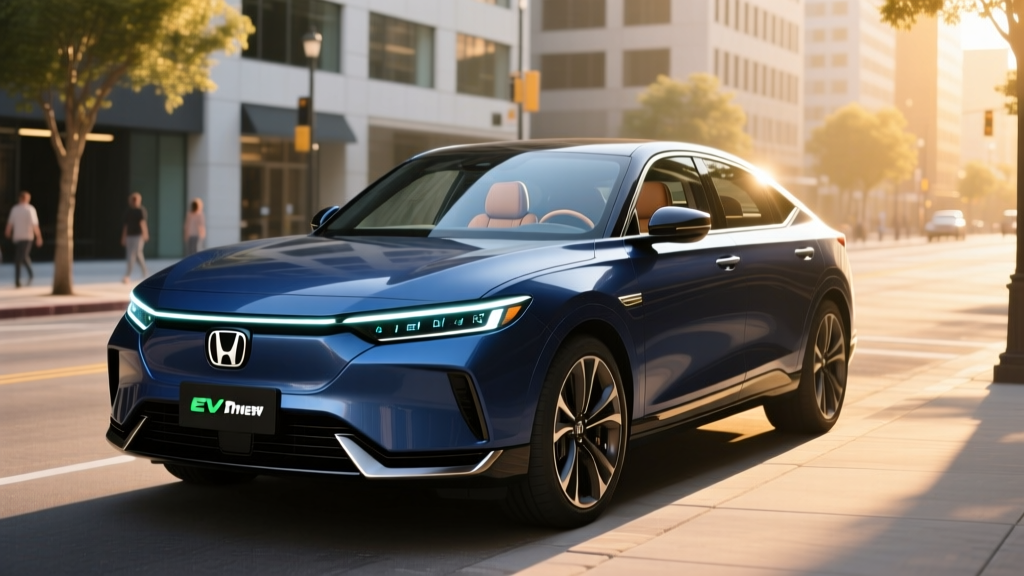
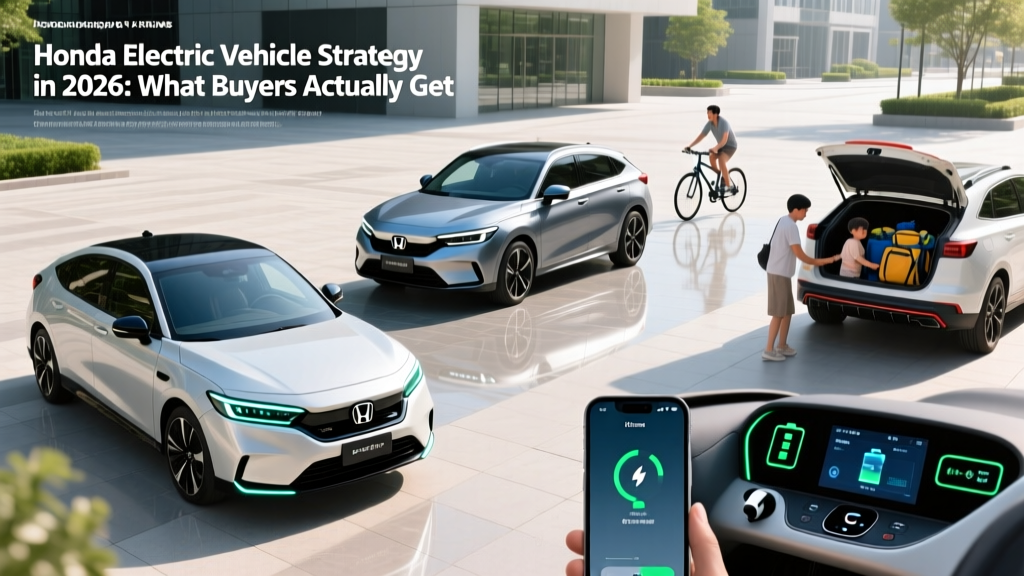
Honda's electric vehicle strategy in 2026 centers on two pillars: the currently available Prologue SUV (built on GM's Ultium platform with up to 296 miles EPA range, starting around $47,400) and the forthcoming 0 Series lineup (Honda's in-house EV architecture, expected late 2026/2027 with thinner batteries and SAE Level 3 highway capability). For buyers today, Honda also offers a robust hybrid lineup (Civic, Accord, CR-V hybrids) that bridges the gap for those without reliable home charging. The Prologue qualifies for partial or full federal tax credits depending on battery sourcing and buyer income, but real-world highway range drops to roughly 240-260 miles.
Where Honda Stands in the 2026 EV Landscape
Honda arrived late to the battery-electric market compared to rivals like Hyundai, Kia, and Tesla. The brand initially partnered with GM to fast-track the Prologue (and its Acura ZDX twin), using the Ultium skateboard platform also found in the Chevrolet Blazer EV and Cadillac Lyriq. This gave Honda an immediate competitive product while its own engineering team developed the next generation.
That next generation is the 0 Series, announced at CES 2024 and expected to begin production with a flagship SUV in late 2026 or early 2027. Honda has previewed a "thin, light, and wise" philosophy: lower-profile battery packs for better aerodynamics, steer-by-wire capability, and an ambition for SAE Level 3 automated highway driving on select models. Until those vehicles reach showrooms, the Prologue remains Honda's sole all-electric offering in the US market.
The Prologue: Specs, Range, and Real-World Numbers
The 2026 Honda Prologue continues with an 85 kWh usable battery (NMC chemistry), available in FWD and AWD configurations. Here is what the spec sheet looks like for the current model year:
| Specification | Prologue EX (FWD) | Prologue Touring (AWD) | Prologue Elite (AWD) |
|---|---|---|---|
| EPA Range | 296 mi | 281 mi | 273 mi |
| Real-World Highway Range | ~245-260 mi | ~235-250 mi | ~225-240 mi |
| Battery (Usable) | 85 kWh, NMC lithium-ion | ||
| Peak DC Fast Charge | 150 kW | ||
| 10-80% DC Charge Time | ~35 minutes (with preconditioning) | ||
| Level 2 Charge Rate | 11.5 kW (~37 mi/hr added) | ||
| Horsepower | 212 hp | 288 hp | |
| 0-60 mph | ~7.7 sec | ~5.9 sec | |
| Starting MSRP | $47,400 | $51,400 | $57,400 |
| Battery/Powertrain Warranty | 8 years / 100,000 miles | ||
Real-World Range vs. EPA Sticker
The EPA rates the Prologue EX FWD at 296 miles, but sustained highway driving at 70-80 mph typically yields 245-260 miles in mild weather. In cold conditions (below 30°F), expect a further 15-25% reduction, bringing effective range down to roughly 195-220 miles. The AWD models lose about 15-20 miles on the EPA cycle, and real-world highway figures follow suit. This is normal for an NMC pack of this size but worth factoring into road-trip planning.
Charging: Home, Public, and the GM Network Advantage
One practical benefit of the Prologue's Ultium underpinnings is access to GM's growing charging partnerships. Honda Prologue owners can use the Ultium Charge 360 network aggregator, which includes Electrify America, EVgo, and Tesla Superchargers (via adapter for CCS-equipped vehicles).
| Charging Level | Power | Miles Added per Hour | Typical Use Case |
|---|---|---|---|
| Level 1 (120V household) | ~1.4 kW | ~4-5 mi/hr | Overnight trickle, emergencies |
| Level 2 (240V home/public) | 11.5 kW (Prologue max) | ~37 mi/hr | Daily home charging |
| DC Fast Charge | Up to 150 kW peak | ~170 mi in 30 min (10-80%) | Road trips |
The Prologue's 150 kW peak DC charge rate is modest by 2026 standards — Hyundai's Ioniq 5 peaks at 240 kW, and the Kia EV6 at 239 kW. The charge curve also tapers noticeably above 80% State of Charge (SoC), meaning that last 20% can take as long as the first 80%. For road-trippers who charge to full at each stop, this adds meaningful time.
Federal Tax Credit Eligibility: What Actually Applies
The Prologue's eligibility for the IRS §30D federal tax credit depends on battery component sourcing, critical mineral content, MSRP caps, and buyer income limits. As of 2026, the credit can reach up to $7,500, but it splits into two halves ($3,750 for battery components, $3,750 for critical minerals), and each half has independent sourcing requirements that tighten annually.
§30D Credit Requirements (2026)
- MSRP cap: SUVs/vans/pickups must be ≤ $80,000; sedans ≤ $55,000 (Prologue qualifies as an SUV)
- Buyer income cap: Modified AGI ≤ $150,000 (single), $225,000 (head of household), $300,000 (joint)
- Battery sourcing: Increasing percentages of critical minerals and battery components must be sourced from the US or FTA partners — check the latest fueleconomy.gov listing for current Prologue eligibility
- Point-of-sale transfer: Buyers can transfer the credit to the dealer at purchase, reducing the out-of-pocket price immediately (requires dealer registration)
- Final assembly: Must occur in North America (Prologue is assembled in Ramos Arizpe, Mexico — verify current-year assembly status with the VIN decoder on fueleconomy.gov)
Note: Tax credit rules change frequently. Consult a tax professional and check IRS.gov before purchasing. The Prologue's Mexico assembly has historically complicated full credit eligibility, though partial credits have applied in some model years.
Prologue vs. Honda Hybrids: The Cost and Practicality Breakdown
For many Honda shoppers, the real decision isn't EV vs. gas — it's EV vs. Honda's strong hybrid lineup. The CR-V Hybrid and Accord Hybrid offer 40+ MPG combined with zero charging infrastructure requirements. Here's how the math compares over five years of ownership:
| Cost Factor (5-Year Estimate) | Prologue Elite AWD | CR-V Hybrid Sport Touring | CR-V Gas (EX-L AWD) |
|---|---|---|---|
| Purchase Price (MSRP) | $57,400 | $41,295 | $38,050 |
| Estimated Tax Credit | $0-$7,500* | N/A | N/A |
| Fuel/Energy (15,000 mi/yr) | ~$3,750 (home charging)** | ~$7,500 (gas at $3.50/gal, 40 MPG) | ~$9,375 (gas at $3.50/gal, 28 MPG) |
| Maintenance | ~$1,800 | ~$3,200 | ~$3,800 |
| Insurance (avg) | ~$10,500 | ~$8,400 | ~$8,100 |
| 5-Year Total (approx) | $65,950-$73,450 | $60,395 | $59,325 |
*Tax credit amount depends on 2026 sourcing rules and buyer eligibility. **Based on $0.14/kWh national average electricity rate. Actual costs vary by state and utility.
Should You Buy the Prologue or a Honda Hybrid?
Choose the Prologue if:
- You have reliable Level 2 home charging (garage or driveway with 240V access)
- Your daily commute is under 100 miles round-trip
- You qualify for at least a partial federal tax credit, narrowing the price gap
- You want zero tailpipe emissions for local air quality
- You rarely take road trips exceeding 250 miles between stops
Choose a Honda Hybrid (CR-V/Accord) if:
- You live in an apartment or lack home charging access
- You frequently drive 300+ miles in a day or live in a charging-desert region
- Upfront cost is a primary concern (hybrids save $15,000+ at purchase)
- You experience harsh winters where EV range drops 20-30%
- You want the lowest total cost of ownership with minimal infrastructure investment
The 0 Series: What Honda Has Promised for 2027+
Honda's 0 Series announcement outlined a ground-up EV platform with several distinguishing goals:
- Thin battery packs using next-generation prismatic and potentially solid-state cells, lowering vehicle height and improving aerodynamics
- SAE Level 3 highway automation on select models — meaning the car handles all driving tasks on limited-access highways under defined conditions, and the driver can legally disengage (eyes off, hands off)
- Steer-by-wire for improved packaging and variable steering ratios
- Target range: Honda has suggested 300+ miles for mainstream models, though final EPA figures are not yet published
Understanding SAE Level 3 vs. Level 2
Current Honda driver-assist (Honda Sensing) is SAE Level 2: the system provides steering and speed assistance, but the driver must remain fully engaged, eyes on the road. Honda's 0 Series Level 3 ambition would permit hands-off, eyes-off driving only on mapped, limited-access highways under specific conditions (e.g., below 60 mph in traffic, clear weather). This is fundamentally different from Level 4 robotaxi service (Waymo, Zoox) which operates without any human driver present. Level 3 still requires a licensed driver who can resume control when the system requests.
The 0 Series is expected to launch first in Japan and North America, with a flagship SUV and sedan. Pricing, final battery specs, and exact US availability dates remain preliminary. Honda has also committed to continuing hybrid production alongside EVs through at least 2030, acknowledging that electrification timelines vary by market and infrastructure readiness.
Common Misconceptions About Honda's EV Lineup
| Myth | Fact |
|---|---|
| "Honda doesn't make EVs" | The Prologue is a full-size, 296-mile EPA-range electric SUV available now at Honda dealers nationwide. |
| "The Prologue is just a rebadged Chevy" | While it shares GM's Ultium platform, Honda tuned the suspension, designed the interior, and integrated its own infotainment and Honda Sensing ADAS suite. |
| "All Prologues get the full $7,500 tax credit" | Credit eligibility depends on battery sourcing, final assembly location, MSRP caps, and buyer income. Verify on fueleconomy.gov before purchasing. |
| "Honda is abandoning hybrids for EVs" | Honda has confirmed hybrid production will continue and expand through 2030+. Hybrids remain a core part of the strategy. |
| "The Prologue charges as fast as any EV" | At 150 kW peak, the Prologue charges slower than competitors like the Ioniq 5 (240 kW) or Model Y (250 kW). Plan for ~35-minute 10-80% stops. |
First-Time EV Buyer Checklist
If the Prologue is your first electric vehicle, these practical steps will smooth the transition:
- Confirm home charging access. A Level 2 (240V) home charger is essential for convenient daily ownership. Installation costs range from $500 (simple outlet near panel) to $2,500+ (panel upgrade, long wire runs). Get a quote from a licensed electrician before purchasing.
- Map your road-trip routes. Use PlugShare or the Ultium Charge 360 app to confirm DC fast-charging availability along routes you drive at least twice a year.
- Factor in cold-weather range loss. If you live in the Upper Midwest or Northeast, plan for 20-30% range reduction in winter. The Prologue's heat pump helps, but physics is physics.
- Compare insurance quotes. EV insurance premiums average 15-25% higher than comparable gas vehicles. Get quotes from your current provider and at least two competitors before committing.
- Understand the charge curve. The Prologue's 150 kW peak only holds briefly; charging slows substantially above 80% SoC. For road trips, plan to charge to 80% and drive on — charging the last 20% takes as long as the first 80%.
- Verify tax credit eligibility with your VIN. Use the official fueleconomy.gov tax credit tool to confirm the specific Prologue trim and model year qualifies.
Does the Honda Prologue qualify for the $7,500 federal tax credit?
Partial or full eligibility depends on the model year, battery sourcing compliance, and your personal income. The Prologue's Mexico assembly has complicated eligibility in some years. Always verify current status on fueleconomy.gov and consult a tax professional.
How long does it take to charge the Prologue at home?
With an 11.5 kW Level 2 home charger, a full charge from empty takes approximately 7.5-8 hours. Most owners plug in overnight and wake to a full battery every morning — this is the standard EV ownership pattern.
Is the Prologue the same as the Acura ZDX?
They share the GM Ultium platform and battery, but differ in interior materials, suspension tuning, infotainment systems, and pricing. The ZDX starts at a higher MSRP and offers a Type S performance variant with 355 hp.
When will Honda's 0 Series EVs be available in the US?
Honda has targeted late 2026 for initial production in Japan, with North American availability expected in 2027. Final specs, pricing, and US launch timing are preliminary and subject to change.
Should I wait for the 0 Series or buy a Prologue now?
If you need an EV today and have home charging, the Prologue is a competent, well-equipped SUV with proven Ultium hardware. If you can wait 18-24 months and want Honda's own platform with potentially faster charging and Level 3 capability, the 0 Series may be worth the delay. There is no wrong answer — it depends on your timeline and charging access.