Quick Answer: Honda's current electric vehicle lineup centers on the 2026 Honda Prologue, a midsize SUV with up to 308 miles of EPA range, a starting MSRP around $47,400, and DC fast charging up to 150 kW (10–80% in roughly 32 minutes). A second Honda EV, the Saloons sedan, is announced for late 2026/2027 on Honda's dedicated EV platform. Whether a Honda EV makes financial sense depends heavily on your home charging access, local electricity rates, and §30D tax credit eligibility — details we break down with exact numbers below.
Honda's Electric Vehicle Strategy in 2026
Honda's path to electrification has been deliberate rather than aggressive. The Prologue, developed on General Motors' Ultium platform, launched for the 2024 model year and continues into 2026 with minor refinements. It remains Honda's only battery-electric vehicle (BEV) currently available for purchase in the United States.
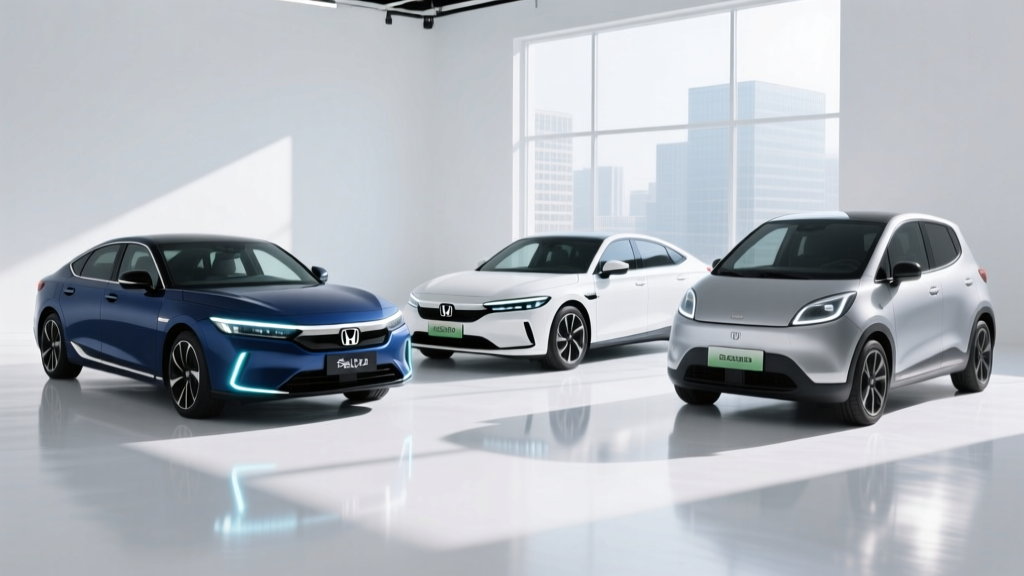
The bigger story is what's coming: Honda has confirmed the Honda 0 Series, a dedicated EV architecture that will underpin multiple models starting with a thin, aerodynamic sedan (previewed as the "Saloon" concept). This platform promises 800-volt architecture, faster charging, and Honda-developed battery management. However, these vehicles are announced/preliminary — final EPA range, pricing, and availability remain unconfirmed as of early 2026.
For buyers shopping today, the Prologue is the Honda EV you can actually drive home. Let's examine exactly what you're getting.
2026 Honda Prologue: Range, Battery & Charging Specs
| Specification | FWD EX/LX | AWD EX-L/Touring |
|---|---|---|
| EPA Range | 308 miles | 281–294 miles |
| Battery (usable) | 85 kWh (NMC lithium-ion, Ultium) | |
| Efficiency (MPGe) | ~99 MPGe combined | ~92 MPGe combined |
| Peak DC Fast Charge | 150 kW (CCS1 connector) | |
| 10–80% DC Charge Time | ~32 minutes | |
| Level 2 Charging (AC) | 11.5 kW (~7.7 kW onboard acceptance) | |
| Horsepower | 212 hp | 288 hp |
| 0–60 mph | ~7.7 sec | ~6.0 sec |
| Starting MSRP | $47,400 | $50,400–$57,900 |
| Battery/Powertrain Warranty | 8 years / 100,000 miles | |
Real-World Range Reality: The Prologue's 308-mile EPA figure (FWD) is achievable in mild, mixed-driving conditions. Expect ~250–270 miles on sustained highway driving at 70+ mph, and ~220–240 miles in cold weather (below 32°F) due to battery resistance and cabin heating demands. AWD models lose roughly 5–8% range in practice compared to FWD. Source: fueleconomy.gov.
Charging Curve Reality
The Prologue's 150 kW peak DC charge rate is respectable but not class-leading. More importantly, peak rate is not sustained rate. The charge curve holds near 150 kW between roughly 10–40% state of charge (SoC), then tapers progressively. The 10–80% time of ~32 minutes reflects this taper. Charging from 80–100% slows dramatically — plan to unplug at 80% on road trips to avoid spending 20+ minutes gaining the last 20% of capacity.
At home on a Level 2 charger (240V, 48-amp circuit), the Prologue adds approximately 30–35 miles of range per hour. A full overnight charge from 20% to 100% takes roughly 8–9 hours, which suits most daily driving patterns well.
Honda EV vs. Gas and Hybrid: The Cost Comparison
The most common question from Honda shoppers: should I buy the Prologue EV, a CR-V Hybrid, or a conventional CR-V? Here's the data.
| Metric | 2026 Prologue (EV) | 2026 CR-V Hybrid (PHEV/HEV) | 2026 CR-V Gas |
|---|---|---|---|
| Starting MSRP | $47,400 | $35,850 | $31,450 |
| Fuel/Energy Cost per Mile | $0.04–$0.06 (home) | $0.10–$0.12 | $0.13–$0.16 |
| EPA Combined Efficiency | 99 MPGe | 40 MPG | 30 MPG |
| Annual Fuel Cost (12k mi) | $480–$720 | $1,200–$1,440 | $1,560–$1,920 |
| Maintenance (annual est.) | $300–$400 | $500–$700 | $600–$900 |
| Federal Tax Credit (§30D) | Up to $7,500* | Up to $7,500 (PHEV)* | None |
* §30D tax credit eligibility depends on MSRP caps, buyer income limits, battery component sourcing, and critical mineral requirements. The Prologue's GM-sourced battery has faced sourcing-rule challenges — verify current-year eligibility at irs.gov or through your tax professional. Point-of-sale transfer is available if eligible.
5-Year Total Cost of Ownership
| Cost Category (5 yr / 60k mi) | Prologue EV | CR-V Hybrid | CR-V Gas |
|---|---|---|---|
| Purchase (after est. credit) | $39,900 | $35,850 | $31,450 |
| Energy/Fuel | $3,000 | $6,600 | $8,700 |
| Maintenance | $1,750 | $3,000 | $3,750 |
| Insurance (est. avg) | $7,500 | $6,000 | $5,500 |
| Estimated Depreciation | $18,000 | $14,000 | $13,000 |
| 5-Year Total | $70,150 | $65,450 | $62,400 |
The Prologue narrows the cost gap primarily through fuel and maintenance savings, but higher insurance premiums and steeper depreciation (common across EVs) partially offset those gains. The EV wins on total cost only if you qualify for the full $7,500 credit and charge primarily at home at average residential electricity rates (~$0.14/kWh).
Real-World Ownership: What First-Time Honda EV Buyers Need to Know
Home Charging Is Non-Negotiable for Most Owners
If you cannot install a Level 2 home charger (240V, 40–48 amp), EV ownership becomes significantly less convenient. Relying solely on public DC fast charging costs roughly $0.30–$0.48/kWh at networks like Electrify America or EVgo — nearly 5–8× more per mile than home charging. Public charging also adds 30–45 minutes to your routine multiple times per week.
Home charger installation costs typically range from $500–$2,500 for the equipment and electrician, though homes needing a panel upgrade (200-amp service) can see costs reach $3,000–$5,000. Factor this into your purchase budget.
Cold Climate Considerations
The Prologue uses a liquid-cooled battery with active thermal management, but expect 20–30% range loss in sustained sub-freezing temperatures. This is physics, not a Honda-specific flaw — lithium-ion chemistry slows in cold, and resistive cabin heating draws significant energy. If you live in northern climates and regularly drive 200+ miles in winter, the Prologue's real-world range may drop to 200–220 miles. Preconditioning the battery while plugged in mitigates some of this loss.
Insurance Costs Run Higher
EV insurance premiums average 15–25% higher than equivalent gas vehicles due to higher repair costs, specialized parts, and battery replacement exposure. Get quotes from your insurer before committing — some carriers now offer EV-specific policies with better rates.
§30D Federal Tax Credit: Does the Prologue Qualify?
Federal tax credit eligibility for the Honda Prologue is not guaranteed and has shifted with evolving battery-sourcing rules under the Inflation Reduction Act. Here's the checklist:
- MSRP cap: SUVs must be under $80,000 — Prologue qualifies ✓
- Buyer income cap: AGI ≤ $150,000 (single) / $300,000 (joint) ✓
- Battery component sourcing: Must meet escalating North American assembly thresholds — Prologue's GM Ultium battery has faced partial disqualification in prior model years due to foreign-sourced critical minerals ⚠️
- Final assembly: Must be in North America — Prologue assembled in Tennessee ✓
- Point-of-sale transfer: Available if eligible, reducing purchase price at the dealer
The Prologue may qualify for a partial credit ($3,750) or the full $7,500 depending on the current year's critical-mineral and battery-component percentages. Always verify at fueleconomy.gov's tax credit database before purchasing. Rules can change mid-year.
Common Honda EV Misconceptions: Myth vs. Fact
| Myth | Fact |
|---|---|
| "The Prologue is a rebadged Chevy — not a real Honda" | The Prologue uses GM's Ultium platform and battery, but Honda engineered its own suspension tuning, interior, infotainment, and Honda Sensing ADAS suite. It drives like a Honda, not an Equinox EV. |
| "EV batteries need replacing every 5 years" | Modern NMC batteries like the Prologue's are warranted for 8 years/100,000 miles at 70%+ capacity retention. Real-world data from similar Ultium packs shows 5–10% degradation over 100,000 miles. Full replacement (rare) costs $12,000–$18,000. |
| "I'll save $10,000+ in fuel over 5 years" | At 12,000 miles/year and $0.14/kWh home charging, you'll save roughly $4,200–$5,700 over 5 years compared to a gas CR-V. Meaningful, but not the dramatic figure some headlines suggest. |
| "Honda Sensing is self-driving" | Honda Sensing is an SAE Level 2 driver-assistance system (adaptive cruise + lane centering). You must keep your hands on the wheel and eyes on the road at all times. It is not autonomous. |
| "DC fast charging damages the battery" | Occasional DC fast charging is fine. The Prologue's thermal management actively protects the battery. However, exclusive reliance on DCFC (never using Level 2) can accelerate degradation by 1–3% over the battery's life. |
Decision Framework: Is a Honda EV Right for You?
Choose the Honda Prologue if:
- You can install a Level 2 home charger (garage or driveway with 240V access)
- Your daily commute is under 80 miles round-trip
- You qualify for at least $3,750 in federal tax credits
- You want a midsize SUV with Honda's reliability reputation and dealership network
- You primarily drive in moderate climates or can accept winter range reduction
Choose the CR-V Hybrid instead if:
- You live in an apartment or lack reliable home charging access
- You regularly take 400+ mile road trips through areas with sparse charging infrastructure
- You need the lowest possible upfront cost and don't qualify for EV tax credits
- You live in an extreme cold climate and need consistent range year-round
- You want maximum cargo flexibility (Prologue loses some under-floor space to the battery)
Wait for the Honda 0 Series (Saloon) if:
- You want a sedan, not an SUV
- You want Honda's own EV platform with expected 800V architecture and faster charging
- You can delay your purchase to late 2026 or 2027
Looking Ahead: The Honda 0 Series
Honda's next-generation EVs, badged under the Honda 0 Series, represent a significant departure from the GM-partnership Prologue. Key announced features include:
- Dedicated Honda EV platform with thin battery packs for lower ride height
- 800-volt architecture enabling DC fast charging above 200 kW (preliminary)
- Next-gen Honda Sensing with expanded ADAS capabilities (still SAE Level 2 for consumer vehicles)
- Targeted range: 300+ miles EPA (unconfirmed)
These vehicles are announced but not yet available. Final specs, pricing, and §30D eligibility will not be confirmed until closer to launch. Honda has indicated initial models will arrive in late 2026 or as 2027 model-year vehicles.
Frequently Asked Questions
What Honda electric vehicles are available right now?
The 2026 Honda Prologue is Honda's only BEV currently on sale in the US. It's available in EX (FWD/AWD), EX-L (AWD), and Touring (AWD) trims, priced from $47,400 to $57,900.
How long does it take to charge the Prologue at home?
On a Level 2 charger (240V, 48A), the Prologue adds roughly 30–35 miles of range per hour. A full charge from near-empty takes about 9–10 hours. Most owners charge overnight from 20–80%, which takes roughly 5–6 hours.
Does the Honda Prologue use a Tesla NACS connector?
No. The Prologue uses a CCS1 connector for DC fast charging and a J1772 inlet for Level 2 AC charging. Honda has not announced a NACS transition for the Prologue, though future Honda 0 Series models may adopt NACS.
What is the real-world range of the Honda Prologue in winter?
In sustained temperatures below 32°F, expect the FWD Prologue's range to drop from its 308-mile EPA rating to approximately 220–245 miles. AWD models may see 200–225 miles. Preconditioning while plugged in helps recover 10–15 miles of that loss.
Is the Prologue eligible for the $7,500 federal EV tax credit?
Eligibility varies by model year and current battery-sourcing rules. The Prologue has qualified for partial ($3,750) or full ($7,500) credit depending on the year. Check the latest status at fueleconomy.gov or consult a tax professional before purchasing. Point-of-sale transfer is available if you qualify.
How does Prologue maintenance compare to a gas CR-V?
The Prologue eliminates oil changes, spark plugs, transmission fluid, and exhaust system maintenance. You'll still need tire rotations (EVs wear tires faster due to instant torque and heavier weight), cabin air filter replacement, brake fluid checks, and wiper fluid. Annual maintenance costs average $300–$400 vs. $600–$900 for a gas CR-V.