The Short Answer
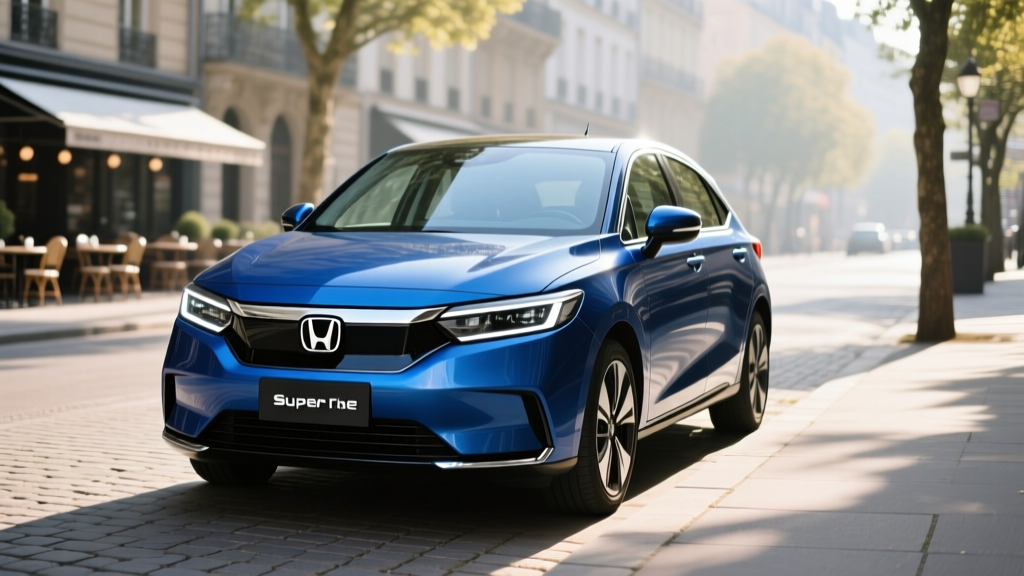
Honda is launching the affordable electric Super-N in Europe as a compact, city-oriented EV positioned below the Honda e in price and aimed at budget-conscious urban drivers. The announced model targets approximately 300 km (186 miles) of WLTP range, a starting price near €25,000 (~$27,500 USD), and a battery around 40 kWh. It is built on Honda's smaller EV platform and is not currently confirmed for the US market. For American buyers eyeing an affordable compact EV, the Super-N signals Honda's electrified direction — but stateside shoppers should look at currently available alternatives like the Chevrolet Equinox EV, Nissan Leaf, or Hyundai Kona Electric while monitoring Honda's US product announcements.
Honda Super-N: Confirmed Specs and European Positioning
Honda revealed the Super-N as part of its expanded European EV offensive, slotting into the B-segment (subcompact) category that's fiercely competitive overseas. Here's what we know from Honda's preliminary disclosures and European automotive reporting:
| Specification | Honda Super-N (Preliminary/Announced) |
|---|---|
| WLTP Range | ~300 km (186 mi) |
| Estimated EPA Range (if US-bound) | ~155–170 mi (EPA typically 10–15% lower than WLTP) |
| Battery Capacity (estimated) | ~40 kWh usable, LFP chemistry |
| DC Fast Charge Rate (est.) | ~80–100 kW peak |
| 10–80% DC Charge Time (est.) | ~30–35 minutes |
| Level 2 AC Charging | ~7.2–11 kW onboard charger |
| Motor Output (est.) | ~100–130 hp |
| 0–60 mph (est.) | ~9–11 seconds |
| European Starting Price | ~€25,000 (~$27,500 USD) |
| US Availability | Not confirmed |
A few critical notes on these figures. The WLTP testing cycle used in Europe produces more optimistic range numbers than the US EPA cycle. If Honda brings the Super-N to America, expect the EPA sticker to land in the 155–170 mile range — adequate for city commuting and suburban errands, but not a road-trip vehicle. The likely use of LFP (lithium iron phosphate) battery chemistry is a smart choice at this price point: LFP cells tolerate frequent 100% charging without accelerated degradation and are less expensive than NMC, though they sacrifice some energy density and perform worse in extreme cold.
Real-World Range Expectations
WLTP sticker: ~186 miles
Estimated EPA: ~155–170 miles
Highway driving (70+ mph): ~130–145 miles
Cold weather (below 30°F): ~110–130 miles (LFP chemistry loses 25–35% in deep cold without preconditioning)
How the Super-N Compares to US-Available Affordable EVs
Since the Super-N isn't (yet) a US option, the practical question is: what can American buyers get right now in the affordable compact EV segment? Here's a side-by-side look at current models that occupy a similar niche.
| Metric | Honda Super-N (EU) | Hyundai Kona Electric (US) | Nissan Leaf (US) | Chevy Equinox EV (US) |
|---|---|---|---|---|
| EPA Range | ~155–170 mi (est.) | 261 mi | 212 mi (60 kWh) | 319 mi |
| Battery | ~40 kWh LFP | 64.8 kWh NMC | 60 kWh NMC | 85 kWh NMC |
| DC Fast Charge | ~80–100 kW | 100 kW | 100 kW | 150 kW |
| 10–80% Time | ~32 min | ~43 min | ~45 min | ~30 min |
| Starting MSRP | ~€25k (~$27.5k) | $32,975 | $28,140 | $33,600 |
| §30D Tax Credit Eligible | N/A (not in US) | Partial ($3,750) | Partial ($3,750) | Up to $7,500 |
| Body Style | Subcompact hatch | Subcompact SUV | Compact hatch | Compact SUV |
The Super-N undercuts every US model on price — but that European MSRP doesn't account for American safety compliance, shipping, dealer markup, or the different feature expectations of US buyers. If Honda prices a US-spec Super-N around $28,000–$30,000 before incentives, it would compete directly with the Nissan Leaf, though the Leaf offers notably more EPA range. The Equinox EV costs more but delivers double the range and qualifies for the full §30D federal tax credit of up to $7,500 (subject to income limits, MSRP caps, and battery sourcing requirements — consult a tax professional for your specific situation).
Real Costs: Buying, Charging, and Owning a Compact EV
Whether you're waiting on the Super-N or buying a currently available compact EV, the ownership math follows the same framework. Here's a five-year cost projection for a typical compact EV in the $28,000–$33,000 range, compared against a similarly priced gas-powered Honda HR-V as a baseline.
| Cost Category (5 Years) | Compact EV (~$30k) | Honda HR-V Gas (~$28k) |
|---|---|---|
| Purchase Price (after credit) | $22,500–$30,000 | $28,000 |
| Fuel / Electricity | $2,400–$3,600 | $7,500–$9,000 |
| Maintenance | $1,200–$1,800 | $3,000–$4,200 |
| Insurance (avg) | $7,500–$9,500 | $6,000–$8,000 |
| Depreciation (est.) | $10,000–$14,000 | $8,000–$11,000 |
| 5-Year Total (approx.) | $43,600–$58,900 | $52,500–$60,200 |
Key takeaways from this breakdown:
- Electricity vs. fuel is the biggest win. At a national average of $0.16/kWh and 3.5 miles/kWh, a compact EV costs roughly $0.046/mile to "fuel." A 30 MPG gas car at $3.40/gallon costs $0.113/mile — a 2.5x difference. Over 12,000 miles/year, that's $550 vs. $1,360 annually.
- Maintenance savings are real but modest. No oil changes, fewer brake replacements (regen braking saves pads), no transmission fluid. Expect ~40–50% lower maintenance costs, but not zero — tires, cabin filters, and coolant still need attention.
- Insurance runs 10–20% higher for EVs on average, due to higher repair costs after collisions and elevated parts pricing. Get quotes before purchasing.
- Depreciation is the wild card. Compact EVs have seen steeper depreciation than gas counterparts in recent years, partly due to price wars and rapid tech advancement. LFP batteries may help long-term resale since they degrade more slowly.
What First-Time EV Buyers Must Know Before Committing
If the Super-N or any compact EV is your first electric car, these practical considerations will determine whether you love or regret the purchase.
Home Charging Is Non-Negotiable for Most Owners
Over 80% of EV charging happens at home. If you have a garage or dedicated parking spot with access to a 240V outlet (or the ability to install one), a Level 2 home charger delivers 25–35 miles of range per hour of charging — more than enough to replenish a compact EV overnight. Installation costs range from $500 (simple outlet near the panel) to $2,500+ (long wire runs, panel upgrades). Without home charging, you'll rely on public infrastructure, which is more expensive ($0.30–$0.50/kWh at DC fast chargers), less convenient, and in some regions still unreliable.
Cold Climate Buyers: Plan for 25–35% Range Loss
LFP batteries — the likely chemistry in the Super-N — are more susceptible to cold-weather capacity loss than NMC cells. In temperatures below freezing, expect your 170-mile EPA range to drop to 110–130 miles unless the car has a heat pump and battery preconditioning (not guaranteed at this price point). If you live in Minnesota, upstate New York, or similar climates, a compact EV with sub-200-mile range requires careful trip planning in winter.
DC Fast Charging: Peak kW Is Not Sustained kW
Manufacturers advertise peak charge rates (e.g., "100 kW"), but that rate is only maintained at a low state of charge (typically 10–40%). Above 60%, charging slows significantly — this is called the charge curve taper. A car rated at 100 kW peak might average only 55–65 kW across a 10–80% session. For the Super-N's estimated ~40 kWh battery, a 10–80% session at a DC fast charger would still take roughly 30–35 minutes, adding about 120–130 miles of range. That's acceptable for occasional road trips but not ideal for frequent long-distance driving.
Common EV Misconceptions — Fact-Checked
| Myth | Fact |
|---|---|
| "EV batteries need replacing every 5 years" | Modern EV batteries are warranted for 8 years/100,000 miles (federally mandated minimum). Real-world data from fueleconomy.gov and fleet studies show most batteries retain 85–92% capacity after 100,000 miles. LFP chemistry, likely in the Super-N, typically degrades even more slowly. |
| "You can't take an EV on a road trip" | You can, but a sub-200-mile compact EV requires planning: 30-minute DC fast-charge stops every 120–150 highway miles. It works, but a 250+ mile EV or a PHEV is significantly more convenient for frequent long drives. |
| "EVs cost more to own, period" | Upfront cost is often higher, but fuel and maintenance savings typically offset this within 3–5 years for drivers covering 10,000+ miles annually. The tax credit accelerates payback when applicable. |
| "All EVs qualify for the $7,500 tax credit" | Under current IRS §30D rules, eligibility depends on MSRP caps ($55,000 for cars, $80,000 for SUVs/trucks), buyer income limits ($150k single / $300k joint), and battery critical-mineral and component sourcing requirements. Many EVs qualify for only $3,750 or nothing at all. Always verify before purchasing. |
| "Compact EVs are unsafe because they're small" | Size matters in crashes, but modern compact EVs benefit from rigid battery-pack structures low in the chassis. Check IIHS and NHTSA ratings for specific models — many earn Top Safety Pick or 5-star ratings. |
Decision Framework: Should You Wait for the Super-N or Buy Now?
Choose a Currently Available US Compact EV (Kona Electric, Leaf, Equinox EV) If:
- You need a car within the next 1–6 months
- You want a vehicle with confirmed EPA range ratings, established dealer service networks, and known §30D tax credit eligibility
- You regularly drive more than 200 miles round-trip and need 250+ mile range (Equinox EV)
- You want to lock in current federal and state incentives before potential policy changes
Wait and Monitor the Honda Super-N If:
- You live in a city and drive under 40 miles daily — 170 miles of range is plenty
- You're not in a rush and can wait 12–24 months for a potential US launch
- You're a Honda loyalist who values the brand's build quality and dealer network
- Your budget is firm at under $30,000 and you want the most affordable new EV possible
Consider a PHEV Instead If:
- You lack home charging access and can't install a Level 2 charger
- You frequently drive 300+ miles in a day and don't want to plan charging stops
- You live in an extreme cold climate where winter range loss would make a sub-200-mile EV impractical
- Models like the Toyota Prius Prime (44 mi electric-only, 52 MPG combined) offer a compelling bridge
Frequently Asked Questions
Will the Honda Super-N be sold in the United States?
Honda has not confirmed US availability for the Super-N as of early 2026. The model is announced for European markets first. Honda's US EV lineup currently centers on the Prologue (a midsize SUV built on GM's Ultium platform). A subcompact EV for the US market is plausible given competitive pressure, but any US-spec version would need to meet different safety standards, and pricing would likely be higher than the European €25,000 figure.
Is 170 miles of EPA range enough for daily driving?
For most drivers, yes. The US average daily commute is roughly 35–40 miles round-trip. A 170-mile EV covers 4+ days of typical commuting before needing a charge. The problem arises with spontaneous long trips, cold-weather range reduction, and highway driving at sustained high speeds, all of which erode that buffer significantly.
What's the difference between kW and kWh, and why does it matter?
kW (kilowatts) measures power — how fast energy flows. Think of it as the speed of water through a hose. kWh (kilowatt-hours) measures energy capacity — how much the battery holds. Think of it as the size of the tank. A 40 kWh battery charged at 80 kW (power) will fill faster than one charged at 50 kW, but both hold the same total energy. When comparing EVs, kWh tells you range potential; kW tells you charging speed.
How does the Super-N's LFP battery compare to NMC?
LFP (lithium iron phosphate) batteries are cheaper to produce, can be charged to 100% regularly without significant degradation, and have longer cycle life (often 3,000+ cycles vs. ~1,500–2,000 for NMC). The trade-offs: lower energy density (heavier for the same kWh), and worse cold-weather performance. For a city-oriented, budget EV, LFP is the rational choice.
If Honda doesn't bring the Super-N to the US, what's the closest alternative?
The Nissan Leaf at $28,140 MSRP with 212 miles of EPA range is the closest current match in price and form factor. The Hyundai Kona Electric ($32,975, 261 mi range) offers more range for a moderate premium. For maximum range per dollar, the Chevrolet Equinox EV ($33,600 before credit, 319 mi range) is the segment leader, especially with the full $7,500 §30D credit potentially dropping its effective price below $27,000.