Honda Electric Scooters for Adults: The Quick Answer
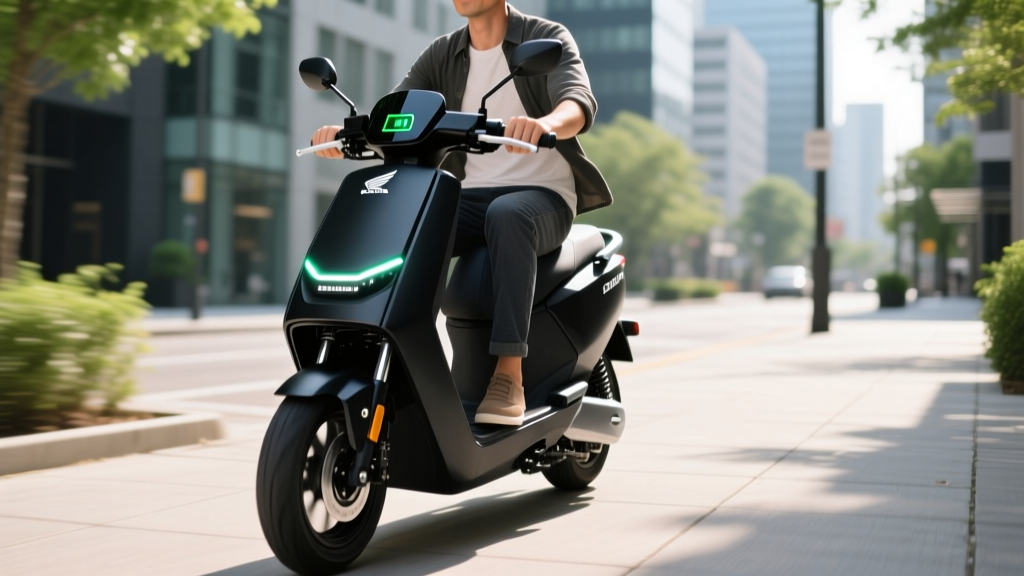
Honda's adult electric scooter lineup for 2026 centers on the Honda EM1 e: (urban commuter) and the larger Honda PCX Electric (mid-range commuter). However, Honda's electric scooter availability in the U.S. remains extremely limited as of 2026 — these models are primarily sold in Japan, Southeast Asia, and select European markets. U.S. buyers looking at Honda electric scooters for adults will largely find the Honda Motocompacto, a foldable electric scooter designed for last-mile commuting, priced around $3,895 MSRP with an EPA-estimated 12.5-mile range and a top speed of 15 mph. For anything beyond very short urban trips, U.S. buyers should consider Honda's U.S.-available electric and hybrid vehicles or third-party electric scooters from brands like Segway, NIU, or Gogoro.
If you've been searching for Honda electric scooters for adults, you're not alone — search interest has climbed as urban commuters look for affordable, zero-tailpipe-emission alternatives to cars. But the reality of Honda's electric two-wheeler strategy in 2026 requires some straight talk about what's actually available, what it costs, and how these scooters compare to both gas-powered scooters and full electric vehicles.
What Honda Electric Scooters Are Available in 2026?
Honda has been developing its electric two-wheeler lineup aggressively, but geographic availability is the single biggest hurdle for U.S. buyers. Here's a breakdown of Honda's current electric scooter portfolio:
| Model | Market | Battery (kWh) | Range | Top Speed | Approx. Price |
|---|---|---|---|---|---|
| Honda Motocompacto | U.S. ✅ | 0.52 kWh (removable) | ~12.5 mi | 15 mph | $3,895 |
| Honda EM1 e: | Japan/EU/Asia | 0.93 kWh (swappable) | ~25 mi (30 km/h constant) | 28 mph (45 km/h) | ~$2,800 (varies by market) |
| Honda PCX Electric | Japan/Asia (limited) | 2.3 kWh | ~25 mi (city) | 37 mph (60 km/h) | ~$4,500 (varies) |
| Honda CUV e: | Announced (Asia/EU) | ~2.0 kWh (est.) | ~40 mi (est.) | ~50 mph (est.) | TBA |
The Motocompacto is the only Honda electric scooter adults in the U.S. can currently purchase. It's a clever, foldable, lightweight scooter designed for exactly one use case: bridging the gap between a parked car (or public transit) and a final destination. Think campus commuting, large office parks, or getting from a train station to your apartment.
The EM1 e: uses Honda's Mobile Power Pack swappable battery system — a promising technology, but one that requires a battery-swap infrastructure network that simply doesn't exist in the U.S. The PCX Electric and upcoming CUV e: are more capable but remain unavailable stateside.
Real Costs: Honda Motocompacto vs. Gas Scooter vs. EV
To understand whether a Honda electric scooter makes financial sense, we need to compare it against realistic alternatives. Here's a 3-year ownership cost comparison for a commuter covering 5 miles each way, 5 days a week (~2,600 miles/year):
| Cost Factor | Honda Motocompacto | Honda Metropolitan 50 (Gas Scooter) | Used EV (e.g., 2024 Chevy Bolt EUV) |
|---|---|---|---|
| Purchase Price | $3,895 | ~$2,699 | ~$18,000 (used) |
| Fuel/Energy (3 yr) | ~$78 (electricity at $0.16/kWh) | ~$624 (gas at $3.50/gal, 100 MPG) | ~$1,170 (electricity) |
| Maintenance (3 yr) | ~$50 (brake pads, tire) | ~$450 (oil, belt, filters) | ~$600 (tires, cabin filter, wipers) |
| Insurance (3 yr) | ~$0–$300 (often not required) | ~$900 | ~$4,500 |
| 3-Year Total | ~$4,023–$4,323 | ~$4,673 | ~$24,270 |
| Range per "tank" | 12.5 miles | ~150 miles | ~247 miles (EPA) |
| Weather Protection | None | Minimal | Full enclosure |
The Motocompacto wins on pure operating cost — electricity for a full charge costs roughly $0.08 (0.52 kWh × $0.16/kWh). But it loses decisively on versatility. You can't take it on a highway, ride it in heavy rain comfortably, or carry a passenger. The gas Metropolitan 50 costs less upfront and goes 12× farther on a tank. A used EV handles every commute scenario but costs 4–5× more to acquire.
Honda Motocompacto Deep Dive: Specs and Ownership Reality
For U.S. buyers, the Motocompacto is the practical starting point. Here's what you need to know from real-world ownership:
Key Specifications
- Battery: 0.52 kWh lithium-ion, removable
- Motor: 490W (peak), front hub motor
- Range: EPA-estimated 12.5 miles — expect 8–10 miles real-world with hills, headwinds, or a heavier rider (200+ lbs)
- Top Speed: 15 mph (electronically limited)
- Charge Time: ~5 hours on standard 120V household outlet (no Level 2 option)
- Weight: 41.3 lbs (scooter) + battery
- Folded Dimensions: 37.4 × 18.9 × 3.7 inches — fits in a car trunk
- Max Rider Weight: 265 lbs
Charging: The Good and the Limiting
The Motocompacto charges exclusively from a standard 120V AC outlet using an included charger. There is no Level 2 (240V) option and no DC fast charging — the battery is simply too small to benefit from higher-power charging. At roughly 0.1 kW charge rate, you're adding about 2.5 miles of range per hour of charging.
This is perfectly adequate for the Motocompacto's intended use — charge it overnight at home or under your desk at work — but it means you cannot "top up" quickly during the day. If your round-trip commute exceeds 10 miles, you'll need access to an outlet at your destination.
Real-World Range vs. Sticker
EPA Estimated Range: 12.5 miles
Real-World Expectation: 8–11 miles (flat terrain, moderate rider weight, 50–70°F)
Cold Weather (below 40°F): Expect 15–25% range loss, yielding ~6–8 miles
Hilly Terrain: Significant impact — sustained climbs can cut range by 30%+
The small battery means every variable — rider weight, terrain, temperature, wind — has an outsized impact on range. A 220-lb rider on a hilly route in winter might realistically get only 6 miles from a full charge. Plan your routes accordingly.
Electric Scooter vs. Gas Scooter vs. Electric Car: Decision Framework
Choosing between Honda electric scooters for adults, a gas scooter, or a full EV depends on your specific commuting pattern. Here's a practical framework:
Choose the Honda Motocompacto if:
- Your one-way commute is under 5 miles on flat or gently rolling terrain
- You need something that folds and stores in a car trunk or office closet
- You have access to a standard outlet at home AND work
- You want near-zero maintenance and fuel cost
- You're supplementing a car or transit, not replacing one
Choose a gas scooter (Honda Metropolitan, Honda ADV160) if:
- Your one-way commute is 5–30 miles and includes varied roads
- You need to ride in rain or cold regularly
- You don't have reliable outlet access at your destination
- You want the flexibility for spontaneous longer trips
- Upfront cost matters more than long-term fuel savings
Choose a full EV (Chevy Equinox EV, Tesla Model 3, Hyundai Ioniq 5) if:
- You're replacing a car, not supplementing one
- Your commute includes highways or roads above 35 mph
- You need weather protection, cargo space, or passenger capacity
- You want to qualify for the §30D federal EV tax credit (up to $7,500 with income, MSRP, and sourcing requirements — see IRS guidelines)
- You can install a Level 2 home charger (240V, typically $500–$2,000 installed)
Common Misconceptions About Honda Electric Scooters
| Myth | Fact |
|---|---|
| "Honda sells a full-size electric scooter in the U.S." | As of 2026, only the foldable Motocompacto (12.5-mi range, 15 mph top speed) is available in the U.S. The EM1 e: and PCX Electric are sold in Asia and Europe. |
| "Electric scooters are cheaper to own than gas scooters." | Operating cost is lower (~$0.03/mile electricity vs. ~$0.04/mile gas at 100 MPG), but purchase price is often higher, and resale value for electric scooters is less established. Over 3 years and 7,800 miles, total savings may be only $100–$300. |
| "I can take the Motocompacto on the highway." | The Motocompacto tops out at 15 mph and is not legal or safe for any road with speed limits above 25 mph. It's a last-mile vehicle, not a commuter scooter for arterial roads. |
| "Electric scooters qualify for the $7,500 EV tax credit." | The §30D federal credit applies to 4-wheeled qualified clean vehicles with MSRP under $55,000 (sedans) or $80,000 (SUVs/trucks/vans). Two-wheeled electric scooters do not qualify. Some states offer e-bike or e-scooter rebates — check your local programs. |
| "The battery will need replacing in 2 years." | Honda's Motocompacto battery is rated for approximately 500 full charge cycles before dropping to 80% capacity. At one full cycle per day, that's roughly 1.5–2 years of daily use before noticeable degradation. However, most users charge partially (not 0–100%), extending real-world battery life to 3–5 years. A replacement battery costs approximately $300–$500. |
What First-Time EV Buyers Should Know About Electric Scooters
If you're exploring Honda electric scooters for adults as a gateway into electric mobility, here are the ownership realities that apply to all electric two-wheelers — not just Honda's:
Home Charging Access Is Non-Negotiable
Unlike electric cars, which have access to a growing (if imperfect) public DC fast-charging network, electric scooters rely almost entirely on standard 120V outlets. If you live in an apartment without outlet access in your parking area or garage, charging becomes a daily inconvenience. Some removable batteries (like the Motocompacto's) can be carried indoors to charge — a significant advantage for apartment dwellers.
Cold Weather Is the Enemy of Small Batteries
Lithium-ion batteries lose efficiency in cold temperatures. A 0.52 kWh battery like the Motocompacto's has so little energy reserve that a 20% cold-weather loss can be the difference between making your round trip and running out of charge. If you commute in a climate where temperatures regularly drop below 40°F, plan for significantly reduced range or consider a gas scooter for winter months.
Insurance, Registration, and Legal Requirements Vary
Electric scooter classification varies by state. In most states, the Motocompacto's 15 mph top speed classifies it as a low-speed vehicle or electric bicycle equivalent, meaning no registration, license, or insurance is required. However, some municipalities have restrictions on where you can ride (sidewalks vs. bike lanes vs. roads). Check your local regulations before purchasing.
Maintenance Is Minimal but Not Zero
Electric scooters eliminate oil changes, spark plugs, air filters, and drive belts. But you'll still need to monitor:
- Tire pressure (small tires are more sensitive to underinflation — affects range and safety)
- Brake pads (regenerative braking reduces wear, but mechanical brakes still need occasional service)
- Battery health (avoid storing at 0% or 100% for extended periods; store at ~50% if not riding for weeks)
- Software updates (Honda has issued firmware updates for the Motocompacto addressing throttle response and battery management)
Alternatives to Honda Electric Scooters in the U.S. Market
If the Motocompacto's limited range or Honda's limited U.S. electric scooter lineup doesn't meet your needs, here are alternatives worth considering in 2026:
| Model | Type | Range | Top Speed | Price | Best For |
|---|---|---|---|---|---|
| Segway Ninebot MAX G3 | E-Scooter (stand-up) | ~25 mi | 18.6 mph | ~$900 | Budget last-mile |
| NIU MQI GT Evo | E-Scooter (sit-down) | ~40 mi | 43 mph | ~$3,900 | Urban commuting |
| Gogoro Viva Mix | E-Scooter (swappable battery) | ~53 mi (2 batteries) | 50 mph | ~$2,500 (Asia/EU) | Longer urban routes |
| Super73 RX | E-Bike (moto-style) | ~40+ mi | 28 mph (Class 2) | ~$3,500 | Versatile urban/suburban |
| Honda Metropolitan 50 | Gas Scooter | ~150 mi | 40 mph | ~$2,699 | Range flexibility |
For U.S. buyers who want a sit-down electric scooter with real commuting range (25+ miles), the NIU MQI GT Evo or similar models currently offer more capability than the Motocompacto. If you want Honda quality and reliability specifically, the gas-powered Metropolitan 50 or the upcoming Honda ADV160 (a larger, more capable gas scooter) may be the pragmatic choice until Honda expands its electric two-wheeler lineup stateside.
Frequently Asked Questions
Does Honda sell electric scooters in the United States in 2026?
Honda sells the Motocompacto in the U.S. — a foldable electric scooter with a 12.5-mile EPA-estimated range and 15 mph top speed, priced at $3,895. Honda's larger electric scooters (EM1 e:, PCX Electric) are not currently available in the U.S. market.
How much does it cost to charge a Honda Motocompacto?
A full charge of the 0.52 kWh battery costs approximately $0.08 at the U.S. average electricity rate of $0.16/kWh. Over a year of daily 5-mile round-trip commuting (~260 days), total electricity cost is roughly $26.
Can I ride the Honda Motocompacto on the road?
The Motocompacto's 15 mph top speed makes it legal for bike lanes and low-speed roads in most jurisdictions, but it is not suitable for roads with speed limits above 25 mph. Check your state and local laws regarding electric scooter classification and where they can legally be operated.
How long does the Honda Motocompacto battery last before replacement?
Honda rates the battery for approximately 500 full charge cycles to 80% capacity. With typical partial charging patterns (not draining to 0% daily), expect 3–5 years of usable battery life. A replacement battery costs approximately $300–$500.
Do Honda electric scooters qualify for the federal EV tax credit?
No. The §30D federal tax credit applies to qualified 4-wheeled clean vehicles. Electric scooters, e-bikes, and motorcycles do not qualify. Some states and localities offer separate rebates for e-bikes and e-scooters — check your state energy office for current programs.
Is an electric scooter cheaper than a gas scooter over 3 years?
Operating costs are lower (electricity vs. gas, fewer maintenance items), but the total 3-year savings are often modest — typically $100–$400 depending on mileage, local fuel/electricity prices, and insurance. The primary advantages of an electric scooter are convenience (charge at home, no gas station visits), quiet operation, and zero tailpipe emissions.