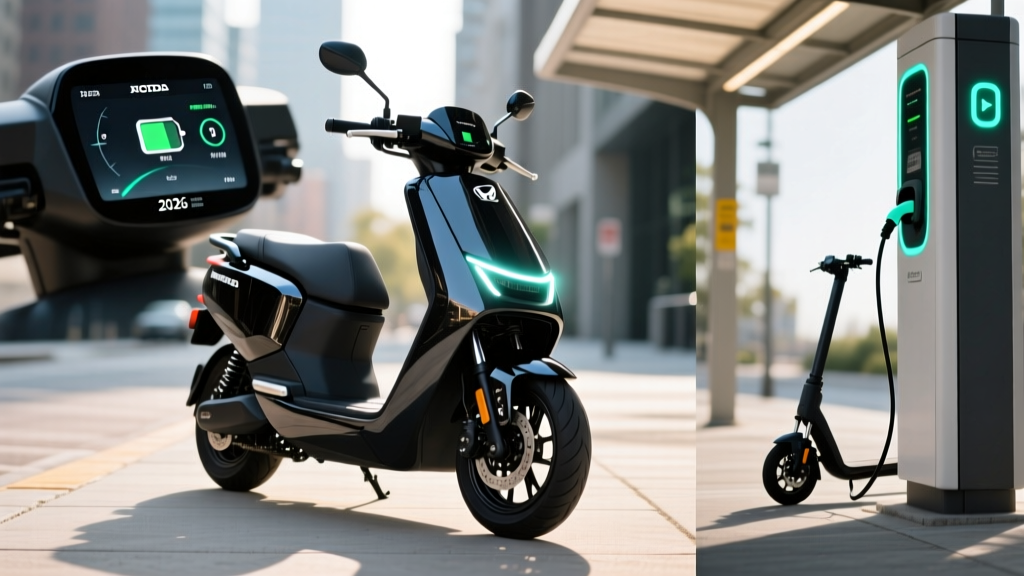
Quick Answer: As of early 2026, Honda does not sell a street-legal electric scooter in the United States. Globally, Honda has introduced the EM1 e: (a compact urban electric scooter with a swappable battery) and the Honda Gyro e: (a three-wheeled electric cargo scooter), but neither is available through U.S. Honda Powersports dealers. If you're searching for Honda electric scooters and hoping to buy one stateside, your current options are limited to Honda's gas-powered scooter lineup (such as the ADV160) or turning to competitors like NIU, Vespa Elettrica, or Zero Motorcycles for electric two-wheelers. This guide breaks down what Honda offers globally, what's coming, and how electric scooters stack up against gas alternatives on cost, range, and ownership.
Honda's Electric Scooter Lineup: What Exists in 2026
Honda has been deliberate — some would say slow — in bringing electric two-wheelers to market. The company's strategy centers on swappable battery platforms and partnerships with other Japanese manufacturers (Yamaha, Suzuki, and Kawasaki) to standardize battery swapping infrastructure. Here's what Honda currently produces for global markets:
Honda EM1 e: (Global Markets)
The EM1 e: is Honda's most accessible electric scooter, aimed at urban commuters in Europe, Japan, and Southeast Asia. Key specs based on Honda's published data:
- Motor: 1.7 kW (2.3 hp) continuous, 4.2 kW (5.6 hp) peak hub motor
- Battery: Honda Mobile Power Pack e: — 1.5 kWh usable capacity, lithium-ion (NMC chemistry)
- Range: Approximately 25 miles (41 km) per charge under WMTC Class 1 testing — expect 18–22 miles in real-world mixed riding
- Top Speed: 30 mph (48 km/h)
- Charging: Swappable battery; charges from 0–100% in roughly 5 hours via standard household outlet (no DC fast charging)
- Weight: ~209 lbs (95 kg)
- Price (Europe): Approximately €3,400 (~$3,700 USD equivalent)
Honda Gyro e: (Japan Only)
A three-wheeled electric cargo scooter designed for last-mile delivery in Japan. It uses two Mobile Power Pack e: batteries for extended range and features a tilting front axle for stability. Not available outside Japan.
Honda PCX Electric (Concept/Limited)
Honda has tested a PCX-based electric scooter in limited fleet programs, but as of 2026, no production version is sold to consumers in any market.
Why Honda Electric Scooters Aren't Sold in the U.S. Yet
Several factors explain Honda's cautious U.S. rollout:
Swappable battery infrastructure: Honda's electric scooter strategy depends on its Mobile Power Pack ecosystem — a network of battery-swap stations similar to what Gogoro has built in Taiwan. Without this infrastructure in American cities, the value proposition collapses. Honda and its Japanese partners have committed to battery-swap standardization, but U.S. deployment remains unannounced.
Market demand dynamics: The U.S. scooter market is small compared to Asia and Europe. Americans favor cars and trucks; scooter adoption concentrates in a handful of metro areas. Honda likely sees insufficient volume to justify certification, dealer training, and warranty support for a niche electric product.
Regulatory complexity: Bringing a new vehicle class to the U.S. requires DOT/EPA certification, state-by-state titling compliance, and dealer network preparation — a significant investment for a product with uncertain demand.
Electric Scooter vs. Gas Scooter: The Real Cost Comparison
If Honda does bring an electric scooter to the U.S. — or if you're considering an available alternative like the NIU MQi+ Sport or Vespa Elettrica — here's how the economics compare to a popular gas scooter like the Honda ADV160:
| Category | Electric Scooter (e.g., NIU MQi+ Sport) | Gas Scooter (Honda ADV160) |
|---|---|---|
| Purchase Price (MSRP) | $3,499 | $4,399 |
| Fuel / Electricity (5 yrs, 5,000 mi/yr) | $375 (at $0.16/kWh, 1.2 kWh/mi equivalent) | $2,813 (at $3.50/gal, 90 MPG combined) |
| Maintenance (5 yrs) | $400 (brake pads, tires, minimal service) | $1,800 (oil changes, belt, valve adjustments, air filter) |
| Insurance (5 yrs avg.) | $1,500 | $1,500 |
| Total 5-Year Cost | $5,774 | $10,512 |
| Cost Per Mile | $0.12 | $0.21 |
Key takeaway: Over five years and 25,000 total miles, an electric scooter saves roughly $4,700 in fuel and maintenance — more than enough to offset a comparable purchase price. The savings compound the more you ride. However, electric scooters carry trade-offs: lower top speed, shorter range, and battery replacement risk ($500–$900 for a new pack after 3–5 years of heavy use).
What Honda Offers U.S. Buyers Right Now: The Gas Alternative
If you need a Honda scooter today, the Honda ADV160 remains the company's U.S. flagship. For context:
- Engine: 157cc liquid-cooled single, 14.5 hp
- Fuel Economy: EPA-estimated 90 MPG combined (source: fueleconomy.gov)
- Fuel Tank: 3.2 gallons (~288-mile range)
- Top Speed: ~65 mph
- MSRP: $4,399
The ADV160's range, speed, and refueling convenience crush any current electric scooter. If your commute involves highways or exceeds 30 miles round-trip, gas remains the practical choice until battery energy density and charging infrastructure catch up.
Real-World Ownership Considerations for Electric Scooters
Before buying any electric scooter — Honda or otherwise — evaluate these practical factors:
Home Charging Access
Electric scooters with removable batteries (like Honda's Mobile Power Pack design) can charge from any standard 120V outlet, eliminating the need for dedicated EV charging infrastructure. This is a major advantage over electric cars for apartment dwellers. However, charging a 1.5 kWh battery takes 4–5 hours from empty — plan accordingly if you ride daily.
Climate and Range Loss
Lithium-ion scooter batteries lose 15–25% of their rated range in cold weather (below 40°F). A scooter rated for 25 miles may deliver only 18–20 miles in winter. If you live in a cold climate, size your range expectations conservatively or consider a gas scooter for winter months.
Battery Degradation and Replacement
Small-format lithium-ion batteries (NMC chemistry, typical in scooters) degrade with charge cycles. Expect 70–80% capacity retention after 500–800 full charge cycles — roughly 3–5 years of daily use. Replacement batteries cost $500–$900. Honda's Mobile Power Pack has not been priced for U.S. consumers, but global pricing suggests a similar range. This is a cost gas scooters don't face, though gas engines require their own major service intervals.
Speed and Route Limitations
Most electric scooters in the $3,000–$5,000 range top out at 28–45 mph. They're ideal for surface streets and bike lanes but unsuitable for highways. Match the vehicle to your actual route before purchasing.
Common Misconceptions About Electric Scooters
| Myth | Fact |
|---|---|
| "Electric scooters have zero maintenance." | They still require brake service, tire replacement, suspension checks, and eventual battery replacement. Maintenance is lower, not zero. |
| "You need a special charger or outlet." | Most electric scooters with removable batteries charge on a standard 120V household outlet. No Level 2 installation needed. |
| "Electric scooters qualify for the federal EV tax credit." | The IRS §30D clean vehicle credit applies to four-wheeled vehicles with a GVWR under 14,000 lbs. Two- and three-wheeled electric scooters do not qualify for the $7,500 credit. Some states offer separate two-wheeler rebates — check your local energy office. |
| "Electric scooters are always cheaper than gas." | Upfront, many electric scooters are comparable or slightly cheaper. True savings come from fuel and maintenance over 2–3+ years of ownership. Low-mileage riders may not recoup the premium. |
| "Honda electric scooters are available in the U.S." | As of 2026, Honda does not sell any electric scooter through U.S. dealerships. Global models like the EM1 e: remain unavailable stateside. |
Decision Framework: Should You Wait for Honda or Buy Now?
Choose a gas scooter (like the Honda ADV160) if:
- Your round-trip commute exceeds 30 miles
- You need highway-capable speeds (55+ mph)
- You ride year-round in cold climates
- You want the longest possible range per fill-up (250+ miles)
- You value Honda's U.S. dealer network for service and warranty
Choose an available electric scooter (NIU, Vespa Elettrica, Zero) if:
- Your daily riding is under 25 miles on surface streets
- You have access to a standard outlet for charging (apartment-friendly)
- You want the lowest per-mile operating cost
- You ride primarily in mild climates
- You value near-silent operation and zero tailpipe emissions
Wait for Honda's U.S. electric scooter if:
- You're committed to the Honda brand and dealer ecosystem
- You live in a city where battery-swap infrastructure may eventually arrive
- Your current gas scooter still has years of life left
- You're willing to monitor Honda's U.S. Powersports announcements through 2026–2027
Frequently Asked Questions
Does Honda make an electric scooter?
Yes — Honda manufactures the EM1 e: electric scooter for global markets (Europe, Japan, Southeast Asia). It features a 1.7 kW hub motor, a swappable 1.5 kWh Mobile Power Pack battery, and approximately 25 miles of range. However, Honda does not currently sell this or any electric scooter in the United States.
When will Honda electric scooters be available in the U.S.?
Honda has not announced a U.S. launch date for any electric scooter. The company's strategy relies on swappable battery infrastructure that doesn't yet exist in American cities. Industry watchers expect a possible U.S. introduction no earlier than 2027–2028, but this is speculative and unconfirmed.
How much does the Honda EM1 e: cost?
In Europe, the Honda EM1 e: retails for approximately €3,400 (roughly $3,700 USD). U.S. pricing, if the model launches here, would depend on import costs, certification, and dealer markup. Expect a likely MSRP between $3,500–$4,200 if it arrives.
Can I import a Honda EM1 e: to the U.S.?
Importing a non-U.S.-certified vehicle is legally complex and generally impractical for individual buyers. The scooter would need DOT and EPA compliance modifications, and Honda's warranty would not apply. It's not a realistic path for most consumers.
Do electric scooters qualify for the $7,500 federal tax credit?
No. The IRS §30D clean vehicle credit applies only to four-wheeled vehicles. Two-wheeled electric scooters and motorcycles do not qualify. Some states and utilities offer separate incentives for electric two-wheelers — check your state energy office or utility provider.
What's the best electric scooter alternative to Honda in the U.S.?
For a commuter-class electric scooter available in the U.S., strong options include the NIU MQi+ Sport (~$3,499, 40-mile range, removable battery), the Vespa Elettrica (~$7,500, 46-mile range, premium build), and the Super73-RX (electric moped-style, ~$3,495, 40+ mile range). Each trades off differently on price, range, and build quality.
How long do electric scooter batteries last?
Most electric scooter batteries (NMC lithium-ion) retain 70–80% of their original capacity after 500–800 full charge cycles — roughly 3–5 years of daily use. Honda's Mobile Power Pack is designed for commercial-grade durability, but U.S.-specific lifespan data isn't available. Budget $500–$900 for an eventual replacement.
Note: This article covers electric two-wheeled scooters, which fall outside AutoEdgeView's core focus on four-wheeled EVs and hybrids. We've addressed this topic due to significant reader interest in Honda's electrification strategy across all vehicle categories. For Honda's four-wheeled EV plans — including the Honda Prologue — see our dedicated EV reviews section.