The Short Answer on the Honda Electric Ridgeline
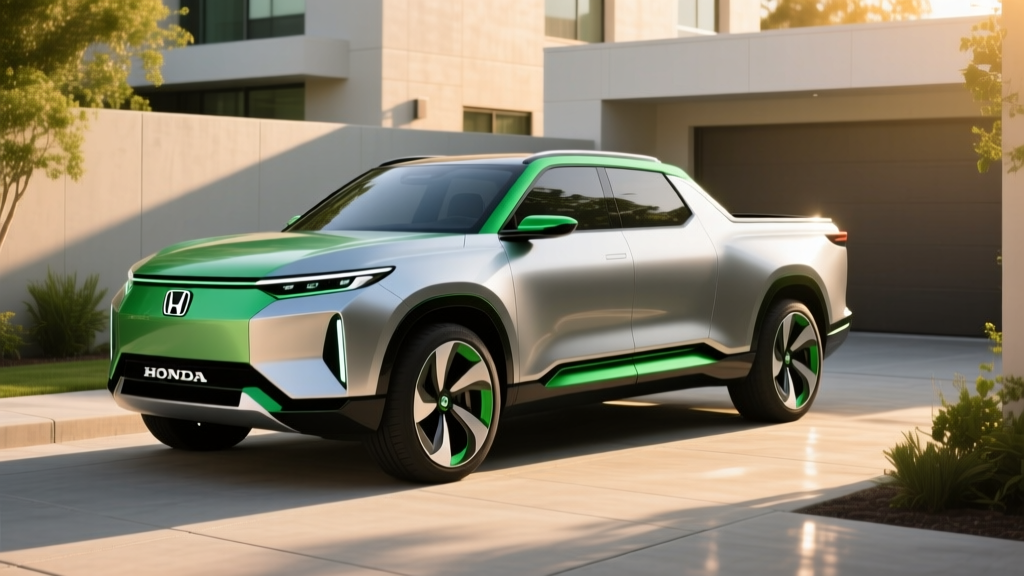
As of early 2026, Honda has not released final specifications, pricing, or a firm on-sale date for an electric Ridgeline. The company has confirmed that an all-electric pickup is in development for the North American market, built on Honda's newly developed large-size EV platform. Until Honda publishes official EPA range, battery capacity, and MSRP figures, everything below is based on Honda's announced platform targets, industry benchmarks from competing electric trucks, and informed analysis. If you need a truck today, the current gas-powered Honda Ridgeline remains the only Ridgeline you can buy.
Where Honda's Electric Pickup Stands in 2026
Honda's path to an electric truck has been anything but linear. The company initially partnered with General Motors to co-develop large EVs using GM's Ultium platform, then canceled that agreement in late 2023, opting instead to engineer its own dedicated large-vehicle EV architecture. That decision delayed Honda's entry into the electric truck and large SUV segments but gave the company full control over packaging, battery chemistry, and software.
The electric Ridgeline — while Honda has not officially confirmed the nameplate — is the logical product to fill the midsize electric pickup gap. The current gasoline Ridgeline sells roughly 30,000–40,000 units annually in the US and competes in a midsize truck segment that has seen electric newcomers like the Ford Maverick Hybrid and the forthcoming electric variants from Toyota and Chevrolet. Honda has stated that its next-generation EV lineup will use a self-developed platform with an emphasis on cost competitiveness and thinner battery packs to improve cabin space.
Here is what Honda has publicly outlined for its large EV platform targets:
- Target range: 300+ miles (EPA estimate, unconfirmed)
- Battery chemistry: Expected NMC (nickel manganese cobalt) for energy density in a truck application, though Honda has also sourced LFP cells for entry-level models
- Platform: Dedicated large-size EV architecture with rear-wheel-drive bias and available dual-motor AWD
- Manufacturing: Honda EV Hub in Ohio, with battery cells from the LG Energy Solution-Honda joint venture in Fayette County, Ohio
Projected Specs: How an Electric Ridgeline Could Compare
Because Honda has not published official figures, the table below uses Honda's platform targets alongside real-world benchmarks from the closest current competitors in the electric and midsize truck space. Treat the Honda column as projected, not confirmed.
| Spec | Honda Electric Ridgeline (Projected) | Ford F-150 Lightning (Std Range) | Chevrolet Silverado EV (4WT) | Honda Ridgeline (Gas AWD) |
|---|---|---|---|---|
| EPA Range | ~300–325 mi (target) | 240 mi | 390 mi | ~438 mi (19.5 gal × 22 mpg combined) |
| Battery Capacity | ~90–100 kWh (est.) | 98 kWh usable | 200 kWh | N/A |
| Peak DC Fast Charge | ~150–175 kW (est.) | 150 kW | 350 kW | N/A |
| 10–80% Charge Time | ~30–35 min (est.) | ~38 min | ~20 min | ~3 min (gas fill) |
| Horsepower | ~350–400 hp (dual motor est.) | 452 hp | 510 hp | 280 hp |
| 0–60 mph | ~5.5–6.5 sec (est.) | 4.4 sec | ~4.5 sec | 6.4 sec |
| Towing Capacity | ~5,000 lb (est.) | 7,700 lb | 10,000 lb | 5,000 lb |
| Bed Length | ~5.0 ft (est., unibody) | 5.5 ft | 5.11 ft (short box) | 5.4 ft |
| Starting MSRP | ~$48,000–$55,000 (est.) | $54,995 | $69,900 | $40,150 |
Sources: fueleconomy.gov (EPA data for gas Ridgeline and F-150 Lightning), manufacturer spec sheets. Honda figures are projected and subject to change.
EV Truck vs. Gas Truck: The Real Cost Breakdown
The most common question from midsize truck shoppers is whether electrification saves money. The answer depends heavily on your driving volume, electricity cost, and how long you keep the vehicle. Below is a five-year ownership cost comparison using a projected $52,000 electric Ridgeline MSRP against the current $40,150 gas Ridgeline AWD, assuming 12,000 miles per year.
| Cost Category | Electric Ridgeline (Projected) | Gas Ridgeline AWD (2026) |
|---|---|---|
| Purchase Price (MSRP) | $52,000 | $40,150 |
| Federal Tax Credit (§30D) | Up to $7,500 (if eligible) | $0 |
| Net Purchase Cost | $44,500 | $40,150 |
| Fuel/Energy (5 years, 60k mi) | $3,600 ($0.12/kWh, 3 mi/kWh) | $8,700 ($3.50/gal, 22 mpg) |
| Maintenance (5 years) | $1,200 (no oil, fewer fluid changes) | $3,500 (oil, filters, transmission) |
| Insurance (5 years, avg.) | $9,500 (EV premium ~15%) | $8,200 |
| Estimated Depreciation | $22,000 | $18,000 |
| Total 5-Year Cost | $80,800 | $78,550 |
Assumptions: National average electricity rate $0.16/kWh with 75% home charging at $0.12/kWh and 25% DC fast charging at $0.35/kWh, blended to ~$0.18/kWh effective. Gas at $3.50/gal national average. Insurance based on national EV premium data. Depreciation estimates based on current EV truck resale trends. Actual costs vary by state, utility rate, and driving pattern. Tax credit eligibility subject to IRS §30D requirements including income caps, MSRP limits, and battery sourcing rules.
The gap narrows further if you qualify for the full federal credit, have low-cost home solar charging, or drive above 15,000 miles per year. It widens if you lose the tax credit due to income or sourcing limitations, or if you primarily use expensive DC fast charging networks.
Real-World Ownership: What a First-Time EV Truck Buyer Should Know
Home Charging Is the Make-or-Break Factor
Electric truck ownership is fundamentally different depending on whether you can charge at home. A Level 2 home charger (240V, 48A / 11.5 kW) would add roughly 30–35 miles of range per hour to a truck-sized battery, meaning a full overnight charge from 20% to 80% takes about 5–6 hours. Without home charging, you are dependent on public DC fast charging, where rates average $0.30–$0.48/kWh nationally — often costing more per mile than gasoline.
Home Level 2 installation typically runs $800–$2,500 for the charger and electrical work if your panel has spare capacity. A 200A panel upgrade can add $1,500–$3,000. For truck owners who park in a garage or driveway with electrical access, this is a one-time cost that makes daily fueling essentially invisible.
Cold Weather and Towing Will Cut Range Hard
The EPA range sticker is measured under controlled conditions. In real-world ownership, expect these reductions:
- Highway driving at 70+ mph: 15–20% below EPA range due to aerodynamic drag, which hits trucks especially hard.
- Cold weather (below 30°F): 20–35% range loss from battery resistance and cabin heating demands. A projected 300-mile EPA truck might deliver 195–240 miles in January in Minnesota.
- Towing a 4,000-lb trailer: Expect a 40–55% range reduction. Electric trucks are not yet competitive with gas or diesel for sustained heavy towing on long routes. This is physics — moving mass uphill requires energy, and no current electric truck matches a gas truck's refueling speed for towing loops.
If your truck use case involves regular towing over 200 miles, a gas or hybrid truck remains the pragmatic choice in 2026.
Charging Speed: The Curve Matters More Than Peak kW
Automakers advertise peak DC fast-charging rates (e.g., "175 kW max"), but that peak is typically sustained only between 10–30% state of charge. Above 50%, the charge rate tapers significantly to protect battery health. A truck with a 175 kW peak might average only 80–100 kW across the full 10–80% session, making the real-world session 30–40 minutes rather than the theoretical 20 minutes. Honda has historically prioritized battery longevity over aggressive charging curves — expect a conservative taper strategy if the company follows its current EV engineering philosophy.
Federal Tax Credit Eligibility: What We Know So Far
The IRS §30D Clean Vehicle Credit offers up to $7,500 for qualifying new EVs, but eligibility is not guaranteed. Key requirements as of 2026:
- MSRP cap: Trucks, vans, and SUVs must have an MSRP at or below $80,000. A midsize electric Ridgeline should clear this easily.
- Buyer income cap: Adjusted gross income must not exceed $150,000 (single), $225,000 (head of household), or $300,000 (joint filers).
- Battery sourcing: A percentage of critical minerals and battery components must be sourced from the US or free-trade-agreement countries. This requirement tightens annually. Honda's Ohio battery plant with LG Energy Solution is positioned to meet domestic content thresholds, but final certification depends on the specific model year and cell supply chain.
- Point-of-sale transfer: As of 2024, buyers can transfer the credit to the dealer for an upfront price reduction rather than waiting to claim it at tax time.
- Fuel cell vehicle exclusion: Only battery-electric and plug-in hybrid vehicles qualify.
Because the electric Ridgeline has not been officially priced or certified, we cannot confirm credit eligibility. Check the fueleconomy.gov credit lookup tool once Honda publishes final specs.
Common Misconceptions About Electric Trucks
| Myth | Fact |
|---|---|
| "Electric trucks can't tow anything." | Most electric trucks tow 5,000–10,000 lb. The limitation is range while towing, not capacity. A 4,000-lb trailer at highway speed cuts range roughly in half. |
| "The battery will need replacing in 5 years." | Current NMC and LFP batteries are engineered for 200,000+ miles with less than 10% degradation. Honda is expected to offer an 8-year/100,000-mile battery warranty, consistent with federal minimums and industry norms. |
| "Charging takes hours everywhere." | Home Level 2 charging happens while you sleep — 6–8 hours for a full truck battery. DC fast charging adds 150–200 miles in 25–35 minutes at a 150+ kW station. |
| "An electric truck is always cheaper to own." | Not always. Higher purchase price, insurance premiums, and potential depreciation can offset fuel and maintenance savings over 5 years, especially for low-mileage drivers. The math favors high-mileage, home-charging owners. |
| "The Honda electric Ridgeline is available now." | It is not. Honda has confirmed a large EV platform and Ohio manufacturing, but no official on-sale date, pricing, or final specs have been published as of early 2026. |
Decision Framework: Should You Wait or Buy Now?
Wait for the Honda Electric Ridgeline If:
- You are a current Honda Ridgeline owner who wants to stay in the brand and electrify, and your truck needs are moderate (commuting, light hauling, weekend trips under 250 miles).
- You have reliable home charging and drive 12,000+ miles per year, making fuel savings meaningful.
- Your current truck still has 1–2 years of useful life, giving Honda time to release final specs and begin production.
- You value Honda's reputation for reliability and resale value and want to see how their EV platform performs before committing to a Ford or Chevrolet electric truck.
Buy a Gas or Hybrid Truck Now If:
- You regularly tow over 3,000 lb on trips longer than 150 miles. Electric truck towing range remains a serious limitation.
- You live in an apartment or park on the street with no practical home charging access.
- You drive in extreme cold (sustained below 15°F) for long highway trips and cannot afford a 30%+ range penalty.
- You need a truck this year, not in 2027 or beyond. Honda's timeline remains unconfirmed.
- Your budget is firmly under $45,000. The current gas Ridgeline starts at $40,150; an electric version will almost certainly start above $48,000 before incentives.
Consider a Competing Electric Truck Now If:
- You need an electric truck immediately and can work with the Ford F-150 Lightning (if a full-size footprint is acceptable) or wait for the Chevrolet Silverado EV's lower-priced trims.
- You want established EPA range data and real-world charging benchmarks rather than projections.
Frequently Asked Questions
When will the Honda electric Ridgeline be available?
Honda has not announced a specific release date. Industry estimates based on Honda's Ohio EV hub timeline and platform development suggest a reveal could come in late 2026 or 2027, with deliveries following 6–12 months later. Until Honda confirms, any date is speculative.
Will the Honda electric Ridgeline qualify for the $7,500 tax credit?
It is likely but not confirmed. Honda's Ohio battery manufacturing with LG Energy Solution positions the truck well for domestic battery-content requirements. However, the credit depends on the specific model year's MSRP (must be ≤$80,000 for trucks), buyer income, and critical-mineral sourcing percentages. Check IRS.gov and fueleconomy.gov once the truck is officially listed.
How does an electric Ridgeline compare to the gas Ridgeline for daily driving?
For daily commuting and around-town driving under 100 miles, an electric Ridgeline would offer lower per-mile energy costs, instant torque for merging, one-pedal regenerative braking in stop-and-go traffic, and zero tailpipe emissions. The gas Ridgeline wins for long highway trips where refueling convenience and sustained cold-weather range matter. If 80% of your driving is under 60 miles round-trip and you can charge at home, the EV version would handle your daily needs effortlessly.
What will it cost to charge an electric Ridgeline at home?
Assuming a ~95 kWh battery and a national average residential electricity rate of $0.16/kWh, a full 10–80% charge would cost approximately $10.64, adding roughly 210 miles of range. That equates to about $0.05 per mile — roughly one-third the per-mile fuel cost of the gas Ridgeline at $3.50/gallon and 22 mpg combined ($0.16/mile). Your actual cost depends on your utility rate; some areas offer off-peak EV rates as low as $0.07–$0.09/kWh.
Will Honda offer a plug-in hybrid Ridgeline instead?
Honda has not announced a PHEV Ridgeline. The company's stated strategy is to move toward battery-electric vehicles for its next-generation lineup while continuing to sell and refine its current gas and hybrid models. A PHEV Ridgeline could be a bridge product, but Honda has not indicated this is in development. For now, the choice is the current gas Ridgeline or waiting for the all-electric version.
How does the Honda electric Ridgeline compare to the Ford Maverick Hybrid?
These are different vehicle classes. The Ford Maverick Hybrid is a compact truck with an EPA-estimated 42 mpg city, starting around $28,000, with no electric-only range. An electric Ridgeline would be a midsize truck with more payload, more cabin space, and zero-emission driving, but at a higher purchase price. If your priority is maximum fuel economy at the lowest price, the Maverick Hybrid is the clear winner. If you want midsize truck capability with electric drivetrain benefits, the Ridgeline EV (when available) targets a different buyer.