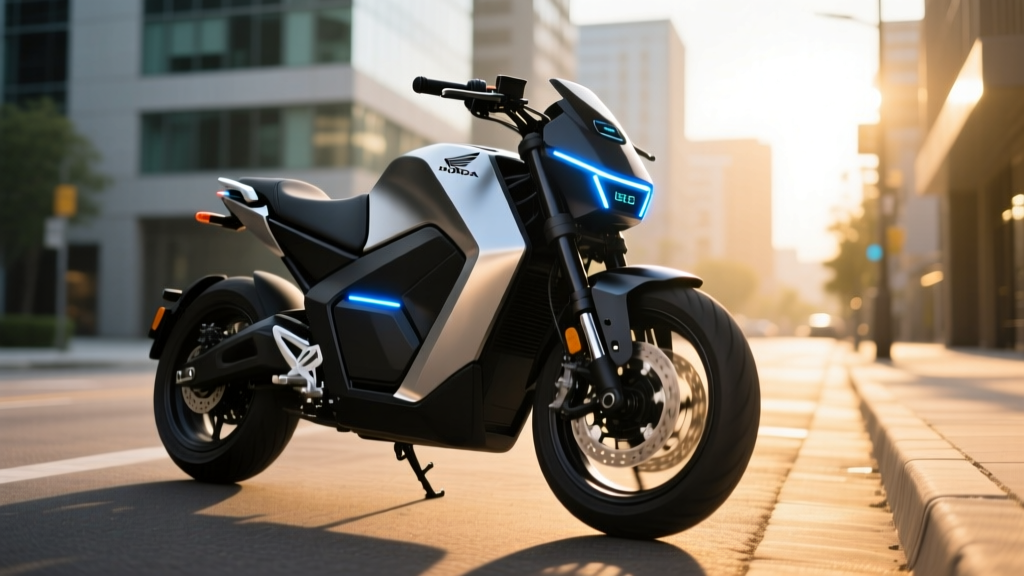
Quick Answer: As of 2026, Honda does not sell a full-size electric motorcycle in the U.S. market. The Honda EM1 e: — a compact electric scooter with a swappable battery — is available in select Asian and European markets but has not been officially launched stateside. Honda has announced a broader electric two-wheeler roadmap targeting 2026–2027, but U.S. availability remains unconfirmed. If you're searching for a Honda electric motorcycle you can buy today in America, the honest answer is that one doesn't exist yet at retail. This guide covers what Honda has announced globally, what the EM1 e: offers where it's sold, realistic expectations for a U.S. launch, and how to evaluate electric two-wheelers from brands that are available now.
At AutoEdgeView, our coverage focuses on electrified four-wheeled vehicles — EVs, PHEVs, and hybrids. However, the search interest around "honda electric motor cycle" tells us readers want clarity on Honda's electrification strategy across all platforms. Below, we break down exactly where Honda stands on electric two-wheelers in 2026, with hard specs where available, and practical guidance if you're considering an electric motorcycle or scooter purchase.
What Honda Electric Motorcycles Exist in 2026?
Honda's electric two-wheeler portfolio is currently limited to low-speed urban scooters built for the Asian and European commuter market. Here's what's in the lineup globally:
| Model | Type | Top Speed | Battery | Range (claimed) | U.S. Availability |
|---|---|---|---|---|---|
| Honda EM1 e: | Compact scooter | 28 mph (45 km/h) | 29.4V, 30.0 Ah (0.88 kWh) removable | ~25 miles (41 km) | Not available |
| Honda e-nyumon (concept) | Commuter scooter | TBD | TBD | TBD | Not announced for U.S. |
| Honda Mobile Power Pack platform | Swappable battery system | N/A | 1.04 kWh per pack (latest gen) | N/A | Not available |
The EM1 e: is the only production Honda electric two-wheeler on sale anywhere as of early 2026. It uses a single Honda Mobile Power Pack e: — a removable lithium-ion battery you can charge at home via a standard wall outlet or swap at dedicated stations (currently only in Japan and parts of Southeast Asia). The 0.88 kWh battery is tiny by any standard — roughly the capacity of a large laptop battery — and delivers a claimed 25 miles of range in ideal urban stop-and-go conditions.
For context, Honda has stated a goal to launch 10 or more electric motorcycle models globally by 2025–2026, but the majority target developing markets (India, Indonesia, Vietnam) where small-displacement gas scooters dominate. Full-size electric motorcycles comparable to Honda's CB or CBR lines are not part of the announced near-term roadmap.
Why Honda's Electric Motorcycle Isn't in the U.S. Yet
Several factors explain the gap between Honda's global electric two-wheeler activity and U.S. market silence:
- Market demand mismatch: The U.S. motorcycle market skews toward recreation and highway use — larger bikes, longer distances, higher speeds. A 28-mph, 25-mile-range scooter doesn't serve the typical American rider's needs.
- Regulatory classification: Low-speed electric scooters occupy a gray area between motorcycles and e-bikes in many U.S. states, complicating dealer sales, registration, and insurance frameworks.
- Charging infrastructure gaps: Honda's swappable-battery ecosystem (Mobile Power Pack stations) requires dense urban deployment to be viable. No U.S. city currently has this infrastructure.
- Competition from established players: The U.S. electric motorcycle market already has Zero Motorcycles, LiveWire (Harley-Davidson's EV spinoff), and Energica — all offering full-size bikes with 100+ mile ranges and highway-capable speeds.
Honda's U.S. dealer network is built around cars, trucks, and powersports (ATVs, side-by-sides, generators). Introducing a low-speed electric scooter through that channel would require retraining, new inventory systems, and a marketing strategy that doesn't cannibalize Honda's profitable gas-powered motorcycle division.
If Honda Launched an Electric Motorcycle in the U.S.: Expected Specs & Pricing
Based on Honda's global announcements, patent filings, and the competitive landscape, here's what a plausible U.S.-bound Honda electric motorcycle might look like — keeping in mind these are estimated/speculative figures, not confirmed specs:
| Spec | Estimated Honda Electric Motorcycle (U.S.) | Honda CB500F (Gas Baseline) | Zero SR/S (Electric Benchmark) |
|---|---|---|---|
| Base MSRP | $12,000–$18,000 (est.) | $6,899 | $21,495 |
| Battery Capacity | 8–12 kWh (est.) | N/A (3.6 gal fuel tank) | 14.4 kWh (usable) |
| Range | 80–120 miles (est. city) | ~180 miles (gas) | ~154 miles (city, EPA-equivalent) |
| Top Speed | 85–100 mph (est.) | ~115 mph | 124 mph |
| 0–60 mph | 4.5–6.0 sec (est.) | ~5.5 sec | 3.7 sec |
| Peak Charge Rate | 3–6 kW AC Level 2 (est.) | N/A | 6.6 kW (Level 2); DC optional |
| Charge Time (0–95%) | 2–4 hours (Level 2, est.) | ~2 min (refuel) | ~2.5 hours (Level 2) |
| Fuel/Energy Cost per Mile | ~$0.01–$0.02 | ~$0.08–$0.12 | ~$0.01–$0.02 |
| Annual Maintenance | $100–$200 (est.) | $400–$700 | $100–$250 |
The cost-per-mile advantage of electric is dramatic: at the U.S. average electricity rate of ~$0.16/kWh, a 10 kWh electric motorcycle battery costs roughly $1.60 for a full charge yielding ~100 miles. A comparable gas bike burning fuel at $3.80/gallon and averaging 50 MPG costs about $7.60 for the same distance. That's a $6.00 savings per 100 miles, or roughly $300–$500/year for a rider covering 5,000–8,000 miles annually.
Real-World Ownership: What a First-Time EV Buyer Should Know
If you're considering an electric motorcycle or scooter — whether from an available brand now or a future Honda product — these ownership realities matter:
Home Charging Access Is Non-Negotiable
Public charging infrastructure for electric motorcycles is virtually nonexistent in the U.S. Unlike electric cars, which can use the growing network of DC fast chargers, electric motorcycles typically rely on Level 1 (standard 120V outlet) or Level 2 (240V) home charging. If you live in an apartment without garage access or dedicated parking with an outlet, owning an electric motorcycle becomes logistically difficult. Most riders charge overnight at home — a full charge from a standard 120V outlet takes 6–12 hours depending on battery size.
Cold Weather Cuts Range by 20–35%
Lithium-ion batteries lose capacity and deliver less power in cold temperatures. Riders in northern climates should expect 20–35% range reduction when temperatures drop below 40°F. A bike rated for 100 miles of range in mild weather may deliver only 65–80 miles in January in Chicago or Minneapolis. Battery preconditioning (warming the pack before riding) helps but is not standard on all models.
Insurance Costs Are Higher
Electric motorcycles generally carry 15–30% higher insurance premiums than equivalent gas bikes, driven by higher replacement costs and limited repair-network familiarity. Before purchasing, get a quote from your insurer — the premium difference can erase some of the fuel savings.
Federal Tax Credits: Complicated for Two-Wheelers
The IRS §30D clean vehicle credit applies to four-wheeled vehicles. Electric motorcycles have historically qualified under a separate provision (§30D was expanded in some years to include two- and three-wheeled plug-in vehicles), but the credit amount is typically capped at $2,500 for motorcycles — not the $7,500 available for cars. Eligibility depends on battery capacity, manufacturer caps, and current-year legislation. Always consult a tax professional and check the latest IRS guidance before counting on a credit.
Common Misconceptions About Honda Electric Motorcycles
| Myth | Fact |
|---|---|
| "Honda sells an electric motorcycle in the U.S." | As of 2026, Honda does not sell any electric motorcycle or scooter through U.S. dealerships. The EM1 e: is only available in Asia and Europe. |
| "Electric motorcycles are maintenance-free." | While they eliminate oil changes, spark plugs, and chain adjustments (belt/shaft-drive models), tires, brakes, suspension, and battery health monitoring still require regular service. |
| "The range is the same in all conditions." | Cold weather, high speeds, hilly terrain, and aggressive throttle use can reduce real-world range by 20–40% vs. the manufacturer's ideal-condition claim. |
| "I can charge at any public EV station." | Most public DC fast chargers use CCS or NACS connectors designed for cars. Electric motorcycles typically lack DC fast-charge capability and rely on home AC charging. |
| "A Honda electric motorcycle will be cheaper than a gas bike." | Current electric motorcycles carry a significant upfront price premium. The Zero SR/S starts above $21,000 vs. ~$6,900 for a Honda CB500F. Fuel savings take 5–8 years to close the gap. |
What's Available Now: Electric Motorcycles You Can Actually Buy in the U.S.
If you don't want to wait for Honda, here are the primary electric motorcycle brands currently selling in the U.S. market:
| Brand / Model | Starting MSRP | Battery (kWh) | Range (city) | Top Speed | 0–60 mph |
|---|---|---|---|---|---|
| Zero SR/S | $21,495 | 14.4 (usable) | ~154 mi | 124 mph | 3.7 sec |
| Zero SR | $19,495 | 14.4 (usable) | ~161 mi | 124 mph | 3.7 sec |
| LiveWire ONE | $21,999 | 15.4 (usable) | ~146 mi (city) | 115 mph | 3.0 sec |
| LiveWire S2 Del Mar | $15,499 | 10.5 (usable) | ~113 mi (city) | 100 mph | 3.5 sec |
| Energica Ego+ | $23,490 | 21.5 (usable) | ~220 mi (city) | 150 mph | 2.8 sec |
| Damon HyperSport | $25,000 (est.) | 20.0 (est.) | ~200 mi (est.) | 200 mph (claimed) | <3.0 sec (claimed) |
None of these qualify for the full $7,500 federal EV tax credit under current §30D rules (which specify four-wheeled vehicles). The separate two-wheeler plug-in credit, when active, has historically offered up to $2,500 — but this provision has lapsed and been renewed inconsistently. Check current IRS rules before budgeting around a credit.
Decision Framework: Should You Wait for Honda or Buy Now?
Here's a practical framework based on your riding profile:
| Your Situation | Recommendation |
|---|---|
| You ride 20–40 miles/day in a warm urban area, have home charging, and want low operating costs | Buy now: A LiveWire S2 Del Mar or Zero S fits this use case today. You'll save $400–$600/year on fuel vs. gas. |
| You want a highway-capable touring bike with 200+ mile range | Stick with gas or wait: No current electric motorcycle (Honda or otherwise) offers practical highway touring range. Consider a Honda CB650R or Africa Twin for now. |
| You're a loyal Honda brand buyer and want dealer-supported service | Wait: Honda has not confirmed a U.S. electric motorcycle. You could wait 2–4 years with no guarantee. Meanwhile, a Honda Rebel 500 or NC750X gives you reliable, efficient gas-powered riding. |
| You live in an apartment with no home charging access | Reconsider: Electric motorcycle ownership without reliable home or workplace charging is impractical in the U.S. today. Public charging options for two-wheelers are nearly zero. |
| You want a low-speed urban commuter scooter (under 30 mph) | Consider alternatives: NIU, Segway, and CSC offer electric scooters in the U.S. now with 30–60 mile ranges at $2,000–$5,000 — closer to what the Honda EM1 e: offers overseas. |
Total Cost of Ownership: Electric Motorcycle vs. Gas Motorcycle (5-Year Projection)
Below is a 5-year cost comparison for a rider covering 5,000 miles/year — a typical U.S. motorcycle usage pattern. We compare a representative electric motorcycle (~$18,000 purchase) against a Honda CB500F (~$6,900 purchase).
| Cost Category | Electric Motorcycle ($18,000) | Honda CB500F Gas ($6,900) |
|---|---|---|
| Purchase Price | $18,000 | $6,900 |
| Tax Credit (est.) | –$2,500 (if eligible) | $0 |
| Net Purchase | $15,500 | $6,900 |
| Fuel/Energy (5 yrs, 25,000 mi) | $500 | $2,000 |
| Maintenance (5 yrs) | $750 | $2,500 |
| Insurance (5 yrs, est.) | $5,500 | $4,200 |
| Depreciation (est. 5 yrs) | $7,000 | $3,000 |
| Total 5-Year Cost | $29,250 | $18,600 |
| Cost per Mile | $1.17 | $0.74 |
The electric motorcycle saves significantly on fuel and maintenance — roughly $3,250 over five years — but the higher purchase price, steeper depreciation, and elevated insurance premiums leave it $10,650 more expensive overall in this scenario. The breakeven point would require 10+ years of ownership, a substantially larger annual mileage, or a lower purchase price. This math is why Honda may be cautious about entering the U.S. electric motorcycle market until battery costs decline further.
What to Watch: Honda's Electric Motorcycle Roadmap
Honda has committed to carbon neutrality across its motorcycle lineup by 2050, with intermediate targets including:
- 2025–2026: Launch of 10+ electric two-wheeler models globally (primarily small scooters for Asian markets).
- Mid-2020s: Expansion of the Mobile Power Pack swappable-battery ecosystem to additional countries.
- 2030: Electric models to represent a significant share of Honda's global two-wheeler sales (target not specified for the U.S.).
- Solid-state battery R&D: Honda is investing in solid-state battery technology that could dramatically improve energy density and reduce costs — potentially making a full-size electric motorcycle viable by the late 2020s or early 2030s.
For U.S. buyers, the most likely scenario is that Honda will first introduce an electric scooter (similar to the EM1 e: but potentially with a larger battery and higher top speed) through its powersports division before committing to a full-size electric motorcycle. Watch for announcements at EICMA (November) and CES (January) for the latest product reveals.
Frequently Asked Questions
Does Honda make an electric motorcycle?
Honda makes the EM1 e:, a compact electric scooter with a swappable 0.88 kWh battery and ~25 miles of range. It is sold in Japan, Indonesia, and parts of Europe — but not in the United States as of 2026. Honda has not announced a full-size electric motorcycle for any market.
When will Honda sell an electric motorcycle in the U.S.?
Honda has not confirmed a timeline for U.S. electric motorcycle sales. Industry analysts expect a U.S. launch no earlier than 2027–2028, likely starting with a commuter scooter rather than a full-size motorcycle. Any specs or pricing discussed before an official announcement are speculative.
How much would a Honda electric motorcycle cost?
Based on global pricing of the EM1 e: (approximately $2,500–$3,500 equivalent in Asian markets) and the competitive U.S. landscape, a Honda electric commuter scooter might price between $4,000–$7,000 if launched stateside. A full-size Honda electric motorcycle, if developed, would likely start at $12,000–$18,000.
Can I import a Honda EM1 e: to the United States?
Importing a vehicle not certified for U.S. sale involves EPA emissions compliance (even for EVs), DOT safety standards, and customs procedures. The EM1 e: has not been homologated for U.S. roads. Importing one for street use would be legally complex and likely impractical.
What electric motorcycles are available in the U.S. right now?
The primary options are Zero Motorcycles (SR, SR/S, S, DS models from $13,000–$24,000), LiveWire (ONE and S2 Del Mar from $15,500–$22,000), and Energica (Ego+, Experia from $20,000–$28,000). For electric scooters, consider NIU, Segway, or CSC at $2,000–$5,000.
Do electric motorcycles qualify for the federal EV tax credit?
The primary §30D credit ($7,500) applies to four-wheeled vehicles. A separate credit for two- and three-wheeled plug-in vehicles has existed but has historically been capped at $2,500 and subject to periodic expiration and renewal. Always verify current eligibility on IRS.gov and consult a tax professional.
Is an electric motorcycle practical for daily commuting?
For commutes under 40 miles round-trip in moderate climates with reliable home charging, yes — an electric motorcycle can be an excellent commuter. For longer commutes, highway riding, cold climates, or riders without home charging access, a gas motorcycle or a four-wheeled EV remains more practical in 2026.