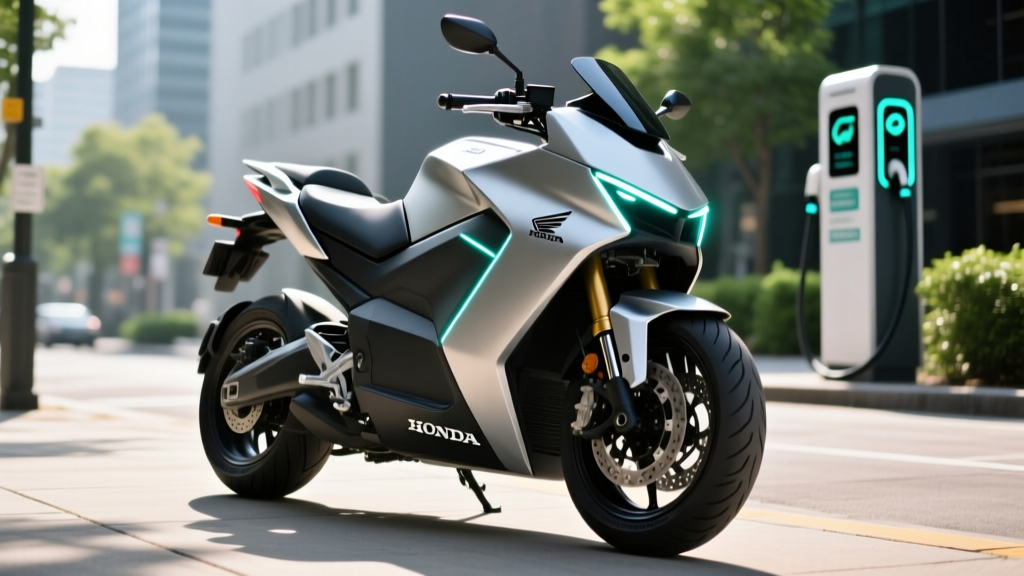
Quick Answer: Honda's primary electric motorbike available to consumers is the EM1 e:, a compact urban scooter with a swappable 29.4 Ah (approximately 1.5 kWh) lithium-ion battery, a top speed of around 28 mph (45 km/h), and a real-world range of roughly 25–30 miles per charge. It is designed for short urban commutes, not highway riding. As of 2026, Honda has not released a full-size, highway-capable electric motorcycle in the U.S. market. Buyers seeking an electric motorbike for longer commutes or highway use should look at competitors or wait for Honda's larger models, which remain in announced/preliminary stages.
Honda's Electric Motorbike Strategy: What Exists and What's Coming
Honda has been deliberate — some would say slow — in bringing electric two-wheelers to market. The company's electric motorbike efforts center on two platforms:
- EM1 e: — A lightweight urban scooter launched in Japan and select European/Asian markets. It features Honda's Mobile Power Pack e: swappable battery system. U.S. availability remains limited as of early 2026.
- Announced larger models — Honda has previewed electric motorcycle concepts (including the CB-inspired electric platform shown at EICMA) targeting 100+ mile range and highway speeds, but these remain in the preliminary/announced stage with no confirmed U.S. launch date or MSRP.
This matters because the keyword "Honda electric motorbike" captures a lot of search intent from riders who may be expecting a full-size electric motorcycle comparable to a Zero SR/F or LiveWire ONE. That product does not yet exist from Honda. What does exist is a niche urban commuter — and understanding that gap is the first step in making a smart purchase decision.
EM1 e: Specifications and Real-World Performance
For buyers in markets where the EM1 e: is available (or those considering import), here are the concrete numbers that define what this electric motorbike can and cannot do:
| Specification | EM1 e: (2025/2026 Model) |
|---|---|
| Battery Capacity | 29.4 Ah (~1.5 kWh usable), swappable Mobile Power Pack e: |
| Battery Chemistry | Lithium-ion (NMC) |
| Motor Output | 1.7 kW (2.3 hp) rated / 4.2 kW (5.6 hp) peak |
| Top Speed | ~28 mph (45 km/h) |
| EPA-Equivalent Range | ~25 miles (41 km) per battery |
| Real-World Range | 18–25 miles depending on rider weight, terrain, temperature |
| Charge Time (standard outlet) | ~5 hours (0–100% via onboard charger) |
| Battery Swap Time | Under 60 seconds at a compatible swap station |
| Weight | ~209 lbs (95 kg) |
| Estimated MSRP | ~$2,800–$3,500 (market-dependent; not U.S.-confirmed) |
| Warranty | 2 years / unlimited mileage (market-dependent) |
Real-world honesty: The 25-mile range figure assumes flat terrain, a single rider under 180 lbs, moderate ambient temperature (65–75°F), and speeds under 20 mph. In colder weather (below 40°F), expect 15–20% range loss — a universal reality for lithium-ion batteries. At full throttle on an incline, range drops further. This is a vehicle for a 5-mile-each-way commute with margin, not a weekend canyon carver.
Electric Motorbike vs. Gas Scooter: Cost and Ownership Comparison
For riders weighing a Honda electric motorbike against a conventional 50cc–125cc gas scooter (like Honda's own PCX or ADV160), the economics tell a nuanced story:
| Factor | Honda EM1 e: (Electric) | Honda PCX 160 (Gas Scooter) |
|---|---|---|
| Purchase Price (est.) | $2,800–$3,500 | $4,200–$4,500 |
| Fuel/Energy Cost per Mile | $0.01–$0.02 (at $0.15/kWh) | $0.05–$0.07 (at $3.50/gal, 100 MPG) |
| Annual "Fuel" Cost (3,000 mi/yr) | $30–$60 | $150–$210 |
| Oil Changes | None | 2–3 per year ($30–$75 each) |
| Transmission Maintenance | None (direct drive) | CVT belt replacement ($150–$300 every 10k mi) |
| Brake Wear | Lower (regen braking assists) | Standard |
| Insurance (annual avg.) | $200–$400 | $250–$500 |
| 5-Year Total Operating Cost | ~$400–$700 | ~$1,500–$2,200 |
The electric motorbike wins decisively on operating costs. Over five years, you save roughly $800–$1,500 in fuel and maintenance. But the trade-off is capability: the PCX 160 can hit 65 mph, carry a passenger comfortably, and travel 150+ miles on a tank. The EM1 e: cannot do any of those things. This is an apples-to-oranges comparison in utility, even if the economics favor electric for the specific use case it covers.
Charging Realities for Electric Motorbike Owners
One advantage of Honda's electric motorbike platform is charging simplicity — but there are constraints buyers must understand before purchasing:
Home Charging (Level 1)
The EM1 e: charges from a standard 120V household outlet. The removable battery can be carried indoors (it weighs about 22 lbs / 10 kg), eliminating the need for a dedicated garage circuit or Level 2 installation. This is a significant advantage for apartment dwellers who cannot install EV charging infrastructure. A full charge takes approximately 5 hours, meaning overnight charging easily covers daily use.
Swappable Battery Network
Honda's Mobile Power Pack e: system allows battery swaps at compatible stations — primarily deployed in Japan, Indonesia, and parts of Europe. In markets without swap infrastructure, this feature is irrelevant. U.S. riders should not expect a swap network anytime soon. Honda has partnered with other Japanese OEMs (Yamaha, Suzuki, Kawasaki) on a standardized swappable battery consortium, but deployment timelines remain unclear.
Cold Weather Impact
Lithium-ion batteries lose capacity and charge acceptance rate in cold temperatures. At 32°F (0°C), expect:
- 15–20% range reduction
- Slower charging (the BMS limits charge current to protect cells)
- Reduced regenerative braking effectiveness on cold starts
Riders in northern climates should plan around 18–20 miles of reliable winter range, not the 25-mile sticker figure.
Tax Credits, Incentives, and What Actually Applies
A common misconception is that all electric vehicles qualify for the federal §30D tax credit. For Honda's electric motorbike, the reality is more restrictive:
| Claim | Reality |
|---|---|
| "Electric motorbikes get the $7,500 federal tax credit" | False. The §30D credit applies to 4-wheeled vehicles meeting MSRP caps, income limits, and battery sourcing requirements. Two-wheeled electric motorbikes do not qualify. (Source: IRS §30D) |
| "There are no incentives for electric motorcycles" | Partially false. Some states and local utilities offer rebates for electric two-wheelers. California's CVRP has included motorcycle/scooter incentives in past program years. Check your state's energy office or utility for current programs. |
| "I can write off an electric motorbike for business use" | Sometimes. Business-use deductions may apply under different tax code sections. Consult a tax professional for your specific situation. |
The absence of the federal credit means the purchase price you see is largely the price you pay (minus any state/local incentives). This narrows the economic advantage over gas scooters, though the lower operating costs still favor electric over a 3–5 year ownership period for urban commuters.
Who Should (and Shouldn't) Buy a Honda Electric Motorbike
Choose the Honda EM1 e: if:
- Your one-way commute is under 10 miles on surface streets
- You need a lightweight, low-speed urban runabout
- You have access to a standard outlet for overnight charging (including apartment living)
- You want near-zero maintenance and minimal operating costs
- You live in a market where Honda sells and services the EM1 e:
Look elsewhere if:
- You need highway speeds (55+ mph) or highway-legal capability
- Your commute exceeds 15 miles each way
- You regularly carry a passenger
- You live in a region with harsh winters and no indoor storage/charging
- You want a full-size motorcycle experience (for that, evaluate the Zero SR/S, LiveWire ONE, or Energica models)
What First-Time Electric Motorbike Buyers Must Know
If you are coming from a gas motorcycle or scooter and considering an electric motorbike for the first time, these ownership realities matter:
- Range is non-negotiable for satisfaction. Map your actual commute — not the idealized version — and add a 30% buffer for weather, detours, and battery degradation over time. If your round trip is 20 miles, a 25-mile-range scooter leaves almost no margin.
- Battery degradation is real but slow. Expect 80–90% capacity retention after 3–5 years of daily use, depending on charge habits and temperature exposure. Avoid regularly draining to 0% or storing at 100% in heat.
- Resale value is uncertain. The used electric motorbike market is thin. Unlike a Honda Grom or PCX that holds value predictably, electric two-wheelers depreciate more steeply due to battery age concerns and rapid technology iteration.
- Insurance may require specialist providers. Not all insurers write policies on electric motorcycles, particularly low-volume imports. Get a quote before committing to a purchase.
- Service infrastructure is limited. Honda dealers in the U.S. may not be equipped to service the EM1 e: if it was not officially launched in your market. Confirm service availability before buying.
Frequently Asked Questions
Does Honda make a highway-capable electric motorcycle?
Not as of early 2026. Honda has announced plans for larger electric motorcycles with highway capability, but no production model with confirmed U.S. availability, MSRP, or delivery date has been released. For highway-capable electric motorcycles, current options include the Zero SR/F (EPA range ~156 city / ~82 highway miles, MSRP from ~$19,995), LiveWire ONE (EPA range ~146 city / ~95 highway miles, MSRP ~$21,999), and Energica Ego+ (EPA range ~130+ miles, MSRP from ~$23,000+).
Can I charge a Honda electric motorbike at a public EV charging station?
No. Public Level 2 (J1772) and DC fast chargers (CCS/NACS/CHAdeMO) are designed for 4-wheeled vehicles. Electric motorbikes and scooters like the EM1 e: charge via standard household outlets or proprietary battery-swap stations. You cannot plug a Honda electric motorbike into an Electrify America or Tesla Supercharger station.
How long does the EM1 e: battery last before replacement?
Honda rates the Mobile Power Pack e: for approximately 2,000+ charge cycles before significant degradation. At one charge cycle per day, that translates to roughly 5–6 years before capacity drops to approximately 70–80% of original. Replacement battery pricing varies by market but is estimated at $500–$800. The swappable design means replacement is a simple swap, not a service-department procedure.
Is an electric motorbike cheaper to own than a gas scooter?
For the specific use case the EM1 e: covers (short urban commutes), yes — operating costs are approximately $0.01–$0.02 per mile vs. $0.05–$0.07 per mile for a 100 MPG gas scooter. Over 5 years and 15,000 miles, that is roughly $600–$900 in fuel savings alone, plus avoided oil changes and CVT maintenance. However, the higher upfront cost of some electric models and uncertain resale value can offset these savings.
Will Honda release more electric motorcycles?
Honda has committed to offering electric motorcycles globally as part of its 2040 carbon neutrality goal. The company has shown concepts for mid-size and large-displacement electric motorcycles, and its participation in the swappable battery consortium with Yamaha, Suzuki, and Kawasaki signals long-term commitment. However, U.S. market timing, pricing, and specifications for any future models remain unconfirmed. Follow Honda's official powersports announcements for updates.
Note: This article focuses on Honda's electric motorbike/scooter lineup within the context of EV buying decisions. For coverage of Honda's 4-wheeled electric vehicles (Prologue, upcoming models), see our dedicated Honda EV reviews. Specifications, pricing, and availability reflect information current as of early 2026 and are subject to change by market. Always verify current specs with your local Honda dealer or Honda Powersports before purchasing.