Quick Answer: What Is the Electric Grom and Is It Worth It?
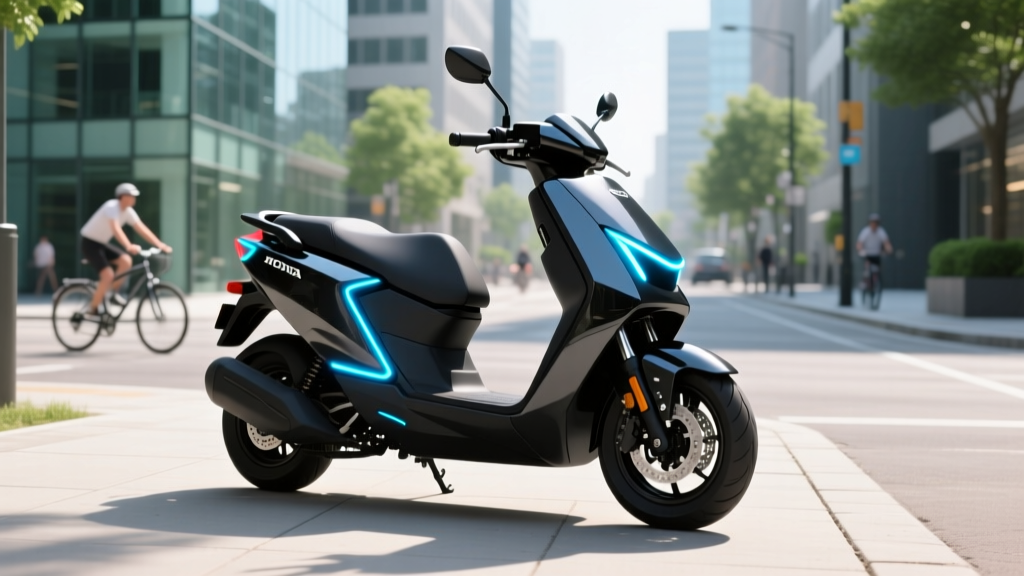
The Honda electric Grom (officially the MSX125 E or e-Grom concept) is Honda's battery-electric reinterpretation of its cult-favorite 125cc miniMOTO platform. As of early 2026, Honda has showcased electric mini-bike concepts (notably the Honda MOTOCOMPO e and EV Fun Concept) and has begun rolling out electric two-wheelers in Asian markets, but a street-legal, full-size electric Grom equivalent for the U.S. market remains announced but not yet on sale. Specs below are based on Honda's published concept data, global electric scooter filings, and comparable 125cc-class EVs currently shipping in Japan and Europe.
Expected headline numbers: ~1.5–2.0 kWh battery, 40–55 miles real-world range, ~45 mph top speed, 2–3 hour Level 1 (120V) charge time, and an estimated U.S. MSRP of $3,500–$4,500 when it arrives. It targets urban commuters and last-mile riders, not highway use.
Expected Specs: Battery, Range, and Charging
Honda's global electric two-wheeler lineup (including the EM1 e: scooter sold in Europe and Asia) gives us a reliable template for what a U.S.-market electric Grom would pack. Here's what the data points to:
| Specification | Expected / Comparable Figure |
|---|---|
| Battery capacity (usable) | ~1.5–2.0 kWh (lithium-ion, likely NMC pouch cells) |
| EPA-estimated range | ~45–55 miles (city cycle); real-world highway/hills: ~30–40 miles |
| Top speed | ~45–50 mph (electronically limited for 125cc-class equivalency) |
| Motor output | ~2.0–3.0 kW continuous / ~5–6 kW peak (~7–8 hp equivalent) |
| Level 1 charge time (120V) | ~3–4 hours (0–100%); removable battery option likely |
| Level 2 / DC fast charging | Not expected — small battery makes DCFC unnecessary and cost-prohibitive |
| Weight (curb) | ~230–260 lbs (vs. 229 lbs for the gas MSX125) |
| Regenerative braking | Yes, likely single-mode with mild one-lever feel |
Real-world range reality check: Honda's EM1 e: is rated at 41 km (~25 miles) under the Japanese WMTC test cycle, but real-world mixed riding yields closer to 20–22 miles. A larger Grom-platform bike with a 2.0 kWh pack should deliver 35–45 miles in temperate city riding, dropping to 25–30 miles in cold weather (below 40°F) or sustained 40+ mph riding where aerodynamic drag dominates. Lithium-ion cells lose 15–25% of effective capacity in freezing temperatures — a hard physics constraint, not a defect.
Electric Grom vs. Gas MSX125: Cost and Efficiency Comparison
The gas Honda Grom (MSX125) remains one of the most popular miniMOTO bikes in the U.S., with a 2026 MSRP around $3,599. Here's how the electric variant stacks up on total ownership cost over five years and 15,000 miles of urban riding:
| Category | Gas Grom (MSX125) | Electric Grom (projected) |
|---|---|---|
| Base MSRP | $3,599 | $3,500–$4,500 (est.) |
| Fuel / energy cost per mile | ~$0.045 (at $3.50/gal, 100 MPG) | ~$0.012 (at $0.15/kWh, 1.8 kWh/mi equivalent) |
| 5-year fuel/energy cost (15k mi) | ~$675 | ~$180 |
| Oil changes (5 years) | ~$150–$250 (annual) | $0 |
| Air filter / spark plug service | ~$80–$120 | $0 |
| Chain maintenance | ~$100–$150 (lube, adjust, replace) | ~$100–$150 (same drivetrain) |
| Brake pad replacement | ~$60–$100 | ~$40–$70 (regen extends pad life) |
| Estimated 5-year total cost | ~$4,764–$5,069 | ~$3,820–$4,820 |
Key takeaway: The electric Grom saves roughly $400–$700 over five years in fuel and maintenance — but the savings are modest because the gas Grom is already extremely efficient at 100+ MPG. The electric version's real advantage isn't cost savings; it's convenience (home charging, no gas station stops, no oil) and zero tailpipe emissions in dense urban environments.
Real-World Ownership: What a First-Time Buyer Should Know
Buying a small electric motorcycle or scooter is not the same as buying an electric car. The ownership equation has unique variables:
Home charging is almost mandatory
Unlike EVs, small electric motorcycles rarely have access to public DC fast-charging networks (Electrify America, EVgo, etc. are designed for four-wheelers with CCS or NACS ports). You'll charge at home via a standard 120V outlet — which is fine for a 2.0 kWh battery (3–4 hours from empty). If you live in an apartment without outlet access near your parking spot, this becomes a serious barrier. Some models offer removable batteries you can carry indoors to charge, which is the single most important feature to confirm before buying.
Range is adequate for city, inadequate for suburbia
A 35–45 mile real-world range covers most urban round-trip commutes (U.S. average one-way commute is ~26 minutes / ~16 miles per the Census Bureau). But if your commute includes 45 mph roads, hills, or cold weather, plan on 25–30 usable miles. This is a bike for one specific use case: short, flat, temperate urban trips.
Insurance and registration
Motorcycle insurance is generally inexpensive for low-displacement bikes. Expect $150–$400/year depending on your state, age, and riding record. Registration fees vary by state; some states impose additional EV registration fees ($50–$200/year) to offset lost gas-tax revenue, though these typically target four-wheeled EVs. Check your state's DMV before purchase.
Cold-weather reality
Battery chemistry doesn't change with the weather, but electrochemical reaction rates do. Below 40°F, expect 15–25% range loss. Below freezing, a small 2.0 kWh pack that normally delivers 40 miles might give you 30 miles or fewer. If you ride year-round in Minneapolis or Boston, this matters. If you ride in San Diego or Austin, it's a footnote.
Common Misconceptions — Myth vs. Fact
| Myth | Fact |
|---|---|
| "It's just a toy, not a real vehicle." | The gas Grom is a street-legal motorcycle licensed for highway use in most states. The electric version will carry the same DOT/NHTSA compliance — it's a legitimate commuter, not a pit bike. |
| "I can charge it at any public EV station." | Public EV chargers use CCS, NACS, or CHAdeMO connectors designed for cars. Small electric motorcycles typically charge via standard 120V (NEMA 5-15) or proprietary connectors. Plan for home charging only. |
| "The battery will die in 2 years." | Modern NMC lithium-ion cells in well-managed packs (with proper BMS thermal controls) retain 80%+ capacity after 500–800 full charge cycles — roughly 20,000–35,000 miles on a 40-mile-range bike. Honda typically warranties batteries for 3–5 years. Replacement cost for a 2 kWh pack: ~$400–$700. |
| "It qualifies for the $7,500 federal EV tax credit." | The IRS §30D credit applies to four-wheeled vehicles with at least four wheels and a GVWR under 14,000 lbs. Two-wheeled motorcycles do not qualify for the federal new clean vehicle credit. A separate 10% credit (up to $2,500) for two-wheeled plug-in vehicles expired in 2021 and has not been renewed as of 2026. |
| "Electric means zero maintenance." | No oil changes or spark plugs — but you'll still maintain tires, brakes, chain/belt, suspension, and coolant (if liquid-cooled). Budget ~$100–$200/year for consumables. |
Decision Framework: Should You Wait for the Electric Grom?
Choose the electric Grom (when available) if:
- Your daily round-trip ride is under 30 miles, mostly on surface streets under 40 mph
- You have access to a standard 120V outlet at home or in a garage for overnight charging
- You want to eliminate gas station visits and oil changes entirely
- You ride in a city with dense traffic where 45 mph top speed is rarely a limitation
- You value zero tailpipe emissions for urban air quality
Stick with the gas Grom (MSX125) if:
- Your commute exceeds 35 miles round-trip or includes 50+ mph roads
- You live in an apartment without convenient outlet access and the model lacks a removable battery
- You ride in sub-freezing temperatures regularly (October–March in northern states)
- You want the proven reliability and dealer support network of a model that's been in the U.S. since 2014
- You want to buy now — the gas Grom is available today at ~$3,599
Consider an alternative electric two-wheeler if:
- You need something available in 2026: look at the Zero FX (~$12,000, 45-mile range, 85 mph), Super73-RX (e-bike class, ~$3,500), or Ryvid Anthem (~$8,000, 60-mile range) depending on your speed and licensing needs
- You need highway capability: no current small-format electric motorcycle matches the range/speed of a gas 125cc for highway commuting
Frequently Asked Questions
When will the Honda electric Grom be available in the U.S.?
Honda has not announced a firm U.S. launch date for an electric Grom as of early 2026. The company has released electric two-wheelers (EM1 e:, MOTOCOMPO e) in Japan and Europe, and its 2024 corporate strategy update outlined plans for 11 electric motorcycle models globally by 2026–2027. A U.S.-spec MSX125 E is plausible but unconfirmed. Monitor Honda Powersports' official announcements for updates.
How fast does the electric Grom go?
Based on Honda's comparable 125cc-class electric platforms, expect a top speed of 45–50 mph. This is electronically limited to match 125cc ICE equivalency and is suitable for city streets but not freeway merging in most states.
Can I charge the electric Grom from a regular wall outlet?
Yes — a standard 120V household outlet (NEMA 5-15) is the primary charging method for small electric motorcycles. A 2.0 kWh battery charges from 0–100% in approximately 3–4 hours at 120V. No special electrical work or Level 2 installation is required.
How long does the battery last before it needs replacing?
With proper care (avoiding repeated 100% charges and extreme heat storage), expect the battery to retain 80%+ capacity for 500–800 full cycles, translating to roughly 20,000–35,000 miles. Honda typically provides a 3–5 year battery warranty. A replacement pack is estimated at $400–$700 based on current 2 kWh NMC pricing.
Does the electric Grom qualify for any federal tax credit?
No. The IRS §30D new clean vehicle credit requires four wheels and a GVWR under 14,000 lbs. Two-wheeled motorcycles are ineligible. The former two-wheeled plug-in vehicle credit (IRC §30D(e), up to $2,500) expired December 31, 2021, and has not been reinstated. Some state or local utility incentives may apply — check your state energy office or electric utility for current programs.
Is the electric Grom street-legal?
When released, the U.S.-spec model would need to meet DOT and NHTSA standards for on-road motorcycles, including lighting, mirrors, horn, and VIN registration — the same requirements as the gas Grom. Honda's track record with street-legal miniMOTO models suggests full compliance, but confirm with your state DMV regarding any specific motorcycle endorsement or registration requirements.