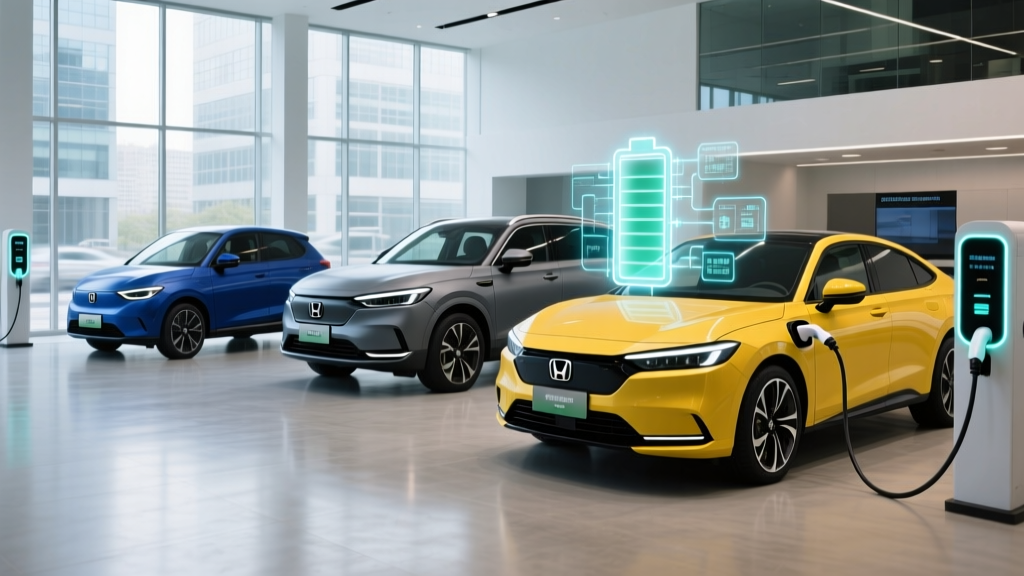
If you're searching for a Honda electric EV in 2026, the Prologue SUV is currently the brand's only all-electric offering available in the U.S. market. Built on General Motors' Ultium platform, the 2026 Prologue delivers an EPA-estimated range of up to 308 miles (EX/Elite FWD trims), peaks at 155 kW DC fast charging (10–80% in roughly 28 minutes), and starts at $47,400 before any incentives. Honda's hybrid lineup—notably the CR-V Hybrid and Accord Hybrid—often presents a more practical alternative for buyers without reliable home charging or those in extreme climates. The right choice depends entirely on your daily mileage, charging access, and budget.
2026 Honda Prologue: The Core EV Specs That Matter
Honda's partnership with GM means the Prologue shares its bones with the Chevrolet Blazer EV and Cadillac Lyriq. That's not a bad thing—GM's Ultium platform is proven at scale—but it does mean the Prologue isn't a ground-up Honda engineering effort. Here are the numbers buyers actually need:
| Specification | 2026 Honda Prologue EX (FWD) | 2026 Prologue Elite (AWD) |
|---|---|---|
| EPA Range | 308 miles | 285 miles |
| Battery (usable) | 85 kWh, NMC (Ultium) | 85 kWh, NMC (Ultium) |
| Horsepower / Torque | 212 hp / 236 lb-ft | 288 hp / 333 lb-ft |
| 0–60 mph | ~7.1 sec | ~5.8 sec |
| Max DC Fast Charge | 155 kW | 155 kW |
| 10–80% DC Charge | ~28 min | ~28 min |
| Level 2 (AC) Charging | 11.5 kW (~31 mi/hr) | 11.5 kW (~31 mi/hr) |
| MPGe (combined) | 99 MPGe | 91 MPGe |
| Base MSRP | $47,400 | $57,900 |
| Battery Warranty | 8 yr / 100,000 mi | 8 yr / 100,000 mi |
Honda Prologue vs. Honda CR-V Hybrid: The Cost Math
This is the comparison most Honda shoppers actually need to make. The CR-V Hybrid is Honda's volume seller for good reason—no charging anxiety, proven reliability, and a significantly lower purchase price. Let's break down five-year costs:
| Cost Category (5 Yr / 75,000 mi) | 2026 Prologue EX (FWD) | 2026 CR-V Hybrid EX-L | 2026 CR-V Gas EX-L AWD |
|---|---|---|---|
| Base MSRP | $47,400 | $38,950 | $37,450 |
| Federal Tax Credit (§30D) | Up to $7,500* | N/A | N/A |
| Effective Purchase Price | ~$39,900* | $38,950 | $37,450 |
| Fuel / Energy (75k mi) | $3,200 (home L2)** | $6,800 | $9,100 |
| Maintenance (5 yr) | $1,200 | $2,800 | $3,200 |
| Insurance (avg 5 yr) | $9,500 | $7,800 | $7,500 |
| Est. 5-Year Total Cost | ~$53,800 | ~$56,350 | ~$57,250 |
* §30D credit eligibility for the Prologue depends on battery-sourcing and critical-mineral requirements that shift annually. Check IRS.gov §30D rules before purchase. Point-of-sale transfer is available if eligible. ** Home charging at $0.14/kWh national average. Public DC fast charging exclusively would raise Prologue energy costs to ~$5,800.
The Prologue wins on five-year total cost only if you qualify for the full $7,500 federal credit AND charge primarily at home. Without the tax credit, the CR-V Hybrid's lower purchase price and strong 40 MPG combined rating make it the more economical choice. Honda's official Prologue page lists current trim pricing and availability.
Charging the Prologue: What You Actually Need at Home
The Prologue's 11.5 kW onboard charger is a strong point—it accepts the full output of a 48-amp Level 2 home charger, adding roughly 31 miles of range per hour. An overnight charge (8–10 hours) from 20% to full is easily achievable. But home installation costs vary enormously:
| Home Charging Setup | Equipment Cost | Electrician + Permit | Total Range |
|---|---|---|---|
| Level 1 (120V, included cord) | $0 | $0 | $0 (adds ~4 mi/hr) |
| Level 2 (240V, 48A, existing outlet) | $400–$700 | $0–$300 | $400–$1,000 |
| Level 2 (new 60A circuit, hardwired) | $500–$700 | $800–$2,000 | $1,300–$2,700 |
| Level 2 + 200A panel upgrade | $500–$700 | $2,500–$5,000 | $3,000–$5,700 |
Honda includes a dual-level charging cord with every Prologue that handles both 120V (Level 1, ~1.3 kW) and 240V (Level 2, up to ~7.7 kW with a NEMA 14-50 outlet). For the full 11.5 kW AC charge rate, you'll need a hardwired 48-amp EVSE on a dedicated 60-amp circuit. Have a licensed electrician assess your panel capacity before committing—older homes with 100-amp service often require an upgrade.
On the road, the Prologue uses the NACS (Tesla-style) connector starting with the 2025 refresh, giving it native access to Tesla Superchargers without an adapter. The 155 kW peak DC rate is respectable but not class-leading—competitors like the Hyundai Ioniq 5 peak at 240 kW. Expect the Prologue's charge curve to taper significantly above 80% SoC, so plan highway stops around 10–80% sessions rather than topping off to full.
Common Honda EV Misconceptions, Corrected
| Myth | Fact |
|---|---|
| "Honda makes several electric cars." | As of 2026, the Prologue is Honda's only U.S. BEV. The Honda e was never sold in the U.S. Honda's next dedicated EVs (built on their own platform) are expected in 2027+. |
| "The Prologue qualifies for the full $7,500 tax credit." | Eligibility depends on current-year battery sourcing and critical mineral rules under §30D. The Prologue's GM-sourced battery has faced sourcing challenges. Always verify at fueleconomy.gov before purchase. |
| "EVs need no maintenance." | EVs skip oil changes and transmission fluid, but still require tire rotations (EVs wear tires 20–30% faster due to weight and instant torque), cabin air filters, brake fluid checks, and wiper/coolant service. Budget ~$200–$300/year. |
| "The battery will need replacing in 5 years." | NMC batteries in liquid-cooled packs like the Ultium platform typically retain 85–90% capacity after 100,000 miles. Honda/GM warrant the battery for 8 years/100,000 miles against defects and excessive degradation (below 70% capacity). Full replacement, if ever needed, runs $12,000–$18,000 out of warranty. |
| "I can charge on any road trip easily." | NACS access to Superchargers helps enormously, but rural routes in the Mountain West, Great Plains, and parts of the South still have sparse DC fast-charging coverage. Use PlugShare or A Better Routeplanner to map trips before departing. |
Prologue Ownership Realities: Who Should (and Shouldn't) Buy
After evaluating the Prologue against its hybrid siblings and EV competitors, here's the practical decision framework:
Choose the Honda Prologue if:
- You have reliable home charging (garage or driveway with 240V access)
- Your daily commute is under 80 miles round-trip (most Americans' is)
- You qualify for the federal §30D credit (check income caps: $150K single / $300K joint, and MSRP cap of $80,000 for SUVs)
- You want a quiet, smooth-driving midsize SUV with zero tailpipe emissions
- You take road trips 2–4 times per year and can plan charging stops
- You value NACS Supercharger access for road-trip flexibility
Choose the Honda CR-V Hybrid instead if:
- You cannot charge at home (apartment, street parking, no garage)
- You regularly drive 300+ miles in a single day without time for charging stops
- You live in a region with extreme cold (sustained sub-20°F winters) and no garage
- You don't qualify for the federal EV tax credit due to income or sourcing rules
- Your budget is firm below $40,000
- You want Honda's longest-proven powertrain reliability track record
Wait for Honda's next-gen EVs (2027+) if:
- You want a Honda-engineered EV (not a GM rebadge) on Honda's own 0-Series platform
- You need faster DC charging (250+ kW) or LFP battery chemistry
- You're interested in a smaller or more affordable Honda EV
Insurance, Depreciation, and the Hidden Costs
Two ownership costs catch first-time EV buyers off guard. Insurance premiums for the Prologue run 15–25% higher than a comparably priced CR-V Hybrid, driven by higher repair costs for EV-specific components and the vehicle's MSRP. Get a quote before purchasing—some insurers weight EVs heavily, while others (like those with dedicated EV programs) are more competitive.
Depreciation has been volatile for EVs. The Prologue launched at aggressive MSRPs with substantial dealer discounts and manufacturer incentives in its first year, which compressed resale values for early buyers. As of 2026, Prologue depreciation is stabilizing but still trails the CR-V Hybrid's strong resale performance. If you plan to sell or trade in within three years, factor in 45–55% depreciation on the Prologue versus 35–40% on the CR-V Hybrid, based on current market trends.
On the savings side: EVs eliminate oil changes ($40–$80 each, 2–3x/year), transmission fluid service, and exhaust system repairs. Regenerative braking extends brake pad life significantly—many EV owners reach 80,000+ miles on original pads. The net maintenance savings run roughly $1,200–$1,600 over five years.
Frequently Asked Questions
Is Honda making more electric vehicles after the Prologue?
Yes. Honda has announced its "0 Series" EV platform, with dedicated Honda-engineered electric vehicles expected starting in 2027. These will include a new SUV and sedan, built on Honda's own architecture with thinner battery packs and a focus on aerodynamic efficiency. Until those arrive, the Prologue (built by GM on Ultium) remains Honda's sole U.S. EV.
Can I use Tesla Superchargers with the Honda Prologue?
Yes. The 2025+ Prologue comes equipped with the NACS (North American Charging Standard) port, the same connector used by Tesla. This provides direct access to Tesla's Supercharger network—over 20,000 stalls in North America—without any adapter. This is a significant advantage over CCS-equipped EVs that require a bulky adapter for Supercharger access.
How long does it take to charge the Prologue at home?
On a 48-amp Level 2 home charger (240V), the Prologue charges at up to 11.5 kW, adding about 31 miles of range per hour. A full charge from 10% to 100% takes approximately 7.5–8 hours. On a standard 120V household outlet (Level 1), expect about 4 miles of range per hour—a full charge takes over 70 hours, making Level 1 practical only for overnight top-offs or very low daily mileage.
Does the Prologue have Honda Sensing driver assistance?
Yes. All Prologue trims include Honda Sensing suite: adaptive cruise control, lane-keeping assist, forward collision warning with automatic emergency braking, and blind-spot monitoring. This is a SAE Level 2 driver-assistance system—you must remain engaged, keep your hands on the wheel, and monitor traffic at all times. It is not autonomous or self-driving.
What happens if the Prologue battery degrades?
The Ultium NMC battery is liquid-cooled and warrantied for 8 years or 100,000 miles (whichever comes first) against defects and capacity loss below approximately 70%. Real-world data from GM's Ultium platform suggests typical degradation of 8–12% over the first 100,000 miles. If the battery falls below the warranty threshold, Honda/GM will repair or replace it at no cost. Out-of-warranty full battery replacement costs $12,000–$18,000 depending on labor, though individual module replacement may be possible at lower cost.