Quick Answer: As of early 2026, Honda has not yet released a production electric dirtbike for sale in the United States. The Honda CR Electric Prototype, first shown at the 2023 Osaka Motorcycle Show and refined through 2025, remains a concept and test platform. Honda has confirmed it is developing an electric motocross machine based on the CRF450R chassis, but no MSRP, EPA-equivalent range, or retail timeline has been published. If you're searching for a Honda electric dirtbike you can buy today, the closest alternatives are the KTM SX-E 5 (youth, ~$5,600) and the Stacyc 16eDrive (youth, ~$3,999), while full-size adult electric motocross bikes come from brands like KTM (Freeride E-XC) and Sur-Ron/Surron Light Bee (trail-oriented). This guide covers what Honda has announced, realistic specs to expect, costs, and how electric dirtbikes compare to their gas counterparts.
What Is the Honda CR Electric Prototype?
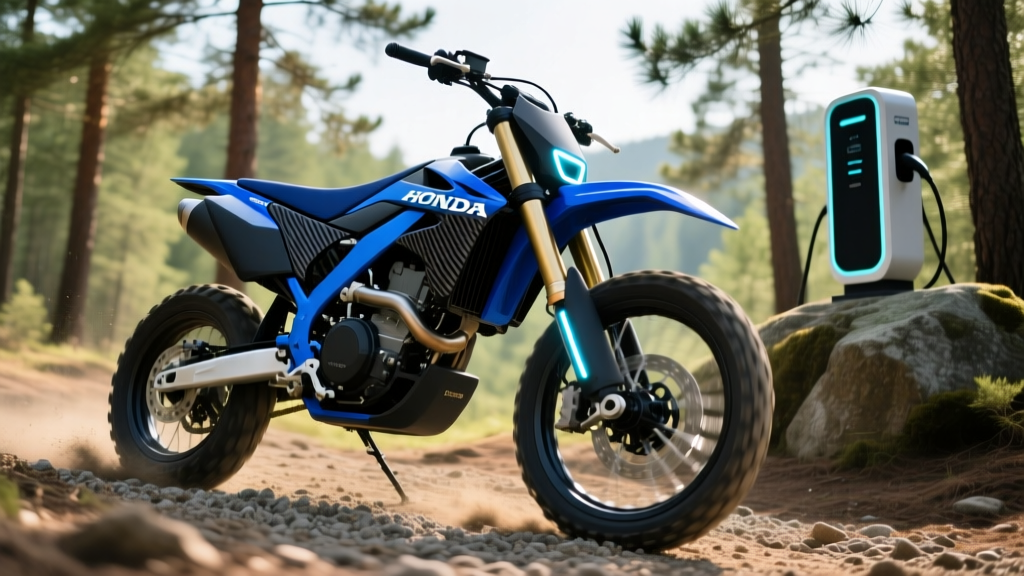
The Honda CR Electric Prototype is an all-electric motocross bike built on the chassis architecture of the Honda CRF450R. Honda debuted the prototype at the Osaka Motorcycle Show in March 2023 and has continued testing it at Japanese motocross circuits. The prototype features a liquid-cooled electric motor, a removable lithium-ion battery pack, and styling nearly identical to the gas-powered CRF450R — a deliberate signal that Honda wants its electric motocross platform to match the ergonomics, weight distribution, and suspension travel of its race-proven gas bikes.
Honda's official position, reiterated through 2025 and into 2026, is that the CR Electric Prototype is part of the company's broader goal to offer 10 or more electric motorcycles globally by 2025 and to achieve carbon neutrality across its product line by 2050. However, Honda has classified the CR Electric as a prototype and technology demonstrator, not a confirmed production model with a retail date.
Known Prototype Specifications (Preliminary)
Because Honda has not published a full spec sheet for a production model, the following figures are based on prototype observations, patent filings, and industry estimates. These are not confirmed production numbers.
| Specification | Estimated / Observed | Notes |
|---|---|---|
| Motor type | Liquid-cooled AC synchronous | Similar architecture to Honda e: technology |
| Peak power | ~40-50 kW (~54-67 HP) | Comparable to CRF450R's ~55 HP |
| Battery capacity | ~4-6 kWh (estimated) | Removable pack; size constrained by chassis |
| Battery chemistry | NMC (nickel manganese cobalt) | Energy density priority for weight savings |
| Estimated moto runtime | 15-25 minutes (race pace) | Motocross is high-load; range varies heavily by riding style |
| Charging | Swappable battery + AC charging | No DC fast charge expected on motocross platform |
| Weight (est.) | ~235-255 lbs | CRF450R gas weighs ~237 lbs wet |
| Production status | Prototype / Not on sale | No MSRP or retail date announced |
Electric Dirtbike vs. Gas: What the Numbers Say
For riders weighing an electric dirtbike against a traditional gas motocross or trail bike, the comparison comes down to runtime, power delivery, maintenance, noise, and cost. Here's how a typical 450cc gas motocross bike stacks up against what a production Honda electric dirtbike (or current full-size electric competitors like the KTM Freeride E-XC) would deliver.
| Category | Gas 450cc MX Bike | Full-Size Electric MX (Est.) |
|---|---|---|
| Peak horsepower | 50-60 HP | 40-67 HP (motor-dependent) |
| Torque delivery | Progressive, clutch-dependent | Instant peak torque, no clutch |
| Runtime per tank/charge | 1.5-2 hours (1.6 gal tank) | 15-30 min at race pace; 45-60 min trail riding |
| Refuel / recharge time | ~2 minutes (gas can) | 2-4 hours (AC); swappable pack ~30 sec |
| Noise level | 94-100+ dB | 55-75 dB (motor + tire noise only) |
| Maintenance intervals | Oil, filter, piston, chain, air filter | Chain lube, brake pads, coolant check |
| Annual maintenance cost | $800-$2,000+ (race use) | $100-$300 |
| Fuel / energy cost per hour | $8-$15 (premium gas + premix oil) | $0.50-$1.50 (at $0.15/kWh residential) |
| Purchase price | $9,500-$11,000 (new 450 MX) | $8,000-$13,000 (est. production) |
| Trail access restrictions | Banned on many public trails (noise) | Allowed on most OHV trails |
The Runtime Reality
The single biggest trade-off with any electric dirtbike is runtime under load. Motocross is one of the most energy-intensive activities in motorsport. A rider hitting berms, accelerating out of corners, and scrubbing jumps can draw 30-50 kW continuously. A 5 kWh battery pack — about the largest that fits a motocross chassis without excessive weight — will deplete in roughly 15-25 minutes at full race pace.
For practice sessions, trail riding, or youth riding, runtime stretches to 30-60 minutes, which is practical. Serious racers will need either multiple swappable battery packs (at $2,000-$4,000 each, estimated) or a generator-based field charger. This is the core limitation Honda must solve before bringing a production model to market.
Real Costs: Buying and Owning an Electric Dirtbike
Whether you're looking at a KTM SX-E 5 today or waiting for Honda's production electric dirtbike, here's what ownership actually costs.
| Cost Category | Gas 450cc MX (Year 1) | Electric MX (Year 1, Est.) |
|---|---|---|
| Purchase price | $10,500 | $10,000-$13,000 |
| Tax / registration (off-road) | $0-$150 (varies by state) | $0-$150 |
| Fuel / electricity (50 hrs riding) | $500-$750 | $40-$75 |
| Maintenance (oil, piston, filters) | $1,000-$1,800 | $150-$250 |
| Spare battery pack | N/A | $2,000-$4,000 (if purchased) |
| Chain, sprockets, brakes | $200-$400 | $150-$300 |
| Insurance (off-road theft/liability) | $200-$400/yr | $200-$400/yr |
| Total Year 1 | $12,400-$14,000 | $12,540-$21,175 |
| Ongoing annual cost (Yr 2+) | $1,900-$3,350 | $540-$1,025 |
Key insight: Electric dirtbikes have a higher upfront cost (especially if you buy spare battery packs) but dramatically lower ongoing operating costs. Over 3-5 years of regular riding, the electric option can break even and then pull ahead in savings — but only if you don't need to replace the battery pack due to degradation.
Battery Degradation and Replacement
High-discharge applications like motocross accelerate battery wear. Expect NMC battery packs in off-road use to retain roughly 70-80% of original capacity after 500-800 charge cycles (about 3-5 years of weekend riding). A replacement pack for a full-size electric dirtbike is estimated at $2,000-$4,000. Honda has not published warranty terms for a production model, but industry standard for motorcycle traction batteries is 2 years unlimited mileage or a capacity-retention guarantee.
What Honda's EV Strategy Means for Dirtbike Buyers
Honda has committed to offering 30 electric motorcycle models globally by 2030, with a focus on commuter bikes, scooters, and eventually off-road machines. The CR Electric Prototype signals that motocross is on the roadmap, but Honda's near-term electric motorcycle production has focused on:
- Honda EM1 e: A compact electric scooter available in Asia and Europe (not currently sold in the US)
- Honda e: The electric car platform (discontinued in the US market)
- Honda Prologue (2024-2026): The Ultium-based electric SUV, Honda's primary US electric vehicle
Honda's off-road racing division (HRC) has been testing electric powertrains in competition settings, but the company has historically taken a conservative approach to production timelines. Based on Honda's pattern, a production CR Electric could arrive in the 2027-2028 model year window — but this is speculative and not confirmed by Honda.
For the latest on Honda's motorcycle lineup, check the official Honda Powersports site.
Alternatives You Can Buy Right Now
If you need an electric dirtbike today and can't wait for Honda, here are the current market options as of 2026:
Full-Size / Adult Electric Dirtbikes
| Model | Type | Peak Power | Battery | Est. Runtime | MSRP |
|---|---|---|---|---|---|
| KTM Freeride E-XC | Trail/enduro | ~18 kW (24 HP) | 3.9 kWh (swappable) | ~60 min trail | ~$9,000 |
| Sur-Ron Storm Bee | Trail/moto | ~22.5 kW (30 HP) | 6.0 kWh | ~45-60 min | ~$4,500 |
| E-Motion MX-1 (est.) | MX race | ~45 kW (60 HP) | 5.5 kWh | ~20 min race | ~$12,000+ |
Youth Electric Dirtbikes
| Model | Age Range | Top Speed | Battery | Runtime | MSRP |
|---|---|---|---|---|---|
| KTM SX-E 5 | 6-12 | ~45 mph | 1.4 kWh | ~45-90 min | ~$5,650 |
| Stacyc 16eDrive | 5-10 | ~23 mph | 0.48 kWh | ~30-60 min | ~$3,999 |
| Sur-Ron Light Bee X | Teens/adults | ~47 mph | 2.0 kWh | ~40-60 min | ~$4,200 |
Common Misconceptions About Electric Dirtbikes
| Myth | Fact |
|---|---|
| "Electric dirtbikes have no power" | Electric motors deliver instant peak torque. A 50 kW electric dirtbike can match or exceed a 450cc gas bike's acceleration off the line. The limitation is sustained power and runtime, not initial thrust. |
| "You can't ride an electric dirtbike in the rain or mud" | Production electric dirtbikes from KTM and Sur-Ron use IP67-rated battery enclosures and sealed motors. They handle mud, water crossings, and rain — same as gas bikes. |
| "The battery will die in a year" | NMC batteries in off-road use typically retain 70-80% capacity after 500-800 cycles (3-5 years of regular weekend riding). Proper storage (40-60% SoC when not in use) extends life significantly. |
| "Electric dirtbikes are silent, so they're not real motocross" | They produce 55-75 dB vs. 94-100+ dB for gas. This is actually a major advantage — many tracks and public trails ban gas bikes due to noise. Electric bikes gain access to more riding locations. |
| "Charging takes all day at the track" | With a standard 120V outlet (Level 1), a 4 kWh pack charges in ~4-5 hours. With a 240V outlet (Level 2), it's ~1.5-2 hours. Swappable-pack designs (like KTM's) let you swap in a fresh pack in under a minute. |
| "The Honda electric dirtbike is available now" | As of 2026, the Honda CR Electric remains a prototype. No production model is available for purchase. |
Decision Framework: Should You Buy Electric or Wait?
Choose an electric dirtbike NOW if:
- You ride primarily on noise-restricted trails or backyard tracks where gas bikes are banned or frowned upon
- Your sessions are under 60 minutes (trail riding, practice, youth riding)
- You want to eliminate gas, premix oil, air filter cleaning, and top-end rebuilds
- You have access to a 120V or 240V outlet at home or at your riding location
- You're buying for a youth rider — the KTM SX-E 5 and Stacyc are proven, available, and adjustable for skill level
Wait for Honda (or another OEM) if:
- You race competitive motocross and need 30+ minute motos with quick pit refueling
- You ride all-day enduro or desert races where range is critical
- You want the dealer network, parts availability, and resale value of a major OEM like Honda
- You're unwilling to spend $2,000-$4,000 on spare battery packs for extended sessions
- You want a machine with proven long-term durability data (electric dirtbikes have ~5 years of market history vs. 50+ for gas)
Charging and Ownership Practicalities
Unlike electric cars, electric dirtbikes don't use standardized EV charging connectors (NACS, CCS, CHAdeMO). Instead, they use proprietary AC chargers that plug into standard household outlets:
- Level 1 (120V household): ~0.5-1.5 kW charge rate. A 4 kWh battery charges in 3-6 hours. This is the default for most electric dirtbikes.
- Level 2 (240V outlet): ~2-3 kW with an optional faster charger. A 4 kWh battery charges in 1.5-2.5 hours. Some models (KTM Freeride E-XC) offer this as an accessory.
- Swappable packs: The fastest "refuel" — swap a depleted pack for a charged one in under 60 seconds. Requires owning 2+ packs.
Real-world ownership tip: If you ride at a motocross track or trailhead without electrical access, you'll need to either bring a portable generator (a small 2,000W inverter generator costs ~$500-$800) or invest in multiple battery packs. This is the electric dirtbike equivalent of bringing extra gas cans.
For home charging, a standard 120V garage outlet is sufficient for overnight charging. Unlike electric cars, electric dirtbikes do not require a dedicated 240V circuit or panel upgrade for basic use — though a 240V outlet (like a dryer outlet) will cut charge times roughly in half.
Federal Tax Credits and Incentives
Electric dirtbikes and off-road motorcycles occupy a gray area under the IRS §30D Clean Vehicle Credit. The federal EV tax credit of up to $7,500 applies to vehicles classified for on-road use with a gross vehicle weight rating (GVWR) under 14,000 lbs. Off-road-only dirtbikes generally do not qualify for the §30D credit because they are not manufactured primarily for use on public roads.
However, some dual-sport or street-legal electric motorcycles may qualify. Always verify eligibility through the IRS Clean Vehicle Credit page and consult a tax professional before assuming credit eligibility.
Some states and local utility companies offer off-road EV rebates or clean-energy incentives that may apply to electric dirtbikes. Check your state's energy office or utility provider for programs specific to off-road electric vehicles.
Frequently Asked Questions
When will the Honda electric dirtbike be available for purchase?
Honda has not announced a production date or MSRP for the CR Electric. The prototype has been shown at trade shows since 2023 and is in active testing, but Honda classifies it as a technology demonstrator. A production model could arrive in the 2027-2028 timeframe, but this is not confirmed.
How much will the Honda electric dirtbike cost?
No official pricing exists. Based on competitor pricing (KTM Freeride E-XC at ~$9,000, electric MX concepts at $10,000-$14,000), a production Honda CR Electric would likely be priced between $9,000 and $13,000 depending on battery size and motor output.
Can I charge an electric dirtbike from a regular outlet?
Yes. Most electric dirtbikes charge from a standard 120V household outlet using a proprietary AC charger included with the bike. Charge times range from 2-6 hours depending on battery capacity and charger wattage.
How long does an electric dirtbike battery last before replacement?
Expect 500-800 full charge cycles before significant degradation (dropping to 70-80% of original capacity). With typical weekend riding, that translates to roughly 3-5 years before you notice meaningful runtime loss. Replacement packs cost an estimated $2,000-$4,000 for full-size models.
Are electric dirtbikes allowed on motocross tracks?
Most motocross tracks allow electric dirtbikes, and many actively encourage them due to the reduced noise. Some tracks that face noise complaints from neighbors have begun restricting gas bikes, making electric the only option. Always check with your local track before arriving.
Do electric dirtbikes have enough power for adult riders?
Yes. Full-size electric dirtbikes like the KTM Freeride E-XC (24 HP) and Sur-Ron Storm Bee (30 HP) are adequate for trail riding. Purpose-built electric MX race bikes in development target 50-67 HP, matching gas 450cc machines. The limitation is sustained runtime, not peak power.
Is an electric dirtbike cheaper to own than a gas dirtbike?
Over 3-5 years, yes — primarily due to dramatically lower maintenance (no oil changes, piston replacements, or air filter service) and lower fuel costs ($0.50-$1.50/hour vs. $8-$15/hour for gas). However, the upfront purchase price and potential battery replacement cost partially offset these savings.
Sources: Honda Powersports official announcements, powersports.honda.com; KTM North America specifications; IRS §30D Clean Vehicle Credit guidelines.