The Quick Answer
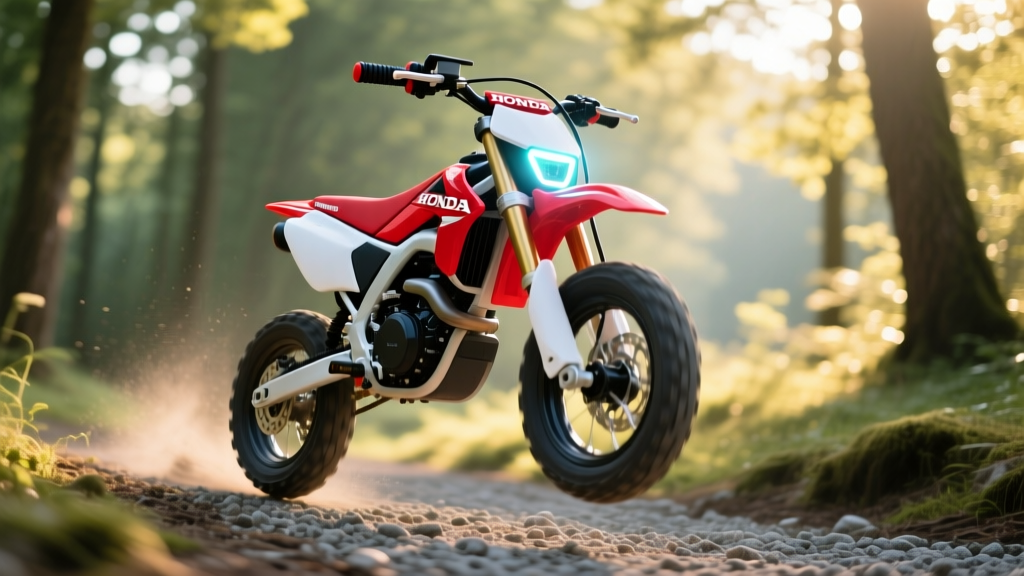
As of 2026, Honda does not manufacture a dedicated electric dirt bike for kids. Honda's youth off-road lineup remains centered on the gasoline-powered CRF50F, CRF110F, and CRF125F. The closest Honda product to a kids' electric off-road machine is the Honda Motocompacto — a compact electric scooter (not a dirt bike) aimed at adult urban commuters, priced at $995. For parents specifically seeking a Honda-branded electric dirt bike for children, no such product currently exists in Honda's US powersports catalog.
Search interest around "Honda electric dirt bike for kids" has grown steadily, driven by parents who trust Honda's reputation in youth motocross and want to transition to electric. The problem? That trust hasn't yet been matched by a product. This guide breaks down exactly what Honda offers, what the real alternatives cost, and how to evaluate kids' electric off-road bikes with the same rigor you'd apply to an EV purchase.
What Honda Actually Sells for Young Riders in 2026
Honda's youth off-road motorcycles are some of the most popular starter bikes in the US. All current models use single-cylinder, four-stroke gasoline engines. Here's the 2026 lineup:
| Model | Engine | Seat Height | Weight | MSRP | Age Range (approx.) |
|---|---|---|---|---|---|
| CRF50F | 49cc gas | 21.6 in | 110 lbs | $1,699 | 4–7 |
| CRF110F | 109cc gas | 24.8 in | 151 lbs | $2,599 | 7–11 |
| CRF125F | 124cc gas | 28.7 in | 187 lbs | $3,399 | 10–14 |
None of these are electric. Honda has not announced an electric replacement or companion to the CRF youth line as of early 2026. Honda's broader electrification strategy has focused on cars (the Prologue SUV) and urban mobility concepts, not youth powersports.
The Motocompacto: Honda's Only Consumer EV
Honda's Motocompacto is a foldable electric scooter with a 490-watt motor, a top speed of 15 mph, and an EPA-estimated range of 12.5 miles on its 0.32 kWh battery. It charges on a standard 120V outlet in about 3.5 hours. At $995, it's priced as a last-mile commuter tool — not an off-road toy, and not intended for children under 16. It has 3.1-inch wheels and zero suspension travel. This is not a dirt bike substitute.
Electric Kids' Dirt Bikes: The Real Market in 2026
If Honda doesn't make one, who does? The kids' electric dirt bike market has matured significantly. Here are the leading options parents actually buy:
| Brand / Model | Motor | Battery | Top Speed | Range (est.) | Weight | MSRP |
|---|---|---|---|---|---|---|
| KTM SX-E 5 | 5 kW peak | 0.907 kWh (NMC) | ~45 mph | 15–30 min hard riding | 89 lbs | $5,299 |
| Kuberg Trial E | 3 kW | 0.48 kWh | ~30 mph | 30–45 min | 73 lbs | $3,499 |
| Sur-Ron Light Bee X | 3 kW peak | 1.92 kWh (NMC) | ~45 mph | 20–40 mi (street) | 110 lbs | $4,299 |
| Razor MX650 (entry-level) | 650W | Sealed lead-acid | 17 mph | ~40 min | 98 lbs | $699 |
| Oset 20.0 (trial) | 1.5 kW | 0.5 kWh | ~35 mph | 45–60 min | 70 lbs | $3,799 |
These bikes span a massive price range — from $699 for a toy-grade Razor to $5,299 for a competition-capable KTM. The gap matters because it determines whether you're buying a backyard toy or a real motocross training tool.
Cost Breakdown: Electric vs. Gas Kids' Dirt Bikes
Parents often assume electric is cheaper to operate. That's true per hour of riding — but the purchase price tells a different story. Here's a realistic 3-year cost comparison between a popular gas starter bike and a mid-tier electric alternative:
| Cost Category | Honda CRF110F (Gas) | KTM SX-E 5 (Electric) |
|---|---|---|
| Purchase Price | $2,599 | $5,299 |
| Fuel / Electricity (3 yrs, ~100 hrs total) | ~$225 (gas + oil mix) | ~$18 (residential electricity) |
| Engine Maintenance (oil, filter, top-end) | ~$350 | $0 (no engine) |
| Chain / Sprocket / Tires (both) | ~$250 | ~$250 |
| Battery Replacement | N/A | ~$800–$1,200 (if needed after warranty) |
| Resale Value (est. after 3 yrs) | ~$1,800 | ~$2,500 |
| Net 3-Year Cost | ~$1,624 | ~$3,867 |
The electric option costs roughly $2,200 more over three years, even after factoring in near-zero fuel and engine maintenance. The math only flips if you ride heavily (300+ hours) or if gas prices spike dramatically. For most families, the electric premium is about noise reduction and simplicity — not savings.
Real-World Ownership: What Parents Actually Need to Know
Charging and Battery Care
Kids' electric dirt bikes use small NMC lithium-ion packs (typically 0.5–2.0 kWh). They charge on standard 120V household outlets — no Level 2 installation needed. Charge times range from 1.5 to 4 hours depending on battery size and charger output.
Critical battery care points:
- Don't store fully charged or fully depleted. Keep between 30–80% State of Charge (SoC) for long-term storage. This mirrors EV best practices.
- Cold weather reduces range 20–35%. If you ride in winter, expect noticeably shorter sessions.
- Battery lifespan is typically 500–800 full charge cycles before capacity drops below 80%. For most families riding weekly, that's 8–12 years before replacement is needed.
- Charger quality varies wildly. Cheap brands ship with unreliable chargers. Budget $100–$200 for an OEM-quality replacement charger from day one.
Noise: The Underrated Advantage
Gas kids' dirt bikes produce 85–95 dB at the rider's ear. Many riding areas, residential neighborhoods, and even some motocross tracks are restricting gas bikes due to noise. Electric dirt bikes run at 55–65 dB — roughly the volume of a normal conversation. This is the single biggest practical advantage of going electric for kids' off-road riding, and it's why many families make the switch despite the higher purchase price.
Power Delivery and Safety
Electric motors deliver instant torque with no clutch, no gears, and no stalling. For a 6-year-old learning to ride, this is genuinely safer — there's no kick-start frustration, no accidental over-rev, and no hot exhaust pipe to burn a leg. Most quality kids' electric dirt bikes include parental speed limiters adjustable via app or physical key, letting you cap top speed at 5, 10, or 15 mph as the child gains confidence.
Common Misconceptions About Kids' Electric Dirt Bikes
| Myth | Fact |
|---|---|
| "Electric dirt bikes have no power." | The KTM SX-E 5 produces 5 kW peak (6.7 hp) — comparable to a gas 65cc motocross bike. It's used in organized youth racing. |
| "The battery will die in a year." | NMC lithium cells are rated for 500–800 cycles. With weekly riding, expect 8+ years before meaningful degradation. |
| "You can't ride in the rain." | Most quality models (KTM, Sur-Ron, Oset) are IP-rated for water resistance. They handle wet trails. Avoid submerging the battery compartment. |
| "Electric bikes are maintenance-free." | No engine maintenance, but chains, sprockets, brake pads, tires, and suspension still need regular service. Budget ~$100/year. |
| "Any electric bike is fine for a kid." | Sub-$500 toy-grade bikes (lead-acid batteries, no suspension) are unsafe for real off-road use. They lack the brakes, travel, and build quality for trails or jumps. |
Decision Framework: Should You Wait for Honda or Buy Now?
Choose to wait for a Honda electric dirt bike if:
- Your child is currently 2–3 years old and won't ride for several more years
- You are committed to the Honda dealer network for service and parts
- You already own a Honda CRF and want to stay within one brand ecosystem
Choose an existing electric brand now if:
- Your child is ready to ride this season
- Noise restrictions at your local track or neighborhood make gas bikes impractical
- You want instant-torque simplicity for a beginner rider
- You're comfortable with independent dealer service (KTM, Sur-Ron networks)
Choose a gas Honda CRF now if:
- Budget is under $2,000 and you need a proven, reliable starter bike
- You ride at motocross tracks where gas bikes are still standard
- You want maximum resale value and the broadest used-buyer market
- Long ride sessions (2+ hours) without charging breaks are important
What a First-Time Buyer Should Know
If you're buying any kids' off-road bike — electric or gas — for the first time, these principles apply:
- Size the bike to the child, not the price tag. A child who can't flat-foot a dirt bike will be scared and unsafe. Seat height matters more than power.
- Budget for safety gear equal to 30–50% of the bike price. A proper helmet ($150–$350), boots ($100–$250), chest protector, gloves, and knee braces are non-negotiable.
- Buy from a brand with parts availability. KTM, Honda, and Sur-Ron have established US parts supply chains. Off-brand imports from Amazon can become unrepairable paperweights when a controller board fails.
- Check your homeowner's insurance. Some policies cover off-road vehicles; others require a separate rider. Call before the bike arrives.
- No federal EV tax credit applies. The IRS §30D clean vehicle credit applies only to four-wheeled highway-capable vehicles. Off-road dirt bikes — electric or gas — do not qualify.
The Bottom Line
Honda makes outstanding kids' gas dirt bikes, but as of 2026, they make zero kids' electric dirt bikes. If you're searching for a "Honda electric dirt bike for kids," you're looking for a product that doesn't exist yet. Your real choices are: buy a proven Honda CRF gas bike today, buy an established electric brand like KTM or Sur-Ron today, or wait indefinitely for Honda to enter a market segment they've shown no public commitment to.
For most families, the practical move is to match the bike to the child's current age, your local riding environment, and your budget — not to wait for a brand that may never arrive.
Will Honda ever make an electric dirt bike for kids?
Honda has not announced any electric youth off-road model. Honda has shown electric motorcycle concepts (like the EM1 e: scooter) and is investing in electrification broadly, but no youth dirt bike has been confirmed. Any timeline would be speculative.
What's the best electric dirt bike for a 6-year-old?
The KTM SX-E 5 and Oset 16.0 are the top choices for young beginners. Both offer adjustable power modes, appropriate seat heights (under 22 inches), and established dealer support. Budget $3,500–$5,300.
How long do kids' electric dirt bike batteries last?
NMC lithium-ion batteries in quality kids' bikes are rated for 500–800 full charge cycles before dropping below 80% capacity. With typical weekly riding, expect 8–12 years of usable life. Replacement batteries cost $500–$1,200 depending on the model.
Can kids ride electric dirt bikes on public trails?
It depends on the jurisdiction. Many public OHV areas and motocross tracks now accept electric bikes — some even prefer them due to lower noise. Check with your local land management agency or track operator. Some state OHV registration requirements apply regardless of powertrain.
Do electric dirt bikes need to be registered?
Registration requirements vary by state. Most states do not require registration for off-road-only vehicles used on private property. For public OHV areas, many states require an OHV permit or green sticker regardless of whether the bike is gas or electric. Check your state's natural resources or DMV office.