Quick Answer: Honda Electric Cars in 2025-2026
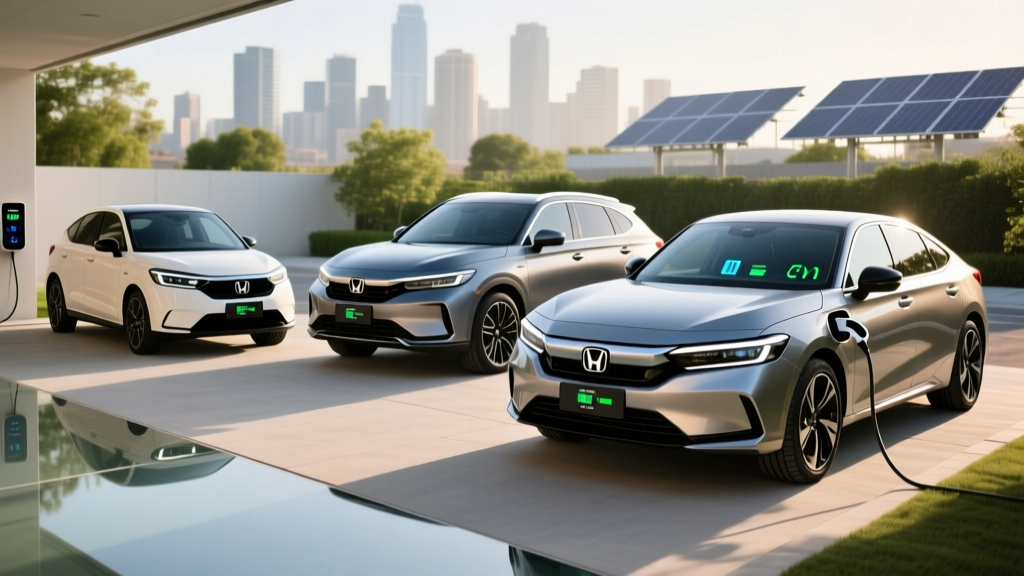
Honda currently offers one all-electric vehicle: the Prologue SUV with 281-296 miles of EPA range, starting at $47,400 MSRP (before incentives). The smaller Honda e (137-mile range) remains unavailable in the US. For most buyers, the Prologue competes directly with the Hyundai Ioniq 5 and Tesla Model Y, offering solid range but slower DC charging (peak 155 kW vs competitors' 240+ kW). Honda's 2026 lineup adds no new EVs, though the company has announced future models on its dedicated EV platform.
Current Honda EV Lineup: What's Available Now
Honda's electric vehicle strategy in 2025-2026 centers on a single model built on General Motors' Ultium platform. Unlike competitors offering multiple EV options across segments, Honda buyers looking for a battery-electric vehicle have one choice:
| Model | Body Style | EPA Range | Battery (kWh) | Peak DC Charge | 10-80% Time | Base MSRP |
|---|---|---|---|---|---|---|
| Prologue EX | Midsize SUV | 296 mi (FWD) | 85 kWh (NMC) | 155 kW | ~32 min | $47,400 |
| Prologue Touring | Midsize SUV | 281 mi (AWD) | 85 kWh (NMC) | 155 kW | ~32 min | $53,400 |
| Prologue Elite | Midsize SUV | 281 mi (AWD) | 85 kWh (NMC) | 155 kW | ~32 min | $57,900 |
The Prologue uses GM's Ultium battery architecture with nickel-manganese-cobalt (NMC) chemistry, providing good energy density but requiring more careful state-of-charge management than lithium iron phosphate (LFP) alternatives. Real-world range typically falls 10-15% below EPA estimates during highway driving at 70+ mph, and cold weather (below 32°F) can reduce range by 20-30% due to battery heating demands and reduced regenerative braking efficiency.
Prologue vs Gas CR-V: 5-Year Cost Comparison
The Prologue competes internally with Honda's best-selling CR-V hybrid, which achieves 40 MPG combined. Here's how ownership costs compare over five years and 75,000 miles:
| Cost Category | Prologue Touring AWD | CR-V Hybrid Sport Touring | Difference |
|---|---|---|---|
| Purchase Price (MSRP) | $53,400 | $40,850 | +$12,550 |
| Federal Tax Credit (§30D) | -$0 to $7,500* | $0 | -$7,500 max |
| Fuel/Energy (75k miles) | $3,375 (home charging) | $7,500 (gas @ $3.50/gal) | -$4,125 |
| Maintenance (5 years) | $1,200 | $2,800 | -$1,600 |
| Insurance (5 years) | $9,500 | $7,200 | +$2,300 |
| 5-Year Net Cost | $60,475 | $58,350 | +$2,125 |
*Federal tax credit eligibility for the Prologue depends on battery component sourcing, buyer income caps ($150k single/$300k joint), and MSRP limits ($80k for SUVs). Check current IRS §30D requirements before purchase, as sourcing rules tighten annually.
The Prologue breaks even with the CR-V Hybrid around year 6-7 if you qualify for the full tax credit and charge primarily at home. Without the credit, the Prologue costs roughly $4,000-5,000 more over five years, though you eliminate gas station visits and reduce maintenance (no oil changes, fewer brake replacements due to regenerative braking).
Real-World Charging: Speed, Cost, and Infrastructure
The Prologue's 155 kW peak DC fast-charging rate trails competitors significantly. While the Hyundai Ioniq 5 charges 10-80% in 18 minutes at 240 kW peak, the Prologue requires 32 minutes for the same session. More critically, the Prologue's charge curve tapers aggressively above 60% state-of-charge, meaning highway road trips require more planning:
Charging Time Comparison: 200-Mile Road Trip
| Vehicle | Starting SoC | Charge Stops Needed | Total Charging Time | Total Trip Time |
|---|---|---|---|---|
| Honda Prologue AWD | 100% → 20% | 1 stop (155 kW peak) | 35 minutes | 3h 35min |
| Hyundai Ioniq 5 AWD | 100% → 20% | 1 stop (240 kW peak) | 20 minutes | 3h 20min |
| Tesla Model Y LR AWD | 100% → 20% | 1 stop (250 kW peak) | 18 minutes | 3h 18min |
Home charging costs average $0.13-0.18 per kWh nationally, making a full Prologue charge (85 kWh usable) cost $11-15 for 280 miles—roughly 4-5 cents per mile. Public DC fast charging costs $0.35-0.50 per kWh at networks like Electrify America, raising costs to 12-15 cents per mile, still below gas but eroding the EV cost advantage if you can't charge at home.
Level 2 home charging requires a 240V/40A circuit (9.6 kW), adding roughly 30 miles of range per hour. Installation costs $800-2,500 depending on electrical panel capacity and distance from panel to charging location. Homes with 100A panels may need a $1,500-3,000 panel upgrade to support EV charging alongside existing loads.
Tax Credit Eligibility: What You Actually Qualify For
The federal EV tax credit (§30D) offers up to $7,500 but includes multiple restrictions that disqualify many buyers and vehicles:
- Income Caps: Modified AGI ≤$150,000 (single) or ≤$300,000 (married filing jointly)
- MSRP Limits: ≤$80,000 for SUVs/pickups, ≤$55,000 for sedans
- Battery Sourcing: Increasing percentages of critical minerals and battery components must be sourced from US/FTA partners (requirements tighten annually through 2029)
- Assembly: Final assembly must occur in North America
- Point-of-Sale Transfer: You can transfer the credit to the dealer for an immediate price reduction, but you must still meet income requirements or repay the credit at tax time
The Prologue qualifies for the credit based on North American assembly (built in Tennessee on GM's Ultium platform), but battery sourcing requirements may reduce the credit to $3,750 or eliminate it entirely depending on your purchase date. Always verify current eligibility on fueleconomy.gov before finalizing your purchase.
Decision Framework: Is a Honda EV Right for You?
Choose the Honda Prologue if:
- You want a midsize electric SUV from a mainstream brand with dealer support
- You have home charging access and drive <200 miles daily
- You qualify for the federal tax credit (income + sourcing requirements)
- You prioritize interior space and Honda's reputation for reliability over cutting-edge charging speed
- You're replacing a gas SUV and want minimal learning curve (Prologue uses conventional door handles, physical climate controls)
Consider Alternatives if:
- Frequent road trips >300 miles: Hyundai Ioniq 5 or Tesla Model Y charge 40-50% faster
- No home charging: Public charging costs and inconvenience may negate EV savings
- Budget under $40,000: Consider Honda CR-V Hybrid (40 MPG) or wait for used Prologue inventory
- Cold climate (<20°F winters): Prologue lacks standard heat pump; expect 25-30% range loss vs competitors with heat pumps
- Need three rows: Prologue seats five only; consider Kia EV9 or wait for Honda's larger EV (announced for 2026-2027)
Common Misconceptions About Honda EVs
| Myth | Fact |
|---|---|
| "Honda doesn't make electric cars" | Honda sells the Prologue SUV (281-296 mi range) and has offered the Honda e hatchback in Europe/Japan since 2020, though not in the US market |
| "EVs cost more to own than gas cars" | Prologue costs ~$2,000 more over 5 years vs CR-V Hybrid without tax credit, but $5,000 less with full credit and home charging |
| "Honda EVs use proprietary charging" | Prologue uses standard CCS1 connector (2025 models); Honda will transition to NACS (Tesla connector) for 2026+ models, but current vehicles use CCS |
| "EV batteries need replacement every 5 years" | Prologue battery warranty: 8 years/100,000 miles with capacity retention ≥70%. Real-world degradation data shows 10-15% capacity loss over 8 years for NMC chemistry |
| "I can't drive an EV in winter" | Prologue operates in cold weather but loses 20-30% range below freezing. Preconditioning while plugged in mitigates this, and AWD models maintain traction |
What's Next: Honda's EV Roadmap Beyond 2025
Honda has announced plans to launch EVs on its dedicated e:Architecture platform starting in 2026-2027, moving away from the GM Ultium partnership for future models. These vehicles are expected to offer:
- Faster DC charging (targeting 200+ kW peak rates)
- Improved cold-weather efficiency with standard heat pumps
- NACS connector compatibility for Tesla Supercharger access
- Multiple body styles including sedans and larger SUVs
However, these remain announced/preliminary specifications. Honda has not released pricing, exact range figures, or confirmed US availability dates. Buyers needing an EV now should evaluate the Prologue or competitors rather than waiting for unconfirmed future models.
First-Time EV Buyer Checklist
- Verify home charging access: Can you install a Level 2 charger (240V/40A)? Get an electrician quote before purchasing.
- Calculate real-world range needs: Take your longest regular drive and add 30% buffer for highway/cold weather. Prologue's 281-mile EPA range becomes ~200 miles at 75 mph in 30°F weather.
- Check tax credit eligibility: Confirm income, MSRP, and battery sourcing requirements on irs.gov before assuming $7,500 savings.
- Test public charging: Visit your nearest Electrify America or EVgo station. Download the app, initiate a charge, and understand the process before you need it on a road trip.
- Factor in insurance costs: EVs typically cost 15-25% more to insure than gas equivalents. Get quotes before purchase.
- Understand maintenance differences: No oil changes, but tire rotation every 5,000-7,500 miles (EVs wear tires faster due to instant torque and weight). Cabin air filter replacement annually.
FAQ: Honda Electric Cars
Does Honda make any fully electric cars in 2025?
Yes, Honda sells the Prologue midsize SUV with 281-296 miles of EPA range. The smaller Honda e hatchback (137-mile range) is not available in the US market. Honda has no electric sedans or compact EVs currently for sale.
How long does it take to charge a Honda Prologue?
Level 2 home charging (9.6 kW): 9-10 hours from 10-100%. DC fast charging (155 kW peak): 32 minutes from 10-80%, but charging slows significantly above 60% state-of-charge. Level 1 charging (120V household outlet): 50+ hours, practical only for emergencies or very low daily mileage.
Is the Honda Prologue eligible for the $7,500 federal tax credit?
The Prologue qualifies based on North American assembly, but eligibility depends on battery component sourcing (requirements tighten annually), buyer income caps ($150k single/$300k joint), and MSRP limits ($80k for SUVs). Verify current eligibility on fueleconomy.gov before purchase. The credit can be transferred to the dealer for an immediate price reduction.
How does the Prologue compare to the Tesla Model Y?
The Model Y Long Range offers 310 miles EPA range (vs Prologue's 281-296), charges at 250 kW peak (vs 155 kW), and accesses Tesla's Supercharger network. The Prologue offers more conventional styling, physical climate controls, and Honda dealer support. Price-wise, the Model Y starts at $48,990 vs Prologue at $47,400, but the Model Y qualifies for the full $7,500 credit while Prologue eligibility varies.
Will Honda release more electric cars after 2025?
Honda has announced plans for EVs on its dedicated e:Architecture platform starting 2026-2027, including multiple body styles. However, specific models, pricing, and US availability remain unconfirmed. The company is also transitioning to NACS (Tesla) connectors for future models, though 2025 Prologue uses CCS1.
Final Considerations
The Honda Prologue represents a competent but not class-leading entry in the midsize electric SUV segment. Its 281-296 mile range and $47,400 starting price are competitive, but slower charging speeds and uncertain tax credit eligibility put it at a disadvantage versus the Hyundai Ioniq 5, Tesla Model Y, and Ford Mustang Mach-E. Buyers prioritizing Honda's brand reputation and dealer network will find the Prologue adequate for daily commuting and occasional road trips, while those focused on charging speed or maximizing tax incentives should cross-shop alternatives.
For buyers not ready for full electrification, Honda's CR-V Hybrid (40 MPG combined, $35,000 MSRP) offers a lower-risk path with excellent efficiency and no charging infrastructure requirements. The decision ultimately depends on your home charging access, daily mileage, tax credit eligibility, and willingness to adapt to EV ownership patterns.