The Short Answer: Honda's EV Pivot Explained
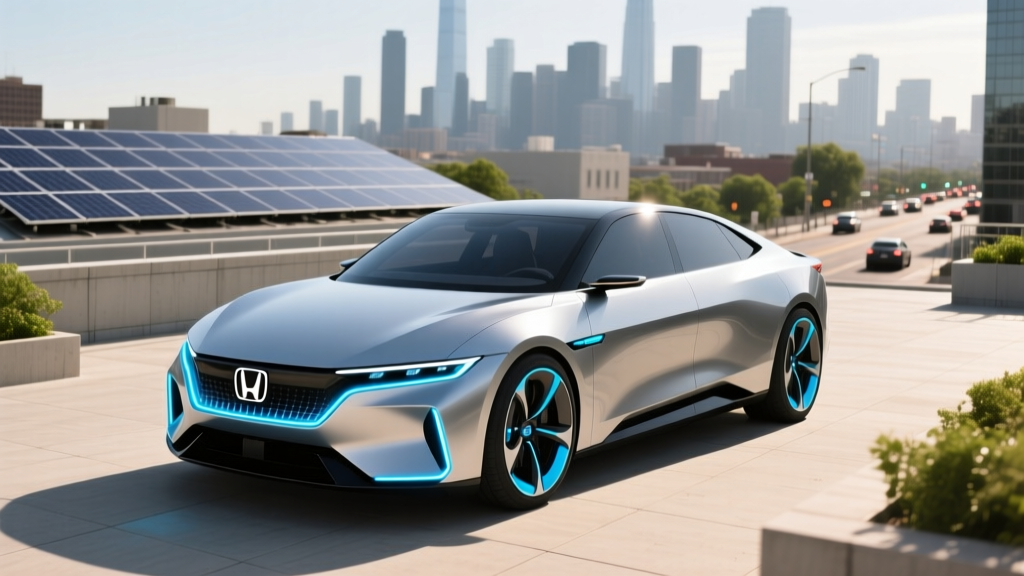
Honda's electric car strategy change, finalized through 2024–2025 and reshaping its 2026 lineup, involves three major moves: (1) abandoning the GM Ultium platform partnership after the Prologue and ZDX, (2) delaying its dedicated in-house EV platform (built on the newly developed "0 Series" architecture) to the late 2020s, and (3) pivoting heavily toward hybrid-electric vehicles as its primary electrification offering in North America. For buyers in 2026, this means the Honda Prologue remains available as a carryover model, no new dedicated Honda EVs are on sale yet, and Honda's strongest electrified offerings are its hybrid lineup (CR-V Hybrid, Accord Hybrid, Civic Hybrid). If you want a Honda-branded EV today, the Prologue is your only option — and it's a vehicle born from a partnership Honda has already exited.
Why Honda Changed Its EV Strategy
Honda's original plan was straightforward: partner with GM to produce affordable EVs on the Ultium platform (yielding the Honda Prologue and Acura ZDX), then transition to proprietary EV architecture by mid-decade. That plan unraveled for several reasons:
- GM partnership economics didn't work. Honda couldn't achieve the cost structure needed for profitable sub-$40,000 EVs on Ultium. As GM itself restructured its EV ambitions, the collaboration lost momentum.
- EV demand softened relative to forecasts. Throughout 2024–2025, U.S. EV adoption continued growing but at a pace below automaker projections, with buyers showing stronger interest in hybrids and PHEVs.
- Honda's hybrid strength. Honda already manufactures some of the most efficient hybrids on the market. Doubling down on hybrid technology offered a faster, more profitable path to fleet emissions compliance.
- "0 Series" platform delays. Honda announced its next-generation EV platform — branded the "0 Series" — at CES 2024, targeting 2026 production. That timeline has slipped, with first vehicles now expected no earlier than 2027–2028 for the global market and potentially later for North America.
The 2026 Honda Electrified Lineup: What You Can Actually Buy
Here's exactly what Honda offers electrified buyers in the 2026 model year:
| Model | Type | EPA Range / MPG | Battery / Powertrain | Starting MSRP |
|---|---|---|---|---|
| Honda Prologue | BEV (Ultium) | ~296 mi (EPA) | 85 kWh NMC, dual-motor AWD avail. | ~$47,400 |
| CR-V Hybrid | HEV | 40 city / 34 hwy / 37 combined MPG | 2.0L + 2-motor hybrid | ~$35,350 |
| Accord Hybrid | HEV | 51 city / 44 hwy / 48 combined MPG | 2.0L + 2-motor hybrid | ~$34,990 |
| Civic Hybrid | HEV | 50 city / 47 hwy / 49 combined MPG | 2.0L + 2-motor hybrid | ~$30,990 |
Key takeaway: The Prologue is the only BEV, and it's a rebadged Chevrolet Blazer EV underneath — a vehicle from a partnership Honda has publicly ended. The hybrids, by contrast, represent Honda's core engineering and are where the company is investing its resources.
Honda Prologue: Is It Still Worth Buying?
The 2026 Honda Prologue continues as a carryover from its 2024 launch. Here are the exact figures buyers need:
Prologue Range Reality Check
EPA rated: 296 miles (FWD) / 281 miles (AWD Elite)
Real-world expectation: ~240–265 miles highway driving; ~200–225 miles in cold weather (below 32°F). The Ultium platform's efficiency is adequate but not class-leading — expect roughly 3.0–3.3 mi/kWh in mixed driving.
| Spec | Value |
|---|---|
| Battery | 85 kWh usable (NMC chemistry) |
| Peak DC Fast Charge | 155 kW (CCS) |
| 10–80% DC Charge Time | ~34 minutes (peak; taper significant above 60%) |
| Level 2 Charge Rate | 11.5 kW (~34 mi/hr added) |
| Horsepower | 212 hp (FWD) / 288 hp (AWD) |
| 0–60 mph | ~7.2 sec (FWD) / ~5.9 sec (AWD) |
| Battery Warranty | 8 years / 100,000 miles |
| Federal Tax Credit (§30D) | Eligibility uncertain — verify current sourcing rules at irs.gov |
The honest assessment: The Prologue is a competent midsize electric SUV, but it charges slower than competitors (the Hyundai Ioniq 5 hits 240 kW peak and does 10–80% in ~18 minutes), its real-world range falls short of the EPA sticker on highway trips, and it occupies an uncertain position as the orphan product of a dead partnership. Honda has committed to servicing the Prologue long-term, but resale value is a legitimate concern.
Honda Hybrids vs. Going Full Electric: The Cost Math
For most Honda shoppers in 2026, the real decision isn't "which EV" — it's "EV or hybrid?" Here's a concrete comparison using the Prologue vs. the CR-V Hybrid, the two most cross-shopped Honda models:
| Cost Category | Prologue (BEV) | CR-V Hybrid (HEV) |
|---|---|---|
| Purchase Price (base MSRP) | $47,400 | $35,350 |
| Est. Federal Tax Credit | $0–$7,500* | $0 |
| Fuel/Energy Cost (5 yr) | $3,750 (home charging at $0.14/kWh) | $6,075 ($3.25/gal, 37 MPG) |
| Maintenance (5 yr) | ~$1,500 | ~$3,200 |
| Insurance (5 yr est.) | ~$10,500 | ~$8,250 |
| 5-Year Total (before credit) | $63,150 | $52,875 |
| 5-Year Total (with max $7,500 credit) | $55,650 | $52,875 |
*Federal §30D credit eligibility depends on battery critical-mineral sourcing, buyer income caps ($150K single / $300K joint), and MSRP caps ($80K for SUVs). Verify current-year rules at irs.gov. The Prologue's GM-sourced battery has faced sourcing-rule complications — do not assume the full $7,500 applies.
The verdict: Even with a maximum tax credit, the Prologue costs roughly $2,775 more over five years than the CR-V Hybrid. Without the credit, the gap widens to $10,275. The hybrid makes financial sense for most buyers unless you have cheap home charging, a short commute, and strong environmental priorities.
What This Means for First-Time EV Buyers Considering Honda
Honda's electric car strategy change creates a specific set of considerations if you're a first-time EV buyer looking at the brand:
| Myth | Fact |
|---|---|
| "Honda is launching new EVs soon, I should wait." | Honda's 0 Series vehicles are not expected in the U.S. before 2028 at the earliest. Waiting means 2+ years with no new Honda BEV option. |
| "The Prologue will get a refresh with Honda's own tech." | The Prologue is an Ultium-platform vehicle. Honda has ended the GM partnership — expect no significant updates, only carryover production until inventory depletes. |
| "Honda hybrids are just a stopgap — EVs are always better." | Honda's 2-motor hybrid system achieves 48–49 MPG combined. For drivers without home charging or in cold climates, a hybrid delivers lower cost and zero range anxiety with meaningful fuel savings. |
| "If I buy a Prologue, Honda will abandon it." | Honda is obligated to provide parts and service support. However, long-term resale value is uncertain for a discontinued-platform vehicle — expect steeper depreciation than a Honda-engineered product. |
Real-World Ownership Considerations
Home charging access: If you can install a Level 2 charger (240V, 32–48A), the Prologue adds ~34 miles of range per hour of charging — adequate for overnight replenishment. Installation costs range from $800–$2,500 depending on panel capacity and run length. If you lack home charging, the Prologue's 155 kW peak DC rate means public charging sessions take 30+ minutes, making daily reliance on public infrastructure inconvenient.
Climate impact: In sub-freezing conditions, expect 20–30% range loss from the Prologue's NMC battery. A driver in Minnesota who sees 296 miles EPA in summer may experience 200–230 miles in January. The Prologue lacks a heat pump (confirmed in initial reviews), relying on resistive cabin heating that draws significant battery energy. Honda hybrids are largely unaffected by cold-weather range loss.
Driving patterns: If your daily driving is under 50 miles and you charge at home, the Prologue works well despite its limitations. If you regularly drive 200+ miles between charges or take frequent road trips, the Prologue's modest charging speed and real-world range reduction make it less practical than competitors like the Ioniq 5, Tesla Model Y, or Ford Mustang Mach-E.
Your Decision Framework: Should You Buy a Honda Electrified Vehicle in 2026?
Choose the Honda Prologue if:
- You have reliable home Level 2 charging
- Your daily commute is under 60 miles round-trip
- You live in a mild climate (limited sub-freezing months)
- You value Honda's dealer network and brand loyalty over cutting-edge EV tech
- You can secure the full §30D tax credit (verify sourcing eligibility before purchase)
- You accept higher depreciation risk on a partnership-origin vehicle
Choose a Honda Hybrid (CR-V, Accord, Civic) if:
- You lack consistent home charging access
- You live in a cold-weather region
- You take regular road trips exceeding 250 miles
- You want the lowest total cost of ownership
- You prefer proven Honda-engineered powertrains with strong resale value
- You want immediate availability with no wait for future models
Look Outside Honda for an EV if:
- You want best-in-class charging speed (Hyundai/Kia at 240+ kW, Tesla at 250 kW)
- You need 320+ miles of real-world highway range
- You want a vehicle with an established EV platform and OTA update trajectory
- You plan to keep the vehicle 8+ years and want strong long-term parts and platform support
The Road Ahead: Honda's 0 Series and What's Next
Honda has staked its long-term EV future on the 0 Series platform, promising ultra-thin battery packs, aerodynamic designs, and a new approach to software-defined vehicles. Concept vehicles shown at CES 2024 and 2025 suggest a radical design departure. However, concrete specifications — battery kWh, range, charge rates, pricing — remain unannounced as of 2026.
What we know:
- First 0 Series production vehicles are targeted for Japan and China first, with North America likely following in 2028–2029
- Honda is developing its own solid-state battery technology, but mass production remains unproven
- The company has reduced its global EV sales targets, reflecting market realities
- Hybrids will carry Honda's electrification strategy in North America for the foreseeable future
For buyers who specifically want a Honda EV with Honda engineering — not a rebadged GM product — the honest answer is: wait. But that wait will be measured in years, not months.
Is Honda discontinuing the Prologue?
Honda has not officially discontinued the Prologue for 2026, but it is a carryover product from a terminated partnership. No refresh or second generation has been announced. Expect production to wind down as Honda transitions to its 0 Series platform later this decade.
Does the Honda Prologue qualify for the $7,500 federal tax credit?
Eligibility under IRS §30D depends on battery component sourcing, critical-mineral origin, buyer income, and MSRP caps. The Prologue's GM-sourced Ultium battery has faced complications under updated sourcing rules. Always verify current eligibility at irs.gov or consult a tax professional before relying on the credit in your purchase decision. Point-of-sale transfer is available if eligible.
Should I wait for Honda's 0 Series EVs?
If you need a vehicle in 2026, waiting is impractical — Honda's 0 Series vehicles are not expected in the U.S. market before 2028 at the earliest, with firm specs and pricing still unannounced. If you can wait 2–3 years and want a purpose-built Honda EV, it may be worthwhile. Otherwise, consider Honda's hybrid lineup or a competitor's current BEV offering.
Are Honda hybrids better than a Honda EV for most buyers?
For 2026, yes — for the majority of buyers. Honda's hybrids (48–49 MPG combined) require no charging infrastructure, suffer no cold-weather range loss, cost $10,000–$15,000 less upfront than the Prologue, and carry Honda's proven powertrain reliability and strong resale value. A BEV makes sense only if you have home charging, short commutes, and prioritize zero tailpipe emissions over total cost.
What happened to Honda and GM's EV partnership?
Honda and GM's collaboration to produce affordable EVs on the Ultium platform yielded the Prologue and Acura ZDX. In late 2024, Honda confirmed it would not pursue further Ultium-based vehicles, citing unfavorable economics and a strategic shift toward its own 0 Series platform. The partnership is effectively concluded, though GM continues to provide parts and service support for existing vehicles.