Quick Answer: Yes, Honda Has One EV — The Prologue
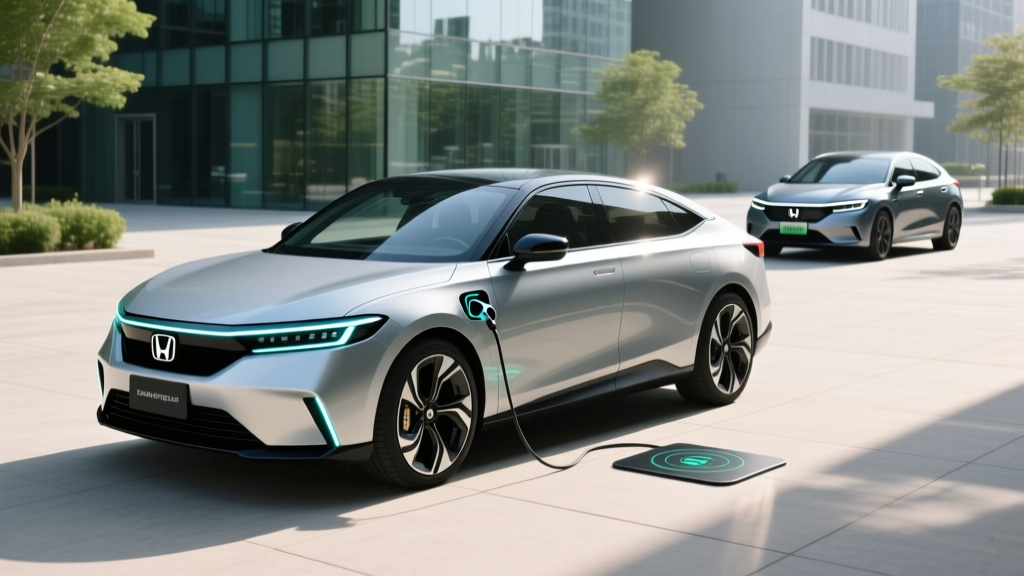
As of the 2026 model year, Honda sells one fully electric vehicle in the U.S.: the Honda Prologue, a midsize SUV built on General Motors' Ultium platform. It offers an EPA-estimated range of up to 308 miles (FWD trim), a 85 kWh usable battery (NMC chemistry), and DC fast charging up to 150 kW. The Prologue starts at approximately $48,795 before destination. Honda also sells several hybrids (Accord, CR-V, Civic) but no other battery-electric models. A next-generation Honda-developed EV lineup is announced for 2027+ but is not yet available.
The 2026 Honda Prologue: Full EV Specs
The Prologue is Honda's only battery-electric vehicle (BEV) currently on sale. It shares its platform, battery, and powertrain architecture with the Chevrolet Blazer EV and Cadillac Lyriq — a result of Honda's partnership with GM. Here are the exact figures buyers need:
| Spec | Prologue EX (FWD) | Prologue Touring (AWD) | Prologue Elite (AWD) |
|---|---|---|---|
| EPA Range | 308 mi | 294 mi | 283 mi |
| Battery (Usable) | 85 kWh, NMC | 85 kWh, NMC | 85 kWh, NMC |
| Horsepower | 212 hp | 288 hp | 288 hp |
| 0–60 mph | ~7.2 sec | ~5.9 sec | ~5.9 sec |
| DC Fast Charge (Peak) | 150 kW | 150 kW | 150 kW |
| 10–80% DCFC Time | ~35 min | ~35 min | ~35 min |
| Level 2 Charge Rate | 11.5 kW | 11.5 kW | 11.5 kW |
| MPGe (Combined) | 99 MPGe | 95 MPGe | 93 MPGe |
| Base MSRP | $48,795 | $54,795 | $59,295 |
| Battery Warranty | 8 yr / 100,000 mi | 8 yr / 100,000 mi | 8 yr / 100,000 mi |
Real-World Range Reality Check
The EPA rates the Prologue EX FWD at 308 miles, but real-world results vary significantly. In highway-heavy driving at 70+ mph, expect 250–275 miles. In cold weather (below 32°F), range can drop to 210–240 miles due to cabin heating demands and reduced battery efficiency. The AWD trims sacrifice 14–25 miles of EPA range for the traction and power of dual motors. If your commute is under 50 miles round-trip, any trim covers it easily with margin. For road trips exceeding 250 miles, plan one DC fast-charge stop.
Honda EV vs. Honda Hybrid: Which Saves You More?
Many Honda shoppers are actually weighing the Prologue against Honda's strong hybrid lineup — especially the CR-V Hybrid (40 MPG combined) and Accord Hybrid (48 MPG combined). Here's a five-year cost comparison that accounts for purchase price, fuel/electricity, and maintenance:
| 5-Year Cost Factor | Prologue EX (FWD) | CR-V Hybrid AWD | CR-V Gas AWD |
|---|---|---|---|
| Base MSRP | $48,795 | $36,395 | $33,395 |
| Est. Federal Tax Credit (§30D) | Up to $7,500* | $0 | $0 |
| Effective Purchase Price | ~$41,295 | $36,395 | $33,395 |
| Fuel / Electricity (5 yr, 75k mi) | ~$3,200** | ~$7,100 | ~$9,400 |
| Maintenance (5 yr) | ~$1,800 | ~$3,200 | ~$3,800 |
| Est. Insurance (5 yr) | ~$9,500 | ~$7,800 | ~$7,500 |
| Total 5-Year Cost | ~$55,795 | ~$54,495 | ~$54,095 |
* §30D credit eligibility depends on MSRP caps, buyer income limits, and battery-component/critical-mineral sourcing rules. Verify current-year rules at IRS.gov or consult a tax professional. Point-of-sale transfer is available at participating dealers.
** Electricity cost assumes $0.16/kWh national average, ~30 kWh/100 mi efficiency, and primarily home Level 2 charging. Public DC fast charging costs significantly more ($0.35–$0.55/kWh).
The Prologue's higher insurance premiums and upfront cost largely offset its fuel savings over five years compared to a CR-V Hybrid. The EV wins on per-mile energy cost (roughly $0.04/mi vs. $0.09/mi for the hybrid), but the breakeven point extends past five years for most buyers. If you drive more than 15,000 miles annually or have cheap home solar charging, the math shifts in the Prologue's favor faster.
Prologue Charging: Home, Public, and What You'll Actually Pay
The Prologue uses the CCS1 connector for DC fast charging and the J1772 connector for Level 2 AC charging. Honda does not currently include a NACS (Tesla-style) port — if you plan to use Tesla Superchargers, you'll need a CCS-to-NACS adapter once Honda officially certifies one for the Prologue.
| Charging Level | Power (kW) | Miles Added per Hour | Typical Use Case |
|---|---|---|---|
| Level 1 (120V outlet) | ~1.2 kW | ~4 mi/hr | Overnight trickle; emergency top-up |
| Level 2 (240V home) | 11.5 kW | ~38 mi/hr | Daily home charging; full charge in ~8 hr |
| DC Fast Charge | Peak 150 kW | ~230 mi in 35 min (10–80%) | Road trips; public stations |
Charging curve reality: The Prologue peaks at 150 kW only between roughly 10–40% state of charge. Above 60%, the rate tapers significantly — expect 50–70 kW from 60–80%, and below 20 kW above 90%. This is normal for NMC batteries but means the advertised "35 minutes to 80%" is a 10–80% figure, not 0–100%. Charging from 80–100% at a DC fast charger is painfully slow and wasteful; save that for overnight Level 2.
Home charging installation: A Level 2 home charger (like the ChargePoint Home Flex or Emporia Vue) costs $500–$750 for the unit. Professional installation by a licensed electrician typically runs $800–$2,500 depending on panel proximity and whether your electrical panel needs an upgrade (a 200-amp service is ideal). Total home setup: $1,300–$3,250. If you live in an apartment or lack garage access, you'll depend on public Level 2 and DC fast charging, which costs 3–5× more per kWh than home electricity.
Federal Tax Credit: Does the Prologue Qualify?
The Prologue's eligibility for the §30D Clean Vehicle Credit (up to $7,500) is not guaranteed for every buyer. Current rules impose multiple requirements:
- MSRP Cap: SUVs must be priced at or below $80,000 — the Prologue qualifies across all trims.
- Buyer Income Cap: Modified AGI must not exceed $150,000 (single), $225,000 (head of household), or $300,000 (joint).
- Battery Component Sourcing: A percentage of battery components must be manufactured or assembled in North America (threshold increases annually).
- Critical Minerals Sourcing: A percentage of critical minerals must be sourced from the U.S. or FTA partners (threshold increases annually).
- Point-of-Sale Transfer: You can transfer the credit to the dealer at purchase for an immediate price reduction, rather than waiting to claim it on your tax return.
Because the Prologue is built on GM's Ultium platform at a U.S. factory, it has historically met the sourcing thresholds — but these rules tighten each year. Always verify current eligibility at fueleconomy.gov before purchasing. The credit phases and sourcing requirements can shift, and a vehicle that qualifies in January may face different rules by year-end.
Common Misconceptions About Honda and EVs
| Myth | Fact |
|---|---|
| "Honda doesn't make electric cars." | Honda sells the Prologue EV (since 2024). It's built by GM on the Ultium platform, but it's badged, tuned, and warrantied by Honda. |
| "The Prologue is just a rebadged Chevy." | While it shares the platform and battery with the Blazer EV, Honda designed unique exterior/interior styling, suspension tuning, software, and Honda Sensing ADAS integration. |
| "EV batteries need replacing every 5 years." | The Prologue's battery carries an 8-year/100,000-mile warranty guaranteeing minimum 70% capacity retention. Industry data shows NMC batteries typically retain 85–90% capacity after 100,000 miles with normal use. |
| "I can't take a road trip in an EV." | The Prologue's 283–308 mile range and 150 kW DC fast charging (10–80% in ~35 min) make 500-mile road trips feasible with one or two planned stops on the Electrify America or EVgo networks. |
| "Honda has a full EV lineup I'm not seeing." | Honda has only one EV. Their upcoming in-house-developed EVs (announced for 2027+) are not yet on sale. The discontinued Honda Clarity EV (2017–2019, 89-mile range) is only available used. |
What First-Time EV Buyers Should Know Before Choosing the Prologue
If you've never owned an EV, the Prologue is a competent but not class-leading entry point. Here's what shapes the ownership experience:
Home charging is the make-or-break factor. If you can install a Level 2 charger at home, the Prologue is remarkably convenient — plug in overnight, wake up to 250+ miles every morning, and visit a gas station only for washer fluid. Without home charging, you'll spend 2–4 hours per week at public chargers, paying $0.35–$0.55/kWh instead of $0.12–$0.18/kWh at home. That erases most of the fuel-cost advantage.
Cold weather cuts range 15–30%. The Prologue uses a resistive heater (not a heat pump), which draws significant battery energy in winter. In sub-freezing climates, a 308-mile EPA rating becomes roughly 220–260 miles. If you live in Minnesota or Maine and commute long distances, this matters.
Insurance costs more. EV insurance premiums run 15–25% higher than comparable gas vehicles due to repair costs and battery replacement risk. Get a quote before purchasing — it can add $1,500–$2,500 over five years compared to a CR-V.
The Honda Sensing suite is Level 2, not self-driving. The Prologue includes adaptive cruise control, lane-centering, and automatic emergency braking. This is an SAE Level 2 driver-assist system — you must keep your hands on the wheel and eyes on the road at all times. It is not autonomous.
Should You Buy the Honda Prologue? Decision Framework
Choose the Prologue if:
- You want a Honda-badged EV with dealer service familiarity
- You have home Level 2 charging access (garage or driveway with 240V)
- Your daily driving is under 80 miles round-trip
- You qualify for the §30D tax credit (income and sourcing requirements met)
- You prefer a midsize SUV with 288 hp (AWD trims) and comfortable ride quality
Choose a Honda Hybrid (CR-V or Accord) instead if:
- You lack reliable home charging access
- You regularly drive 300+ miles in a single trip in cold weather
- Your budget is firmly under $40,000
- You want maximum cargo space (CR-V Hybrid offers 76.5 cu ft vs. Prologue's 57.7 cu ft)
- You live in a rural area with sparse DC fast-charging infrastructure
Look at competitors (Hyundai Ioniq 5, Tesla Model Y, Ford Mustang Mach-E) if:
- You want faster DC charging (Ioniq 5 peaks at 240+ kW with 800V architecture)
- You need access to the Tesla Supercharger network natively (NACS port)
- You want a more established EV with longer real-world track records
- Performance matters — the Model Y Performance does 0–60 in 3.5 seconds
Honda's EV Future: What's Coming After the Prologue
Honda has announced a next-generation series of EVs developed in-house (on a new dedicated platform called the "Honda e:Architecture") expected beginning in 2027. These will include a midsize SUV and a sedan, with thinner batteries and improved efficiency. However, as of this writing, these vehicles are announced only — no pricing, final specs, or on-sale dates are confirmed. Honda's earlier "Honda 0 Series" concept previews this direction but is not a production vehicle you can buy today.
For now, the Prologue remains Honda's sole EV offering. If you want a Honda electric car today, the Prologue is your only option. If you can wait 12–18 months, Honda's in-house EVs may offer more competitive range, faster charging, and potentially NACS compatibility — but that remains to be verified with production specs.
Does Honda have a fully electric car in 2026?
Yes. The Honda Prologue is a midsize electric SUV with up to 308 miles of EPA range, starting at $48,795. It is Honda's only battery-electric vehicle currently on sale in the U.S.
Is the Honda Prologue eligible for the $7,500 federal tax credit?
The Prologue has historically qualified for the full §30D credit, but eligibility depends on your income (capped at $150K–$300K depending on filing status), the vehicle's battery sourcing compliance in the current year, and MSRP limits (all Prologue trims fall under the $80K SUV cap). Verify at IRS.gov before purchasing.
How does the Prologue compare to the CR-V Hybrid?
The Prologue costs ~$12,000 more upfront but saves roughly $3,900 in fuel and $1,400 in maintenance over five years. After the potential $7,500 tax credit, total five-year costs are nearly identical. The Prologue wins on per-mile energy cost; the CR-V Hybrid wins on cargo space, lower insurance, and no charging dependency.
Can I charge the Honda Prologue at Tesla Superchargers?
Not natively. The Prologue uses the CCS1/J1772 connector standard. Honda has not yet certified a NACS adapter for the Prologue. You can use Electrify America, EVgo, ChargePoint, and other CCS-compatible networks for DC fast charging.
What is the real-world range of the Honda Prologue?
The EPA rates the FWD Prologue EX at 308 miles. In real-world highway driving at 70 mph, expect 250–275 miles. In cold weather (below freezing), expect 210–240 miles. The AWD Elite trim rates at 283 miles EPA and delivers roughly 230–255 miles on the highway in moderate temperatures.
How long does it take to charge the Prologue at home?
On a Level 2 (240V) home charger at 11.5 kW, a full 0–100% charge takes approximately 8 hours. Most owners plug in overnight and never deplete below 20%, making a typical nightly session 5–6 hours for a full replenishment.