The Short Answer on "Honda Bike Electric"
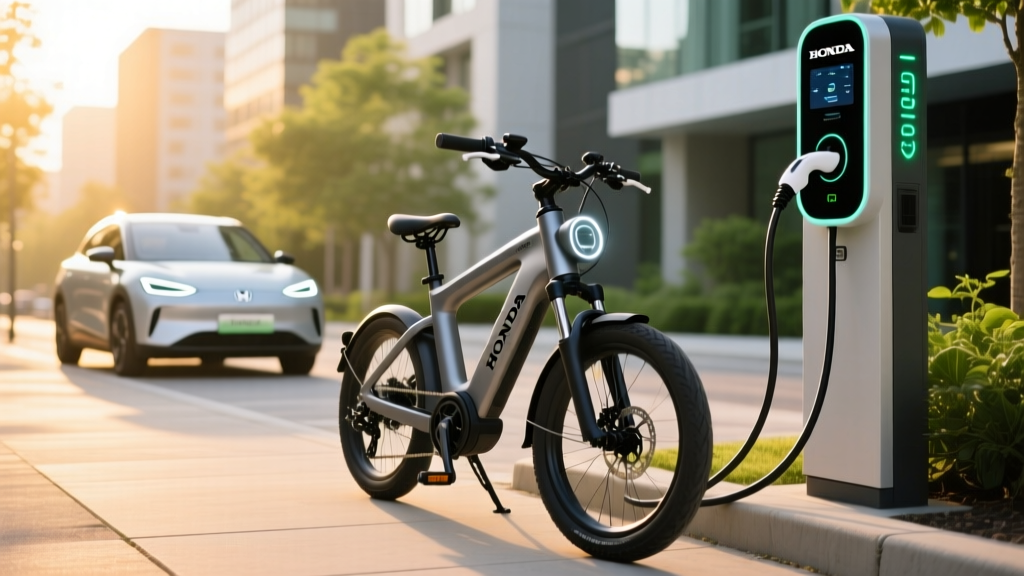
As of 2026, Honda does not sell a street-legal electric motorcycle in the United States. The Honda EM1 e: electric scooter is available in select Asian and European markets but has not been released for U.S. consumers. For American buyers interested in Honda's electrified lineup, the practical options are the Honda Prologue (all-electric SUV, EPA-estimated 296 miles of range, starting at $47,400) and the Honda Clarity Plug-In Hybrid lineage, which has been succeeded by Honda's expanding hybrid lineup across the Accord, CR-V, and Civic. If you specifically need a two-wheeled electric vehicle from Honda, the U.S. market is not yet served — and you'll want to explore alternatives or wait for Honda's announced 2027+ global electric motorcycle rollout.
What Honda Actually Offers Electric Buyers in 2026
Honda's electrification strategy has been methodical and, frankly, slower than competitors like Hyundai, Tesla, or Ford. The brand's global commitment targets 100% EV and fuel cell sales by 2040, but the near-term U.S. reality is more modest. Here's what's actually available to American buyers:
| Model | Type | EPA Range | Battery | Starting MSRP | U.S. Availability |
|---|---|---|---|---|---|
| Honda Prologue | BEV (SUV) | 296 mi (FWD) | 85 kWh (NMC) | $47,400 | Available |
| Honda EM1 e: | Electric Scooter | ~25 mi (WLTP) | 1.5 kWh (swappable) | ~$3,200 (EU) | Not available in U.S. |
| Honda Accord Hybrid | HEV | N/A (48 MPG combined) | 1.3 kWh | $33,655 | Available |
| Honda CR-V Hybrid | HEV | N/A (40 MPG combined) | 1.1 kWh | $36,300 | Available |
The Prologue — built on General Motors' Ultium platform — is Honda's only true battery-electric vehicle for the U.S. market as of the 2026 model year. Honda has announced a next-generation EV series using its own "e:Architecture" platform expected for 2027+ models, but no specs or pricing are confirmed.
The Honda EM1 e: Electric Scooter — Why U.S. Buyers Can't Get It
When people search for "Honda bike electric," they're often looking for the EM1 e:, Honda's compact electric scooter designed for urban commuting. Here's what it offers in markets where it's sold:
- Motor: 1.7 kW (2.3 hp) continuous, 4.2 kW peak
- Battery: Honda Mobile Power Pack e: — 1.5 kWh, swappable lithium-ion
- Range: Approximately 25 miles (WLTP cycle at 30 km/h constant); real-world urban use yields roughly 18–22 miles
- Top Speed: 28 mph (45 km/h)
- Charge Time: ~5 hours from a standard household outlet (no DC fast charging)
- Weight: 209 lbs (95 kg)
The EM1 e: is classified as a moped/scooter, not a motorcycle, and its limited range and speed make it suitable only for dense urban environments. Honda has indicated that larger electric motorcycles are in development globally — the brand showed concepts like the Honda Motorcycle EV Concept at the 2023 Japan Mobility Show — but no U.S. release date has been announced.
Why it's not in the U.S.: Honda has cited the need for charging infrastructure maturity, regulatory alignment, and market demand validation before bringing electric two-wheelers to North America. The U.S. market also has different licensing and safety requirements for motorized two-wheelers compared to Asia and Europe.
Honda Prologue: The Real Electric Honda You Can Buy
If you're committed to buying an electric Honda in the U.S., the Prologue is your only option. Built alongside the Chevrolet Blazer EV at GM's Ramos Arizpe plant in Mexico, it's essentially a rebadged GM Ultium vehicle with Honda styling and tuning.
Honda Prologue Range Reality Check
EPA Estimated: 296 miles (FWD Elite) / 281 miles (AWD) / 273 miles (AWD Touring)
Real-World Expectation: ~240–260 miles highway driving at 70 mph; ~200–220 miles in cold weather (below 32°F). The Prologue's Ultium battery and thermal management system handle moderate climates well, but efficiency drops noticeably in sustained sub-freezing conditions.
| Specification | Prologue EX (FWD) | Prologue Touring (AWD) |
|---|---|---|
| Battery Capacity | 85 kWh usable (NMC) | 85 kWh usable (NMC) |
| Horsepower | 212 hp | 288 hp |
| 0–60 mph | ~7.5 sec | ~6.0 sec |
| Peak DC Fast Charge | 150 kW | 150 kW |
| 10–80% DC Charge Time | ~35 min | ~35 min |
| Level 2 Charge Rate | 11.5 kW | 11.5 kW |
| EPA Efficiency | 99 MPGe combined | 93 MPGe combined |
| Cargo Volume | 25.2 cu ft (rear up) / 57.7 cu ft (rear folded) | 25.2 cu ft / 57.7 cu ft |
| Battery Warranty | 8 years / 100,000 miles | 8 years / 100,000 miles |
At 150 kW peak DC charging, the Prologue is adequate but not class-leading — the Hyundai Ioniq 5 peaks at 240 kW and charges 10–80% in roughly 18 minutes. The Prologue's charge curve also tapers significantly above 80% State of Charge, adding 15–20 extra minutes if you need a full charge on a road trip.
Cost Breakdown: Honda Prologue vs. Gas Equivalent
Let's compare the Prologue against a comparably equipped Honda CR-V EX-L (gas), which starts around $38,600, to understand the real economics of going electric with Honda.
| Cost Factor (5 Years / 75,000 Miles) | Honda Prologue EX (FWD) | Honda CR-V EX-L (Gas AWD) |
|---|---|---|
| MSRP (before incentives) | $47,400 | $38,600 |
| Federal Tax Credit (§30D) | Up to $7,500* | $0 |
| Effective Purchase Price | ~$39,900 | $38,600 |
| Fuel / Electricity (5 yrs) | ~$3,750 (home charging at $0.14/kWh avg) | ~$9,375 (gas at $3.50/gal, 30 MPG combined) |
| Maintenance (5 yrs) | ~$1,800 | ~$3,500 |
| Insurance (5 yrs avg) | ~$8,500 | ~$7,000 |
| Estimated Depreciation | ~$18,000 | ~$14,000 |
| 5-Year Total Cost of Ownership | ~$71,950 | ~$72,475 |
*The §30D federal tax credit is subject to income caps ($150K single / $300K joint AGI), MSRP caps ($80K for SUVs), and critical mineral/battery component sourcing requirements that change annually. The Prologue, assembled in Mexico with a GM Ultium battery, has faced shifting eligibility — always verify current status at fueleconomy.gov and consult a tax professional. As of 2026, point-of-sale transfer is available at participating dealers, reducing your out-of-pocket at purchase.
The Prologue breaks even with the gas CR-V over five years primarily through fuel and maintenance savings, but higher insurance premiums and steeper EV depreciation partially offset those gains. Your actual savings depend heavily on local electricity rates, driving patterns, and whether you qualify for the full credit.
Common Misconceptions About Honda's Electric Lineup
| Myth | Fact |
|---|---|
| "Honda makes an electric motorcycle you can buy in the U.S." | No Honda electric motorcycle or scooter is sold in the U.S. as of 2026. The EM1 e: is only available in select international markets. |
| "The Prologue is 100% Honda-engineered." | The Prologue uses GM's Ultium platform, battery, and powertrain. Honda designed the exterior, interior, and suspension tuning, but the core EV architecture is General Motors. |
| "Electric Hondas don't need any maintenance." | EVs still require tire rotations, cabin air filter replacements, brake fluid checks, wiper blades, and coolant service. Budget ~$300–$400/year for routine maintenance. |
| "I'll get the full $7,500 tax credit automatically." | Credit eligibility depends on your AGI, the vehicle's MSRP, battery sourcing requirements, and annual OEM caps. Always verify at IRS.gov before purchasing. |
| "Honda's hybrid vehicles are basically electric." | Honda's HEVs (Accord Hybrid, CR-V Hybrid) cannot be plugged in and have no electric-only driving range beyond brief low-speed assist. They use regenerative braking to charge a small battery that assists the gas engine. |
Real-World Ownership: What First-Time EV Buyers Should Know
If you're considering the Honda Prologue as your first EV — or any EV for that matter — these practical realities will determine whether the experience is rewarding or frustrating:
Home Charging Is the Foundation
Over 80% of EV charging happens at home. The Prologue's 11.5 kW Level 2 onboard charger means a full charge from empty takes roughly 7.5 hours on a 240V Level 2 home charger. Expect to spend $800–$2,500 on a quality Level 2 home charger installation (equipment + licensed electrician + permit), depending on your panel capacity and the distance from your electrical panel to the charging location. If your home has a 100-amp panel, you may need a $1,500–$3,000 panel upgrade to 200 amps — get a quote from a licensed electrician before purchasing any EV.
Public Charging Reliability Varies
Honda Prologue owners can use GM's Ultium Charge Network and have access to CCS-compatible networks including Electrify America, EVgo, and ChargePoint. As of 2026, Honda Prologue owners also gained access to Tesla Supercharger stations via an included NACS adapter — a significant advantage for road trips. However, public DC fast charger uptime averages around 80–85% across major networks according to J.D. Power studies, so always have a backup charging plan on longer trips.
Cold Weather Hits Range Hard
In sustained temperatures below 32°F, expect the Prologue's range to drop 20–30%. A 296-mile EPA rating becomes roughly 200–230 miles in deep winter conditions. Preconditioning the battery while still plugged in (using the HondaLink app) mitigates this loss and improves DC fast-charge speeds in cold weather — always precondition before a road-trip charge stop.
Decision Framework: Should You Buy a Honda EV, Hybrid, or Look Elsewhere?
Choose the Honda Prologue (BEV) If:
- You have reliable home Level 2 charging access
- Your daily commute is under 100 miles round-trip
- You want a mid-size electric SUV with Honda dealer support
- You qualify for the §30D tax credit (check income and sourcing requirements)
- You value the Tesla Supercharger network access via NACS adapter
Choose a Honda Hybrid (Accord/CR-V/Civic Hybrid) If:
- You lack home charging access or live in an apartment without EV infrastructure
- You frequently drive in areas with limited public charging (rural routes, charging deserts)
- You want lower upfront cost without sacrificing fuel economy (40–48 MPG combined)
- You regularly tow or carry heavy loads in extreme cold
- You want zero range anxiety on long road trips
Look at Competitors If:
- You want faster DC charging: Hyundai Ioniq 5 (240 kW peak, 10–80% in ~18 min)
- You need more range: Tesla Model Y Long Range (320+ mi EPA)
- You want a fully Honda-engineered EV: Wait for Honda's 2027+ e:Architecture models
- You specifically want an electric motorcycle: Consider Zero Motorcycles, LiveWire, or Energica in the U.S. market
Frequently Asked Questions
Does Honda sell any electric motorcycle in the United States?
No. As of 2026, Honda does not offer any electric motorcycle or scooter for sale in the U.S. market. The EM1 e: electric scooter is available in Japan, Europe, and parts of Southeast Asia, but Honda has not announced a U.S. release date. American buyers seeking electric two-wheelers should look at brands like Zero Motorcycles (street bikes from $12,995), LiveWire (from $14,999), or Super73 (e-bikes from $2,495).
What is the cheapest electric vehicle Honda sells?
The Honda Prologue EX (FWD) starts at $47,400 MSRP before any federal or state incentives. After the maximum $7,500 §30D federal tax credit (if eligible), the effective price drops to approximately $39,900. This positions the Prologue against the Hyundai Ioniq 5 ($42,450), Ford Mustang Mach-E ($42,995), and Tesla Model Y ($44,990).
Is the Honda Prologue eligible for the $7,500 federal tax credit?
Eligibility is complex and changes based on battery sourcing rules that tighten annually. The Prologue is assembled in Mexico using a GM Ultium battery. You must also meet income requirements (AGI under $150K single / $300K joint) and the vehicle must fall under the $80K MSRP cap for SUVs. Always verify current eligibility at fueleconomy.gov and confirm with your tax professional before relying on the credit in your purchase decision.
How long will the Honda Prologue battery last?
Honda covers the Prologue's battery with an 8-year/100,000-mile warranty, guaranteeing it will retain at least 70% of original capacity during that period. Industry data from NMC batteries in similar GM Ultium vehicles suggests 10–15% degradation over 100,000 miles under normal use. Replacement cost for an 85 kWh Ultium battery is estimated at $12,000–$18,000 out of warranty, though prices are expected to decline as battery manufacturing scales.
Can I charge the Honda Prologue at Tesla Superchargers?
Yes. Honda provides a NACS (North American Charging Standard) adapter with the Prologue, enabling access to Tesla's Supercharger network — the most reliable and extensive DC fast-charging network in the U.S. with over 25,000 stalls. This is a significant practical advantage over EVs limited to CCS-only networks, especially for road trips through rural areas.