The Short Answer on the Honda E Electric Car
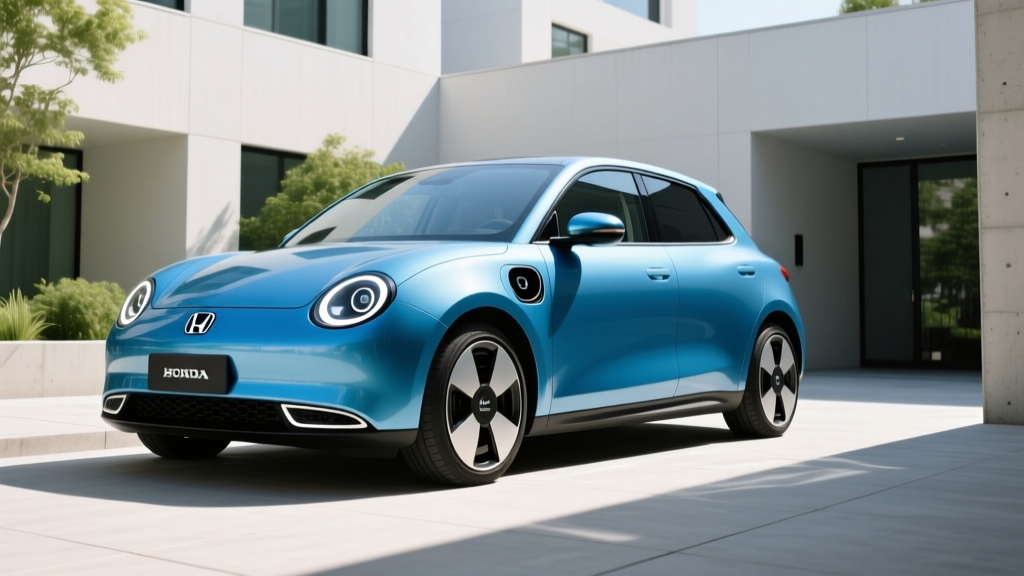
The Honda E electric car is a compact, retro-styled battery-electric vehicle that Honda sells exclusively in Europe and Japan. It is not available in the United States and has never been officially imported. With an EPA-equivalent range of roughly 137 miles (WLTP), a 35.5 kWh battery, and a starting price around €38,000 (~$41,000 USD equivalent), Honda positioned it as a premium urban runabout — not a long-distance cruiser. If you're a US buyer searching for the Honda E, you'll need to look at alternatives like the Chevrolet Bolt EV, Nissan LEAF, or Mini Cooper SE, all of which offer similar city-friendly dimensions with US dealership support and federal tax-credit eligibility.
What Is the Honda E and Why Does It Matter?
Launched in 2020, the Honda E was one of the most anticipated small EVs of its generation. Its pixel-art LED headlights, flush door handles, and a dashboard spanning five digital screens earned it design awards across Europe. Underneath the charm, however, is a modest electric powertrain:
| Spec | Honda E (Standard) | Honda E Advance |
|---|---|---|
| Battery (usable) | 28.5 kWh (Lithium-ion) | 28.5 kWh |
| Motor output | 100 kW (134 hp) | 113 kW (152 hp) |
| WLTP range | 137 mi (220 km) | 125 mi (201 km) |
| 0–62 mph (0–100 km/h) | 9.0 sec | 8.3 sec |
| DC fast charge (peak) | ~50 kW (CCS) | ~50 kW (CCS) |
| 10–80% DC charge | ~30 min | ~30 min |
| Level 2 AC charge | 6.6 kW (~4.1 hr) | 6.6 kW |
| Length | 152.8 in | 152.8 in |
| Curb weight | ~3,395 lb | ~3,450 lb |
For context, the Honda E's battery is smaller than a Chevrolet Bolt EV's 65 kWh pack, and its peak 50 kW DC charging rate is well below the 150–250 kW rates common on modern US-market EVs. Honda engineered it for European city driving: short commutes, narrow streets, and abundant public Level 2 chargers. That use case doesn't translate well to American driving patterns, which is precisely why Honda never brought it here.
Why Honda Never Sold the E in the United States
Honda's decision to exclude the US market was driven by three hard realities:
1. Range expectations. American buyers overwhelmingly prefer 250+ miles of EPA-rated range. A 137-mile WLTP figure — which typically translates to even fewer real-world miles on US highways at 70+ mph — would have drawn harsh reviews and sluggish sales. For comparison, the 2026 Chevrolet Bolt EV delivers 259 EPA miles.
2. Price-to-range ratio. At roughly $41,000 USD equivalent (before European subsidies), the Honda E costs more than a Bolt EV or Nissan LEAF while offering half the range. US consumers are price-sensitive on small cars, and the math doesn't work without significant incentives.
3. Regulatory and safety homologation. Adapting the Honda E for US crash-test standards (NHTSA, IIHS), lighting regulations, and bumper requirements would have required costly engineering changes for a vehicle Honda projected would sell in low volumes.
Honda confirmed in late 2023 that the Honda E would be discontinued after the 2024 model year in Europe as well, as the company shifted focus to larger, more profitable EVs built on its new dedicated EV architecture. As of 2026, Honda's US electric lineup centers on the Honda Prologue, a midsize SUV developed in partnership with General Motors using the Ultium platform.
Honda E vs. US-Available Alternatives: By the Numbers
If the Honda E's compact size and city-car personality appeal to you, here's how it compares to EVs you can actually buy in the US:
| Spec | Honda E (EU only) | 2026 Chevy Bolt EV | 2026 Mini Cooper SE | 2026 Nissan LEAF S |
|---|---|---|---|---|
| EPA range | N/A (~120 mi est.) | 259 mi | 146 mi | 212 mi |
| Battery (usable) | 28.5 kWh | 65 kWh (NMC) | 54.2 kWh (NMC) | 60 kWh (NMC) |
| Motor | 134–152 hp | 200 hp | 218 hp | 214 hp |
| 0–60 mph | ~8.3–9.0 sec | ~6.5 sec | ~6.7 sec | ~6.9 sec |
| Peak DC charge | 50 kW | 115 kW | 95 kW | 100 kW |
| 10–80% DC | ~30 min | ~30 min | ~28 min | ~40 min |
| Base MSRP (US) | Not available | ~$28,700 | ~$32,500 | ~$29,500 |
| Federal §30D credit | N/A | Up to $7,500* | Limited* | Up to $7,500* |
| Length | 152.8 in | 163.2 in | 157.7 in | 176.4 in |
*Federal §30D tax credit eligibility depends on MSRP caps ($55,000 for cars), buyer income limits, battery-component and critical-mineral sourcing requirements, and point-of-sale transfer rules. Always verify current-year eligibility at IRS.gov and consult a tax professional.
The Mini Cooper SE is the closest US-market equivalent to the Honda E in spirit: small, stylish, city-oriented, and with ~146 miles of range. However, the Bolt EV offers nearly double the range for less money, making it the pragmatic choice for most buyers.
Real-World Ownership Costs: Small EV vs. Gas Compact Car
One of the most common questions first-time EV buyers ask is whether a small electric car actually saves money compared to a gas-powered compact. Here's a five-year cost comparison using a US-available alternative (Chevy Bolt EV) against a typical gas compact (Honda Civic):
| Cost Category (5 yr) | 2026 Chevy Bolt EV | 2026 Honda Civic (Gas) |
|---|---|---|
| Purchase price (base) | $28,700 | $25,000 |
| Federal tax credit | –$7,500 (if eligible) | $0 |
| Net purchase | $21,200 | $25,000 |
| Fuel/energy (15k mi/yr) | $2,700 (home L2, $0.14/kWh) | $9,750 ($3.25/gal, 33 MPG) |
| Maintenance (5 yr) | $1,200 | $3,500 |
| Insurance (est. avg) | $7,500 | $6,500 |
| Total 5-yr cost | $32,600 | $44,750 |
The EV wins on total cost of ownership primarily through energy and maintenance savings — no oil changes, no spark plugs, regenerative braking extends pad life. However, insurance tends to run 10–20% higher for EVs due to repair costs and parts pricing. Your actual numbers depend heavily on local electricity rates, driving patterns, and whether you can charge at home.
Home charging access is the single biggest variable. If you can install a Level 2 charger at home (240V, 32–48 amps), your "fuel" cost drops to roughly $0.04–$0.06 per mile. Relying exclusively on public DC fast charging at $0.35–$0.50/kWh pushes EV energy costs closer to gas — and adds significant time and inconvenience. A Level 2 home installation typically costs $800–$2,500 including the charger unit, electrical work, and permits, though a panel upgrade to 200A service can add $1,500–$4,000 if your home's electrical panel is older.
What First-Time EV Buyers Should Know Before Purchasing
If you were drawn to the Honda E's concept — a small, efficient city EV — and are now evaluating US-market options, here's a practical framework:
Decision Framework: Which Small EV Fits You?
- Choose the Chevrolet Bolt EV if: You want the best range-per-dollar in a compact package, need 259 EPA miles for occasional road trips, and prioritize practicality over premium styling.
- Choose the Mini Cooper SE if: You love the Honda E's design-forward personality, your daily commute is under 40 miles round-trip, and you have reliable home charging.
- Choose the Nissan LEAF if: You want a proven platform with comfortable ride quality, need moderate range (212 mi), and prefer a traditional hatchback form factor.
- Consider a PHEV (like the Toyota Prius Prime) if: You lack home charging access, frequently drive 300+ miles in a day, or live in an area with sparse public charging infrastructure.
Beyond the vehicle itself, first-time buyers should understand these realities:
Range loss is real. Expect 20–30% less range in freezing temperatures and 10–15% less at sustained highway speeds above 70 mph. A 259-mile Bolt EV might deliver 185–200 miles on a cold winter highway trip.
Charging curves taper. The "10–80% in X minutes" spec is meaningful; the 80–100% top-off can take nearly as long. Plan road-trip stops to charge to 80% and move on.
Battery warranties are strong. Federal law mandates a minimum 8-year/100,000-mile battery warranty for EVs. Most manufacturers guarantee 70% capacity retention over that period. Replacement costs for small-EV batteries currently range from $6,000–$12,000 out of warranty, though degradation data from fueleconomy.gov shows most modern packs retain 90%+ capacity after 100,000 miles.
Common Misconceptions About Small EVs Like the Honda E
| Myth | Fact |
|---|---|
| "Small EVs can't handle real driving." | A 200+ hp compact EV like the Bolt or Mini SE out-accelerates most gas compacts. The limitation is range on long trips, not performance. |
| "EV batteries need replacing every few years." | Modern NMC and LFP packs are engineered for 1,500–3,000+ charge cycles. At 250 miles per cycle, that's 375,000–750,000 miles before significant degradation. |
| "You can't drive an EV in winter." | EVs start instantly in cold (no cranking a frozen engine). Range drops 20–30%, but preconditioning the battery while plugged in recovers much of that loss. |
| "The Honda E is coming to the US soon." | Honda discontinued the E globally after 2024. Honda's US EV strategy now focuses on the Prologue SUV and future models on a new dedicated EV platform. |
| "EVs cost more to own long-term." | When the federal tax credit applies and home charging is available, small EVs typically save $8,000–$15,000 over 5 years vs. comparable gas cars, per DOE analysis. |
Honda's US Electric Future: What's Actually Available
While the Honda E won't be crossing the Atlantic, Honda's US electrification strategy has evolved significantly:
Honda Prologue (2024–present): A midsize electric SUV built on GM's Ultium platform with up to 296 EPA miles of range, 288 hp (AWD), and DC fast charging up to 150 kW. Starting around $48,800 before incentives. This is Honda's volume EV play in the US.
Honda 0 Series (announced): Honda's next-generation dedicated EV platform, expected to underpin a range of vehicles from sedans to SUVs starting in 2026–2027. Honda has previewed thin, aerodynamic designs with a focus on lightweight construction and a target of 300+ miles of range. Specs remain preliminary until production begins.
For buyers who admired the Honda E's philosophy — small, efficient, city-friendly — Honda does not currently offer a direct US equivalent. The closest option within Honda's lineup is the Civic Hybrid, which delivers 49 MPG combined without a plug, though it lacks the EV driving experience.
Frequently Asked Questions
Can I import a Honda E to the United States?
Practically, no. The Honda E was never homologated for US safety and emissions standards. Importing one would require a 25-year wait under NHTSA's import rules, or an extremely costly and unlikely federalization process. It's not a viable path for any buyer.
What's the closest US car to the Honda E?
The Mini Cooper SE is the closest in size, personality, and city-oriented range (~146 EPA miles). The Chevrolet Bolt EV offers a more practical alternative with 259 miles of range at a lower base price.
Does Honda make any fully electric car for the US market?
Yes — the Honda Prologue is a fully electric midsize SUV available in the US starting with the 2024 model year. It's built on GM's Ultium platform and offers up to 296 EPA miles of range.
Are small EVs worth it for city driving?
Absolutely — if you have home charging. A small EV with 120–200 miles of range covers 95%+ of urban commutes, costs pennies per mile to fuel, and eliminates tailpipe emissions in dense areas. The key is ensuring your daily round-trip is well within the car's real-world range, especially in winter.
Will Honda bring a small electric car to the US?
As of 2026, Honda has not announced a small EV for the US market. The company's US EV roadmap focuses on the Prologue SUV and the upcoming Honda 0 Series. A compact city EV remains unlikely given American range and size preferences.