The Quick Answer on the Honda CR-V Electric
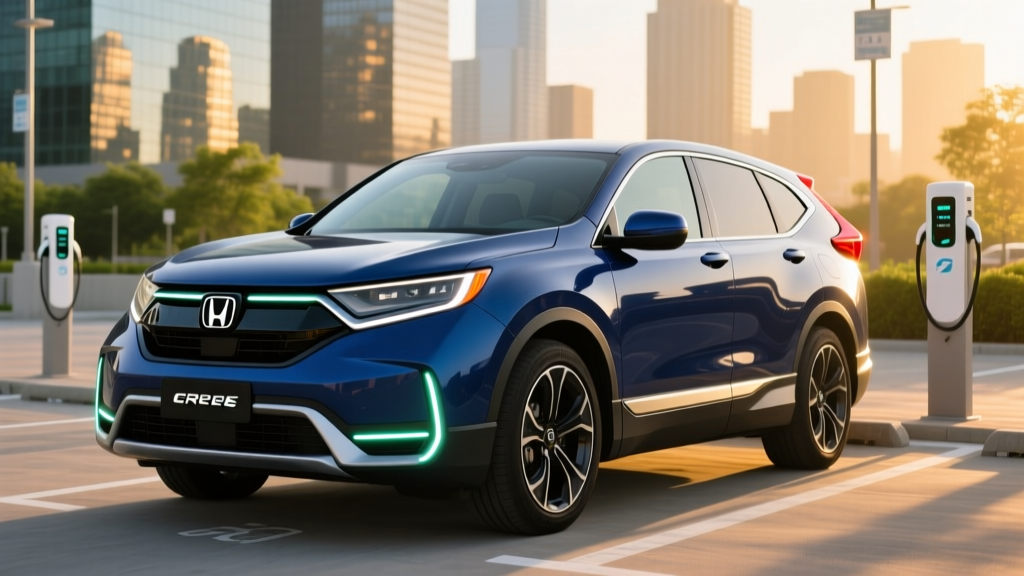
As of early 2026, Honda does not sell a fully electric CR-V in the United States. The CR-V lineup includes a conventional gas model and the CR-V Hybrid (HEV). Honda's dedicated electric SUV for the North American market is the Prologue, built on GM's Ultium platform with an EPA-estimated range of up to 296 miles and a starting MSRP around $47,400. If you're searching for a "Honda CR-V electric," you're likely deciding between the CR-V Hybrid, the Prologue, or waiting for Honda's next-generation EVs. This guide breaks down exactly what's available, what it costs, and how to choose.
What Honda Actually Sells in 2026: CR-V Hybrid vs. Prologue EV
The Honda CR-V remains one of America's best-selling compact SUVs, but its electrification path has been gradual. Here's what's in showrooms right now:
- 2026 Honda CR-V (Gas) — 1.5L turbo, up to 29 MPG combined, starting ~$31,450.
- 2026 Honda CR-V Hybrid — 2.0L Atkinson-cycle + two-motor hybrid system, EPA 40 MPG combined, starting ~$35,350.
- 2026 Honda Prologue (EV) — 85 kWh usable Ultium battery (NMC chemistry), EPA range up to 296 miles (FWD EX trim), peak DC fast charge rate of 150 kW, starting ~$47,400.
Honda has confirmed it will launch a next-generation, Honda-developed EV lineup in North America for model year 2027+, built on its new "e:Architecture" platform. Whether a future electric CR-V carries that exact nameplate remains unannounced. For now, buyers cross-shopping a "CR-V electric" are really choosing between two vehicles: the proven CR-V Hybrid and the GM-based Prologue.
Spec Showdown: CR-V Hybrid vs. Prologue EV
| Specification | 2026 CR-V Hybrid (AWD Sport) | 2026 Prologue (EX AWD) |
|---|---|---|
| Powertrain | 2.0L I4 + 2-motor hybrid (HEV) | Single/Dual motor BEV (Ultium) |
| Horsepower | 204 hp combined | 288 hp (AWD) |
| EPA Efficiency | 40 MPG combined | 95 MPGe combined (est.) |
| EPA Range / Tank | ~430 miles (14.0-gal tank) | ~281 miles (AWD, EPA est.) |
| Usable Battery | ~1.1 kWh (hybrid buffer) | 85 kWh (NMC) |
| DC Fast Charge (10-80%) | N/A | ~30 min at 150 kW peak |
| Level 2 Home Charge Rate | N/A | 7.7 kW (~32 hrs for full) |
| 0-60 mph | ~7.6 sec | ~5.9 sec (AWD) |
| Cargo Volume | 36.3 cu ft (rear up) | 25.2 cu ft (rear up) |
| Starting MSRP | $35,350 | $47,400 |
| Federal Tax Credit (§30D) | Not eligible | Up to $7,500 (see rules) |
| Powertrain Warranty | 5 yr / 60,000 mi | 8 yr / 100,000 mi (battery) |
Sources: fueleconomy.gov, Honda Prologue specifications.
Real Costs: What You'll Actually Spend Over 5 Years
The sticker price tells only part of the story. Below is a realistic 5-year / 75,000-mile cost projection comparing the CR-V Hybrid AWD against the Prologue AWD, assuming 15,000 miles driven annually, home Level 2 charging availability, and a national average electricity rate of $0.16/kWh.
| Cost Category (5 yr / 75k mi) | CR-V Hybrid AWD | Prologue AWD (EV) |
|---|---|---|
| Purchase Price (base MSRP) | $35,350 | $47,400 |
| Federal Tax Credit (§30D) | $0 | Up to -$7,500* |
| Effective Purchase Price | $35,350 | ~$39,900 |
| Fuel / Energy Cost | ~$8,440 (gas @ $3.40/gal) | ~$3,600 (electricity) |
| Maintenance (oil, filters, brakes) | ~$2,800 | ~$900 (no oil, regen saves brakes) |
| Insurance (avg.) | ~$7,500 | ~$9,000 (EV premium ~15-20%) |
| Estimated Depreciation | ~$14,000 | ~$19,000 |
| 5-Year Total Cost of Ownership | ~$68,090 | ~$72,400 |
*§30D credit eligibility depends on buyer income caps ($150k single / $300k joint MAGI), MSRP caps ($80k for SUVs), battery critical-mineral sourcing, and point-of-sale transfer rules. Verify current eligibility at IRS.gov §30D. Credit may be reduced or phased out for GM-based vehicles depending on sourcing compliance in 2026.
Where the EV Saves — and Where It Doesn't
The Prologue recoups roughly $4,840 in fuel savings and $1,900 in maintenance savings over five years. That's ~$6,740 in operational savings. However, higher insurance premiums (~$1,500 extra) and steeper depreciation (~$5,000 more) eat into those gains. The net result: the CR-V Hybrid and Prologue are within a few thousand dollars of each other on total cost, with the EV pulling ahead only if you keep it past year six, drive more than 15,000 miles annually, or have access to cheap electricity (under $0.12/kWh).
Real-World Range and Charging: What the EPA Sticker Doesn't Tell You
The Prologue AWD carries an EPA-estimated range of approximately 281 miles. That number assumes moderate temperatures, mixed city/highway driving, and minimal climate-control load. Here's what to actually expect:
Prologue AWD — Real-World Range Expectations
- EPA Sticker: ~281 miles
- 70 mph highway (70°F): ~240-255 miles
- Highway in winter (30°F): ~195-220 miles (30-35% loss from battery heating + cabin heat)
- City / suburban (moderate): ~270-290 miles (regen braking recovers energy)
The Charging Curve Reality
Honda rates the Prologue at a peak 150 kW DC fast-charge rate. But peak is not sustained. In real-world fast-charging sessions, expect:
- 10-50% SoC: Sustained ~130-150 kW — roughly 20 minutes to add ~150 miles
- 50-80% SoC: Tapers to ~80-100 kW — adds another ~10 minutes
- 10-80% total: Approximately 30 minutes at a functioning 150+ kW charger
- Above 80%: Charge rate drops sharply to protect the NMC battery; plan to charge to 80% on road trips and move on
For home Level 2 charging at 7.7 kW (240V / 32A), a full 0-100% session takes roughly 11 hours. Most owners plug in nightly and never need a full charge. A dedicated 48A Level 2 circuit (11.5 kW) could reduce this to ~7.5 hours but requires a heavier electrical install.
Common Misconceptions About a "Honda CR-V Electric"
| Myth | Fact |
|---|---|
| "Honda sells an electric CR-V." | No fully electric CR-V exists in 2026. The Prologue is Honda's electric SUV; the CR-V Hybrid is the closest electrified CR-V. |
| "EVs always save money vs. hybrids." | Not over 5 years for moderate-mileage drivers. The CR-V Hybrid's lower purchase price and strong resale can beat the Prologue on TCO unless you drive high miles or have cheap solar-powered charging. |
| "The $7,500 tax credit applies to everyone." | §30D has income caps ($150k single / $300k joint), MSRP caps, and battery-sourcing requirements. Many buyers are ineligible. Always verify at IRS.gov. |
| "You can fast-charge to 100% quickly." | Charging slows dramatically above 80% to protect NMC cells. Road-trip strategy: charge 10-80% and go. |
| "EV batteries need replacement every few years." | Modern NMC and LFP packs are warrantied for 8 years / 100,000 miles with a minimum 70% capacity retention threshold. Real-world degradation averages 1-2% per year for liquid-cooled packs like the Prologue's. |
Who Should Buy What: A Practical Decision Framework
Choose the CR-V Hybrid If:
- You live in an apartment or lack access to reliable home or workplace Level 2 charging.
- You regularly drive in extreme cold (below 20°F) where EV range loss hits 30%+.
- Your budget tops out around $38,000 before incentives.
- You take frequent road trips through regions with sparse DC fast-charging infrastructure (rural Mountain West, parts of the Great Plains).
- You want maximum cargo space (36.3 cu ft vs. the Prologue's 25.2 cu ft).
- You plan to own for under 5 years and want stronger near-term resale value.
Choose the Prologue EV If:
- You have a garage or driveway where a Level 2 (240V) home charger can be installed — budget $500-$2,000 for the install depending on panel capacity and run length.
- Your daily commute is under 80 miles round-trip, meaning you'll rarely need public DC charging.
- You qualify for the full §30D credit, effectively bringing the Prologue's price within ~$4,500 of the CR-V Hybrid.
- You value the smoother, quieter, more responsive driving experience (288 hp, instant torque, one-pedal regen capability).
- You want to reduce tailpipe emissions and your local grid is increasingly renewable.
- You plan to keep the vehicle 7+ years, where fuel and maintenance savings compound.
Wait for a Future Honda-Developed EV If:
- You specifically want a Honda-engineered electric platform (not GM Ultium).
- You need a compact SUV footprint closer to the CR-V's dimensions with more cargo room than the Prologue offers.
- You're comfortable waiting for 2027-2028 model-year vehicles built on Honda's e:Architecture.
First-Time EV Buyer Essentials: What You Must Know Before You Sign
If you're leaning toward the Prologue (or any EV), these are the non-negotiable homework items:
1. Confirm Your Home Charging Situation
A standard 120V outlet (Level 1) adds roughly 3-4 miles of range per hour — fine for low-mileage drivers but frustrating for most. A Level 2 home charger (240V, 32-48A) is the standard for comfortable EV ownership. Expect to pay:
- Level 2 charger hardware: $300-$700 (e.g., ChargePoint Home Flex, Emporia Vue)
- Electrician install (240V/50A circuit): $800-$2,500 depending on panel proximity and local permit fees
- Electrical panel upgrade (if needed, 100A → 200A): $1,500-$3,500 — this is the gotcha that surprises many buyers
2. Understand kW vs. kWh
This is the single most common point of confusion. kW (kilowatts) measures power — how fast energy flows, like water pressure from a hose. kWh (kilowatt-hours) measures energy capacity — how much the battery holds, like the size of a gas tank. The Prologue has an 85 kWh battery and can accept up to 150 kW of charging power. Knowing the difference prevents you from being misled by marketing.
3. Research Public Charging Near You
Download apps for Electrify America, EVgo, and ChargePoint before you buy. Check whether DC fast chargers (150+ kW) exist along your common routes. The Prologue uses the CCS connector (not NACS/Tesla), though Honda has announced future models will adopt NACS. Adapter availability for Tesla Supercharger access is expected but verify current compatibility.
4. Get Insurance Quotes Before Purchasing
EV insurance premiums run 15-25% higher than equivalent gas vehicles due to higher repair costs and battery replacement exposure. Get a real quote from your insurer before committing — don't assume it matches the CR-V Hybrid rate.
Frequently Asked Questions
Will Honda make an electric CR-V?
Honda has not officially confirmed an "e:CR-V" or electric CR-V nameplate. The company has announced a next-generation EV lineup for North America starting around 2027, built on its proprietary e:Architecture platform. Whether the CR-V name carries over to an EV variant or a new name is used remains to be seen.
Is the Honda Prologue the same size as the CR-V?
No. The Prologue is larger — closer to a midsize SUV like the Passport. It's about 10 inches longer than the CR-V, which gives it more passenger room but, counterintuitively, less cargo space (25.2 cu ft behind the rear seats vs. 36.3 cu ft in the CR-V) due to the Ultium battery platform's floor height and rear cargo design.
Does the Prologue qualify for the $7,500 federal tax credit?
Potentially, but eligibility depends on several factors: your adjusted gross income must be under $150,000 (single) or $300,000 (joint), the vehicle MSRP must be under $80,000 (SUV cap), and the battery must meet critical-mineral and component-sourcing thresholds defined by the IRS. These sourcing rules tighten annually. Check the latest eligibility at IRS.gov and confirm with your tax professional before relying on the credit.
How long will the Prologue's battery last?
Honda warrants the Ultium battery for 8 years / 100,000 miles with a minimum 70% state-of-health retention. Industry data from similar liquid-cooled NMC packs (Chevrolet Bolt, Cadillac Lyriq) suggests real-world degradation of roughly 1-2% per year under normal use, meaning ~85-90% capacity at 100,000 miles. Avoid routinely charging to 100% or letting the pack sit at 0% for extended periods to maximize longevity.
Can I charge the Prologue at Tesla Superchargers?
As of early 2026, the Prologue uses the CCS1 connector. Honda has signaled a transition to the NACS (Tesla) connector for future models, and CCS-to-NACS adapters are becoming available. However, confirm current Supercharger compatibility directly with Honda or Tesla's "Open Supercharger" list before assuming access.
CR-V Hybrid vs. Prologue: which is better for road trips?
For frequent long-distance driving (300+ miles between stops), the CR-V Hybrid wins on convenience: 430-mile range, 5-minute refueling, and no charging-infrastructure dependency. The Prologue is viable for road trips if you plan around 150-kW DC chargers every 200-220 miles and accept 30-minute charge stops — manageable, but it requires more planning.