The Short Answer on the Honda CR-V Electric
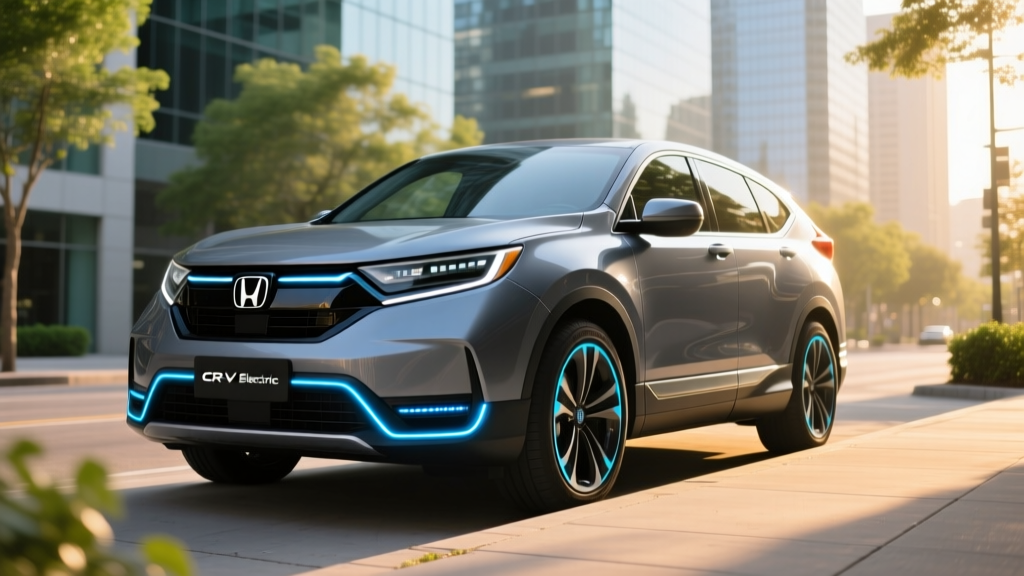
As of the 2026 model year, there is no fully electric Honda CR-V sold in the United States. Honda does not offer a battery-electric CR-V. Your two electrified options in the CR-V lineup are the CR-V Hybrid (a conventional hybrid, HEV) and the CR-V e:PHEV (a plug-in hybrid available in select markets, though U.S. availability remains limited). If you want a fully electric SUV with Honda engineering, the closest equivalent is the Honda Prologue, a midsize electric SUV built on GM's Ultium platform. Below, we compare what each option actually delivers in range, cost, and daily usability so you can choose the right fit.
Why There Is No All-Electric Honda CR-V Yet
Honda's global electrification strategy has leaned on partnerships and platform sharing rather than building a dedicated electric CR-V. The CR-V nameplate — one of the best-selling compact SUVs in America — remains anchored to hybrid powertrains for the U.S. market. Honda has publicly targeted a full EV lineup by 2040, but the compact SUV segment in North America is served by the CR-V Hybrid while the all-electric role falls to the larger Honda Prologue.
For shoppers specifically searching for a "CR-V electric," the practical decision is whether to:
- Stay in the CR-V family with the hybrid powertrain
- Move to the Prologue for full electric operation
- Consider a competitor's electric compact SUV (such as the Hyundai Ioniq 5, Kia EV6, or Tesla Model Y)
2026 Honda CR-V Hybrid: Specs, Range, and Real-World Efficiency
The 2026 CR-V Hybrid pairs a 2.0-liter Atkinson-cycle four-cylinder engine with a two-motor hybrid system producing a combined 204 horsepower. It does not plug in — you fuel it like any conventional car, and the hybrid system recaptures energy through regenerative braking.
| Spec | Value |
|---|---|
| EPA Fuel Economy (FWD) | 43 city / 36 hwy / 40 combined MPG |
| EPA Fuel Economy (AWD) | 40 city / 34 hwy / 37 combined MPG |
| Powertrain | 2.0L I-4 + 2-motor hybrid (HEV) |
| Combined Output | 204 hp |
| Fuel Tank | 14.0 gallons |
| EPA Range (FWD, est.) | ~560 miles per tank |
| 0–60 mph | ~7.8 seconds |
| Cargo Volume | 36.3 cu ft (rear seats up) / 76.5 cu ft (folded) |
| Starting MSRP (Sport FWD) | ~$35,350 |
| Powertrain Warranty | 5 years / 60,000 miles |
Real-world note: Expect 34–37 MPG combined in mixed driving with AWD. Highway-heavy trips at 75+ mph will drop efficiency toward 30–32 MPG. Cold weather has minimal impact on a hybrid compared to a full EV, since waste engine heat warms the cabin.
Honda Prologue: The Closest Thing to an Electric CR-V
If you want a Honda-badged EV, the 2026 Honda Prologue is your option. It rides on GM's Ultium platform (shared with the Chevrolet Blazer EV) and is a midsize SUV — about half a class larger than the CR-V. It qualifies as a potential alternative for CR-V shoppers willing to accept a larger footprint and higher price for full electric operation.
| Spec | Value |
|---|---|
| Battery | 85 kWh usable (NMC lithium-ion) |
| EPA Range (FWD) | ~296 miles |
| EPA Range (AWD) | ~281 miles |
| Real-World Range (highway/cold) | ~230–260 miles (expect 15–20% loss in winter) |
| Peak DC Fast Charge Rate | 190 kW |
| 10–80% DC Fast Charge | ~28 minutes (under ideal conditions) |
| Level 2 Charging (AC) | 11.5 kW (~35 miles/hour) |
| Motor Output (AWD) | 288 hp / 333 lb-ft torque |
| 0–60 mph (AWD) | ~5.9 seconds |
| EPA Efficiency | ~95 MPGe combined (FWD) |
| Starting MSRP | ~$48,795 (EX FWD) |
| Federal Tax Credit (§30D) | Up to $7,500 (eligibility depends on income, sourcing — see IRS rules) |
| Battery Warranty | 8 years / 100,000 miles |
Real-world range reality: The Prologue's EPA-estimated 296 miles (FWD) assumes moderate temperatures and mixed driving. On a 70-mph highway cruise in 30°F weather, expect roughly 220–240 miles before needing a charge. DC fast charging peaks at 190 kW but tapers significantly above 80% SoC — plan for 35–40 minutes for a 10–90% session, not the headline 10–80% figure.
Cost Comparison: CR-V Hybrid vs. Prologue vs. Gas CR-V
The real decision hinges on total cost, not just sticker price. Below is a 5-year ownership estimate assuming 15,000 miles/year, $3.50/gallon gas, and $0.14/kWh home electricity.
| Category | CR-V Gas (EX AWD) | CR-V Hybrid (Sport AWD) | Prologue (EX FWD) |
|---|---|---|---|
| Base MSRP | $33,350 | $37,350 | $48,795 |
| Federal Tax Credit | $0 | $0 | Up to $7,500* |
| Effective Purchase Price | $33,350 | $37,350 | ~$41,295 |
| Fuel/Energy (5 yrs) | ~$10,060 | ~$6,760 | ~$3,150 (home charging) |
| Maintenance (5 yrs, est.) | ~$3,200 | ~$2,800 | ~$1,500 |
| Insurance (5 yrs, est.) | ~$7,500 | ~$7,800 | ~$9,200 |
| 5-Year Total (est.) | ~$54,110 | ~$54,710 | ~$55,145 |
* §30D tax credit eligibility requires meeting income caps ($150K single / $300K joint), MSRP caps ($80K for SUVs), and battery critical-mineral/sourcing rules. Credit may be applied at point of sale. Always verify current rules at IRS.gov and consult a tax professional.
Key takeaway: The CR-V Hybrid and gas CR-V are nearly identical in 5-year cost — the hybrid's fuel savings mostly offset its higher purchase price. The Prologue is competitive only if you qualify for the full $7,500 tax credit and charge primarily at home. Without the credit, or if you rely on public DC fast charging at $0.35–$0.50/kWh, the Prologue's 5-year cost climbs significantly.
Real-World Ownership: What First-Time EV and Hybrid Buyers Must Know
Home Charging Access Is the Make-or-Break Factor
If you're considering the Prologue (or any EV), home charging determines whether ownership is convenient or frustrating. A Level 2 home charger (240V, 48-amp circuit) adds roughly 35 miles of range per hour — enough to fully replenish the Prologue's 85 kWh battery overnight. Installation typically costs $800–$2,500 depending on your electrical panel's capacity and the run distance from panel to garage. If your panel is maxed out at 100 amps, a panel upgrade to 200 amps can add $1,500–$3,000.
The CR-V Hybrid requires no charging infrastructure. You fill up at any gas station, exactly as before.
Climate and Driving Pattern Considerations
- Cold climates (below freezing regularly): The Prologue will lose 15–25% of its rated range in winter. A CR-V Hybrid is largely unaffected. If you live in Minnesota, Maine, or Colorado and lack a garage, the hybrid is the lower-risk choice.
- Mostly city driving: Hybrids shine in stop-and-go traffic where regenerative braking maximizes efficiency. The Prologue is also excellent in city use, with one-pedal driving and zero tailpipe emissions.
- Frequent road trips (300+ miles): The CR-V Hybrid's 560-mile tank range and 5-minute refueling make it far easier for long trips. The Prologue requires planning around DC fast chargers — 28-minute stops every ~230 miles in real-world conditions.
- Apartment/no garage: Without reliable home charging, EV ownership becomes a significant burden. The CR-V Hybrid is the practical default.
Common Misconceptions — Corrected
| Myth | Fact |
|---|---|
| "The CR-V comes in a fully electric version." | No. Honda does not sell a battery-electric CR-V in the U.S. The Prologue is Honda's closest electric SUV. |
| "Hybrids need to be plugged in." | The CR-V Hybrid (HEV) never plugs in. It generates electricity from the engine and regenerative braking. |
| "EVs always save money." | EVs save on fuel and maintenance, but higher purchase prices, insurance premiums, and potential home charging installation can offset savings — especially without the federal tax credit. |
| "EV batteries need replacing every few years." | Modern NMC and LFP batteries are warranted for 8 years/100,000 miles and typically retain 85–90% capacity at that point. Full replacement is rare and costs $8,000–$15,000 if needed out of warranty. |
| "The federal tax credit is $7,500 for everyone." | The §30D credit has income caps, MSRP caps, and battery-sourcing requirements. Many buyers qualify for partial or no credit. Always check IRS guidelines. |
Decision Framework: Which Electrified Honda SUV Is Right for You?
Choose the CR-V Hybrid if:
- You don't have access to home Level 2 charging
- You regularly drive in extreme cold or take 400+ mile road trips
- Your budget is under $40,000
- You want the lowest-risk, most familiar ownership experience
- You want CR-V cargo dimensions (36.3 cu ft) and compact SUV maneuverability
Choose the Honda Prologue if:
- You have reliable home Level 2 charging (or can install it)
- You qualify for the full or partial §30D federal tax credit
- Your daily commute is under 150 miles round-trip
- You want zero tailpipe emissions and minimal maintenance
- You're comfortable with a midsize SUV (larger than the CR-V)
Consider a competitor's electric compact SUV (Ioniq 5, EV6, Model Y) if:
- You specifically want an EV in the CR-V's compact footprint
- Faster DC charging matters (Ioniq 5/EV6 peak at 240+ kW with 10–80% in ~18 minutes)
- You want access to the Tesla Supercharger network (Model Y with NACS, or Ioniq 5/EV6 with NACS adapter)
Tax Credit and Incentive Details for 2026
The federal §30D Clean Vehicle Credit remains available for eligible new EVs like the Honda Prologue, but qualification is not guaranteed. Key rules for 2026:
- Income caps: Modified AGI must not exceed $150,000 (single), $225,000 (head of household), or $300,000 (joint filers)
- MSRP cap: Vehicle MSRP must be $80,000 or less for SUVs (the Prologue qualifies)
- Battery sourcing: A percentage of critical minerals and battery components must be sourced from the U.S. or free-trade-agreement countries — these thresholds increase yearly and can reduce or eliminate the credit for specific models
- Point-of-sale transfer: You can transfer the credit to the dealer at purchase, reducing your out-of-pocket cost immediately (rather than waiting for a tax refund)
- Assembly: Vehicle must undergo final assembly in North America
The CR-V Hybrid does not qualify for the §30D new clean vehicle credit (it's a conventional hybrid, not a plug-in). Always verify a specific VIN's eligibility on fueleconomy.gov before purchasing.
Frequently Asked Questions
Will Honda make an electric CR-V in the future?
Honda has not announced a battery-electric CR-V for the U.S. market. The company's next-generation EVs will use its own "e:Architecture" platform, expected in the 2026–2028 timeframe, but Honda has not confirmed which models will receive it. For now, the Prologue and upcoming models on the Honda 0 Series platform are the brand's electric path forward.
Is the CR-V Hybrid a plug-in hybrid?
No. The U.S.-market CR-V Hybrid is a conventional hybrid (HEV). It cannot be plugged in and has no electric-only driving range beyond brief low-speed assist. Honda offers a CR-V e:PHEV in Europe and China with approximately 35–45 miles of electric-only range, but this variant is not currently sold in the United States.
How much does it cost to charge the Prologue at home?
At the U.S. average residential electricity rate of ~$0.16/kWh (per EIA data), fully charging the Prologue's 85 kWh battery costs approximately $13.60. For a typical 40-mile daily commute using ~12 kWh, expect about $1.92/day or roughly $58/month in electricity — compared to approximately $115/month in gasoline for the CR-V Hybrid covering the same distance.
Does the Prologue use Tesla's NACS connector or CCS?
The 2026 Honda Prologue uses the CCS1 connector for DC fast charging and J1772 for Level 2 AC charging. Honda has committed to adopting the NACS (Tesla-style) connector on future EV models, and a CCS-to-NACS adapter is available for accessing Tesla Supercharger V3 stations (150 kW max via adapter). Confirm adapter compatibility with Honda before relying on Supercharger access.
What's the real-world range of the Prologue in winter?
In sustained below-freezing temperatures with highway driving, expect the Prologue's range to drop to approximately 220–240 miles from its 296-mile EPA rating. Using the heat pump (standard on the Prologue) mitigates some loss compared to resistive heating, but battery chemistry inherently loses efficiency in cold. Preconditioning the battery while plugged in before departure helps preserve range and improves DC fast-charge speeds.
Is the CR-V Hybrid worth the premium over the gas CR-V?
The hybrid typically costs $2,000–$4,000 more than an equivalently trimmed gas CR-V. With fuel savings of roughly $650–$800/year (at 15,000 miles/year and $3.50/gallon), the payback period is approximately 3–5 years. Beyond fuel savings, the hybrid delivers smoother acceleration from electric motor torque and better city MPG. For most buyers planning to keep the vehicle 5+ years, the hybrid is the stronger financial and driving-experience choice.