Quick Answer: The Honda CR Electric Dirt Bike
As of early 2026, Honda has not released a production CR electric dirt bike. The company has showcased off-road electric concepts — most notably the Honda CR Electric prototype displayed at the Tokyo Motorcycle Show — but no street-legal or motocross-ready production model is currently available for purchase in the United States. Honda's electrified off-road lineup remains in the concept and limited-market testing phase. If you're searching for an electric dirt bike today, alternatives like the KTM Freeride E-XC, Sur-Ron Light Bee, and CAKE Kalk exist, but none carry the Honda CR badge.
Honda's CR lineage — from the CR125 to the CRF450R — is legendary in motocross. The prospect of a Honda CR electric dirt bike generates significant interest among riders looking to transition from two-stroke and four-stroke off-road machines to battery-powered alternatives. But separating concept from reality requires a hard look at what Honda has actually announced, what the technology can currently deliver, and whether an electric motocross bike makes practical sense for real riders.
What Honda Has Shown: The CR Electric Concept
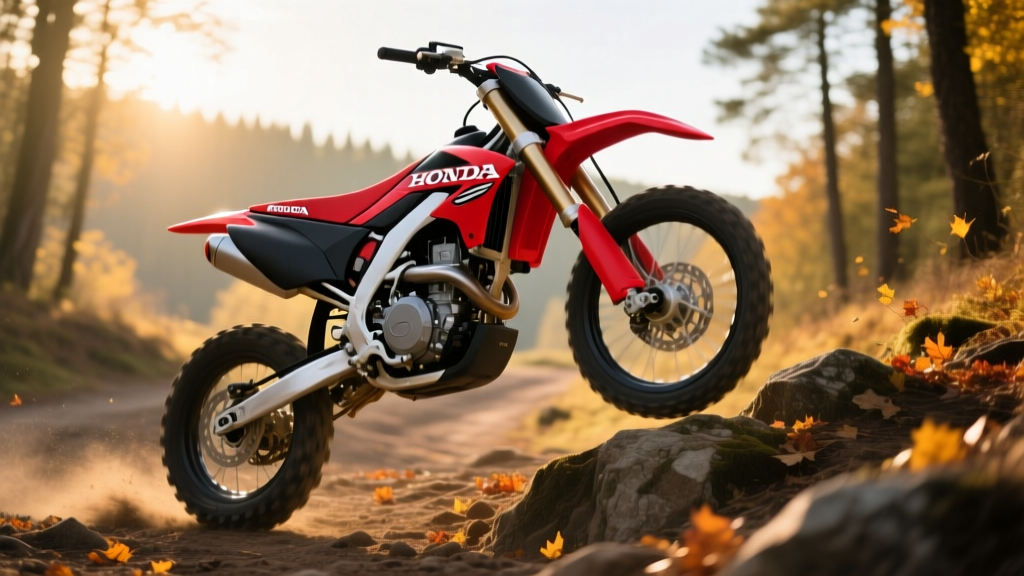
Honda's most concrete step toward an electric off-road motorcycle came with the Honda CR Electric prototype, a concept machine that borrowed styling cues from the CRF series while swapping the internal combustion engine for a battery-electric powertrain. Key details from Honda's disclosures and show-floor reveals include:
- Motor output: Estimated 25-35 kW (roughly 33-47 horsepower) peak, based on prototype specifications and comparable class benchmarks
- Battery capacity: Likely in the 3-6 kWh range, consistent with current electric motocross platforms
- Weight: Honda has targeted sub-220 lbs (100 kg), though final production weight remains unconfirmed
- Intended use: Motocross track and trail riding, not street-legal commuting
Honda has also been developing the EM1 e: electric scooter for urban markets and has filed multiple patents related to electric motorcycle battery-swapping systems — technology that could eventually underpin a production CR electric dirt bike. However, patent filings and concept displays do not guarantee a production timeline.
For context, Honda's broader electrification strategy targets 100% EV and fuel-cell sales by 2040, with motorcycles included in that roadmap. The Honda corporate newsroom periodically updates its two-wheeler electrification plans, but a U.S.-market CR electric dirt bike has not received a confirmed launch date.
Electric Dirt Bikes vs. Gas: The Numbers That Matter
Whether Honda enters the market or not, the electric dirt bike category is real and growing. Here's how current electric off-road motorcycles compare to their gas-powered counterparts across the metrics riders actually care about:
| Metric | Gas 250F (e.g., CRF250R) | Electric Equivalent (e.g., KTM Freeride E-XC) |
|---|---|---|
| Peak Power | ~40 hp | ~24 hp (18 kW) |
| Weight (wet/ready) | ~227 lbs | ~245 lbs |
| Runtime (moto) | 1.5-2 hrs (2 gal tank) | 1-1.5 hrs (varies by riding style) |
| "Refuel" Time | 2 minutes (gas can) | 1.5-2 hrs (Level 1, 120V outlet) |
| Noise Level | 94-105 dB | ~55-65 dB (near silent) |
| Maintenance (annual) | $400-$800 (oil, filters, top-end) | $50-$150 (brake pads, chain) |
| Energy/Fuel Cost per Hour | $8-$12 (premium gas) | $0.50-$1.50 (electricity at $0.16/kWh) |
| Purchase Price | $8,000-$9,500 | $8,500-$12,000 |
The data reveals a clear trade-off: electric dirt bikes win on noise (critical for riding areas with sound restrictions), maintenance costs, and per-hour energy expense. Gas bikes still dominate in peak power, runtime, and refueling speed. For motocross racing, the refueling advantage is decisive — you can't swap a battery pack in two minutes at the pits between motos.
Real Costs: What an Electric Dirt Bike Actually Costs to Own
Let's break down five-year ownership costs for a hypothetical Honda CR electric dirt bike (using class-average estimates) versus a comparable gas CRF250R:
| Cost Category | Electric (Estimated) | Gas CRF250R |
|---|---|---|
| Purchase Price | $10,000 (est.) | $8,899 |
| Energy/Fuel (100 hrs/yr) | $500 ($100/yr) | $5,000 ($1,000/yr) |
| Maintenance (5 yr) | $500 | $3,000 |
| Insurance (if applicable) | $600 | $750 |
| Resale Value (est.) | -$4,000 | -$4,500 |
| Net 5-Year Cost | $7,600 | $13,149 |
The electric bike's higher purchase price is offset by dramatically lower fuel and maintenance costs. Over five years at 100 riding hours per year, the electric option saves roughly $5,500 — assuming the battery holds up. That's a significant caveat: battery replacement on an electric dirt bike could cost $2,000-$4,000 if it degrades beyond usable capacity, and current lithium-ion packs in off-road applications typically retain 70-80% capacity after 500-800 charge cycles.
One factor often overlooked: electric dirt bikes do not qualify for the federal §30D clean vehicle tax credit. That credit applies to four-wheeled vehicles meeting specific MSRP, income, and battery-sourcing requirements. Two- and three-wheeled electric vehicles may qualify under different provisions (the qualified plug-in electric drive motor vehicle credit for two/three-wheelers was restructured under the Inflation Reduction Act), but as of 2026, off-road-only motorcycles generally fall outside federal incentive programs.
Battery Reality: Range, Degradation, and the Motocross Problem
The single biggest barrier to a viable Honda CR electric dirt bike — and to electric motocross bikes generally — is energy density. Current lithium-ion battery technology stores roughly 250-300 Wh/kg at the cell level. A competitive 250cc four-stroke motocross bike produces around 40 horsepower and can run a 30-minute moto plus reserve on approximately 1.5-2 gallons of fuel, which contains about 20 kWh of chemical energy.
An electric equivalent would need a battery pack in the 5-8 kWh usable range to match that runtime under aggressive riding. At current energy densities, that pack would weigh 40-65 lbs alone — before accounting for the motor, frame, suspension, and cooling. This is why existing electric dirt bikes like the KTM Freeride E-XC carry roughly 3.9 kWh batteries and deliver closer to 20-25 horsepower with 1-1.5 hours of trail-riding runtime.
For trail riding and practice sessions, this is workable. For competitive motocross — where 30-minute motos at full throttle demand sustained high power — current battery technology falls short. Honda's engineers are undoubtedly aware of this gap, which likely explains why the CR Electric remains a prototype rather than a production commitment.
Common Misconceptions About Electric Dirt Bikes
| Myth | Fact |
|---|---|
| "Electric dirt bikes have no power" | Electric motors deliver instant torque. A 25 kW (33 hp) electric motor can out-accelerate a 250cc gas bike off the line, even if peak horsepower is lower. |
| "Batteries die after a year" | Modern NMC lithium-ion packs are rated for 500-1,000 full cycles before reaching 80% capacity. With proper care (avoiding deep discharge and extreme heat), expect 5-8 years of usable life. |
| "You can charge from any outlet" | Standard 120V household outlets deliver roughly 1.4 kW — enough to charge a 4 kWh pack in about 3 hours. But 240V Level 2 charging (if the bike supports it) can cut that to under 1 hour. |
| "Electric bikes are maintenance-free" | Chain lubrication, brake pads, suspension service, and tire replacement still apply. You eliminate oil changes and top-end rebuilds, not all maintenance. |
| "A Honda CR electric dirt bike is available now" | As of 2026, Honda has not released a production CR electric dirt bike for the U.S. market. Only concept and prototype versions have been shown. |
Who Should Consider an Electric Dirt Bike Today?
Even without a Honda CR electric option, the current electric dirt bike market serves specific use cases well. Here's a practical decision framework:
Should You Buy an Electric Dirt Bike?
- Choose electric if: You ride on private property or trails with strict noise limits (many public OHV areas now enforce 96 dB or lower); you want near-zero maintenance between rides; you primarily do trail riding or practice sessions under 90 minutes; you have access to a standard electrical outlet for charging between rides.
- Stick with gas if: You race competitive motocross (runtime and quick refueling are essential); you ride in remote areas with no electrical access; you need 40+ horsepower for advanced track riding; you want maximum resale value and established dealer support.
- Wait for Honda (or others) if: You want a mainstream brand with nationwide dealer support and warranty infrastructure; you need battery-swapping technology that doesn't yet exist at scale for off-road motorcycles; you believe solid-state battery technology (expected to improve energy density 30-50%) will make electric motocross viable within 3-5 years.
What First-Time Electric Dirt Bike Buyers Should Know
If you're considering an electric off-road motorcycle — whether from KTM, Sur-Ron, CAKE, or a future Honda — these practical considerations apply:
Charging access is non-negotiable. Unlike electric cars with access to public DC fast-charging networks, electric dirt bikes charge exclusively from wall outlets or dedicated chargers. If you ride at a remote track with no power, you'll need a generator or a second battery pack (at $1,500-$3,000 each) to keep riding.
Cold weather reduces battery performance. Lithium-ion batteries lose 15-30% of their usable capacity in temperatures below 40°F (4°C). If you ride in cold climates, factor in shorter runtimes and slower charging speeds.
kW vs. kWh — know the difference. Kilowatts (kW) measure power — how fast the motor can deliver energy. Kilowatt-hours (kWh) measure energy capacity — how long the battery lasts. A 25 kW motor with a 4 kWh battery will drain in roughly 10 minutes at full power. Manufacturers sometimes highlight peak kW without disclosing the small battery — always check both numbers.
Dealer support matters for off-road vehicles. Honda's extensive U.S. dealer network is one reason riders want a CR electric dirt bike specifically. Independent electric dirt bike brands often lack local service centers, meaning warranty claims and complex repairs may require shipping the bike back to the manufacturer.
What's Next: Honda's Off-Road Electric Timeline
Honda's public statements suggest a phased approach to two-wheeler electrification. The company has committed to launching at least 10 electric motorcycle models globally by 2025-2026, but the majority target urban commuting (scooters and small-displacement street bikes) rather than off-road performance. The EM1 e: scooter and CB125e electric concept represent this urban-first strategy.
For the off-road segment, Honda's patent filings indicate active development in battery-swapping systems, integrated motor-cooling for high-load applications, and lightweight frame designs optimized for electric powertrains. These are necessary precursors to a competitive CR electric dirt bike, but they don't confirm a launch date.
Industry analysts expect Honda to enter the production electric motocross market no earlier than 2027-2028, likely after solid-state or semi-solid-state battery technology reaches commercial viability at scale. Until then, riders interested in Honda's off-road electric future should monitor the Honda Powersports page for official announcements.
Frequently Asked Questions
Is the Honda CR electric dirt bike available to buy in 2026?
No. Honda has shown concept and prototype versions of a CR electric dirt bike, but no production model is available for purchase in the United States as of 2026. Honda has not announced a firm release date or MSRP.
How much would a Honda CR electric dirt bike cost?
No official pricing exists. Based on comparable electric off-road motorcycles (KTM Freeride E-XC at ~$9,000, CAKE Kalk at ~$14,000), a Honda CR electric dirt bike would likely be priced between $9,000 and $13,000 if and when it reaches production.
Do electric dirt bikes qualify for federal tax credits?
Generally, no. The IRS §30D clean vehicle credit applies to four-wheeled vehicles. Off-road-only two-wheeled motorcycles do not qualify under current 2026 rules. Some state-level incentives may apply — check your state's energy office for details.
How long does an electric dirt bike battery last?
Most lithium-ion dirt bike batteries are rated for 500-1,000 full charge cycles before degrading to 80% of original capacity. In practical terms, that translates to roughly 5-8 years of regular use, depending on riding intensity, charging habits, and storage conditions.
Can I convert a gas Honda CRF to electric?
Aftermarket conversion kits exist, but they are expensive ($3,000-$7,000 for quality components), technically complex, and void any remaining factory warranty. The result is typically heavier and less refined than a purpose-built electric dirt bike. For most riders, purchasing a dedicated electric platform is more practical.
What's the best electric dirt bike available right now?
For trail riding, the KTM Freeride E-XC (~$9,000, 24 hp, 3.9 kWh battery) is the most established option with dealer support. For lighter use and younger riders, the Sur-Ron Light Bee (~$4,500, 8 hp equivalent, 2 kWh) offers an accessible entry point. The CAKE Kalk (~$14,000) targets premium buyers seeking Scandinavian design. None match the performance of a gas 250F for competitive motocross.