The Bottom Line on the Honda Clarity Electric
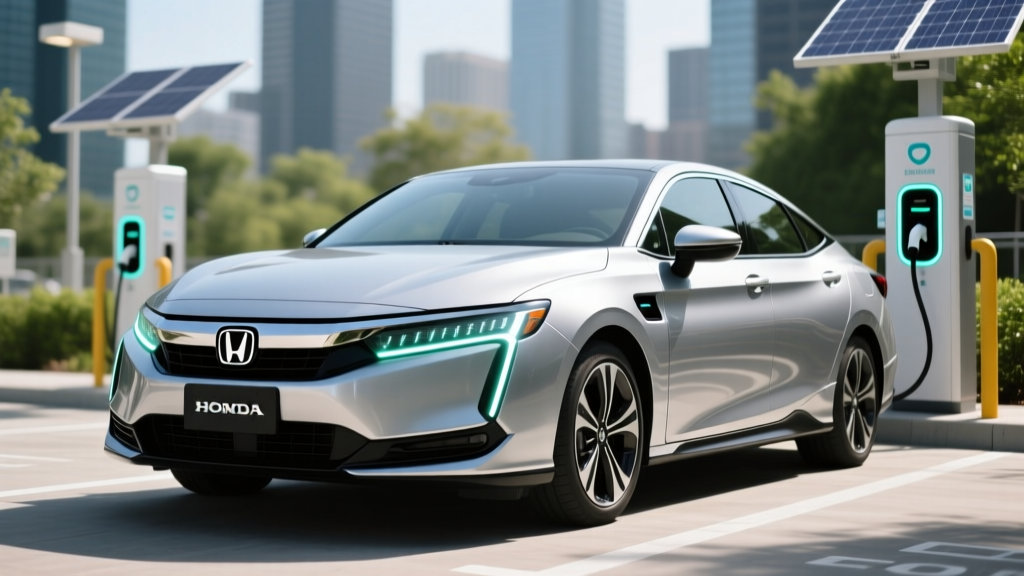
The Honda Clarity Electric was discontinued after the 2019 model year and is only available on the used market. With an EPA-rated 89 miles of range and a 25.5 kWh battery, it functions strictly as a city commuter. In 2026, used examples typically sell for $10,000–$16,000 depending on mileage and condition. It is not eligible for the federal §30D new-EV tax credit, but may qualify for the used-EV credit of up to $4,000 (30% of sale price, capped) if purchased through a licensed dealer and buyer income falls within IRS limits. If you need more than 90 miles of daily range or road-trip capability, look at a newer used EV like a Chevrolet Bolt (238–259 mi) or Nissan Leaf (149–226 mi) instead.
Range, Battery, and Efficiency: The Hard Numbers
The Clarity Electric's powertrain is modest by 2026 standards. Here is exactly what you are working with:
| Spec | Value |
|---|---|
| Battery Capacity | 25.5 kWh (total), ~22 kWh usable |
| Battery Chemistry | NMC (Nickel Manganese Cobalt) |
| EPA Range | 89 miles |
| Real-World Range (city, mild weather) | ~80–90 miles |
| Real-World Range (highway, 70 mph) | ~60–70 miles |
| Real-World Range (cold, below 32°F) | ~50–65 miles |
| Efficiency (EPA combined) | 110 MPGe / 31 kWh/100 mi |
| Motor Output | 161 hp / 221 lb-ft torque |
| 0–60 mph | ~8.1 seconds |
| Top Speed | ~93 mph (electronically limited) |
| DC Fast Charging (CCS) | Up to ~50 kW peak; 10–80% in ~30 min |
| Level 2 Charging (240V) | 6.6 kW onboard charger; full charge in ~3.5 hours |
| Level 1 Charging (120V) | ~1.4 kW; full charge in ~15+ hours |
| EPA Fuel Economy Source | fueleconomy.gov |
Real-World Range Reality Check
The EPA sticker says 89 miles. In practice, expect about 80–90 miles in mild city driving with regenerative braking engaged. At sustained highway speeds of 70+ mph, range drops to roughly 60–70 miles. In freezing temperatures (below 32°F), NMC batteries without active thermal heating lose 30–40% of capacity, putting usable range at approximately 50–65 miles. The Clarity Electric lacks a heat pump — cabin heat draws directly from the traction battery, compounding winter losses. Plan your commute around a 60-mile round trip maximum to avoid range stress.
Charging in 2026: Connector, Speed, and Practical Limits
The Clarity Electric uses a CCS1 (Combined Charging System) connector for DC fast charging and a standard J1772 inlet for Level 1 and Level 2 AC charging. In 2026, the U.S. charging landscape has shifted heavily toward NACS (Tesla's connector, now adopted by Ford, GM, Hyundai, and others), but CCS1 infrastructure remains widely available on Electrify America, EVgo, and ChargePoint networks.
| Level | Power (kW) | Miles Added Per Hour | Full Charge Time |
|---|---|---|---|
| Level 1 (120V household) | ~1.4 kW | ~4–5 mi/hr | ~15+ hours |
| Level 2 (240V, 32A) | 6.6 kW | ~22–25 mi/hr | ~3.5 hours |
| DC Fast (CCS1, 50 kW peak) | ~50 kW | ~150 mi/hr (peak) | 10–80% in ~30 min |
A critical ownership note: the Clarity's DC fast-charging peak of roughly 50 kW is low by 2026 standards. Modern EVs charge at 150–350 kW. On a road trip, the 30-minute 10–80% session is manageable, but the 89-mile range means you will stop to charge every 60–70 highway miles. This makes the Clarity a poor road-trip vehicle.
For daily use, a home Level 2 charger is effectively mandatory. A full Level 2 charge in 3.5 hours means you can top off every evening. Installation of a 240V / 40-amp circuit with a quality Level 2 EVSE (such as a ChargePoint Home Flex or Emporia Vue) typically costs $800–$2,000 including electrician labor and permit, depending on panel proximity. If your home electrical panel needs a service upgrade (100A to 200A), add $1,500–$3,500.
Used Purchase Cost vs. Comparable EVs and Gas Cars
The Clarity Electric competes in the budget used-EV segment. Here is how ownership costs compare to a typical gas commuter and a more capable used EV:
| Cost Factor | Honda Clarity Electric (Used) | Chevy Bolt EV 2022 (Used) | Toyota Corolla Gas (2022, Used) |
|---|---|---|---|
| Purchase Price | $12,000–$16,000 | $16,000–$20,000 | $18,000–$22,000 |
| Federal Used EV Credit (§25E) | Up to $4,000 | Up to $4,000 | $0 |
| Effective Purchase Price | $8,000–$12,000 | $12,000–$16,000 | $18,000–$22,000 |
| Annual Fuel/Energy (12,000 mi/yr) | ~$450 (electricity, $0.13/kWh avg) | ~$480 | ~$1,440 (gas, $3.20/gal, 32 MPG) |
| 5-Year Fuel/Energy Total | ~$2,250 | ~$2,400 | ~$7,200 |
| 5-Year Maintenance (est.) | ~$1,200 | ~$1,400 | ~$3,500 |
| Insurance (avg annual) | ~$1,300 | ~$1,400 | ~$1,200 |
| 5-Year Total Cost (est.) | $17,950–$23,750 | $22,800–$28,800 | $35,900–$39,900 |
The Clarity's low purchase price and minimal energy cost make it one of the cheapest vehicles to operate in 2026 — if your commute fits within its range. The IRS §25E used-EV credit can knock up to $4,000 off the purchase (30% of sale price, max $4,000), but income caps apply: modified AGI must not exceed $75,000 (single), $112,500 (head of household), or $150,000 (joint). The vehicle must also have a sale price of $25,000 or less and be purchased from a licensed dealer.
Common Misconceptions About the Clarity Electric
| Myth | Fact |
|---|---|
| "It has 340 miles of range." | That is the Clarity Fuel Cell (hydrogen), not the Electric. The Clarity Electric is rated at 89 miles. The Clarity Plug-In Hybrid has 47 electric miles + gas. These are three entirely different powertrains under the same nameplate. |
| "I can buy one new in 2026." | Honda discontinued the entire Clarity line after 2021. Only used examples are available. |
| "It qualifies for the $7,500 federal tax credit." | The §30D new-EV credit applies only to new vehicles. As a used purchase, the Clarity may qualify for the §25E used-EV credit (up to $4,000) subject to IRS income and price caps. |
| "DC fast charging will charge it in 10 minutes." | With a ~50 kW peak rate and a small 25.5 kWh battery, 10–80% takes roughly 30 minutes. Charge rate tapers significantly above 80% SoC to protect the NMC cells. |
| "Any mechanic can service it." | EV powertrain service requires Honda-certified high-voltage technicians. Independent shops may handle suspension and brakes, but battery diagnostics need dealer tools. |
Battery Degradation and Longevity
The Clarity Electric's NMC battery has aged 7–8 years by 2026. NMC chemistry typically loses 10–20% of original capacity over 8 years depending on climate, charging habits, and depth of discharge cycles. Honda originally warranted the battery for 8 years / 100,000 miles (with a capacity retention threshold of approximately 60–70% of original capacity, varying by state — California and CARB states mandate stricter thresholds).
Key degradation considerations for a used Clarity Electric:
- Request a battery health report. A Honda dealer can pull a State of Health (SoH) reading. Accept only examples showing 80%+ SoH (roughly 20 kWh usable remaining, translating to ~70 miles of real range).
- Avoid examples from hot climates (Arizona, Texas, Southern California) where sustained high ambient temperatures accelerate NMC degradation, unless SoH documentation is strong.
- Level 1 and Level 2 charging history is preferable to frequent DC fast charging, which generates more heat stress on the small battery pack.
- Battery replacement cost, if needed out of warranty, is estimated at $5,000–$8,000 including labor — a significant expense relative to the car's value.
Who Should (and Shouldn't) Buy the Honda Clarity Electric
Actionable Decision Framework
Buy the Clarity Electric if:
- Your daily round-trip commute is under 60 miles (providing a safety margin for weather and detours)
- You have reliable home Level 2 charging access (garage or driveway with 240V circuit)
- You want the lowest possible operating cost for a second car or city runabout
- You find one under $14,000 with a verified battery SoH above 80%
- You live in a mild climate where winter range loss is manageable
Do NOT buy the Clarity Electric if:
- Your commute exceeds 70 miles round-trip, especially with highway driving
- You rely on street parking with no charging access — Level 1 alone takes 15+ hours for a full charge
- You need a primary vehicle for road trips or unpredictable long drives
- You live in a cold climate (Upper Midwest, Northeast) where winter range could drop below 50 miles
- The battery SoH is below 75% or no health report is available
Clarity Electric vs. The Used-EV Alternatives
If the Clarity's range is too limiting, several used EVs in a similar price bracket offer substantially more capability:
- Chevrolet Bolt EV (2020–2023): 238–259 miles EPA range, 60–66 kWh battery, CCS fast charging up to ~55 kW. Used prices $14,000–$20,000. Far more versatile as a primary vehicle.
- Nissan Leaf (2020–2023): 149 miles (40 kWh) or 226 miles (62 kWh, Leaf Plus). Note: Leaf uses CHAdeMO for DC fast charging, a connector being phased out at many U.S. networks in favor of CCS and NACS. Used prices $12,000–$20,000.
- Hyundai Kona Electric (2020–2022): 258 miles EPA range, 64 kWh battery, CCS charging up to ~75 kW. Used prices $16,000–$22,000.
- Clarity Plug-In Hybrid (2018–2021): If you like the Clarity's interior but need more range, the PHEV variant offers 47 electric miles + a gasoline engine for 340+ total miles. A strong option for one-car households without reliable charging.
Frequently Asked Questions
Is the Honda Clarity Electric still being sold new?
No. Honda discontinued the entire Clarity lineup (Electric, Plug-In Hybrid, and Fuel Cell) after the 2021 model year. Only used examples are available in 2026.
What is the difference between the Clarity Electric, Plug-In Hybrid, and Fuel Cell?
These are three distinct powertrains sharing the same body. The Electric is a pure BEV with 89 miles of range. The Plug-In Hybrid pairs a 17 kWh battery (47 electric miles) with a 1.5L gas engine for 340+ total miles. The Fuel Cell runs on hydrogen with 340 miles of range but was only available in California and required hydrogen station access. Confusion between these three models is the most common mistake used buyers make.
Can I get a tax credit buying a used Clarity Electric?
Possibly. The IRS §25E used clean vehicle credit provides up to $4,000 (30% of the sale price) if: (1) you buy from a licensed dealer, (2) the sale price is $25,000 or less, (3) your modified AGI is within limits ($75K single / $150K joint), and (4) the vehicle is at least 2 model years old. Confirm eligibility with a tax professional before purchase.
How long does it take to charge at home?
On a 240V Level 2 charger at 6.6 kW, a full charge takes approximately 3.5 hours. On a standard 120V household outlet (Level 1), expect 15+ hours. For daily use, Level 2 is strongly recommended — a 3.5-hour charge window means you plug in when you get home and wake up to a full battery.
Is the Honda Clarity Electric safe?
The Clarity earned strong crash-test results during its production run. The IIHS rated it well in key categories, and the vehicle includes Honda Sensing (adaptive cruise, lane-keeping, forward collision warning, automatic emergency braking) as standard equipment. Verify that all ADAS sensors and cameras are functional on any used example, as recalibration requires dealer equipment.
What happens if the battery fails out of warranty?
The original 8-year/100,000-mile battery warranty has expired for most 2017–2019 Clarity Electric examples by 2026. Out-of-warranty battery replacement costs approximately $5,000–$8,000. Given the car's used value of $10,000–$16,000, a battery failure can be a total-loss scenario. This is why a pre-purchase battery SoH check at a Honda dealer is non-negotiable.