The Honda Clarity Electric: A 2026 Used-EV Lease Reality Check
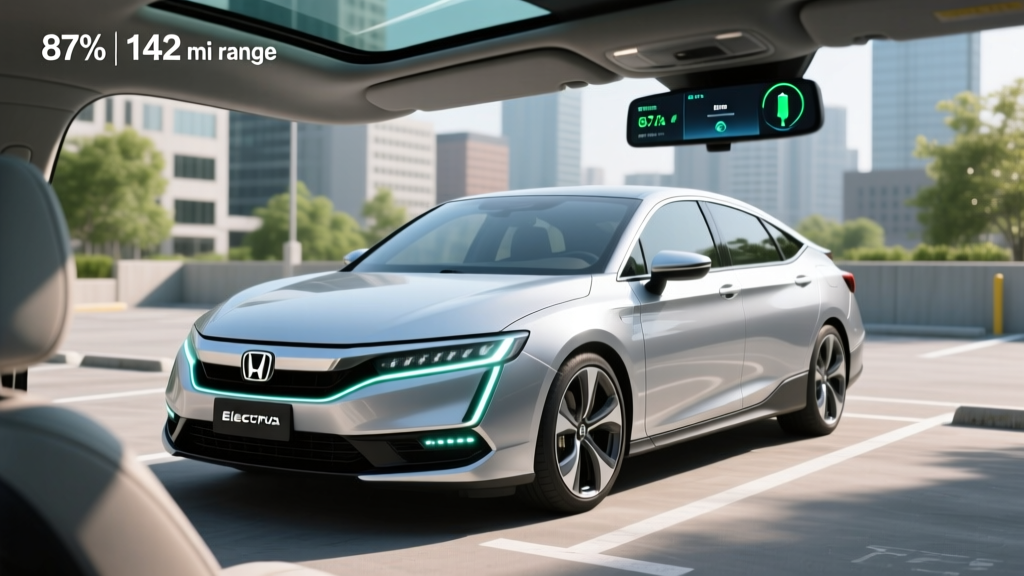
If you've been searching for a Honda Clarity Electric lease deal in 2026, here's the critical context you need before signing anything: Honda discontinued the Clarity Electric after the 2022 model year. That means no new leases are available from Honda dealers today. However, you may encounter the Clarity Electric on the used-EV market, through third-party lease-transfer platforms like Swapalease or LeaseTrader, or as a former lease vehicle being sold at auction.
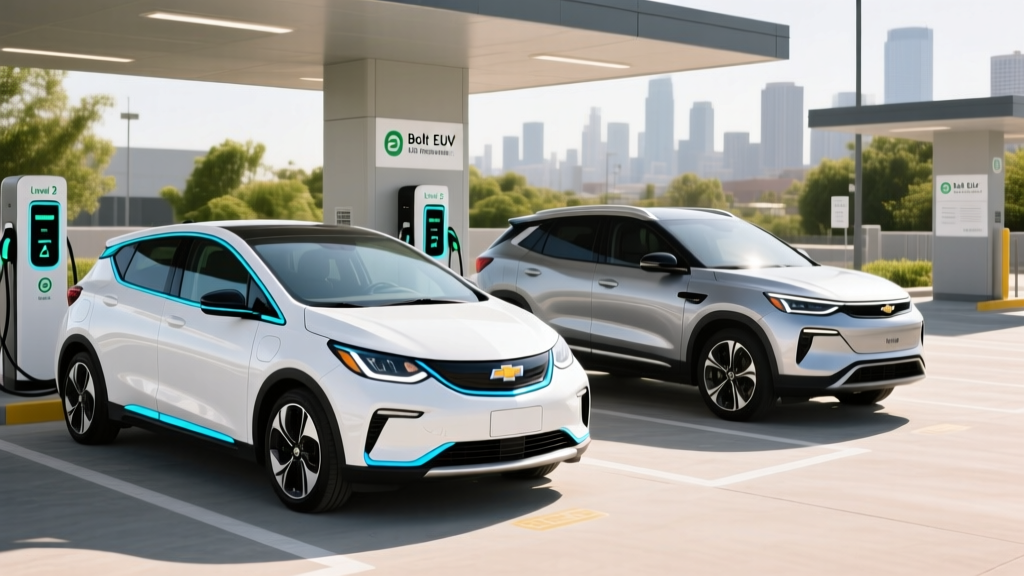
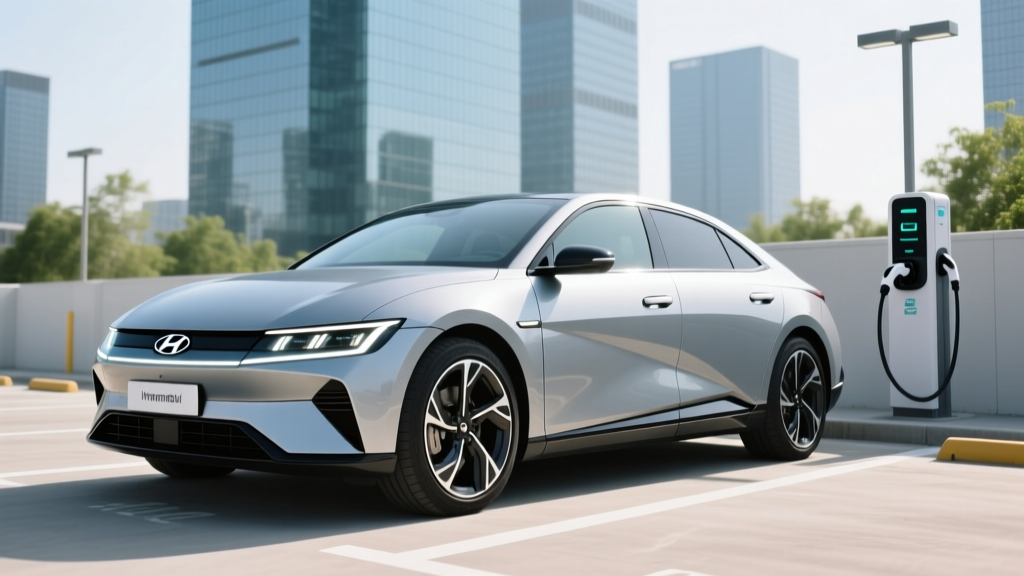
The Clarity Electric was always a niche product. With an EPA-estimated range of just 89 miles from its 32 kWh battery pack, it was designed as a commuter car, not a road-trip EV. In 2026, that range figure places it well behind modern EVs — the Hyundai Ioniq 6 SE delivers 361 miles EPA, and even the compact Chevrolet Bolt EV offers 259 miles. So if you're considering a Clarity Electric today, the financial calculus is different from leasing a new EV.
Clarity Electric Specs: What You're Getting
| Specification | Honda Clarity Electric (2019–2022) |
|---|---|
| EPA Range | 89 miles |
| Battery Capacity | 32 kWh (usable ~25.5 kWh) |
| Battery Chemistry | NMC (Nickel Manganese Cobalt) |
| Motor Output | 174 hp / 221 lb-ft torque |
| 0–60 mph | ~8.1 seconds |
| EPA Efficiency | 118 MPGe combined (28 kWh/100 mi) |
| DC Fast Charging | CCS1, peak ~50 kW (10–80% in ~30 min) |
| Level 2 Charging | 6.6 kW onboard charger (~4.5 hours 0–100%) |
| Original MSRP (2022) | $36,620 (before incentives) |
| Current Used Market (2026) | $14,000–$21,000 depending on mileage and condition |
Sources: fueleconomy.gov, Honda Newsroom archives.
5-Year Total Cost of Ownership: Clarity Electric vs. Gas Sedan Baseline
The most common question from prospective EV buyers is straightforward: How much does it really cost to own an EV over 5 years? Below, we model a 5-year ownership scenario for a used 2021 Honda Clarity Electric purchased at ~$17,000 against a comparable used gas sedan (2021 Honda Civic, ~$18,000 used, 33 MPG combined). We assume 12,000 miles/year, home Level 2 charging at the national average electricity rate, and California gasoline prices as a moderate-cost market.
| Cost Category | Clarity Electric (Used) | Gas Sedan Baseline (Used Civic) |
|---|---|---|
| Purchase Price | $17,000 | $18,000 |
| Fuel/Energy (5 yr / 60k mi) | $2,520 (at $0.14/kWh) | $7,272 (at $4.00/gal, 33 MPG) |
| Maintenance (5 yr) | $1,200 | $3,500 |
| Insurance (5 yr) | $8,400 | $7,200 |
| Depreciation (est. 5 yr) | $8,500 (to ~$8,500 resale) | $7,500 (to ~$10,500 resale) |
| 5-Year Total | $37,620 | $43,472 |
| Net Savings (EV vs Gas) | ~$5,852 over 5 years | |
Key takeaway: The Clarity Electric saves roughly $5,800 over five years versus a comparable gas sedan, driven primarily by fuel and maintenance savings. However, higher insurance and steeper depreciation partially offset those gains. This is the honest EV ownership math — savings are real, but they're not as dramatic as some marketing suggests.
Charging vs. Gas: The Per-Mile Cost Math
Let's break down how much you save on fuel with concrete numbers. The Clarity Electric consumes approximately 28 kWh per 100 miles (its EPA-rated efficiency). At the 2026 national average residential electricity rate of ~$0.16/kWh (EIA data), that works out to:
Clarity Electric cost per mile: 28 kWh ÷ 100 mi × $0.16/kWh = $0.045/mile
Gas sedan (33 MPG) at $3.50/gal: 1 ÷ 33 × $3.50 = $0.106/mile
Savings: ~$0.061/mile, or $732/year at 12,000 miles driven annually.
Note: If you charge primarily on public DC fast chargers at $0.35–$0.50/kWh, your cost rises to $0.10–$0.14/mile — erasing much of the advantage. Home Level 2 charging is essential to realizing EV fuel savings.
Federal Tax Credit: What Applies to a Used Clarity Electric in 2026?
If you're buying a used Honda Clarity Electric (not leasing new — since new leases no longer exist), you may qualify for the Used Clean Vehicle Credit under IRS §25E, not the new-vehicle §30D credit. Here's what the rules look like for 2026:
Used EV Tax Credit (§25E) Eligibility Checklist
- Credit amount: 30% of the sale price, up to a maximum of $4,000
- Vehicle sale price cap: Must be $25,000 or less
- Vehicle age: Must be at least 2 model years old (Clarity qualifies — last produced 2022)
- Buyer income limits (modified AGI): $75,000 single / $112,500 head of household / $150,000 joint
- Dealer requirement: Must purchase from a licensed dealer (private-party sales don't qualify)
- Point-of-sale transfer: You can transfer the credit to the dealer at purchase for an immediate price reduction
- First transfer rule: The vehicle must be transferring to its first owner after the original — check the title history
Source: IRS.gov — Used Clean Vehicle Credit. Rules are subject to change; consult a tax professional for your specific situation.
Important distinction: The §30D new-vehicle credit (up to $7,500) does not apply here since the Clarity Electric is no longer manufactured. The §25E used-vehicle credit is the relevant incentive, and its $4,000 cap and $25,000 price cap mean you'll likely qualify on a Clarity priced between $14,000–$21,000, provided your income is within limits.
Do I Qualify for the Federal Tax Credit?
You qualify for the up-to-$4,000 used EV credit if: (1) your modified adjusted gross income falls below the thresholds above, (2) you buy from a dealer, (3) the Clarity's sale price is $25,000 or less, and (4) this is the vehicle's first title transfer after the original owner. The credit can be applied at the point of sale, reducing your out-of-pocket cost immediately. Always verify current-year rules at irs.gov before committing.
State, Local, and Utility Incentives
Incentives vary significantly by region. Some examples of what may be available in 2026 for a used EV purchase:
- California (CVRP): Up to $1,000–$2,000 rebate for used EVs (income-dependent; check CARB for current availability)
- Colorado: State tax credit of up to $5,000 for EV purchases (verify current-year rules with the CO Dept. of Revenue)
- Utility rebates: Many utilities offer $250–$1,000 for EV purchase or home charger installation (e.g., PG&E, SCE, ConEdison, Xcel Energy) — check with your local provider
- HOV lane access: Some states grant carpool-lane stickers for EVs, though these programs often have income or price caps and may expire
Always verify state and utility incentives through official sources — amounts and eligibility change frequently.
Maintenance Savings: Where EVs Actually Win
One of the strongest financial arguments for EV ownership is reduced maintenance. The Clarity Electric has no engine oil, no transmission fluid, no spark plugs, no timing belt, and no exhaust system. Regenerative braking significantly reduces brake pad wear — many EV owners report original brake pads lasting 80,000+ miles.
| Maintenance Item | Clarity Electric | Gas Sedan (Civic) |
|---|---|---|
| Oil Changes (5 yr / 60k mi) | $0 (none required) | $350–$600 |
| Brake Pads | $0–$150 (regen extends life) | $400–$700 |
| Transmission Service | $0 | $150–$300 |
| Air Filters / Spark Plugs | $0 | $150–$250 |
| Coolant / Misc. | $100–$200 | $200–$400 |
| Tire Rotation & Replacement | $800–$1,200 (EVs wear tires faster due to weight/torque) | $600–$1,000 |
| Estimated 5-Year Total | $900–$1,550 | $1,850–$3,250 |
Honest caveat: EVs tend to wear through tires faster than gas cars due to their heavier curb weight and instant torque delivery. Budget for tire replacement every 35,000–45,000 miles rather than the 50,000+ miles typical for lighter gas sedans.
Insurance Cost Reality: The EV Premium
Are EVs more expensive to insure? Generally, yes. Industry data shows EV insurance premiums running 15–25% higher than comparable gas vehicles. The reasons are structural:
- Higher repair costs: Battery pack damage can total a vehicle that would otherwise be repairable. High-voltage system repairs require specialized technicians.
- Parts cost: EV-specific components (power electronics, battery modules) are expensive and sometimes have limited aftermarket availability.
- Vehicle value: Even used, EVs can carry higher book values than equivalent gas cars, raising comprehensive/collision premiums.
- Shop availability: Fewer body shops are certified for high-voltage repairs, increasing labor rates and repair timelines.
For the Clarity Electric specifically, expect annual premiums of roughly $1,500–$1,900 depending on your state, driving record, and coverage level — compared to $1,200–$1,600 for a comparable used Civic. That's an additional $200–$400/year, or $1,000–$2,000 over five years. Always get quotes from at least three insurers before purchasing.
Depreciation and Resale Value Trends
How well do EVs hold their value? This is where the Clarity Electric presents a specific challenge. Early-discontinued, low-range EVs have experienced steeper depreciation than longer-range modern models. Consider:
- The Clarity Electric originally stickered at ~$36,620. Today, a 2021 model with 30,000–40,000 miles sells for roughly $14,000–$18,000 — that's 50–60% depreciation in four to five years.
- By comparison, a 2021 Honda Civic holds roughly 55–65% of its value over the same period.
- The broader used-EV market saw accelerated depreciation in 2023–2025 as new-EV prices dropped and Tesla cut MSRPs, pulling used values down across the board.
- Going forward, a Clarity Electric's value will likely stabilize at $8,000–$12,000 by 2030 as a budget city commuter — it won't drop to zero, but it won't recover either.
Practical implication: If you buy a used Clarity Electric at $17,000 and sell it in 5 years for ~$8,500, you'll absorb ~$8,500 in depreciation. That's slightly worse than a gas sedan, but the fuel and maintenance savings more than compensate over the same period.
Decision Framework: Should You Lease or Buy a Clarity Electric in 2026?
Choose the Honda Clarity Electric if:
- Your daily round-trip commute is under 60 miles
- You have reliable home Level 2 charging (a 240V outlet or installed charger)
- You want an affordable entry into EV ownership ($14k–$21k used)
- You can claim the $4,000 used-EV tax credit (income under $75k single / $150k joint)
- You value a smooth, quiet ride with Honda build quality
Look elsewhere if:
- You regularly drive more than 80 miles between charges
- You need DC fast charging above 50 kW for road trips
- You live in a cold climate where 89 miles EPA becomes 60 miles real-world
- You want modern ADAS features (the Clarity's Honda Sensing suite is 2019-era)
- Resale value retention is a top priority
Frequently Asked Questions
Can I still lease a new Honda Clarity Electric in 2026?
No. Honda discontinued the Clarity Electric after the 2022 model year. You cannot lease a new one from any Honda dealer. You may find lease transfers on third-party platforms, but these assume the remainder of an existing lease rather than starting a new one.
How much does it really cost to own a Clarity Electric over 5 years?
Based on our analysis, approximately $37,620 over 5 years including purchase price, energy, maintenance, insurance, and depreciation. That's roughly $5,800 less than a comparable gas sedan over the same period, assuming you charge primarily at home.
Do I qualify for any federal tax credit on a used Clarity Electric?
You may qualify for the IRS §25E Used Clean Vehicle Credit — up to $4,000 or 30% of the sale price (whichever is less), provided your income is under $75,000 (single) or $150,000 (joint), you buy from a licensed dealer, and the sale price is $25,000 or less. Verify current rules at IRS.gov.
How much do I save on fuel and maintenance?
Fuel savings run approximately $732/year (at $0.16/kWh and $3.50/gal gas). Maintenance savings add another $300–$500/year. Combined, that's $1,000–$1,200/year in operational savings versus a gas sedan.
Are EVs more expensive to insure than gas cars?
Yes, typically 15–25% more. For the Clarity Electric, budget an extra $200–$400/year compared to a Civic. Get quotes before purchasing — the gap varies significantly by insurer and state.
How well does the Clarity Electric hold its value?
Not as well as gas sedans or longer-range EVs. Expect roughly 50% depreciation over 5 years from a used purchase price. A Clarity bought at $17,000 today might sell for $8,000–$10,000 in five years. The fuel and maintenance savings offset this, but resale value is a genuine weakness.
Is the 89-mile range enough for daily driving?
For commutes under 60 miles round-trip with home charging, yes. For anything beyond that — or in cold climates where range drops 20–30% — the Clarity's range becomes a real limitation. This is a dedicated city/suburban commuter, not a versatile daily driver.