The Honda Clarity Electric Is Discontinued — Here's What That Means for Lease Shoppers
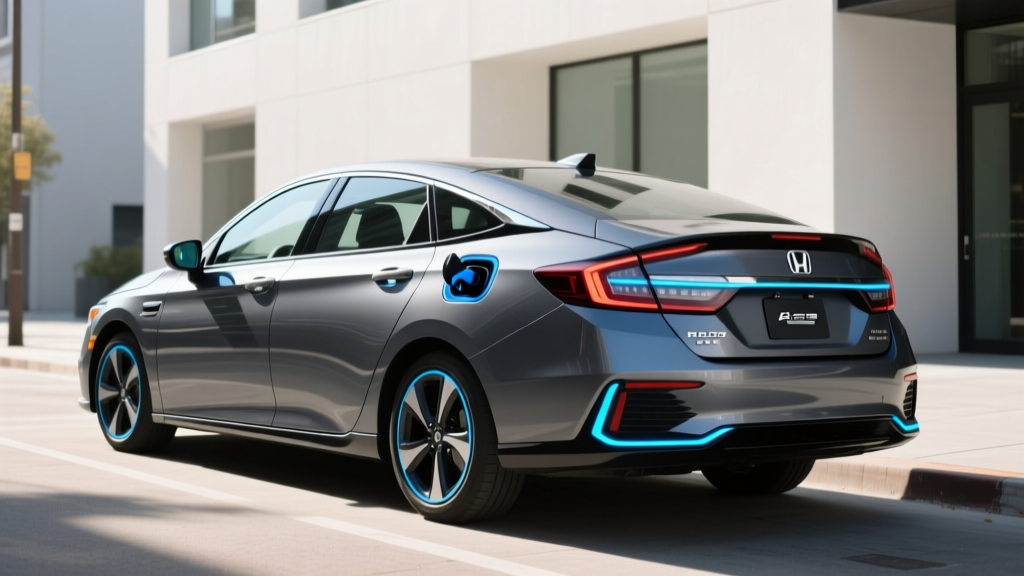
If you've been searching for Honda Clarity Electric lease deals, you need to know one critical fact up front: Honda discontinued the Clarity Electric after the 2022 model year. There are no new 2026 Honda Clarity Electric lease deals available from dealerships. The Clarity lineup — which included a battery-electric variant, a plug-in hybrid, and a hydrogen fuel-cell version — was retired as Honda pivoted its electrification strategy toward the Prologue (its first dedicated EV SUV, built on GM's Ultium platform) and upcoming models on its own e:Architecture.
That said, you may still find used Clarity Electric vehicles on the secondary market, and understanding the ownership economics of this model — and comparable EVs in 2026 — is essential before committing money to any electrified vehicle. This guide breaks down what the Clarity Electric offered, why Honda killed it, and what the real 5-year total cost of ownership looks like for EVs in its class today.
EPA Range: 89 miles (47 kWh usable battery, NMC chemistry)
Efficiency: 125 MPGe combined (27 kWh/100 mi)
DC Fast Charging: CCS1 connector, peak ~50 kW (10–80% in ~45 min)
Level 2 Charging: 6.6 kW onboard charger (~7 hours for full charge)
Motor Output: 174 hp, 221 lb-ft torque
0–60 mph: ~7.7 seconds
Original MSRP: ~$37,490 (before incentives)
An 89-mile EPA range was competitive in 2017 but became increasingly untenable as rivals like the Chevrolet Bolt EV (259 miles), Hyundai Kona Electric (258 miles), and Tesla Model 3 (272+ miles) pushed past 250 miles. Honda's decision to discontinue the Clarity Electric was largely a recognition that sub-100-mile EVs no longer met mainstream buyer expectations.
5-Year Total Cost of Ownership: EVs in the Clarity's Class
Whether you're considering a used Clarity Electric, a new Honda Prologue, or a comparable EV like the Bolt EV or Kona Electric, the 5-year ownership math follows a consistent framework. Below is a representative breakdown for a ~$35,000 compact/midsize EV driven 12,000 miles per year with home Level 2 charging.
| Category | 5-Year Cost | Notes |
|---|---|---|
| Purchase Price (after credit) | $27,500 | $35,000 MSRP − $7,500 §30D credit |
| Home Electricity (charging) | $2,700 | 60,000 mi ÷ 3.3 mi/kWh × $0.15/kWh |
| Public DC Fast Charging | $600 | ~10 road trips, avg $0.40/kWh |
| Insurance | $9,500 | ~$1,900/yr avg (higher than gas equiv.) |
| Maintenance | $1,200 | Tire rotations, cabin filter, wiper fluid |
| Depreciation (resale value loss) | $12,000 | EVs retain ~40–50% at 5 yrs (varies by model) |
| TOTAL 5-Year Cost | $53,500 |
For comparison, a similarly priced gas vehicle (e.g., a Honda CR-V at ~$33,000) would cost roughly $58,000–$62,000 over five years when you factor in fuel at $3.40/gallon, higher maintenance (oil changes, transmission fluid, brake pads), and slightly lower insurance. The EV wins on operating costs but loses ground on depreciation and insurance premiums.
Federal Tax Credit Eligibility: IRS §30D Rules for 2026
The federal EV tax credit under IRS §30D remains a major purchase incentive, but qualifying for the full $7,500 requires navigating several rules that changed significantly after the Inflation Reduction Act. Here is the current eligibility checklist for new vehicles purchased in 2026:
- ✅ MSRP Cap: Vans, SUVs, and trucks must have an MSRP ≤ $80,000. Sedans and other passenger cars must be ≤ $55,000.
- ✅ Buyer Income Limits: Modified adjusted gross income (MAGI) must not exceed $300,000 (joint filers), $225,000 (head of household), or $150,000 (single filers).
- ✅ Battery Sourcing Requirements: A percentage of critical minerals and battery components must be sourced from the U.S. or free-trade-agreement countries. The thresholds increase annually — in 2026, the critical minerals requirement is 90% and battery components 100%. Vehicles failing either test lose $3,750 per failure.
- ✅ FEOC Exclusion: Vehicles containing battery components from a "foreign entity of concern" (primarily targeting Chinese supply chains) are ineligible for the full credit regardless of other criteria.
- ✅ Point-of-Sale Transfer: As of 2024, buyers can transfer the credit to the dealer at purchase, receiving it as an immediate price reduction rather than waiting to claim it on their tax return. This effectively lowers the out-of-pocket cost at signing.
- ✅ Final Assembly: Vehicle must undergo final assembly in North America (check VIN via the DOE's VIN lookup tool).
Important for Clarity shoppers: The Honda Clarity Electric is no longer in production, so the new-vehicle §30D credit does not apply. However, if you purchase a used Clarity Electric (or any qualifying used EV) from a dealer, you may be eligible for the Used Clean Vehicle Credit under IRC §25E — up to $4,000 or 30% of the sale price (whichever is less), subject to income caps ($150K joint / $75K single) and a sale price cap of $25,000.
Charging vs. Gas: Real Cost Per Mile
The single largest operating-cost advantage of an EV is fuel. But the actual savings depend on your local electricity rate, charging habits, and the efficiency of the specific vehicle.
| Scenario | Cost/Mile | Assumptions |
|---|---|---|
| EV — Home Charging (national avg) | $0.045 | 3.3 mi/kWh × $0.15/kWh |
| EV — Public DC Fast Charging | $0.12 | 3.3 mi/kWh × $0.40/kWh |
| EV — Blended (85% home / 15% DCFC) | $0.056 | Weighted average |
| Gas Vehicle (28 MPG combined) | $0.121 | $3.40/gallon ÷ 28 MPG |
| Savings (blended EV vs gas) | $0.065/mi | ~$3,900 over 60,000 miles |
At 12,000 miles per year, a typical EV owner charging primarily at home saves roughly $780–$900 annually compared to a 28 MPG gas vehicle. Over five years, that's approximately $3,900–$4,500 in fuel savings. The Honda Clarity Electric, with its 27 kWh/100 mi consumption, sits right at the 3.3–3.7 mi/kWh efficiency range used in these calculations.
One caveat for Clarity Electric owners specifically: the 50 kW DC fast-charging peak is slow by 2026 standards. A full 10–80% charge takes roughly 45 minutes at a CCS1-equipped station, compared to 18–25 minutes for modern EVs with 150–250 kW peak charge rates. This means more time spent at public chargers on road trips — and potentially higher per-session costs if your charging network bills by the minute rather than the kWh.
Maintenance Savings: What EVs Actually Cost to Service
EVs eliminate the most routine maintenance items associated with internal combustion engines. Here's a direct comparison:
| Service Item | EV (5-yr cost) | Gas Vehicle (5-yr cost) |
|---|---|---|
| Oil Changes | $0 | $600–$900 |
| Transmission Fluid | $0 | $150–$300 |
| Brake Pads | $0–$100 | $400–$700 |
| Engine Air Filter | $0 | $100–$200 |
| Spark Plugs | $0 | $200–$400 |
| Tire Rotations | $250–$400 | $250–$400 |
| Cabin Air Filter | $100–$200 | $100–$200 |
| Tire Replacement (heavier EV wear) | $800–$1,200 | $600–$900 |
| TOTAL | $1,150–$1,900 | $2,400–$4,000 |
The net savings are real — typically $1,000–$2,500 over five years — but note the one area where EVs cost more: tires. EVs are heavier (the Clarity Electric weighs ~4,000 lbs) and deliver instant torque, which accelerates tread wear. Budget for a tire replacement around year 3–4.
Regenerative braking is the reason brake pads last dramatically longer on EVs. The Clarity Electric's regen system handles the majority of deceleration, meaning the friction brakes are used sparingly. Many EV owners report original brake pads at 80,000+ miles.
Insurance Reality: Why EVs Cost More to Insure
This is the line item that catches many first-time EV buyers off guard. On average, EV insurance premiums run 15–25% higher than comparable gas vehicles. For a $35,000 EV, expect to pay $1,700–$2,100 per year depending on your state, driving record, and coverage level — compared to $1,400–$1,700 for a gas equivalent.
The reasons are structural, not arbitrary:
- Higher repair costs: EV battery packs, power electronics, and specialized structural components are expensive to replace after a collision. A minor rear-end impact that damages a battery enclosure can result in a total-loss declaration.
- Limited repair network: Fewer body shops have the high-voltage safety certification and equipment needed for EV repairs, which drives up labor rates.
- Higher vehicle MSRP: Even after incentives, the insured value of the vehicle is based on its sticker price, and EVs still carry a price premium over comparable gas models.
Some insurers now offer dedicated EV policies with competitive rates — companies like Progressive, State Farm, and specialized providers like Plug In America's partner network have begun closing the gap. Always get quotes from at least three carriers before purchasing.
Depreciation and Resale Value: The EV Wildcard
EV depreciation has been volatile. According to data from iSeeCars and Kelley Blue Book, the average EV retains roughly 40–50% of its original MSRP after five years, compared to 45–55% for mainstream gas vehicles. However, this varies enormously by model.
The Honda Clarity Electric specifically faces steep depreciation challenges:
- 89-mile range: Well below 2026 buyer expectations of 250+ miles, limiting demand on the used market.
- Discontinued model: No ongoing production means limited dealer support, potential parts scarcity over time, and reduced buyer confidence.
- CCS1 connector at 50 kW: As the industry transitions to NACS (the Tesla charging standard, now adopted by most major automakers), CCS1-only vehicles may face reduced charging convenience in coming years.
Expect a used 2020–2022 Clarity Electric to trade for $12,000–$18,000 in 2026 depending on mileage and condition — a depreciation hit of 50–65% from original MSRP. If you're leasing or buying, this is the cost category that can erase your fuel and maintenance savings.
Bright spots for EV resale: Tesla Model 3/Y, Hyundai Ioniq 5, and Ford Mustang Mach-E have shown stronger retention, particularly as the used-EV market matures and buyer familiarity grows.
Beyond the federal §30D credit, many states and utilities offer additional incentives that can significantly reduce your net cost. Examples include:
- California (CVRP): Up to $7,000 for income-qualified buyers purchasing new EVs (check CARB for current eligibility).
- Colorado: State tax credit of up to $5,000 for new EVs (income and price caps apply).
- Utility rebates: Many electric utilities (e.g., PG&E, ConEdison, Xcel Energy) offer $500–$1,500 rebates for home Level 2 charger installation, plus off-peak charging rates as low as $0.06–$0.08/kWh.
Alternatives to the Honda Clarity Electric in 2026
Since new Clarity Electric lease deals are no longer available, here are the closest current alternatives from Honda and competitors, with the specs that matter most for ownership-cost calculations:
| Model | EPA Range | Battery (kWh) | Peak DC kW | 10–80% Min | Base MSRP |
|---|---|---|---|---|---|
| Honda Prologue (2026) | 296 mi | 85 kWh (NMC) | 190 kW | ~28 min | $47,400 |
| Chevrolet Equinox EV (2026) | 319 mi | 85 kWh (NMC) | 150 kW | ~30 min | $33,600 |
| Hyundai Kona Electric (2026) | 261 mi | 65 kWh (NMC) | 100 kW | ~40 min | $32,975 |
| Tesla Model 3 RWD (2026) | 272 mi | 60 kWh (LFP) | 170 kW | ~25 min | $38,990 |
For buyers specifically interested in Honda's electrified lineup, the Prologue is the current flagship EV, though at ~$47,400 it sits in a higher price bracket than the old Clarity. The Chevrolet Equinox EV is the closest match in both price and utility to what the Clarity aimed to be, and it qualifies for the full $7,500 federal credit under current IRS §30D rules (subject to income and sourcing requirements).
Frequently Asked Questions
Can I still lease a Honda Clarity Electric in 2026?
No. Honda discontinued the Clarity Electric after the 2022 model year. No new lease deals are available. You may find used Clarity Electrics on the secondary market, but these would be purchases or used-vehicle leases through third-party providers — not new Honda factory leases.
How much does it really cost to own an EV over 5 years?
For a typical ~$35,000 EV (after the $7,500 federal credit), expect a 5-year total cost of ownership around $50,000–$56,000 including purchase, electricity, insurance, maintenance, and depreciation. The largest single costs are depreciation ($10,000–$15,000) and insurance ($8,500–$10,500 over five years), not fuel or maintenance.
Do I qualify for the federal EV tax credit?
Eligibility for the full $7,500 under IRS §30D depends on your income (≤$150K single / $300K joint), the vehicle's MSRP (≤$55K cars / $80K SUVs), North American final assembly, and battery sourcing requirements (90% critical minerals, 100% battery components from approved sources in 2026). Many popular models qualify for $3,750 or $7,500 depending on their supply chain. Check the IRS's official list and the DOE VIN lookup tool.
How much do I save on fuel and maintenance with an EV?
A typical EV owner charging primarily at home saves $780–$900 per year on fuel compared to a 28 MPG gas vehicle, plus $300–$600 per year on maintenance (no oil changes, fewer brake replacements). Combined 5-year savings: roughly $5,000–$7,500. However, these savings can be partially offset by higher insurance premiums and faster tire wear.
Are EVs more expensive to insure?
Yes, typically 15–25% more expensive than comparable gas vehicles. Higher repair costs (specialized battery and electronics work), a smaller certified repair network, and higher initial vehicle prices all contribute. Shop multiple insurers and ask about dedicated EV policies to minimize the premium gap.
How well do EVs hold their value?
EVs retain roughly 40–50% of MSRP after five years on average, though this varies significantly by model. Tesla Model 3/Y, Hyundai Ioniq 5, and Ford F-150 Lightning tend to hold value better than discontinued or short-range models. The Honda Clarity Electric specifically has depreciated steeply (50–65%) due to its 89-mile range and discontinued status.