Quick Answer: Is the Honda Civic EV Available Now?
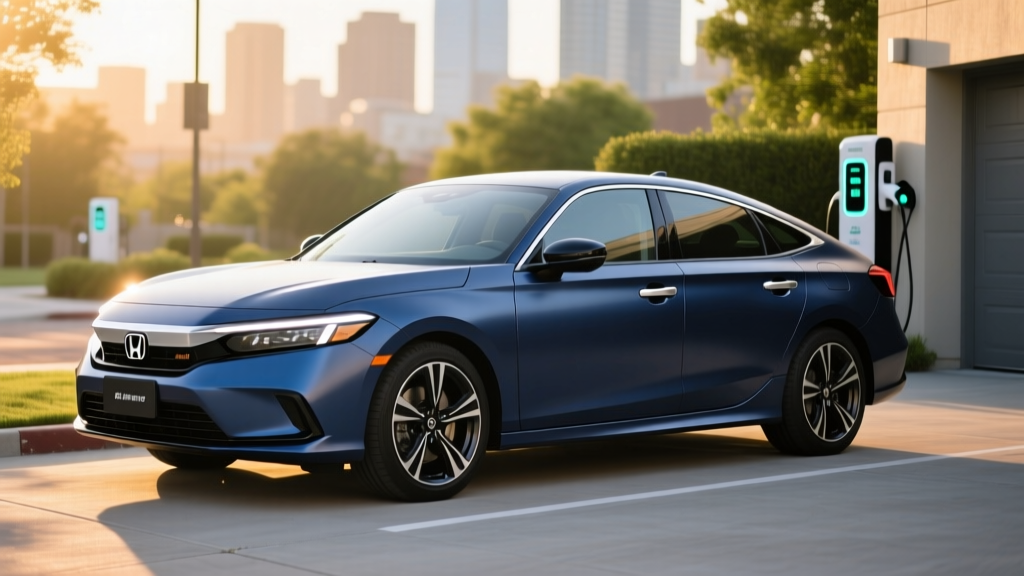
As of early 2026, the Honda Civic EV is not yet on sale. Honda has confirmed a next-generation Civic electric sedan will arrive in North America, likely as a 2027 model-year vehicle with first deliveries in late 2026 or early 2027. Expected specs include a 300+ mile EPA range, a starting price near $35,000–$40,000, and eligibility for the §30D federal tax credit up to $7,500 (subject to IRS sourcing and income rules). If you need an electric Civic-sized sedan today, your closest alternatives are the Tesla Model 3, Hyundai Ioniq 6, or the Chevrolet Equinox EV.
What We Know About the Honda Civic EV So Far
Honda has been deliberate about its electrification roadmap. The brand currently sells the Prologue midsize SUV (built on GM's Ultium platform) and the CR-V e:FCEV hydrogen plug-in, but its compact sedan lineup — the bread-and-butter Civic — has remained gasoline and hybrid only in the US market. That changes with the upcoming Civic EV.
Based on Honda's global announcements and the e:Architecture platform previewed in concept form, here's what preliminary data suggests:
| Specification | Estimated Figure | Status |
|---|---|---|
| EPA Range | 300–330 miles | Estimated |
| Battery Capacity | ~68–75 kWh usable | Estimated |
| Battery Chemistry | Likely NMC (possible LFP base trim) | Unconfirmed |
| Peak DC Fast Charge Rate | ~150–180 kW | Estimated |
| 10–80% DC Charge Time | ~25–30 minutes | Estimated |
| Level 2 AC Charge Rate | 11.5 kW (estimated) | Estimated |
| 0–60 mph | ~6.5–7.5 seconds | Estimated |
| Horsepower | ~200–240 hp | Estimated |
| Starting MSRP | $35,000–$40,000 | Estimated |
| Federal Tax Credit (§30D) | Up to $7,500 (if sourcing rules met) | Subject to IRS rules |
| Battery/Powertrain Warranty | 8 years / 100,000 miles (expected) | Industry standard |
Important caveat: These figures are preliminary estimates based on Honda's platform disclosures and competitive positioning. Final EPA certification, pricing, and trim details will only be confirmed closer to launch. We'll update this guide as official data becomes available.
Honda Civic EV vs. Gas Civic vs. Civic Hybrid: The Numbers
The Civic nameplate currently spans three powertrains: the traditional 1.5L turbo gasoline model, the Civic Hybrid (which pairs a 2.0L Atkinson-cycle engine with two electric motors), and the upcoming all-electric variant. Here's how they compare on paper using current 2025/2026 Civic data alongside Civic EV projections.
| Metric | Civic Gas (1.5T) | Civic Hybrid | Civic EV (Est.) |
|---|---|---|---|
| EPA Fuel Economy / MPGe | 33 city / 42 hwy / 36 combined MPG | 50 city / 47 hwy / 49 combined MPG | ~110–120 MPGe combined (est.) |
| Range / Tank | ~430 miles (12.4-gal tank) | ~500+ miles | ~300–330 miles (EPA est.) |
| Energy Cost per Mile | ~$0.10–$0.13 (at $3.50/gal) | ~$0.07–$0.09 (at $3.50/gal) | ~$0.04–$0.06 (at $0.16/kWh home) |
| Annual Fuel/Energy Cost (12k mi) | $1,200–$1,560 | $840–$1,080 | $480–$720 (home charging) |
| Starting MSRP | ~$25,000 | ~$29,500 | $35,000–$40,000 (est.) |
| Federal Tax Credit | None | None | Up to $7,500 (§30D) |
| Effective Price After Credit | ~$25,000 | ~$29,500 | $27,500–$32,500 (est.) |
| 5-Year Maintenance Cost (est.) | ~$2,500–$3,500 | ~$2,200–$3,000 | ~$1,200–$1,800 |
Sources: fueleconomy.gov for gas/hybrid Civic data. Electricity cost based on US average residential rate of ~$0.16/kWh (EIA 2025 data).
Real-World Range: What the EPA Sticker Won't Tell You
If the Honda Civic EV achieves its estimated 300–330 mile EPA range, that positions it competitively against the Tesla Model 3 Long Range (341 miles EPA) and Hyundai Ioniq 6 SE Long Range (361 miles EPA). But EPA range is a laboratory figure. Here's what real-world Civic EV buyers should actually expect:
Real-World Range Expectations (Estimated 315-Mile EPA Baseline)
- City/mixed driving, mild weather: ~290–315 miles (near EPA or slightly below)
- Sustained highway (70–80 mph): ~240–270 miles (aerodynamic drag eats range at speed)
- Cold weather (below 30°F): ~220–260 miles (battery chemistry loses efficiency; cabin heating draws power unless a heat pump is equipped)
- Worst-case (highway + cold + headwind): ~190–220 miles
These estimates are based on observed real-world testing patterns for similarly sized EVs with NMC batteries. Honda has not confirmed whether the Civic EV will include a heat pump — a critical efficiency feature for cold-climate buyers. The Prologue includes one; we'd expect the same for the Civic EV, but it's unconfirmed.
Charging-curve reality check: If the Civic EV peaks at ~150–180 kW on DC fast charging, expect that peak to sustain only between roughly 10–40% state of charge. Above 60%, the charge rate will taper significantly — likely dropping to 60–80 kW by 80% SoC. This means a 10–80% session will take approximately 25–30 minutes at a capable 250+ kW charger, but a full 10–95% top-up could take 50+ minutes. Plan road-trip stops accordingly.
Total Cost of Ownership: 5-Year Breakdown
Upfront price is only part of the equation. Here's a 5-year/60,000-mile ownership comparison between the Civic EV (estimated), Civic Hybrid, and Civic gas — assuming home charging access, 12,000 miles/year, and current energy prices.
| Cost Category | Civic Gas | Civic Hybrid | Civic EV (Est.) |
|---|---|---|---|
| Purchase Price (MSRP) | $25,000 | $29,500 | $37,500 (mid-trim est.) |
| Federal Tax Credit (§30D) | $0 | $0 | –$7,500 (if eligible) |
| Net Purchase Price | $25,000 | $29,500 | $30,000 |
| Home Charger Install (Level 2) | $0 | $0 | $800–$1,500 |
| 5-Year Energy/Fuel Cost | $6,600 | $4,800 | $3,000 |
| 5-Year Maintenance | $3,000 | $2,600 | $1,500 |
| 5-Year Insurance (avg.) | $7,500 | $7,800 | $8,500 |
| Estimated Depreciation (5yr) | $10,000 | $11,000 | $14,000 |
| Total 5-Year Cost | $52,100 | $55,700 | $58,300–$59,000 |
Key takeaways:
- The Civic EV's energy and maintenance savings (~$6,900 less than gas over 5 years) are substantial but don't fully close the upfront price gap in this scenario.
- EV insurance tends to run 10–20% higher than gas equivalents — factor this into your budget.
- Depreciation on EVs remains less predictable than gas cars; Honda's strong resale-value reputation could help here, but the used-EV market is still maturing.
- If the Civic EV qualifies for the full $7,500 credit applied at point of sale, the effective purchase price drops to roughly Civic Hybrid territory — making the EV the clear long-term winner on operating costs.
- Home charging installation ($800–$1,500 for a Level 2 wallbox on an existing 240V circuit; up to $3,000+ if a panel upgrade is needed) is a one-time cost that pays for itself within 2–3 years versus public DC fast charging.
Note: The §30D federal tax credit has strict eligibility requirements including buyer income caps ($150K single / $300K joint MAGI), vehicle MSRP caps ($55K for sedans), and critical-mineral/battery-component sourcing thresholds that tighten annually. Verify current-year rules at irs.gov before purchase. The credit can be transferred to the dealer at point of sale as an upfront discount.
First-Time EV Buyer Checklist: What to Know Before You Wait
If the Civic EV will be your first electric vehicle, these practical considerations will determine whether it's the right fit — or whether you should look at a hybrid instead.
Should You Buy the Honda Civic EV, a Hybrid, or Look Elsewhere?
- Choose the Civic EV if: You have reliable home charging (garage or driveway with 240V access), your daily commute is under 100 miles round-trip, you want minimal maintenance, and you can wait for late 2026/2027 delivery.
- Choose the Civic Hybrid if: You lack home charging access, you regularly drive 300+ miles between stops, you live in an area with sparse public charging infrastructure, or you need a car now.
- Look at the Tesla Model 3 or Hyundai Ioniq 6 if: You want an EV today with proven charging networks (Tesla Supercharger) or faster DC charging speeds (Ioniq 6 peaks at 240+ kW on 800V architecture).
- Consider the Chevrolet Equinox EV if: You want a ~$33,000 EV with 319 miles of EPA range and confirmed §30D eligibility available right now.
Home Charging: The Make-or-Break Factor
EV ownership satisfaction is overwhelmingly tied to home charging. If you can install a Level 2 charger (240V, 32–48 amps), you'll wake up every morning with a "full tank" and rarely visit a public charger except on road trips. At 11.5 kW (the estimated Civic EV AC rate), a full overnight charge from 20% to 100% takes roughly 7–8 hours — perfect for overnight replenishment.
If you live in an apartment, rely on street parking, or your home electrical panel is maxed out at 100 amps, Level 2 installation could require a costly panel upgrade ($2,000–$4,000) or may not be feasible at all. In these cases, the Civic Hybrid's 49 MPG combined is an excellent bridge technology with zero lifestyle compromise.
Climate Considerations
EVs lose range in extreme cold — typically 20–30% below freezing. If you live in the upper Midwest, New England, or mountain states, plan for a real-world winter range of ~220–260 miles from the Civic EV's estimated 315-mile EPA figure. Preconditioning the battery while plugged in (a feature Honda includes on the Prologue and likely will on the Civic EV) mitigates this loss and preserves fast-charging speeds in cold weather.
Common Misconceptions About the Civic EV — Addressed
| Myth | Fact |
|---|---|
| "The Civic EV is available now at Honda dealers." | Not yet. Honda has announced the vehicle but it is not in production or on sale as of early 2026. The current Civic lineup is gas and hybrid only. |
| "EVs cost more to own than gas cars." | Over 5 years, the Civic EV saves ~$3,600 in fuel and ~$1,500 in maintenance vs. the gas Civic. Higher insurance and upfront cost partially offset this, but the gap narrows significantly with the $7,500 tax credit. |
| "I'll need to replace the battery for $20,000." | Modern EV batteries are designed to last the life of the vehicle. Honda is expected to warrant the Civic EV battery for 8 years/100,000 miles with a minimum 70% capacity retention threshold. Industry data shows typical degradation of 10–15% over 8 years/100K miles for NMC chemistries. |
| "Public charging is unreliable everywhere." | Reliability varies widely by network. Tesla Superchargers maintain 99%+ uptime. Electrify America and EVgo have improved but still see ~10–15% downtime at some stations. The Civic EV will use the NACS connector (Tesla-standard), giving access to the Supercharger network — a major advantage. |
| "The Civic EV will be slower than my gas Civic Si." | Estimated 0–60 of 6.5–7.5 seconds puts the base Civic EV in line with the Civic Sport Touring. A future performance variant (Type R EV or Si electric) is speculative but not out of the question given Honda's e:N brand direction globally. |
Charging Infrastructure: What the Civic EV Buyer Needs
Honda has adopted the NACS (North American Charging Standard) connector for its future EVs, meaning the Civic EV will natively plug into Tesla Superchargers without an adapter. This is a significant practical advantage over CCS-equipped vehicles that require adapters for Supercharger access.
| Charging Level | Power (kW) | Miles of Range Added per Hour | Typical Use Case |
|---|---|---|---|
| Level 1 (120V household outlet) | ~1.4 kW | ~4–5 miles/hour | Emergency/trickle only; ~60 hours for full charge |
| Level 2 (240V home wallbox) | ~11.5 kW (est.) | ~35–40 miles/hour | Daily overnight charging; ~7–8 hours for full charge |
| DC Fast Charge (public) | ~150–180 kW peak (est.) | ~500–650 miles/hour (at peak) | Road trips; 10–80% in ~25–30 minutes |
Home installation budget: A quality Level 2 wallbox (ChargePoint Home Flex, Emporia Level 2, or similar) costs $400–$700 for the unit. Professional electrician installation runs $400–$1,200 if your panel has capacity and a 240V circuit can be added easily. If your home needs a panel upgrade from 100A to 200A service, budget an additional $1,500–$3,000. Always get a quote from a licensed electrician before committing.
Honda Civic EV FAQ
When will the Honda Civic EV be available to buy?
Honda has confirmed a next-generation Civic EV for the North American market, expected to arrive as a 2027 model-year vehicle. First customer deliveries are projected for late 2026 or early 2027. Reservations and official pricing have not yet opened.
Will the Honda Civic EV qualify for the $7,500 federal tax credit?
It's likely but not guaranteed. Honda's Prologue (built on GM's Ultium platform with US battery sourcing) currently qualifies. If the Civic EV uses a similarly sourced battery and meets IRS §30D critical-mineral and battery-component requirements, it should qualify. Buyer income caps ($150K single / $300K joint) and the $55,000 sedan MSRP cap also apply. Confirm eligibility in the purchase year, as sourcing thresholds tighten annually.
What connector will the Honda Civic EV use?
Honda has committed to the NACS (Tesla-standard) connector for its future EVs in North America. This means native access to the Tesla Supercharger network — currently the largest and most reliable DC fast-charging network in the US — without needing an adapter.
How does the Civic EV compare to the Tesla Model 3?
The Model 3 Long Range offers 341 miles EPA, 250 kW peak DC charging, Supercharger network access, and a starting price around $42,000 (before credit). The Civic EV is expected to undercut the Model 3 on price ($35K–$40K) but likely won't match its charging speed or range. The trade-off: Honda's traditional build quality, dealership service network, and a more conventional interior layout vs. Tesla's minimalist approach and proven EV software ecosystem.
Should I wait for the Civic EV or buy a Civic Hybrid now?
If you need a car within the next 6 months, lack home charging, or frequently drive routes longer than 300 miles without reliable charging stops, the Civic Hybrid (49 MPG, $29,500, available now) is an excellent choice with no range compromise. If you have home charging, can wait until late 2026/2027, and want to eliminate fuel and most maintenance costs, the Civic EV is worth the wait.
Will Honda offer an all-wheel-drive Civic EV?
Not confirmed for the initial launch, but Honda's e:Architecture supports dual-motor AWD configurations. An AWD variant could follow the initial rear-wheel-drive or front-wheel-drive model, likely at a price premium of $3,000–$5,000 and with a modest range reduction (~15–20 miles EPA).