The Short Answer
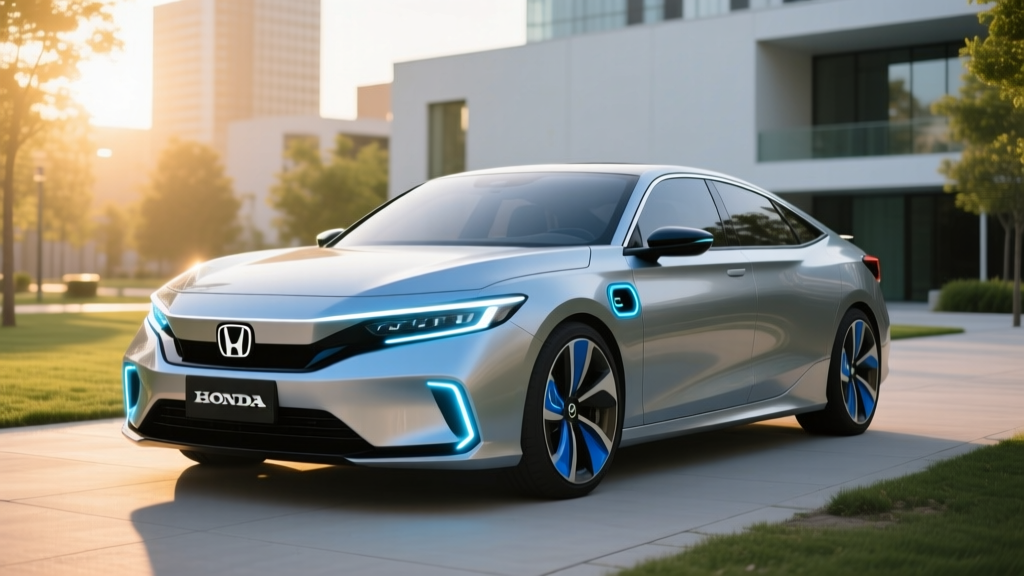
As of 2026, Honda does not sell a battery-electric Civic. The Civic lineup includes a 1.5L turbocharged gasoline model and a Civic Hybrid (HEV), but no plug-in hybrid or fully electric variant. If you're searching for a "Civic electric car," you're likely thinking of one of three things: the Honda Prologue (Honda's all-electric midsize SUV), the Civic Hybrid (a gasoline-electric hybrid that doesn't plug in), or the long-rumored next-generation electric Civic built on Honda's upcoming dedicated EV platform. Here's what's real, what's rumored, and what to buy right now.
Does a Honda Civic Electric Car Exist in 2026?
Honda has publicly committed to electrifying its lineup, but the Civic—the brand's best-selling compact car—has not yet received a fully electric variant in the U.S. market. The current 11th-generation Civic (introduced for 2022, refreshed for 2025) is available as a gasoline model or as a traditional hybrid (HEV). Neither version can be plugged in or driven on electricity alone.
Honda's only battery-electric vehicle currently on sale in North America is the Honda Prologue, a midsize SUV built on General Motors' Ultium platform. Honda has announced plans for a next-generation EV lineup using its own in-house "e:Architecture" platform, and a compact electric sedan—widely expected to carry the Civic nameplate—is part of that roadmap. However, Honda has not confirmed a U.S. launch date, pricing, or final specifications for an electric Civic.
Bottom line: If you want a fully electric Honda today, the Prologue is your only option. If you want a Civic specifically, you're choosing between gas and hybrid—both of which still use gasoline.
Honda Prologue: The Closest Electric Honda You Can Buy
Since there's no electric Civic, the Prologue is where Honda buyers looking for a BEV end up. Here's what the 2026 Prologue delivers based on EPA data and Honda's official specifications:
| Spec | Value |
|---|---|
| EPA Range (FWD) | 296 miles |
| EPA Range (AWD) | 273 miles |
| Battery Capacity | 85 kWh usable (NMC chemistry) |
| Peak DC Fast Charge Rate | 150 kW |
| 10–80% DC Charge Time | ~30 minutes (estimated) |
| Level 2 Charging Rate | 11.5 kW (~34 mi/hr added) |
| Horsepower (FWD / AWD) | 212 hp / 288 hp |
| 0–60 mph (AWD) | ~6.0 seconds |
| Combined MPGe (FWD) | 95 MPGe |
| Starting MSRP | ~$47,400 (before incentives) |
| Battery/Powertrain Warranty | 8 years / 100,000 miles |
The Prologue is a competent electric SUV, but it's a larger, heavier, and more expensive vehicle than a Civic. A compact electric Civic, when it arrives, would likely target a lower MSRP (potentially in the $30,000–$38,000 range), lighter weight, and higher efficiency—filling a gap Honda currently leaves open to competitors like the Hyundai Ioniq 6, Tesla Model 3, and Chevrolet Equinox EV.
Civic Hybrid vs. an Electric Car: What's the Real Cost Difference?
The 2026 Civic Hybrid is a strong fuel-sipper, and for many buyers it's a practical bridge to full electrification. Let's compare it head-to-head with a hypothetical electric Civic (using segment averages) and the current Prologue:
| Category | Civic Hybrid (HEV) | Honda Prologue (BEV) | Civic Gas (1.5T) |
|---|---|---|---|
| Starting MSRP | ~$29,845 | ~$47,400 | ~$25,345 |
| Federal Tax Credit (§30D) | Not eligible | Up to $7,500 (eligibility varies) | Not eligible |
| Effective Purchase Price | ~$29,845 | ~$39,900 (if full credit applies) | ~$25,345 |
| Fuel/Energy Cost (5 yr, 75k mi) | ~$5,250 (gas) | ~$3,000 (electricity, home charging) | ~$7,500 (gas) |
| Maintenance (5 yr) | ~$2,200 | ~$1,200 | ~$2,800 |
| Insurance (5 yr avg) | ~$7,500 | ~$9,500 | ~$7,200 |
| Estimated 5-Year Total Cost | ~$44,795 | ~$53,600 | ~$42,845 |
Assumptions: 15,000 miles/year, $3.50/gal gasoline, $0.14/kWh home electricity. Tax credit eligibility depends on income, MSRP caps, and battery sourcing rules per IRS §30D guidelines. Consult a tax professional.
The Civic Hybrid wins on total cost for most buyers today. The Prologue's higher upfront price isn't fully offset by fuel savings over five years, especially if you don't qualify for the full federal credit. An electric Civic—if priced around $33,000–$35,000 with a $7,500 credit—would dramatically change this equation, potentially undercutting even the gas Civic on five-year cost.
What First-Time EV Buyers Need to Know Before Waiting
If you're holding out for an electric Civic, here are the practical realities to consider right now:
Home Charging Is the Make-or-Break Factor
EV ownership is dramatically more convenient and affordable when you can charge at home. A Level 2 home charger (240V, 32–48 amps) adds roughly 25–35 miles of range per hour of charging and costs between $500 and $2,500 installed, depending on whether your electrical panel needs an upgrade. If you live in an apartment or lack a dedicated parking space with outlet access, public-only charging is more expensive (often $0.30–$0.48/kWh at DC fast chargers) and less convenient.
Cold Weather Reduces Range by 20–30%
Lithium-ion batteries lose efficiency in cold temperatures. An electric Civic with a 250-mile EPA range might deliver only 175–200 miles in sub-freezing winter conditions. If you live in the northern U.S. and commute long distances, factor this into your range requirements. A heat pump (standard on many modern EVs) mitigates but doesn't eliminate this loss.
The §30D Federal Tax Credit Is Not Guaranteed
Under current IRS rules, the $7,500 federal EV tax credit requires meeting battery component and critical mineral sourcing thresholds, buyer income caps ($150,000 single / $300,000 joint), and vehicle MSRP limits ($55,000 for sedans, $80,000 for SUVs/trucks). These rules have tightened annually, and fewer vehicles qualify each year. By the time an electric Civic launches, eligibility may differ from today's landscape.
Charging Speed Matters More Than Peak Range
A vehicle that charges at 250 kW (adding ~150 miles in 10 minutes) is far more road-trip-friendly than one capped at 150 kW, even if the latter has 30 more miles of EPA range. When the electric Civic specs are released, pay close attention to the DC fast-charge rate and the 10–80% charge time—not just the headline range number.
Common Misconceptions About a Civic Electric Car
| Myth | Fact |
|---|---|
| "The Civic Hybrid is an electric car." | The Civic Hybrid (HEV) cannot be plugged in. It uses a small battery and electric motor to assist the gas engine but always runs on gasoline. |
| "Honda already makes an electric Civic in Japan." | Honda sells the e:HEV hybrid Civic in some markets and previously offered the Honda e (a small city EV) in Europe, but neither is a fully electric Civic sedan available in the U.S. |
| "An electric Civic will be cheaper to own than any gas car immediately." | Without a home charger and without the federal tax credit, EV ownership costs can exceed a fuel-efficient hybrid like the Civic HEV, which achieves an EPA 50 MPG combined. |
| "I'll save $7,500 no matter what." | The §30D credit has income caps, MSRP caps, and battery-sourcing requirements. Many buyers and vehicles no longer qualify for the full amount. Always verify on the IRS site before purchasing. |
| "EV batteries need replacement every 5 years." | Modern EV batteries are warrantied for 8 years/100,000 miles, and real-world data from fleets shows most retain 85–90% capacity after 100,000 miles. Full replacement is rare and typically only needed after major degradation outside the warranty period. |
Decision Framework: What Should You Buy Right Now?
Choose the Civic Hybrid if:
- You want a compact Honda sedan today with excellent fuel economy (50 MPG combined)
- You don't have reliable home charging access
- Your budget is under $32,000
- You drive in extreme cold regularly and want zero range-degradation risk
Choose the Honda Prologue if:
- You want an all-electric Honda now and need SUV cargo space
- You have home Level 2 charging and drive under 250 miles daily
- Your budget is $40,000–$50,000 and you qualify for the §30D credit
Wait for an electric Civic if:
- You specifically want a compact electric sedan from Honda
- You're willing to wait potentially until 2027–2028 for a U.S. launch
- You want a sub-$35,000 EV with 250+ miles of range and Honda's reliability reputation
- Your current vehicle is adequate and you're not in a rush to replace it
Consider a competitor's electric sedan now if:
- You want a compact EV today: the Tesla Model 3 (EPA 341 mi, from ~$38,990), Hyundai Ioniq 6 (EPA 361 mi, from ~$37,500), or Chevrolet Equinox EV (EPA 319 mi, from ~$33,000) are all available now with proven charging networks
Frequently Asked Questions
Will Honda make an all-electric Civic?
Honda has announced a next-generation EV platform (e:Architecture) and has indicated compact electric vehicles are part of its global strategy. An electric Civic—or a Civic-sized electric sedan—is widely expected, but Honda has not confirmed U.S. timing, pricing, or specs as of 2026.
Is the Honda Civic Hybrid a plug-in?
No. The Civic Hybrid is a conventional hybrid (HEV), not a plug-in hybrid (PHEV). It charges its small battery through regenerative braking and the gasoline engine. You cannot plug it in, and it has no electric-only driving range. It achieves an EPA-estimated 50 MPG combined.
What's the cheapest electric Honda available?
The Honda Prologue is currently Honda's only all-electric vehicle in the U.S., starting at approximately $47,400 before incentives. After the federal tax credit (if eligible), effective pricing can drop to around $39,900.
Does the Honda Civic Hybrid qualify for any tax credits?
No. The federal §30D Clean Vehicle Credit applies only to plug-in electric vehicles (BEVs and PHEVs) with sufficient battery capacity. Conventional hybrids like the Civic HEV are not eligible for the federal credit. Some states offer hybrid incentives, but these vary—check your state's energy office for details.
Should I buy a gas Civic or wait for an electric one?
If your current car needs replacing now and you want a Honda compact, the Civic Hybrid (50 MPG, ~$29,845) is an excellent, low-risk choice with strong resale value. If you can wait 1–3 years and want to go fully electric, holding out for Honda's compact EV—or choosing a currently available electric sedan from another brand—are both reasonable strategies.
How much would an electric Civic cost to charge?
Based on segment averages (a ~60 kWh battery and ~3.5 mi/kWh efficiency), charging a hypothetical electric Civic at home ($0.14/kWh national average) would cost roughly $4.00 for a full charge and about $0.04 per mile. Compare that to the gas Civic at ~$0.14/mile and the Civic Hybrid at ~$0.07/mile at $3.50/gallon.