Quick Answer: Did Honda Cancel Its EVs?
Yes — in May 2025, Honda confirmed it was canceling several planned battery-electric vehicles, including models from its next-generation "0 Series" EV lineup, citing shifting market demand and tariff-related cost pressures. The Prologue (a rebadged GM Ultium SUV) remains on sale for now, but Honda's long-term EV strategy has been significantly scaled back. For buyers, this means Honda's immediate electrified future leans heavily on hybrids and plug-in hybrids rather than pure battery-electric vehicles.
What Honda Actually Canceled — and What Survives
The headlines around "Honda cancels EV" require some unpacking. Honda did not exit the electric vehicle market entirely. What the company did was pull back from an ambitious roadmap that had promised a wave of dedicated EVs built on a new, Honda-developed platform called the "0 Series." That platform was supposed to underpin a new generation of thin, light, aerodynamic EVs starting around 2026–2027.
Here's the current status of Honda's electrified lineup as of mid-2026:
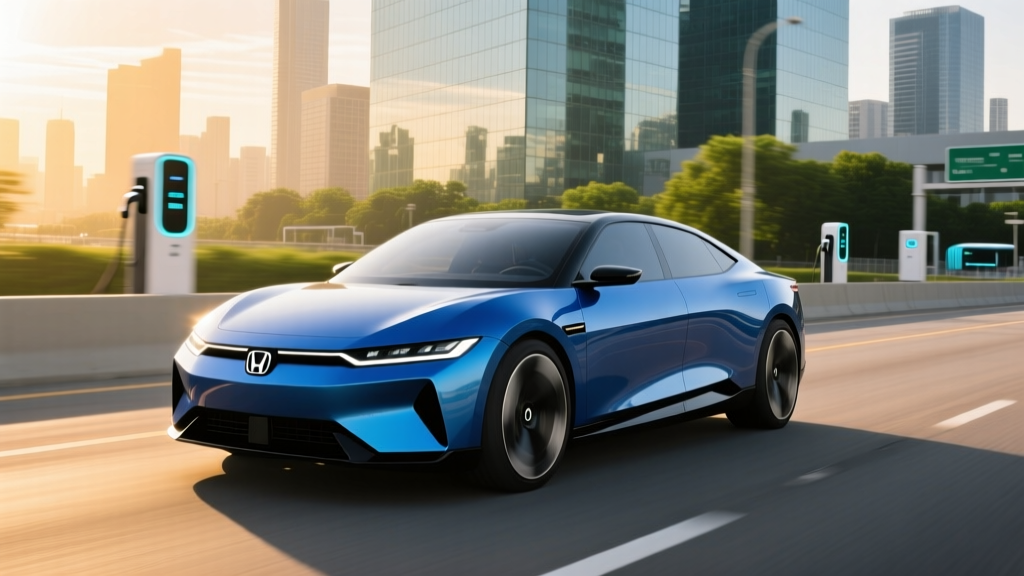
- Honda Prologue (BEV): Still on sale. Built on GM's Ultium platform alongside the Chevrolet Blazer EV. EPA-estimated range up to 296 miles (FWD), 85 kWh usable battery, DC fast charging up to 150 kW (10–80% in ~32 minutes). Base MSRP starts around $47,400. However, no next-generation successor has been confirmed.
- Honda 0 Series sedans/SUVs (announced, now uncertain): Originally previewed at CES 2024 with concepts like the Saloon and Space-Hub. Honda confirmed at least some of these programs have been canceled or indefinitely delayed.
- Honda hybrids (HEV/PHEV): This is where Honda is doubling down. The Accord Hybrid, CR-V Hybrid, and Civic Hybrid are all current, with strong EPA ratings (the Accord Hybrid achieves up to 51 MPG combined per fueleconomy.gov).
The strategic pivot is clear: Honda is retreating from a pure-BEV offensive and retrenching into its hybrid stronghold, which has historically been a profit center and a market differentiator for the brand.
Why Honda Pulled Back: Market Realities
Honda's decision wasn't made in a vacuum. Several converging pressures explain the pullback:
1. Softening EV demand growth. While total EV sales continued to grow through 2025, the rate of growth slowed considerably in the U.S. market. Inventory piled up on dealer lots for several automakers, and transaction prices fell as Tesla's price cuts rippled through the market.
2. Tariff and trade policy uncertainty. New and proposed tariffs on imported vehicles and battery components added cost unpredictability, particularly for automakers like Honda that rely on global supply chains and had planned to source certain EV components from international partners.
3. The GM partnership complication. The Prologue exists because of a partnership with General Motors, but Honda had signaled its intent to move to its own platform. Canceling that in-house platform means Honda's EV future is now more dependent on GM than originally planned — or more dependent on hybrids.
4. Hybrid profitability. Hybrids carry lower battery costs, require less charging infrastructure investment from consumers, and have proven market demand. For Honda, redirecting R&D dollars from uncertain EV programs toward profitable hybrid expansion made financial sense.
Honda Prologue vs. Alternatives: How Does It Compare?
If you were considering a Honda EV and are now unsure what to do, here's how the Prologue stacks up against key competitors in the mid-size electric SUV segment:
| Spec | Honda Prologue (2025/2026) | Hyundai Ioniq 5 (2026) | Tesla Model Y (2026) | Toyota bZ4X (2025) |
|---|---|---|---|---|
| EPA Range (max) | 296 mi (FWD) | 318 mi (Long Range RWD) | 320 mi (Long Range RWD) | 252 mi (FWD) |
| Battery (usable) | 85 kWh (NMC) | 77.4 kWh (NMC) | ~75 kWh (LFP/NMC) | 64 kWh (NMC) |
| Peak DC Fast Charge | 150 kW | 240 kW | 250 kW | 150 kW |
| 10–80% Charge Time | ~32 min | ~18 min | ~22 min | ~30 min |
| 0–60 mph | ~6.5 sec (AWD) | 5.1 sec (AWD) | 4.8 sec (Long Range AWD) | ~7.0 sec (AWD) |
| Base MSRP | $47,400 | $42,600 | $44,990 | $43,070 |
| Federal Tax Credit (§30D) | Eligibility varies — verify at irs.gov | Partial/none (Korean-built) | $7,500 (if eligible) | Eligibility varies |
Real-world range note: The Prologue's 296-mile EPA estimate assumes moderate temperatures and mixed driving. In real-world highway testing at 70+ mph, expect roughly 240–260 miles. In cold weather (below 30°F), range can drop 20–30%, putting realistic winter range around 200–230 miles. The Prologue's 150 kW peak charge rate also means longer road-trip stops compared to the Ioniq 5 or Model Y, which can sustain higher charge rates and add more miles per minute at a DC fast charger.
Honda Hybrids as the Practical Alternative
For many buyers who were considering the Prologue but are now hesitant about Honda's EV commitment, Honda's hybrid lineup offers a compelling — and lower-risk — path to electrification.
| Metric | Honda CR-V Hybrid (AWD) | Honda Prologue (AWD) | Honda CR-V (Gas, AWD) |
|---|---|---|---|
| Base MSRP | $36,350 | $49,400 (AWD trim) | $34,350 |
| EPA Fuel Economy | 40 MPG combined | 95 MPGe combined | 29 MPG combined |
| Annual Fuel/Energy Cost* | ~$1,350 | ~$650 (home charging) | ~$1,860 |
| 5-Year Fuel/Energy Cost | ~$6,750 | ~$3,250 | ~$9,300 |
| 5-Year Estimated Maintenance | ~$2,200 | ~$1,100 | ~$2,800 |
| 5-Year Total (Purchase + Fuel + Maint.) | ~$45,300 | ~$53,750 | ~$46,450 |
*Based on 15,000 miles/year, $3.45/gallon gas, $0.16/kWh electricity. Actual costs vary by region and driving habits. Source: fueleconomy.gov estimates.
The math tells a clear story: the CR-V Hybrid delivers most of the fuel savings of the Prologue at a significantly lower purchase price. Over five years, the total cost gap between the hybrid and the EV narrows — but the hybrid starts $13,000 cheaper. Unless you have reliable home charging and drive patterns that maximize the EV's efficiency advantage, the hybrid is the more financially conservative choice.
The CR-V Hybrid also sidesteps every common EV pain point: no charging infrastructure dependency, no cold-weather range loss, no charging-curve taper on road trips, and no concern about long-term battery replacement costs (though Honda's hybrid battery warranty covers 8 years/100,000 miles, and 10 years/150,000 miles in CARB states).
Ownership Realities: What First-Time EV Buyers Should Know
If you're still interested in buying the Prologue — or any EV — despite Honda's strategic uncertainty, here's a realistic ownership framework:
Should You Buy the Honda Prologue (or Any EV) Right Now?
- If you have Level 2 home charging (240V, 32–48A): EV ownership is dramatically easier. You wake up every morning with a full battery, and daily driving costs are roughly 3–5 cents per mile. The Prologue's 296-mile EPA range covers most daily needs without thinking about it.
- If you rely on apartment/condo charging or public chargers only: Proceed with caution. Public DC fast charging costs $0.35–$0.55/kWh in many markets, which erodes the cost advantage over gas. Charging time and availability become weekly planning concerns.
- If you regularly drive in cold climates (below 30°F for extended periods): Budget for 20–30% range loss. The Prologue's 296 miles becomes ~210–235 miles in winter. If your commute or regular trips are under 150 miles round-trip, this is manageable. If not, consider a hybrid.
- If road trips are frequent (300+ miles, multiple times per month): The Prologue's 150 kW peak charge rate means ~32-minute stops from 10–80%. Competitors like the Ioniq 5 (240 kW, ~18 min) or Model Y (250 kW, ~22 min) spend significantly less time at chargers on long drives.
- If long-term brand support matters to you: Honda's EV pullback raises questions about future software updates, parts availability, and resale value for the Prologue. A Honda hybrid carries less risk on this front — the brand is clearly committed to that technology.
Cost Breakdown: EV vs. Hybrid vs. Gas Over 5 Years
Let's put concrete numbers behind the ownership comparison for a buyer cross-shopping Honda's options. This assumes 15,000 miles/year, home charging at $0.16/kWh, and gas at $3.45/gallon:
| Cost Category | Prologue EV (AWD) | CR-V Hybrid (AWD) | CR-V Gas (AWD) |
|---|---|---|---|
| Purchase Price (MSRP) | $49,400 | $36,350 | $34,350 |
| Federal Tax Credit (§30D) | Up to $7,500 (verify eligibility) | $0 | $0 |
| Effective Purchase Price | $41,900 (if full credit) | $36,350 | $34,350 |
| Home Charger Install (Level 2) | $500–$2,000 | $0 | $0 |
| 5-Year Fuel/Energy | $3,250 | $6,750 | $9,300 |
| 5-Year Maintenance | $1,100 | $2,200 | $2,800 |
| 5-Year Insurance (est.) | $9,500 | $7,800 | $7,500 |
| 5-Year Total Cost | $55,250–$57,750 | $53,100 | $53,950 |
Key takeaways: Even with the full $7,500 federal tax credit, the Prologue's 5-year total cost is roughly comparable to the CR-V Hybrid. The EV saves on fuel and maintenance but costs more upfront and typically carries higher insurance premiums (15–25% higher for EVs is common, per industry data). The hybrid wins on simplicity: no charger installation, no range planning, lower insurance, and a purchase price that doesn't depend on tax credit eligibility.
Note on the §30D tax credit: eligibility depends on MSRP caps ($55,000 for SUVs), buyer income limits ($150,000 single / $300,000 joint AGI), battery component and critical mineral sourcing requirements, and final assembly in North America. The Prologue qualifies on assembly grounds (built in Tennessee), but battery sourcing rules are complex and subject to change. Always verify current eligibility at irs.gov and consult a tax professional. As of 2026, the credit can be transferred to the dealer at point of sale for an instant price reduction.
Common Misconceptions About Honda's EV Situation
| Myth | Fact |
|---|---|
| "Honda is completely out of EVs." | The Prologue is still on sale and supported. Honda canceled future planned models, not current inventory. |
| "If Honda cancels EVs, parts and service will disappear." | The Prologue shares its Ultium platform with GM vehicles (Blazer EV, Equinox EV). Parts supply is tied to GM's ongoing commitment to the platform, not solely Honda's strategy. |
| "Hybrids are just a stepping stone — I should wait for EVs." | Modern hybrids like the CR-V Hybrid deliver 40 MPG combined with zero lifestyle compromise. For many buyers, a hybrid is the optimal endpoint, not a transition vehicle. |
| "The Prologue will be heavily discounted now." | Dealer discounts vary by market. Honda has offered lease incentives (as low as $199/month in some 2025 campaigns), but purchase discounts are inconsistent. Check local dealers. |
| "I'll never need to replace the EV battery." | Honda warranties the Prologue's battery for 8 years/100,000 miles (capacity above ~70%). Out-of-warranty replacement for an 85 kWh pack could cost $12,000–$18,000+ based on current Ultium platform estimates. This is a long-tail risk worth budgeting for in a 10+ year ownership plan. |
The Decision Framework: What Should You Actually Buy?
Choose the Honda Prologue if:
- You have reliable Level 2 home charging and your daily driving is under 200 miles.
- You qualify for the full §30D tax credit, bringing the effective price closer to $42,000.
- You value a quiet, smooth electric drivetrain and lower per-mile energy costs.
- You're comfortable with Honda's uncertain EV roadmap and potential resale value implications.
- You primarily drive in moderate climates where range loss is minimal.
Choose the Honda CR-V Hybrid if:
- You don't have home charging access or don't want to install a Level 2 charger ($500–$2,000).
- You live in a cold climate where EV range loss would be a regular inconvenience.
- You want the lowest total cost of ownership with the least planning and infrastructure dependency.
- You take frequent long road trips and don't want to plan around charging stops.
- You want a vehicle from a technology line Honda is actively investing in and supporting.
Look at competitors (Ioniq 5, Model Y, EV6) if:
- You want faster DC charging for road trips (200+ kW vs. Prologue's 150 kW).
- You want a dedicated EV platform with more interior space efficiency.
- You want access to the Tesla Supercharger network (Model Y natively; others via NACS adapter).
- You want stronger long-term brand commitment to EVs from the manufacturer.
Frequently Asked Questions
Is the Honda Prologue being discontinued?
As of mid-2026, Honda has not officially discontinued the Prologue. It remains on sale and in production. However, Honda's cancellation of its next-generation 0 Series EV platform raises questions about whether a second-generation Prologue will be developed. Honda has not confirmed a successor.
Will Honda honor the Prologue's warranty if they cancel future EVs?
Yes. Honda is legally obligated to honor all existing warranties regardless of future product strategy. The Prologue's basic warranty is 3 years/36,000 miles, the powertrain warranty is 5 years/60,000 miles, and the battery warranty is 8 years/100,000 miles. These commitments don't change based on Honda's product roadmap.
Should I lease or buy the Prologue given Honda's EV uncertainty?
Leasing is arguably the smarter move here. A 36-month lease limits your exposure to resale value risk — if Honda's EV pullback depresses Prologue values by 2028–2029, that's the leasing company's problem, not yours. Honda has historically offered aggressive Prologue lease incentives, sometimes making the monthly cost competitive with financing a CR-V Hybrid. Check current offers at your local dealer.
How does the Prologue's charging speed compare to competitors?
The Prologue's 150 kW peak DC fast-charge rate is below the segment leaders. The Hyundai Ioniq 5 peaks at 240 kW and can charge 10–80% in roughly 18 minutes on a capable 350 kW charger. The Tesla Model Y peaks at around 250 kW. The Prologue's 10–80% time of ~32 minutes is acceptable for most road trips but means noticeably longer stops. Also, the Prologue uses the CCS1 connector; Tesla Supercharger access requires a NACS adapter (availability and compatibility should be verified with Honda).
What's the best Honda for someone who wants to reduce gas use but isn't ready for a full EV?
The Honda CR-V Hybrid (40 MPG combined, ~$36,350) or the Accord Hybrid (up to 51 MPG combined, ~$34,000) are excellent choices. Both deliver substantial fuel savings over their gas counterparts with zero behavioral change — no charging, no range planning, no cold-weather compromise. For buyers who want electric-only driving for short commutes, a plug-in hybrid (PHEV) from another brand — like the Toyota RAV4 Prime (42 miles electric-only, 94 MPGe) — may be worth cross-shopping, though Honda does not currently offer a PHEV in the U.S. market.
Does Honda's EV cancellation affect the federal tax credit for the Prologue?
No. The §30D federal tax credit is based on the vehicle's specifications (battery sourcing, MSRP, final assembly) and the buyer's income — not the manufacturer's future product plans. As long as the Prologue remains on sale and meets current IRS requirements, it remains eligible. Verify at irs.gov before purchasing, as sourcing rules update periodically.
Sources: EPA fuel economy data via fueleconomy.gov; IRS §30D credit rules via irs.gov; Honda Prologue specifications via Honda Newsroom. Pricing and availability current as of mid-2026 model year. Always verify with your local dealer and a tax professional before purchasing.